





Fusee Railway Clock
A fusee railway clock is a precise timekeeper designed for transport networks, sought after for its dependable movement and station heritage.
Fusee Railway Clock
When considering a fusee railway clock, a buyer looks at timepieces that regulated movement across British transport networks from the nineteenth century onward. These wall-mounted instruments governed operations for major companies such as the Great Western Railway, London and North Eastern Railway, and London, Midland and Scottish Railway.
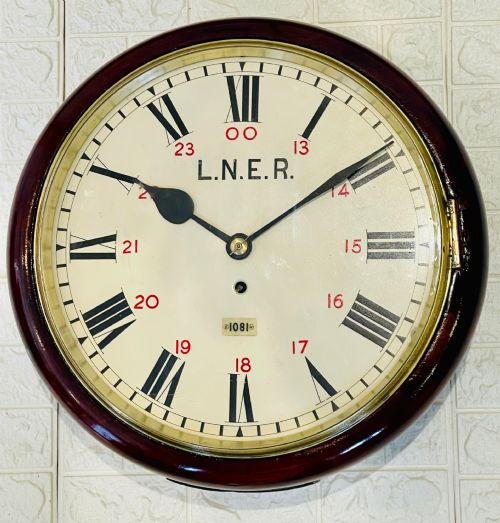
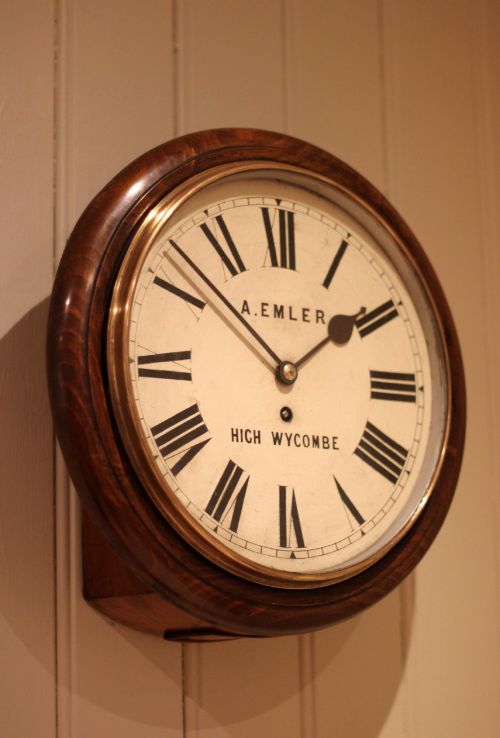
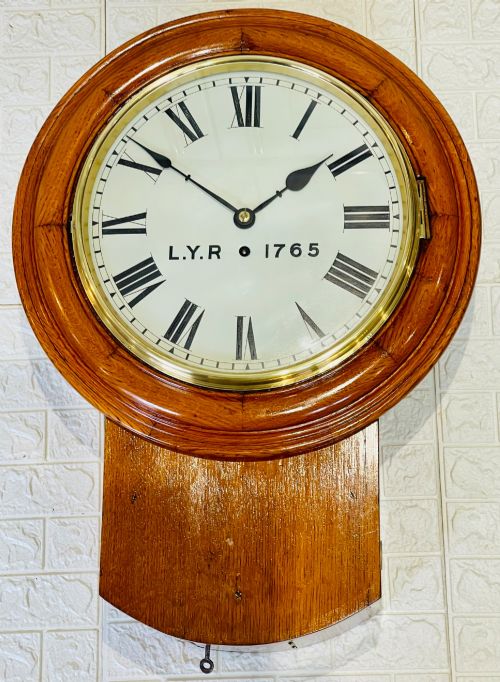
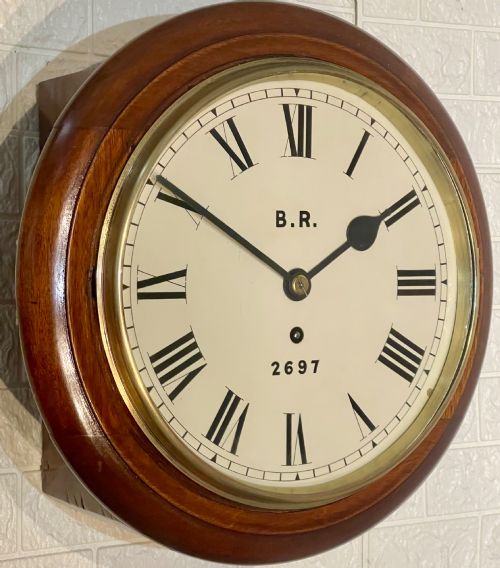
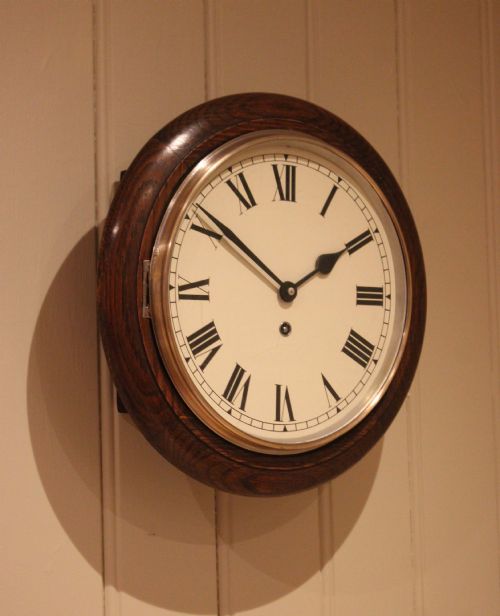
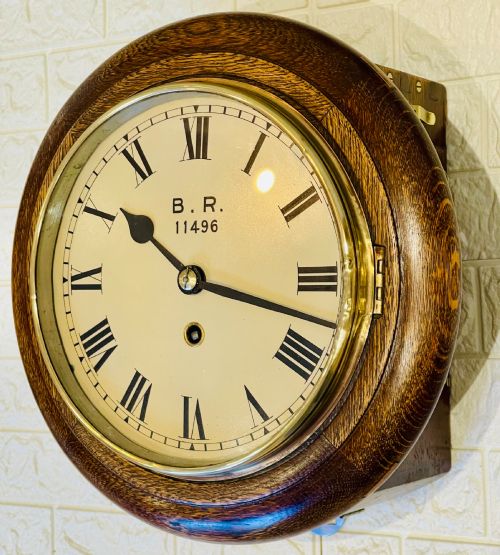
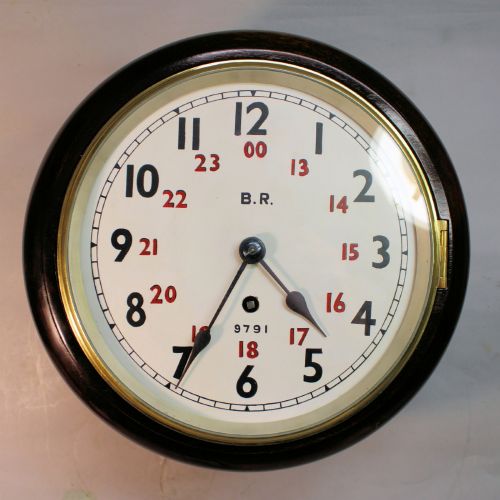
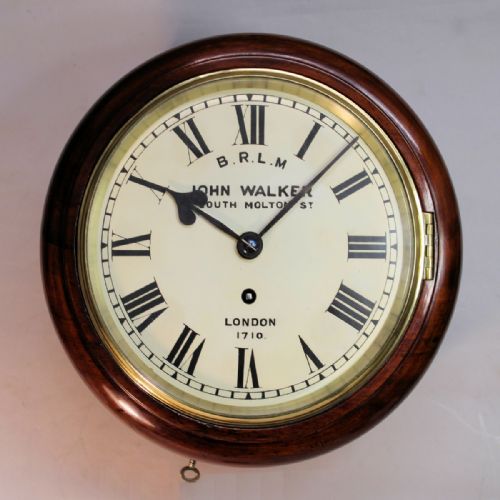
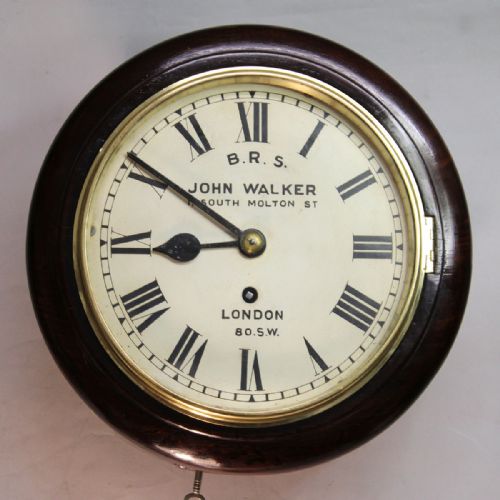
The version most commonly met on this page is the dial clock housed in a sturdy wooden case with a hinged bezel for winding and setting. Many examples carry station names, line abbreviations, or inventory numbers painted on the dial or stamped into the timber case.
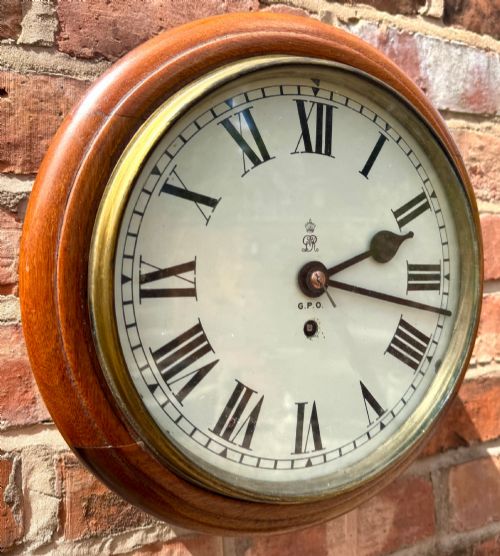
Beyond corporate railway use, similar dial clocks served in post offices, schools, and offices during the Victorian and Edwardian eras. These domestic and institutional pieces share the robust mechanical architecture required for reliable public timekeeping.
How they were made
Clockmakers housed these movements in solid timber enclosures, turning predominantly to mahogany, oak, and occasionally beech for framing. A hinged wooden or brass bezel secured the protective glass face over the painted iron dial.
The defining mechanical feature is the fusee, a cone-shaped pulley connected by a chain or cord to the mainspring barrel. This mechanism equalises the diminishing torque of the uncoiling spring to maintain constant force on the gear train.
Station masters relied on these heavy iron dials to keep trains running on time while passengers rushed below.
What varies in quality
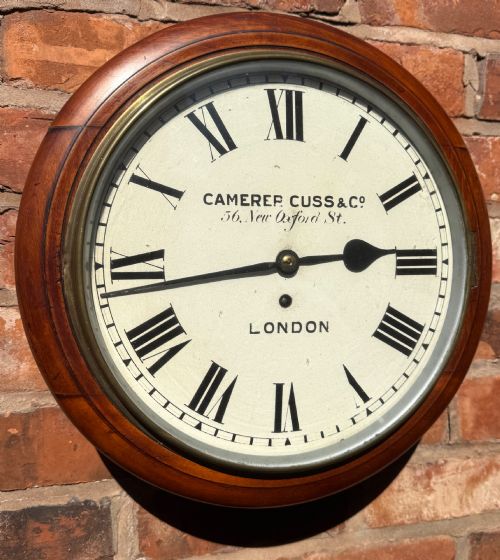
The calibre of a fusee railway clock depends on the precision of the brass movement and the reputation of the retailer or maker inscribed on the dial. Signed dials from established London makers like John Walker or Camerer Cuss indicate workshop standards.
Construction details in the case timber and the preservation of original company markings elevate certain pieces. Clean execution of the painted dial numerals and crisp stamping on the case back distinguish superior examples.
Camerer Cuss & Co·John Walker·Thomas Gibbs·Bennetts Cheapside London
The Fusee Railway Clock Glossary
- Fusee
- A conical pulley connected to the mainspring via a chain or cord that ensures even power distribution as the spring unwinds. This device forms the mechanical heart of these timepieces.
- Dial
- The visible face of the clock, typically constructed from painted iron and marked with numerals and railway company initials. It provides the primary reading surface for station staff.
- Bezel
- The ring, made of brass or wood, that holds the glass cover in place over the dial. It usually hinges open to allow access for winding and hand adjustment.
- Drop Dial
- A clock case featuring an extended lower portion that accommodates a pendulum drop or a box for weights. This configuration was common in offices and station master rooms.
- Chain Driven
- A movement powered by a fine metal chain wrapping around the fusee cone rather than a gut cord. This method offers greater durability under continuous operation.
Fusee Railway Clock: Frequently Asked Questions
What is a fusee railway clock?
A fusee railway clock is a wall-mounted timepiece driven by a conical fusee mechanism, designed for timing and operations in railway stations and offices.
These clocks display company lettering or station names on their painted iron dials, reflecting their history within the British transport network.
How do you wind them?
Winding is performed by inserting a matching key into the small aperture on the dial face and turning it clockwise until resistance is felt.
Most surviving examples utilise an eight-day movement, requiring attention roughly once a week to maintain accurate timekeeping.
Where were they used?
These clocks hung in station master offices, ticket halls, platform buildings, and railway boardrooms across the country to synchronise train schedules.
Similar dial designs were also deployed in post offices and municipal buildings during the nineteenth and early twentieth centuries.
How do you identify the railway company?
Identification relies on the painted initials or full names stencilled onto the dial face, such as GWR, LNER, or LMS. Inventory numbers stamped into the mahogany or oak cases often provide further records of station provenance.