

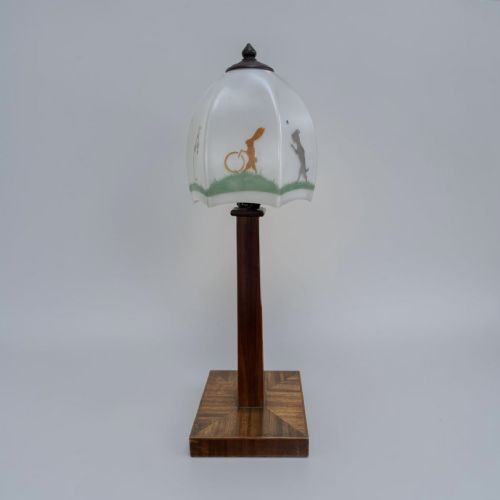
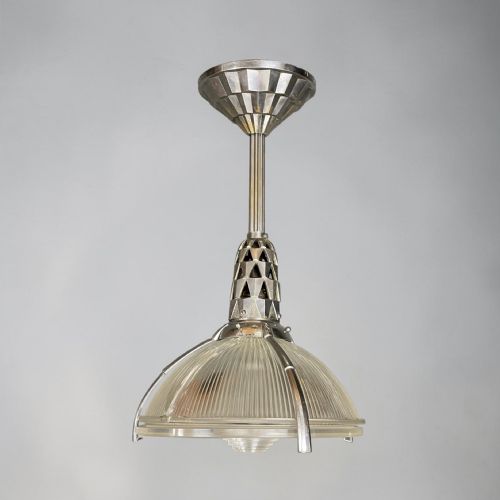
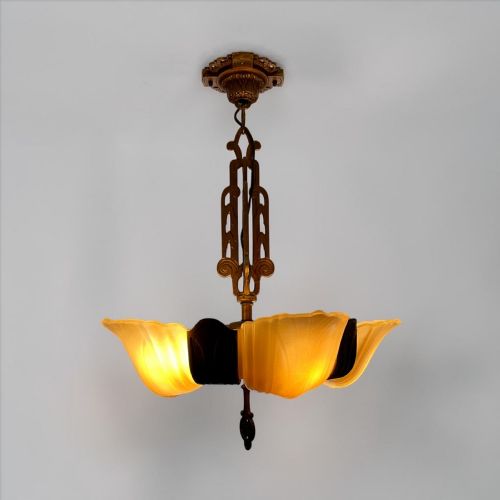
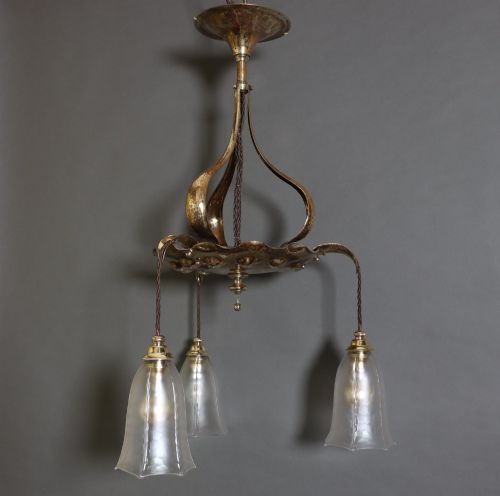
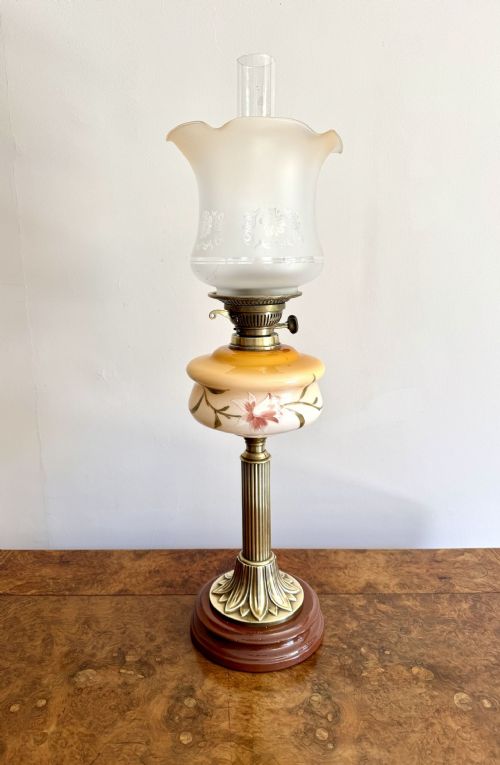
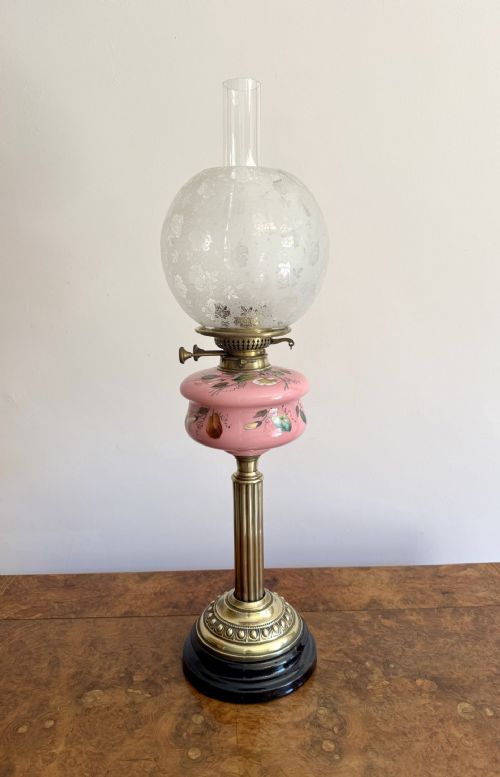
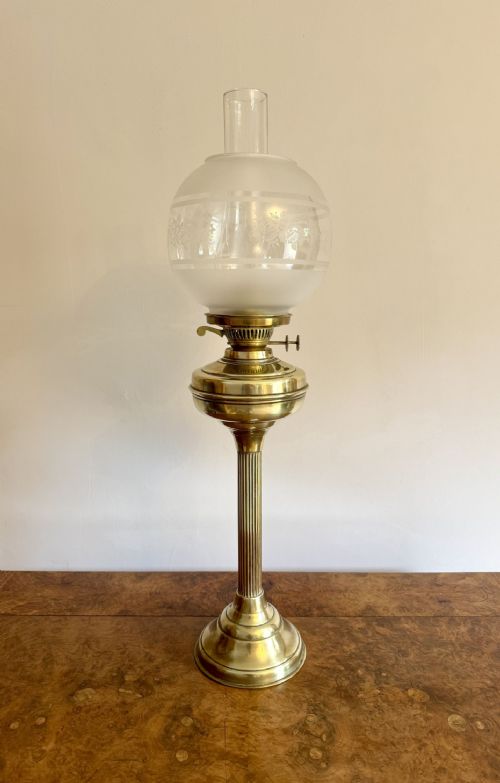
Frosted Glass Shade
These frosted glass shade examples bring soft, diffused illumination to period rooms, combining utility with decorative presence.
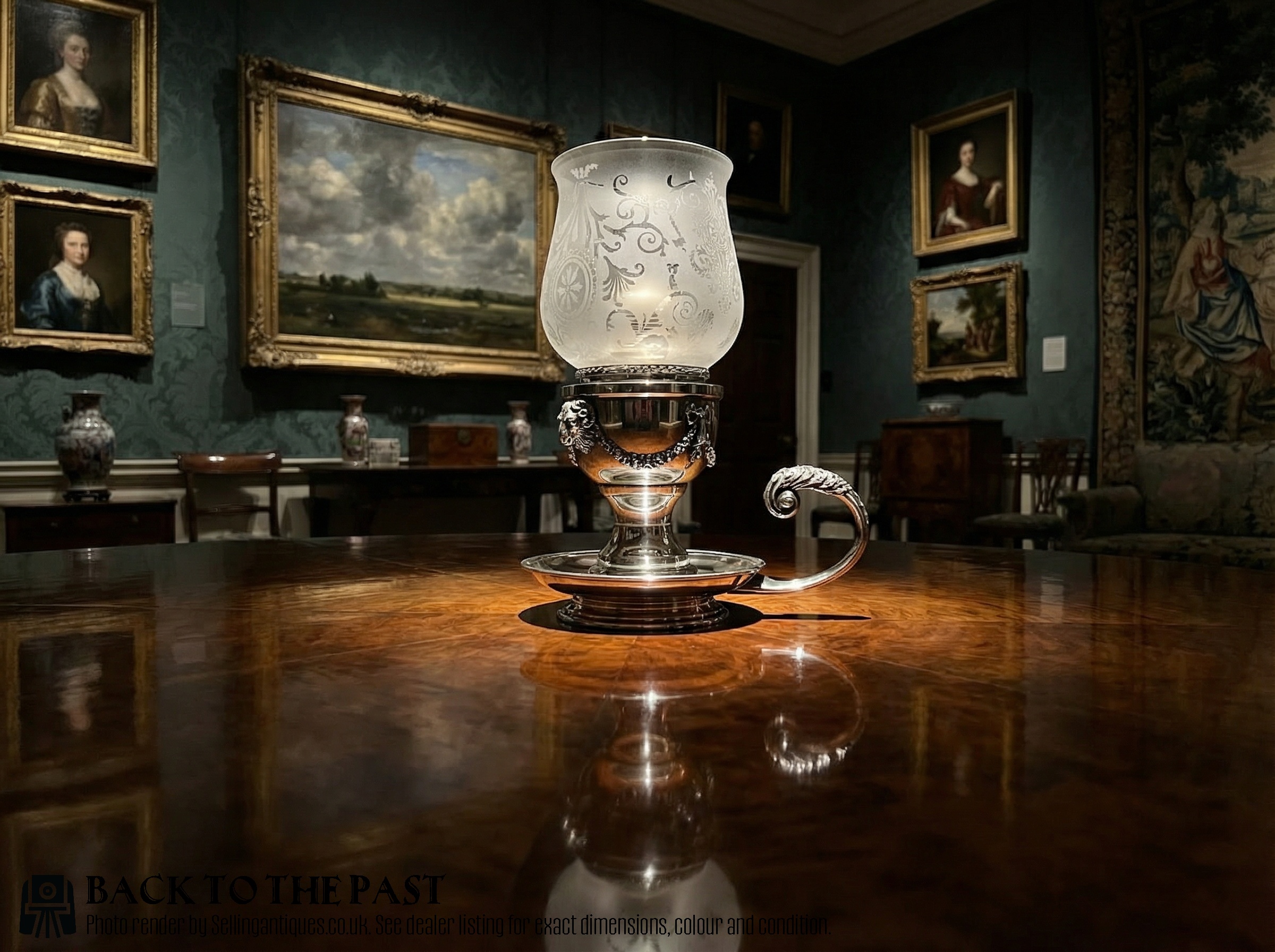
Frosted Glass Shade
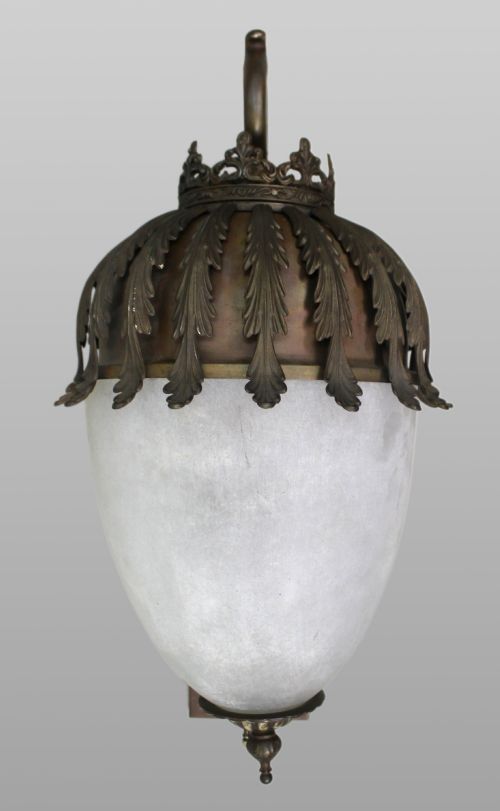
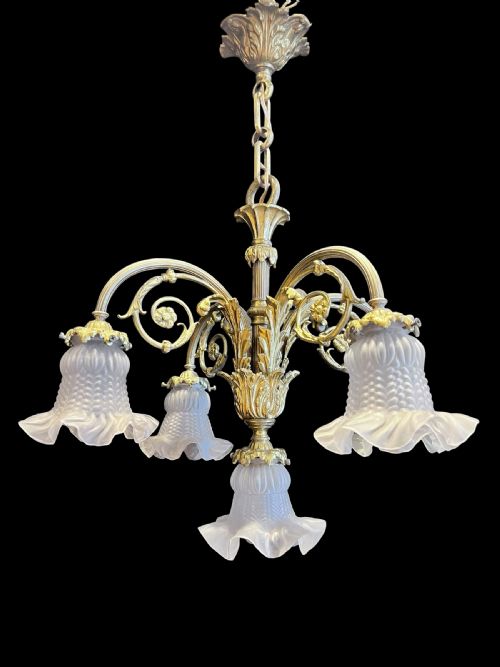
A frosted glass shade functions to diffuse light evenly across a room while concealing the glowing bulb within. Buyers searching for a frosted glass shade encounter a variety of forms including pendant lights, ceiling lights, wall sconces, and oil lamp shades spanning the nineteenth century through the Art Deco period. These pieces originate from domestic and commercial settings, appearing in brass, bronze, and wrought iron mounts.
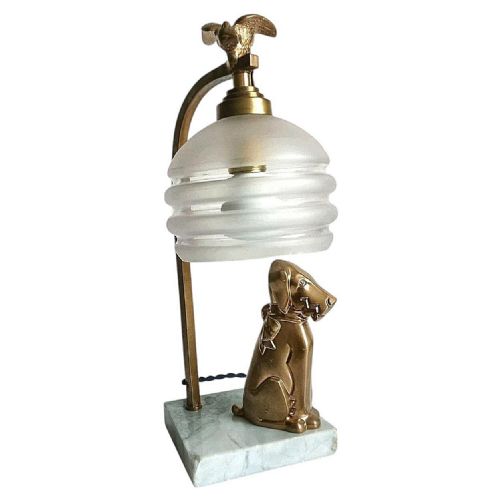
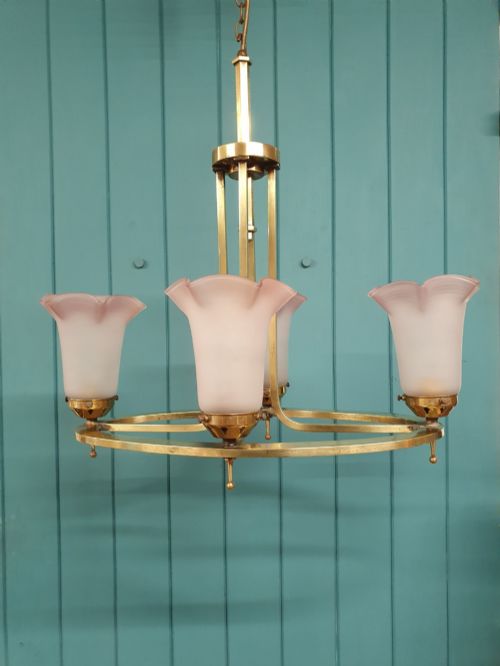
The selection ranges from Victorian oil lamp components to streamlined Art Deco slip shade ceiling fixtures and French plafonnier diffusers. Edwardian brass chandeliers and Arts and Crafts ceiling lights frequently incorporate these diffusers to soften interior illumination. The prevalence of Art Deco designs reflects the period's preference for geometric and moulded glassware paired with metal fixtures.
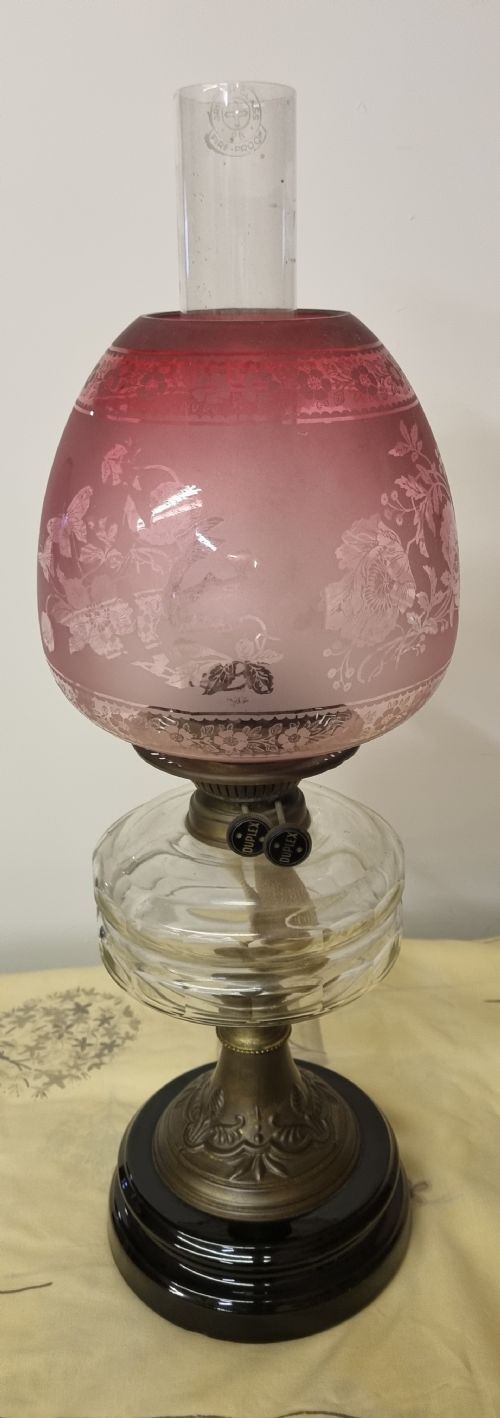
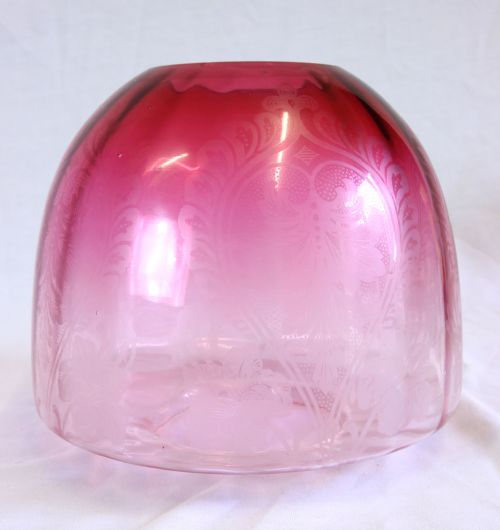
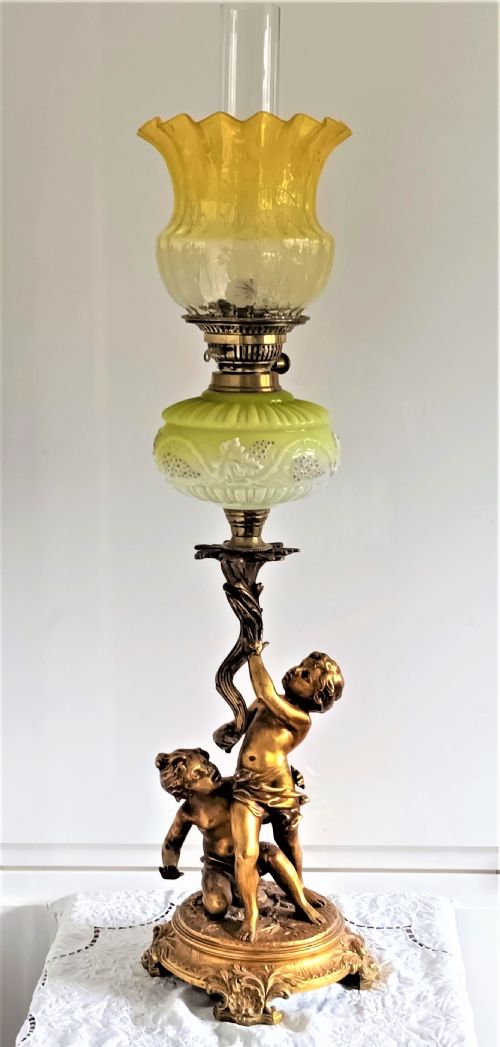
Victorian examples often take the form of oil lamp fonts or frilly pendant bowls, sometimes in coloured glass such as cranberry or ruby. Later twentieth-century items lean towards opalescent or clam shell formations designed for flush-mounted ceiling illumination. Each iteration demonstrates how lighting technology transitioned from oil and gas to electricity while retaining decorative glass diffusers.
Materials and technique
Makers produced frosted glass shades using techniques such as acid etching, sandblasting, or mould-pressing to achieve a translucent, non-reflective surface. Glass was often blown into moulds, as seen in slip shade and clam shell designs, or shaped by hand into frilly pendant profiles. Coloured glass variants incorporated metallic oxides during the melting process to create ruby, cranberry, or opalescent effects.
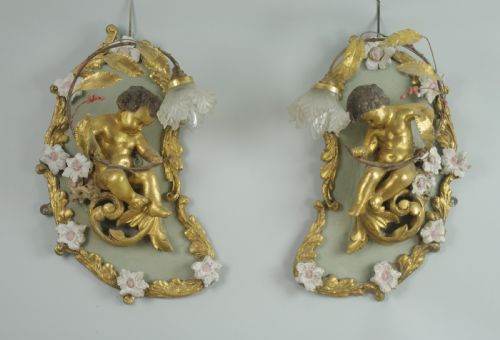
Metal mounts and fittings rely heavily on brass, copper, nickel, and wrought iron to support the heavier glass bowls and shades. These structural elements were cast, spun, or hammered depending on the stylistic requirements of the Victorian, Edwardian, or Art Deco movements. Gilt finishes, surface chasing, and applied putti or cherub details further embellished the supporting metalwork.
Combination pieces integrate cut glass or moulded glass with brass frames, chandeliers, and wall brackets. The union of metal and glass required precise engineering to secure heavy diffusers safely within pendant lights and wall lanterns. Artisans balanced structural durability with aesthetic elegance, ensuring the fittings complemented the light diffusing properties of the shade.
Frosted Glass Shade Retail Price Guide 2026
Typical asking prices for frosted glass shade among the pieces listed under this phrase on Sellingantiques today, from the lower quarter to the upper quarter. They describe what is for sale here now, not the wider market.
Listings feature frosted glass shades across Victorian, Edwardian, and Art Deco periods, integrated into pendant lights, chandeliers, and table lamps.
Quality variations
The distinction between standard production and superior quality rests upon the crispness of the glass moulding and the depth of the finish. Fine examples display even frosting, precise geometric or floral relief work, and substantial glass thickness rather than thin, brittle walls. The integration between the glass shade and its metal mount indicates the level of craftsmanship involved.
Metalwork quality separates ordinary fixtures from exceptional ones through the weight of the brass, the clarity of chased details, and the integrity of original plating. Makers who utilised heavy gauge metals and robust fixings produced lighting that retained structural stability over decades of use. Subtleties in hand-finishing, such as subtle gilding or controlled acid etching, elevate the standing of a piece.
Émile-Jacques Ruhlmann·F&C Osler·Muller Bros·Degue
The Frosted Glass Shade Glossary
- Frosted glass
- Glass treated on the surface by acid etching or sandblasting to diffuse transmitted light and reduce glare. This finish creates a matte appearance that softens the illumination in interior spaces.
- Slip shade
- A moulded glass panel designed to slide into a corresponding metal frame on a ceiling light or sconce. These shades are characteristic of Art Deco multi-light fixtures.
- Plafonnier
- A ceiling-mounted bowl light that sits close to the surface, typically featuring a frosted or moulded glass diffuser held by metal clips or a central fixture.
- Opalescent glass
- Glass exhibiting a milky, iridescent appearance that shifts in colour depending on the angle of the light source. It was widely utilised during the Art Deco and Art Nouveau periods.
- Font
- The oil or paraffin reservoir of a lamp, often manufactured from coloured or cut glass beneath a matching shade. This component forms the central body of Victorian table and standing lamps.
Frosted Glass Shade: Frequently Asked Questions
How do I clean frosted glass?
Clean frosted glass gently using warm water and mild soap with a soft cloth to avoid damaging the textured surface. Harsh chemical cleaners and abrasive pads should be avoided as they can strip or scratch the etched finish.
Ensure the glass is completely dry before reattaching it to metal mounts or electrical fittings. Support the shade securely with both hands during the process to prevent accidental drops.
Are these lights wired for modern use?
Many period fixtures retain older wiring configurations and benefit from professional rewiring to meet contemporary electrical safety standards. A qualified electrician can adapt the internal fittings while preserving the original metalwork and glass components.
Checking the lampholders and wiring integrity ensures the antique lighting functions safely in a modern domestic environment. Professional installation is recommended for heavy chandeliers and ceiling lights.
How can I date my glass shade?
Dating relies upon stylistic indicators, manufacturing techniques, and the associated metal hardware. Victorian pieces often feature hand-blown elements or heavy brass oil lamp mounts, whereas Art Deco items display geometric moulding and streamlined metal frames.
Comparing the fitter dimensions and glass composition with documented period pieces assists in establishing an approximate decade of origin. Consulting archives helps verify specific maker signatures or patent marks.
Can I use LED bulbs in these fixtures?
LED bulbs are suitable for antique light fixtures provided they match the required voltage and physical dimensions of the socket. They generate less heat than traditional incandescent bulbs, which helps protect vintage glass and historic wiring.
Selecting warm white LED outputs preserves the amber or soft glow intended by the original designers. Ensure the bulb wattage does not exceed the recommended capacity of the fixture.