


Frosted Glass Dish
A frosted glass dish brings tactile texture and subtle light play to a room, captured here in pieces from the Edwardian years through the Art Deco era.
What these pieces are
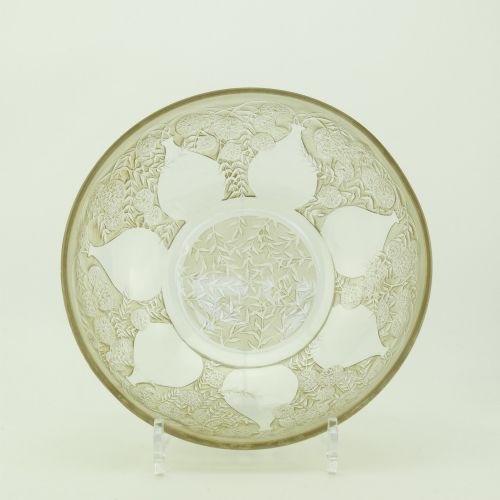
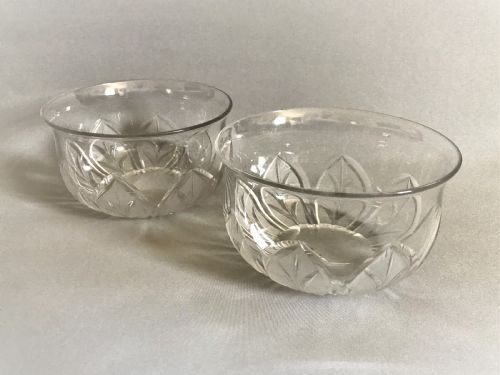
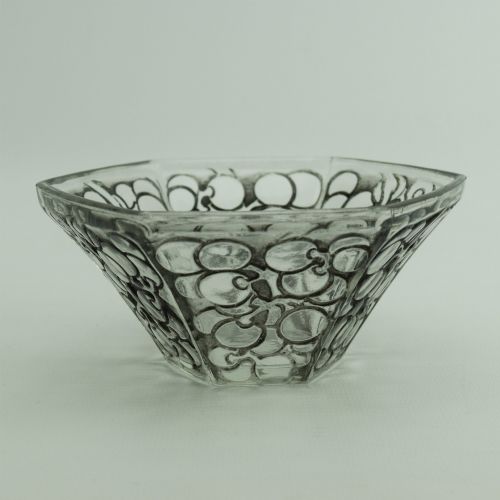
When you search for a frosted glass dish, you encounter two distinct forms across the listings and the archive: standalone decorative bowls and plates from the Art Deco period alongside mounted butter dishes from the Edwardian and Georgian eras. The former category is dominated by French work featuring deep relief and moulded floral or figurative motifs.
The latter category comprises glass liners held within pierced or solid silver and silver-plated frames, often designed for the dining table with matching knives or revolving lids. These domestic vessels reflect the formal hospitality of the early twentieth century, contrasting sharply with the sculptural glass art of the interwar years.
How they were made
The objects combine pressed or moulded glass with techniques of frosting, staining, and opalescence to achieve contrasting textures. Clear surfaces meet satin-finished opaque areas that catch the light, sometimes enhanced with coloured stain to accentuate the modelled details.
Silver-plated and solid silver mounts provide structural support for the liners, involving smithing, piercing, and casting work executed by silversmiths alongside the glassworks.
Retail Price Guide 2026
Typical UK retail prices for frosted glass dish, calculated from the Sellingantiques database of over a million retail prices indexed since 2003. This retail price guide relies exclusively on Sellingantiques data; no external sources or auction records are used, so the figures do not describe the wider market.
Butter once required its own dedicated glass throne supported by cupped silver hands.
What varies in quality
Quality reveals itself in the crispness of the moulded relief and the subtlety of the frosted finish, where superior examples display sharp botanical or figuration lines against softly diffused backgrounds. The weight and clarity of the base glass distinguish finer studio pieces from standard domestic pressed wares.
In mounted examples, the gauge of the silver or silver-plate and the precision with which the glass liner fits its metal frame separate workshop pieces from mass-produced table settings.
Rene Lalique·Edward Souter Barnsley
The Frosted Glass Dish Glossary
- Opalescent Glass
- Glass that milky-blue or fire-like appearance under light, shifting in tone depending on the angle of view. It is frequently utilised in French art glass to give depth to moulded designs.
- Pressed Glass
- Glass shaped by being pressed into a metal mould using a plunger, allowing complex patterns to be produced efficiently. This technique forms the foundation of many decorative bowls and liners.
- Cendrier
- The French term for an ashtray, appearing in period smoking accessories fashioned from decorative glass. These items adapt sculptural forms to domestic utility.
- Liner
- The removable glass insert designed to sit inside a metal frame, such as a butter dish. Liners protect the silver from acidic contents and allow for easy cleaning.
Frequently Asked Questions
How do I clean frosted glass?
Clean frosted glass gently using warm soapy water and a soft cloth to avoid scratching the textured surface. Harsh abrasives can damage the satin finish and remove any applied staining.
Dry the piece thoroughly with a lint-free towel. Take particular care with mounted pieces to keep moisture away from any silver or plated components.
Were these butter dishes used daily?
Butter dishes with frosted glass liners served dining tables during the Edwardian and Victorian periods. They functioned as part of formal breakfast and afternoon tea services.
The removable glass liner held the butter securely while the silver or plated mount protected the table and offered a decorative presentation.
How do I date an Art Deco bowl?
Dating an Art Deco bowl relies on the stylistic markers of the 1920s and 1930s, such as stylised floral motifs, geometric symmetry, and low, broad vessel forms. Maker signatures moulded into the glass often provide a direct year of production or a specific design period.
Compare the relief depth and the treatment of the frosted background against documented examples from the same workshop. The materials and signature formats help narrow down the decade.