
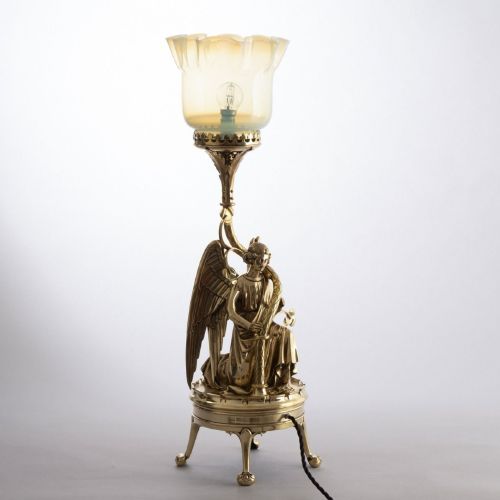
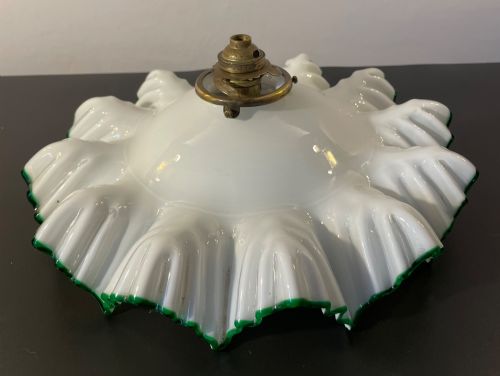


Frilled Glass Light Shade
A frilled glass light shade brings instant warmth to a room, scattering soft colour through its crimped and fluted edges.
Frilled Glass Light Shade
A frilled glass light shade is a decorative bowl or chimney designed to fit an oil lamp, pendant, or wall sconce. When you search for a frilled glass light shade, you encounter Victorian, Edwardian, and later twentieth-century lighting fixtures that rely on shaped glass to diffuse light.
Most examples found here date from the nineteenth century up through the nineteen-thirties, spanning periods from late Victorian and Edwardian to French country and Art Nouveau styles. The forms include oil lamps, pendants, and wall lights made from brass or copper paired with coloured glass.
The most common configurations feature ruffled or crimped rims mounted to metal bodies, appearing on table lamps, ceiling pendants, and floor lamps. These shades transform simple illumination into a decorative focal point through their distinct glass forms.
Materials and construction
Glassmakers created these shades using specialist techniques to achieve distinct colours like cranberry, ruby, yellow, and vaseline glass, often adding frosted or etched surface details. The glass was blown and manipulated while hot to form the characteristic crimped, frilled, or ruffled edges.
Mountings and lamp bodies utilise metals such as brass, copper, and silver plate, frequently paired with fitted galleries to secure the glass shade. The combination of heavy cast or spun metal with fragile blown glass defines the physical makeup of these pieces.
Listings feature brass and copper bodies paired with cranberry, vaseline, ruby, etched, and frosted glass shades across Victorian and Edwardian periods.
Assessing quality and character
Quality in these pieces rests upon the depth of colour in the glass and the crispness of the hand-formed frills at the rim. Better examples show careful manipulation of the hot glass, resulting in even fluted folds rather than heavy or lopsided shapes.
The accompanying metalwork also dictates overall merit, where substantial brass fittings, embossed details, and original matching components elevate the piece. The harmony between the glass shade and its metal base marks the distinction between standard and superior examples.
W A Benson·Farraday and Son·Meissen
The Frilled Glass Light Shade Glossary
- Vaseline glass
- A transparent or translucent yellow-green glass that contains uranium dioxide and glows brightly under ultraviolet light.
- Cranberry glass
- A rich red-pink glass produced by adding gold chloride to the molten batch during the blowing process.
- Gallery
- The metal ring with thumb screws on a lamp fixture designed to securely hold a glass shade in place.
- Pendant light
- A hanging lighting fixture suspended from the ceiling by a chain, cord, or metal rod.
- Wall sconce
- A decorative lighting fixture fixed directly to a wall surface to hold a lamp or bulb.
Frilled Glass Light Shade: Frequently Asked Questions
How do I clean an antique frilled glass shade?
Wash the glass gently in warm, soapy water using a soft cloth, taking special care around the fragile crimped edges. Avoid harsh scrubbing or abrasive materials that might damage etched surfaces or old patinas.
Dry the piece thoroughly with a lint-free towel before remounting it onto the metal gallery or fitting.
Can I use modern light bulbs with these shades?
Many of these fixtures can accommodate modern electrical wiring and low-heat LED bulbs while retaining their original period shades. Consult a qualified electrician to ensure the wiring meets safety standards before regular use.
Keep wattage low to prevent excessive heat buildup, particularly within enclosed glass galleries.
How do I date a glass lampshade?
Examine the manufacturing characteristics, such as pontil marks, colour saturation, and the specific style of the crimped rim. Victorian and Edwardian examples often display distinctive hues like vaseline or cranberry along with hand-finished variations.
Compare the shade's mounting fitter size against standard nineteenth- and twentieth-century brass hardware measurements.
Were these shades made for oil or electricity?
The majority of these pieces originated during the nineteenth and early twentieth centuries as oil or paraffin lamps before many were later converted to electricity. Some survived with their original burners and fonts intact, while others served as ceiling pendants from the start.
Conversion methods varied widely over the decades depending on domestic lighting updates.