



Gilded Glass Lamp Shade
These gilded glass lamp shade examples bring a warm, reflective glow to period light fittings.
Gilded Glass Lamp Shade
A gilded glass lamp shade is an interior lighting component designed to diffuse light while adding metallic warmth to a room. When buyers search for a gilded glass lamp shade, they encounter various forms originating from the nineteenth century up through the nineteen-twenties.
The selections available here span Victorian, Edwardian, Arts and Crafts, and French styles. Objects range from specialised notary lamps and ornamental ewers to general pendant lights, chandeliers, and table lamps.
Frosted glass and coloured glass variants appear frequently alongside gilt metal components and exposed brass or copper frameworks. These pieces reflect diverse manufacturing origins including English and French workshops of the period.
Materials and construction
Makers combined blown or moulded glass with metal mountings in brass, copper, and gilt bronze. Frosted glass and coloured glass bodies were frequently paired with gilded metalwork to catch and soften the light.
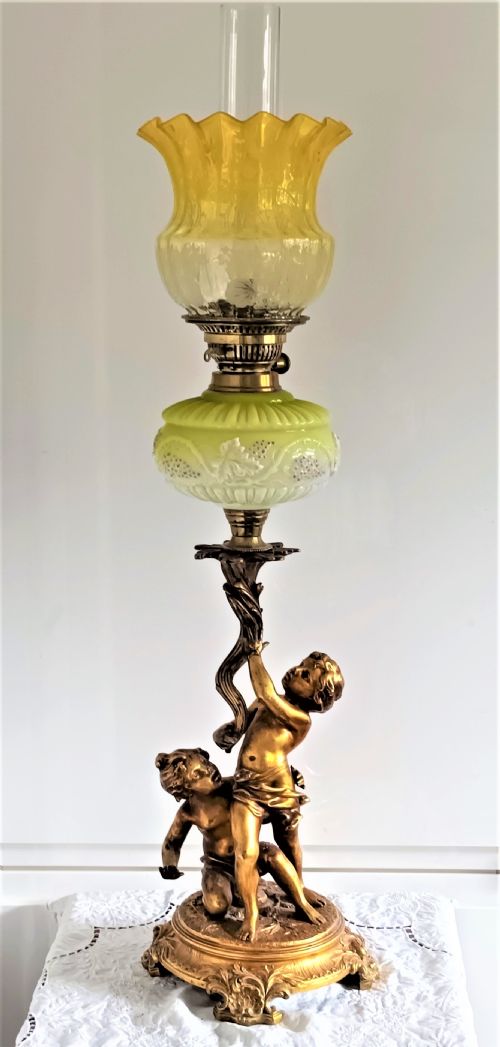
Metalwork techniques include beaten copper and cast bronze, sometimes featuring decorative figures such as putti. Gilt finishes and gold leaf application completed the decorative scheme on both the glass and the supporting mounts.
Gilded Glass Lamp Shade Retail Price Guide 2026
Typical asking prices for gilded glass lamp shade among the pieces listed under this phrase on Sellingantiques today, from the lower quarter to the upper quarter. They describe what is for sale here now, not the wider market.
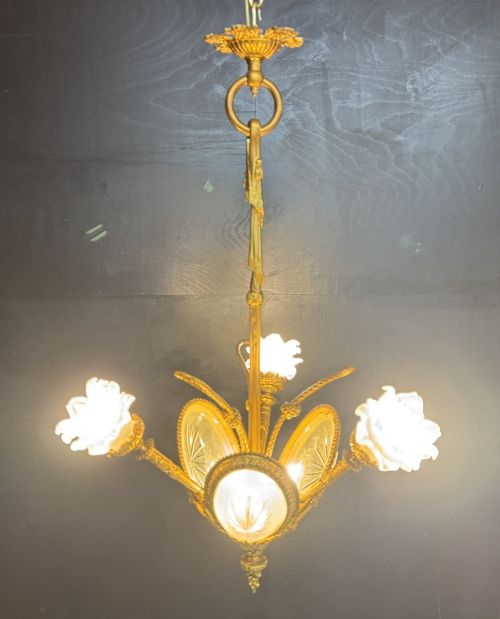
Bronze putti cheerfully linger in the nineteen-twenty ceiling lights, keeping watch over the room below.
Assessing quality in period lighting
Quality shows in the weight and clarity of the glass, whether frosted, dimpled, or coloured, and the crispness of the surrounding metal casting. Finer examples display meticulous chased detail on bronze and brass rather than simple stamped or plated components.
The integration between the glass shade and the metal frame determines the overall integrity of the piece. Superior items maintain a harmonious proportion between the gilded metalwork and the glass element.
The Gilded Glass Lamp Shade Glossary
- Frosted glass
- Glass treated to have a matte, translucent surface that diffuses light evenly. This technique softens the glare from oil or electric burners inside the shade.
- Gilt bronze
- Bronze that has been coated with a thin layer of gold or gold leaf. It offers a durable, luminous finish common in finer nineteenth-century light fittings.
- Ewer
- A large jug with a wide spout, often adapted into a decorative lamp base during the nineteenth century. These forms usually feature ornate handles and matching shades.
- Putti
- Depictions of chubby male toddlers, often winged, used as decorative motifs in classical and revival lighting. They appear frequently in cast bronze ceiling lights.
Gilded Glass Lamp Shade: Frequently Asked Questions
How do I clean a gilded glass lamp shade?
Clean the glass gently with a soft cloth and mild soapy water, avoiding harsh abrasives that could damage the surface.
Keep moisture away from any gilt metal or gold leaf areas to preserve the original finish.
Are these shades compatible with modern bulbs?
Many period shades fit standard vintage or modern fixtures, though fitting sizes should be checked carefully before installation.
Lower wattage LED bulbs work well inside antique glass to prevent excessive heat buildup.
What is the difference between Victorian and Edwardian styles?
Victorian lighting often leans towards ornate, heavier designs with rich colours and elaborate cast metal mounts.
Edwardian pieces tend to favour lighter, airier aesthetics with simpler glass forms and refined brass work.
Where were these lamps originally used?
These pieces lit parlours, studies, and grand hallways in both English and French residences during the late nineteenth and early twentieth centuries.
Specialised items like notary lamps served specific functional roles on desks and tables.