


Frieze Drawer Table
A frieze drawer table combines everyday utility with architectural restraint, offering concealed storage directly beneath the top surface.
Frieze Drawer Table
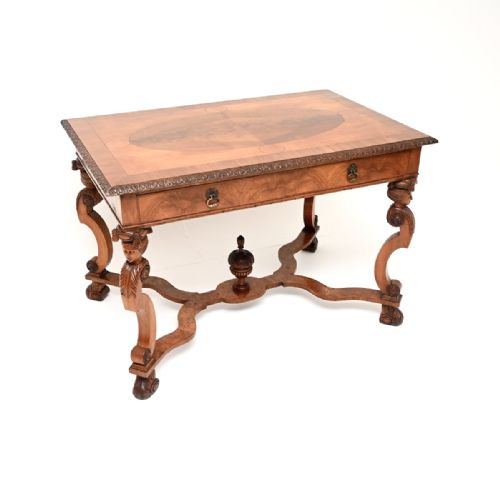
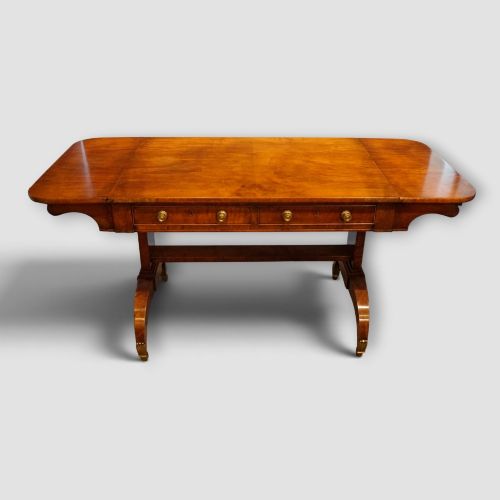
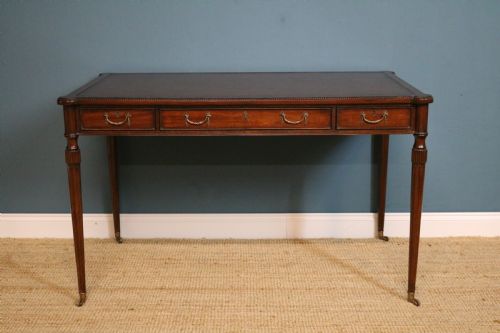
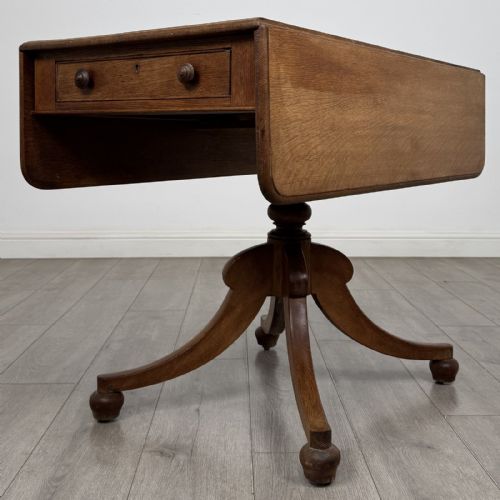
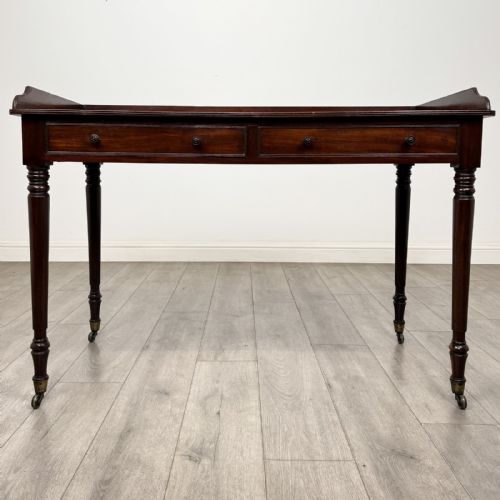
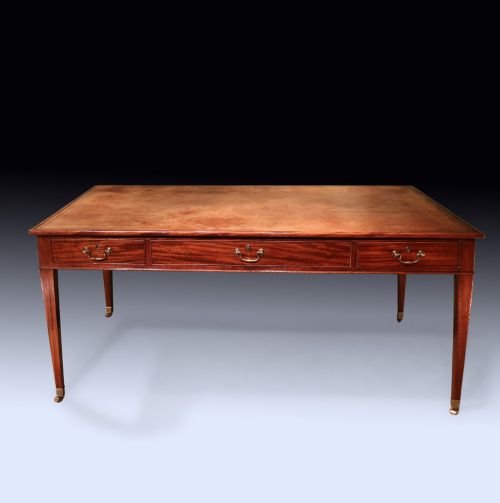
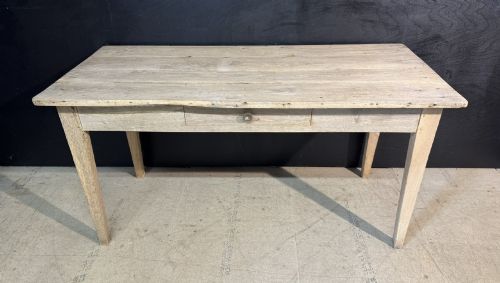
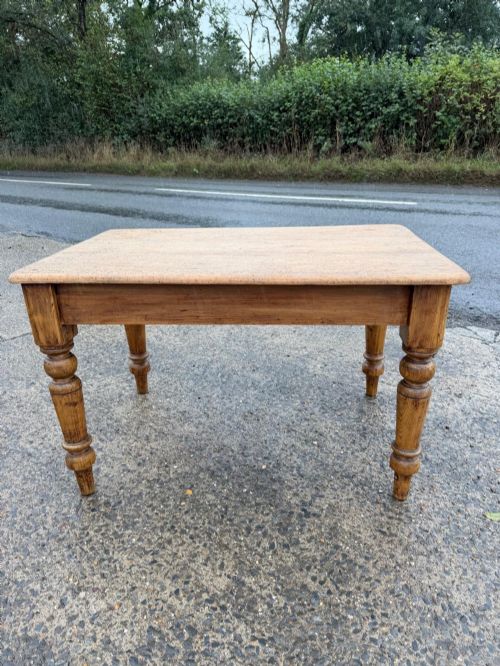
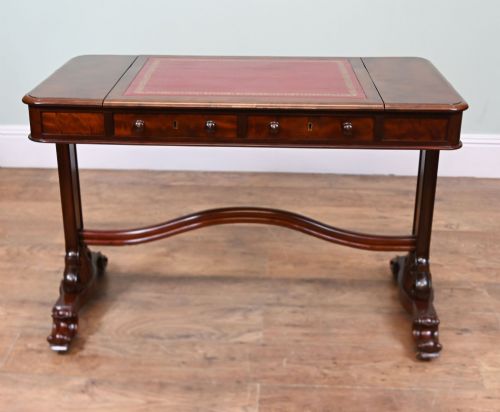
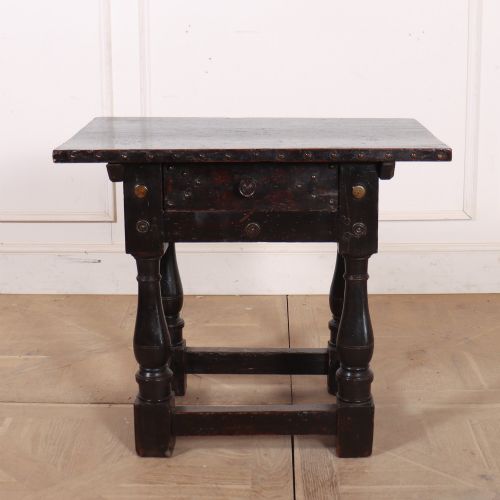
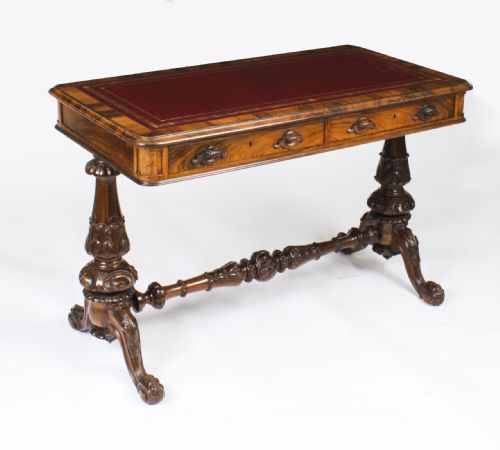
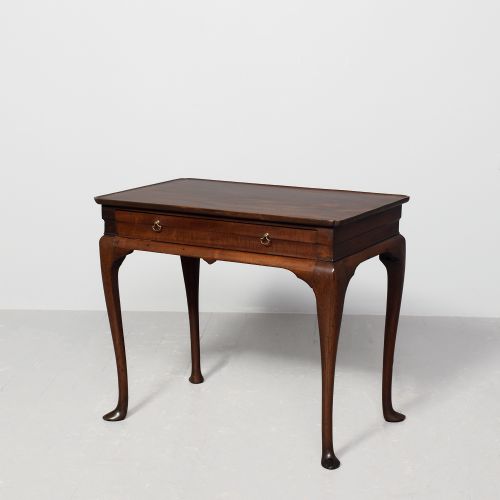
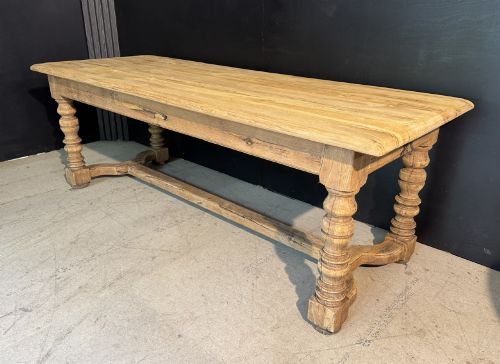
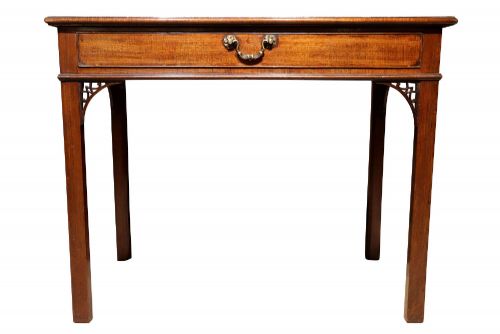
When you search for a frieze drawer table, you are looking at practical furniture designed with one or more drawers built straight into the apron beneath the main surface. The selection spans utilitarian pine and oak country pieces to refined mahogany and rosewood library or writing tables from the Georgian, Regency, and Victorian periods.
You are most likely to encounter side tables, writing desks, and sofa tables on this page, originating from British, French, and Italian workshops. These items served diverse roles from domestic farmhouse kitchens to grand libraries and formal parlours.
The layout of these tables relies on straightforward carpentry where the drawer frame integrates into the structural support of the legs. Simpler country models in oak or fruitwood contrast with polished walnut and mahogany examples finished with fine veneers.
Construction and materials
Makers utilised dense timbers such as mahogany, oak, and walnut for the primary structure, often applying figured veneers or crossbanding to the top surfaces for visual depth. Secondary woods like pine appeared in drawer linings and internal framing.
Joinery techniques relied on hand-cut dovetails for drawer construction and sturdy mortise and tenon joints for the leg and rail assemblies. Brass hardware, including drop handles, knobs, and castors, added both functional mobility and decorative contrast.
Frieze Drawer Table Retail Price Guide 2026
Typical asking prices for frieze drawer table among the pieces listed under this phrase on Sellingantiques today, from the lower quarter to the upper quarter. They describe what is for sale here now, not the wider market.
One Victorian oak side table comes equipped with a carved stag head mounted directly to the back gallery.
Judging the work
Quality rests in the selection of timber and the precision of the joinery rather than mere ornamentation. Well-chosen grain patterns matched across drawer fronts and tops elevate a piece from simple utility to high craftsmanship.
The smoothness of the drawer action and the survival of original brass handles or secondary framing indicate the level of care taken during construction. Subtle details like carved brackets, reeded legs, or inlaid banding separate standard workshop production from master cabinet work.
Edwards & Roberts·Maurice Adams·Donald Ross·Whytock & Reid·W. Priest
The Frieze Drawer Table Glossary
- Frieze
- The horizontal band or rail situated immediately beneath the top surface of a table, typically housing one or more drawers.
- Dovetail
- A joint formed by interlocking wedge-shaped fingers, commonly used in period drawer construction for lasting strength.
- Crossbanding
- A narrow strip of veneer laid around the border of a table top with the grain running perpendicular to the central panel.
- Drum table
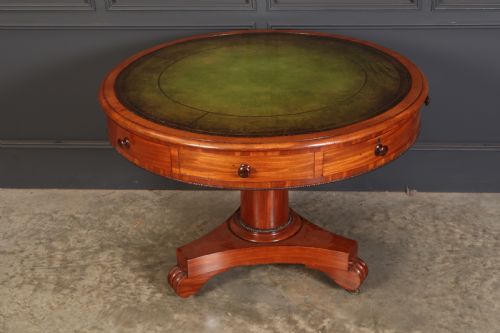
- A round library table featuring a deep frieze fitted with alternating functional and dummy drawers around the circumference.
- Lowboy
- A small seventeenth or eighteenth century side table with one or more drawers in the frieze, set on relatively tall legs.
Frieze Drawer Table: Frequently Asked Questions
What is a frieze drawer table?
A frieze drawer table is any freestanding table that incorporates one or more storage compartments directly into the structural rail beneath the top board. These designs appear across centuries of cabinet making in various regional styles.
Such tables served multiple functions including writing, serving, and bedside storage depending on the room they occupied.
How were these tables used originally?
In domestic settings, they provided a surface for writing letters, serving food, or holding lamps while keeping writing materials or utensils close at hand. Library and partners variations accommodated paperwork and research in larger households.
The inclusion of the drawer meant everyday clutter could be hidden away instantly while maintaining a tidy surface.
How do I date an antique wooden table?
Dating relies on observing construction methods, timber choices, and hardware styles alongside overall design proportions. Hand-sawn boards, pegged joints, and hand-cut dovetails generally point to earlier centuries.
Later Victorian and Edwardian pieces often incorporate machine assistance or alternative secondary timbers while reflecting the revival styles popular at the time.
How do I care for a polished wood surface?
Historic wood finishes require protection from direct sunlight, extreme temperature changes, and excess moisture to prevent splitting and fading. Regular dusting with a soft, dry cloth preserves the patina without stripping natural oils.
Applying occasional appropriate wax feeds the timber and maintains a soft sheen on period surfaces.