

Antique Revolving Desk
When you search for an antique revolving desk piece, you encounter the rotating seating and tables designed for nineteenth and early twentieth century studies.
Antique Revolving Desk
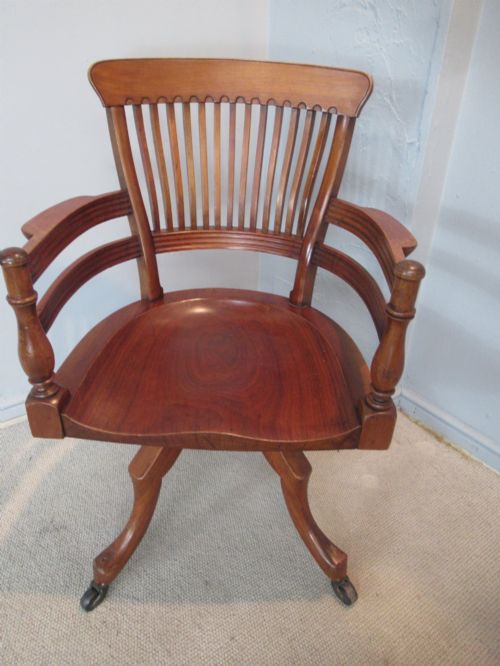
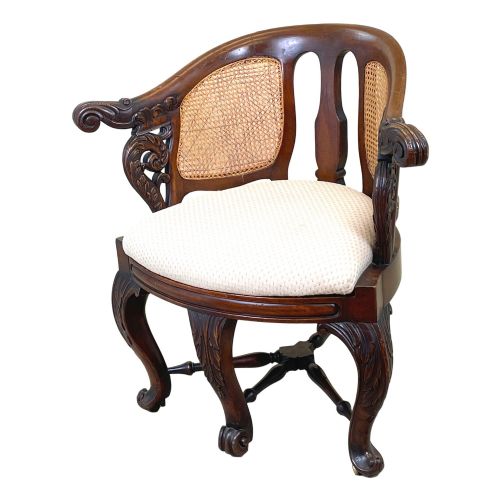
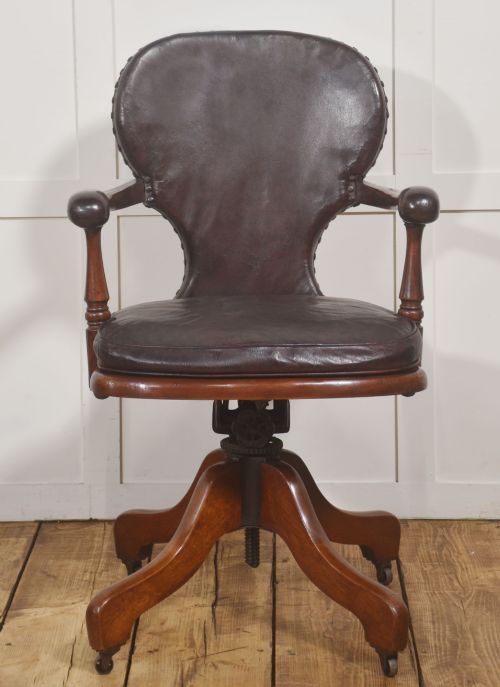
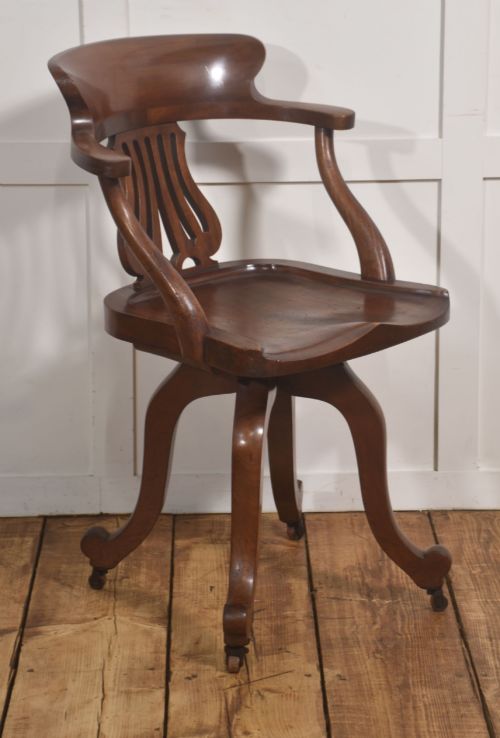
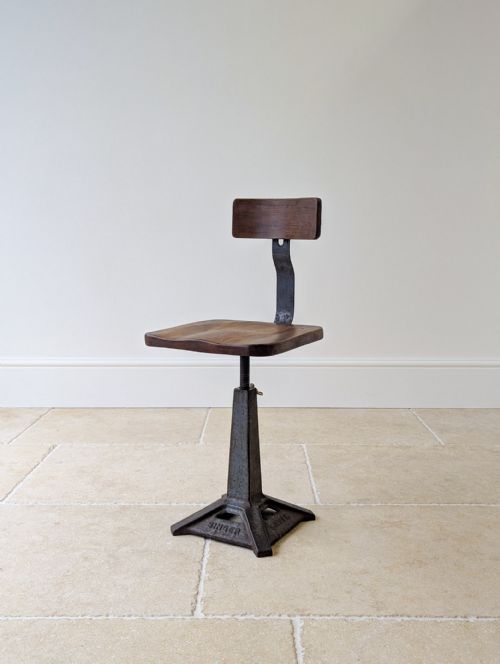
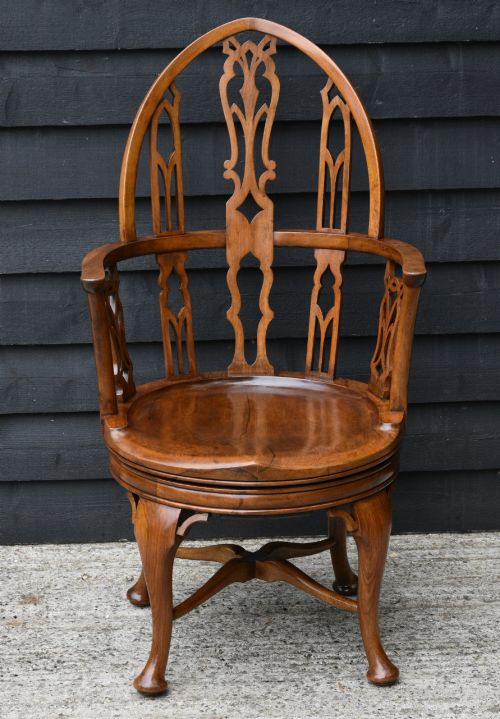
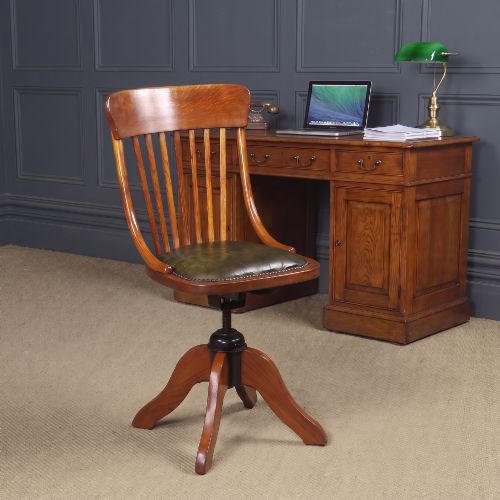
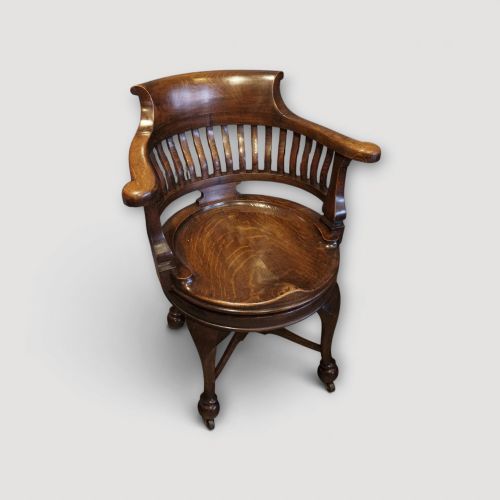
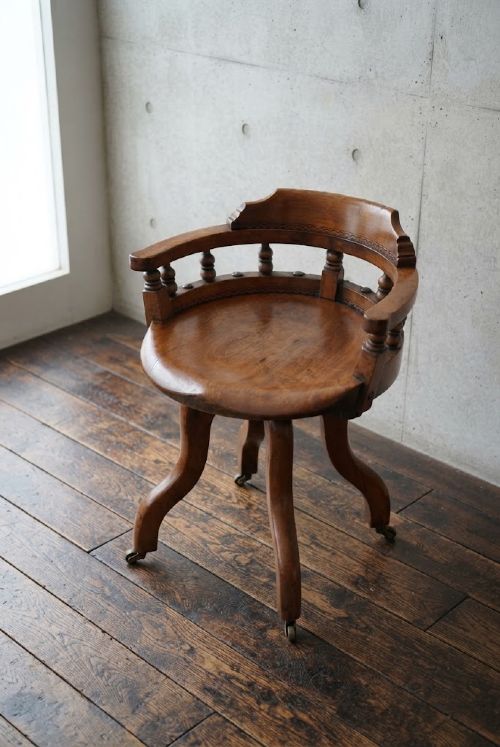
An antique revolving desk selection centres primarily upon swivel office armchairs and revolving desk chairs produced across the Victorian, Edwardian, and George V periods. These practical seats often feature green or red leather upholstery set into solid oak, mahogany, walnut, or beech frames designed for daily use at a library table or bureau.
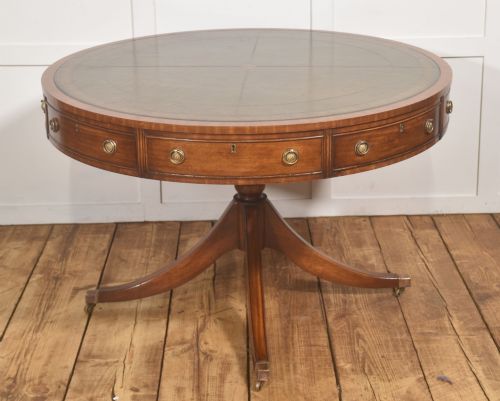
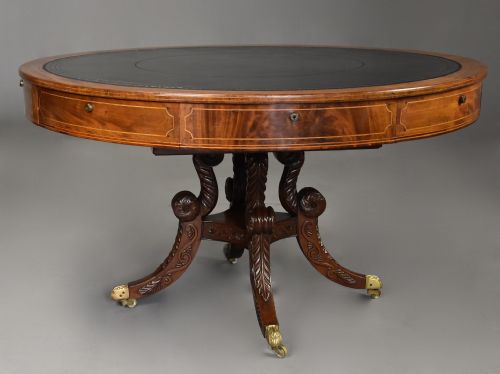
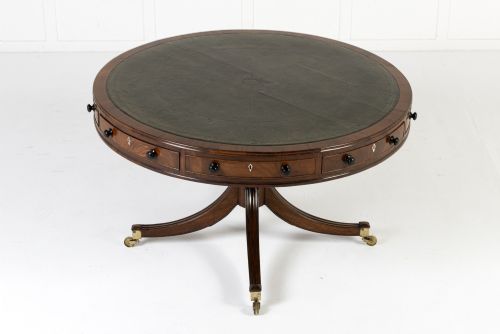
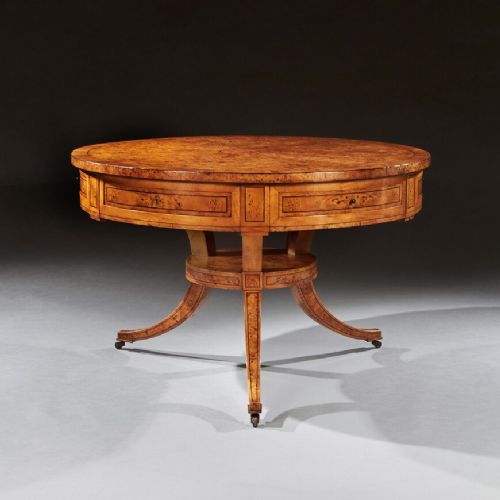
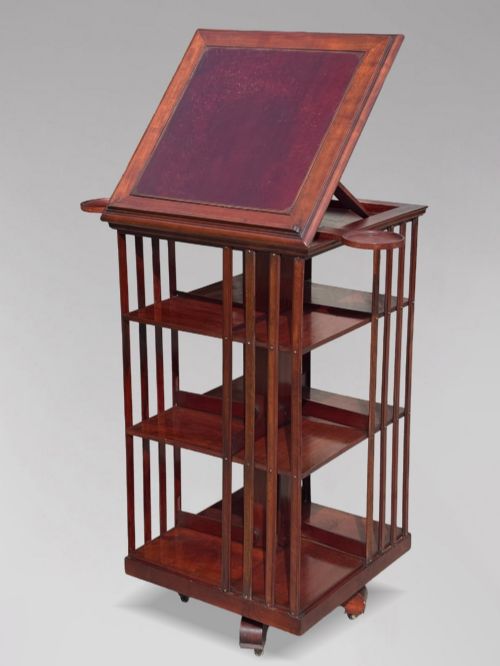
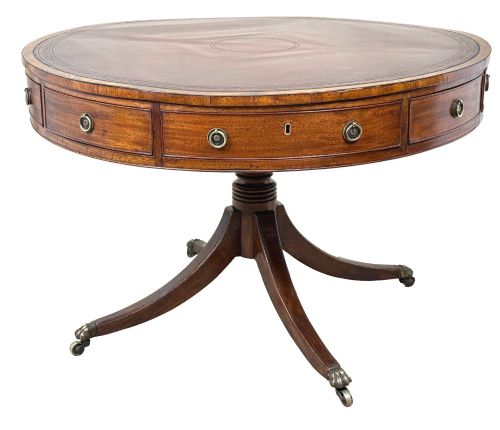
Beyond seating, the category encompasses related rotating furniture such as mahogany drum tables, library tables, and desktop revolving bookstands or book cases originating from the nineteenth century. These secondary forms provide surface space or book storage whilst incorporating a functional rotational mechanism.
The dominant forms meeting buyers on this page are Edwardian oak desk chairs and Victorian mahogany revolving armchairs, alongside occasional walnut and rosewood drum tables from the Regency and Georgian eras.
How they were made
Cabinetmakers and chair bods constructed these items using dense timbers such as mahogany, oak, walnut, and rosewood, frequently incorporating turned wooden spindles and solid bentwood components. Metal mechanisms, iron screw threads, and cast iron spiders underpin the swivel and tilt actions found beneath the seats.
Upholstery techniques involved stretching leather over padded seats and securing the edges with brass studs or tacks. Selected surfaces received polished finishes that highlighted the natural grain of golden mahogany, burr walnut, and oak.
Antique Revolving Desk Retail Price Guide 2026
Typical asking prices for revolving desk among the pieces listed under this phrase on Sellingantiques today, from the lower quarter to the upper quarter. They describe what is for sale here now, not the wider market.
The listings span the Georgian, Regency, Victorian, and Edwardian periods, utilising mahogany, oak, walnut, rosewood, leather, and cast iron.
What varies in quality
The distinction between standard commercial office seating and superior examples rests in the substance of the timber and the complexity of the revolving mechanism. Heavier gauge ironwork, solid brass fittings, and finely carved wooden bases separate workshop-produced seating from utilitarian factory output.
The selection of timbers creates a clear tier of finish, ranging from plain beech and standard oak up to figured burr walnut, rosewood, and golden mahogany. Original leather hides retaining patinated colour and depth represent a higher standard than later replacement upholstery.
Bell Barn Furniture·William Birchcraft·Cooke’s of Finsbury
The Antique Revolving Desk Glossary
- Drum table
- A circular library table with a deep frieze containing drawers, mounted on a central pillar and tripod base.
- Swivel chair
- A chair with a seat that rotates around a vertical axis, typically supported by a central metal screw or pivot mechanism.
- Bentwood
- Wood that has been shaped by steam or heat into curved structural elements, commonly utilised in late nineteenth and early twentieth century chair arms and backs.
- Revolving bookcase
- A small tiered wooden bookcase designed to rotate on a fixed base for easy access to volumes from any angle.
- Frieze
- The horizontal band beneath the top edge of a table or desk, often fitted with small drawers in drum tables.
Antique Revolving Desk: Frequently Asked Questions
How do I identify an Edwardian swivel chair?
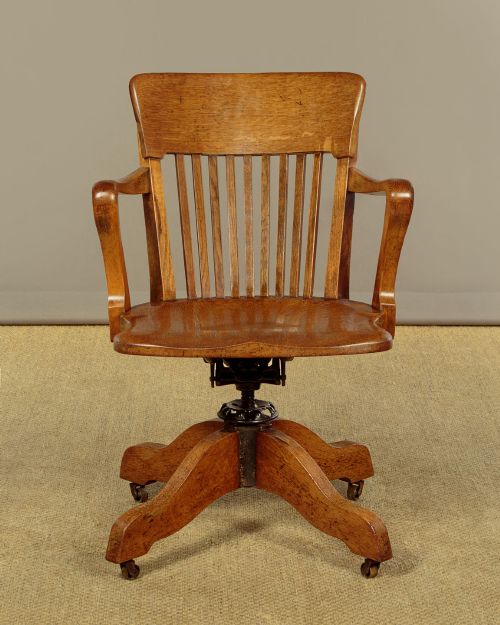
Edwardian revolving desk chairs typically combine solid oak or beech frames with green or red leather upholstery. They often incorporate tilt mechanisms dating from around 1910.
Makers from this period favoured saddle seats and sturdy four-legged iron spider bases beneath the central wooden column.
What is a drum table used for?
A drum table served as a central library or writing table in nineteenth century homes and studies. The circular top provided ample space for books, papers, and writing implements.
Drawers set into the deep frieze allowed for the storage of stationery and documents within easy reach of the seated reader.
Are these chairs suitable for daily desk work?
Many collectors and buyers utilise antique swivel chairs at modern desks due to their sturdy wooden construction and ergonomic height adjustments. The mechanical iron threads allow the seat height to be altered to suit individual requirements.
Care should be taken to protect the historic leather upholstery and wooden bases during everyday office use.
How do Victorian and Edwardian chairs differ?
Victorian revolving chairs frequently utilise rich dark mahogany or walnut with heavier carvings and Gothic Revival influences. They date from the mid-to-late nineteenth century and display deep polished wood tones.
Edwardian examples tend to feature lighter oak or beech frames, simpler turned spindles, and standardised mechanical swivel actions from the early twentieth century.