



Victorian Circular Desk
These Victorian circular desk examples are solid timber writing pieces designed for central room placement, offering practical workspace paired with period charm.
Victorian Circular Desk
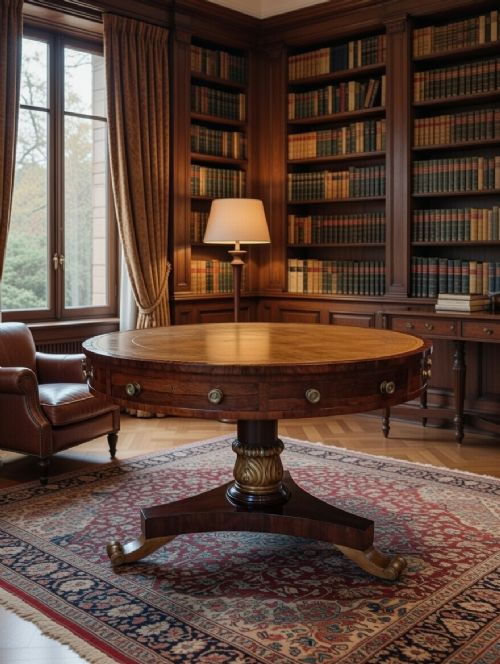
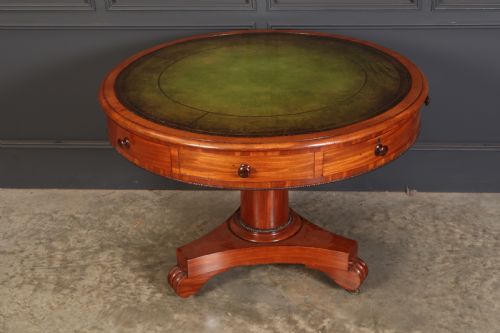
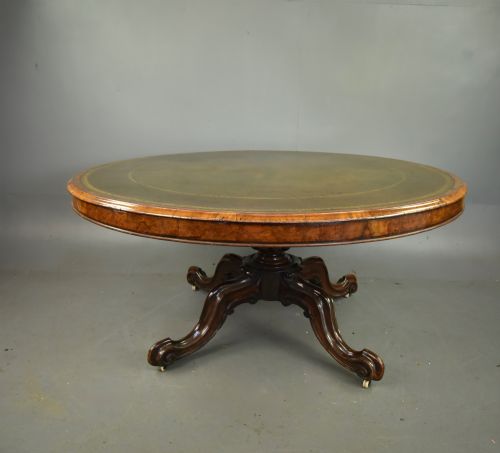
A victorian circular desk typically takes the form of a drum table or centre table, designed to sit freely within a room rather than against a wall. These items frequently feature a round top inset with leather, supported by a central pillar or pedestal base.
The materials recorded in the evidence range from rich rosewood and flame mahogany to walnut and beech-wood. Most examples reflect the Victorian and 19th Century periods, alongside earlier Georgian and Grand Regency influences.
How they were made
Cabinet makers utilised dense timber stocks such as mahogany, rosewood, and walnut to build these circular forms, often selecting figured veneers for the top surface. Selected pieces incorporate brass hardware and fitted leather writing inserts.
Construction techniques of the period relied on solid joinery for the central pedestals and carcases to support the heavy round tops. Turned wooden components and specialised boxes demonstrate the joinery skills of nineteenth-century workshops.
Victorian Circular Desk Retail Price Guide 2026
Typical asking prices for victorian circular desk among the pieces listed under this phrase on Sellingantiques today, from the lower quarter to the upper quarter. They describe what is for sale here now, not the wider market.
What varies in quality
The choice of timber grain fundamentally separates standard items from finer examples, particularly where flame mahogany or highly figured rosewood veneers are employed. Superior execution shows in the precision of the turned woodwork and the crispness of any applied brass details.
The integration of the leather writing surface and the overall stability of the central pedestal construction dictate the standard of execution. Pieces that maintain balanced proportions and harmonious timber selection represent the higher end of the range.
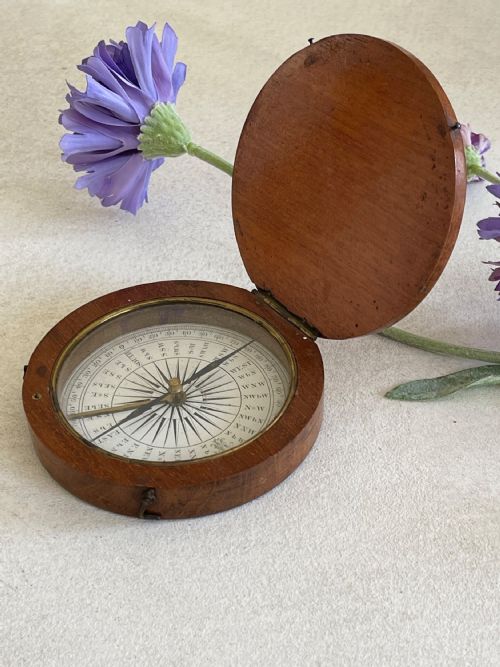
Thomas Rubergall·Negretti and Zambra
The Victorian Circular Desk Glossary
- Drum table
- A circular library table with a deep top resembling the shape of a drum, often fitted with drawers around the circumference. These pieces were historically used in studies and libraries.
- Centre table
- A freestanding table finished on all sides, designed to be placed in the middle of a room rather than flush against a wall. They appear in various nineteenth-century reception rooms.
- Flame mahogany
- A veneer cut from timber where the grain creates a flame-like or mottled pattern across the surface. This figuring was highly prized by period cabinet makers.
- Pedestal base
- A single central support column rising from a weighted foot or claw feet to hold the table top. It allows unhindered seating space around the circular perimeter.
Victorian Circular Desk: Frequently Asked Questions
Where should I place a circular desk?
These tables work best positioned in the middle of a room, as their circular tops and finished backs allow them to be viewed from all angles.
Ensure there is sufficient clearance around the perimeter for chairs and movement, making them ideal as centre tables or library pieces.
How do I care for the leather top?
Keep the leather surface away from direct sunlight and excessive moisture to prevent cracking or fading over time. Gentle dusting and occasional specialist leather care will preserve the material.
Avoid placing hot cups or sharp objects directly on the leather without a protective pad.
Are these desks practical for daily work?
Many period examples offer generous round surfaces and built-in drawers, making them functional for writing and laptop use.
Their solid timber construction provides a sturdy platform, though historical drawer depths may differ from modern office furniture.
How can I tell the period of the wood?
Examine the grain patterns, timber species such as rosewood or mahogany, and construction methods like hand-cut dovetails in the drawers. Victorian pieces often display rich patination developed over generations.
Comparing the secondary timbers inside the drawers can also help confirm nineteenth-century origins.