




Fretwork Tier Shelf
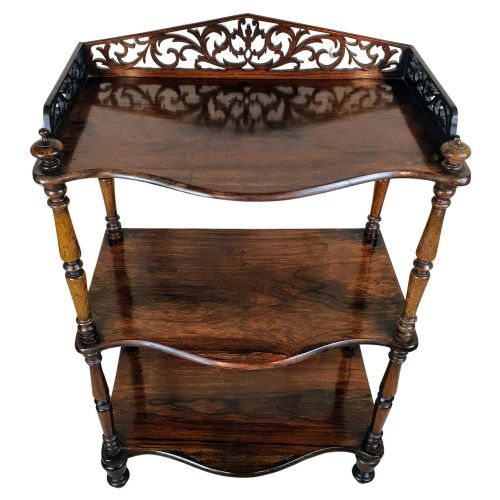
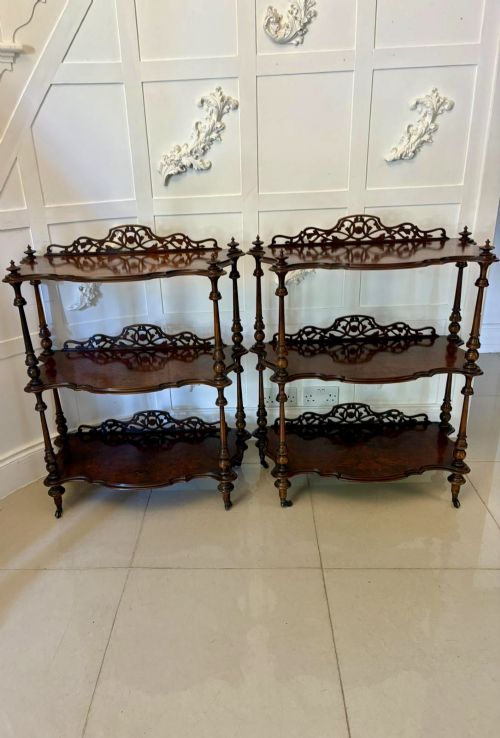
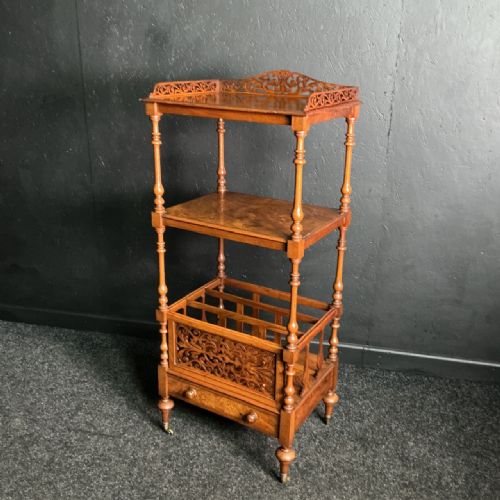
These fretwork tier shelf designs combine open display with intricate pierced timber, offering a practical surface for ornaments and books.
Fretwork Tier Shelf
A fretwork tier shelf provides multiple levels for display, appearing predominantly in walnut, mahogany, and rosewood across various periods. These items function as wall-mounted storage or freestanding corner units.
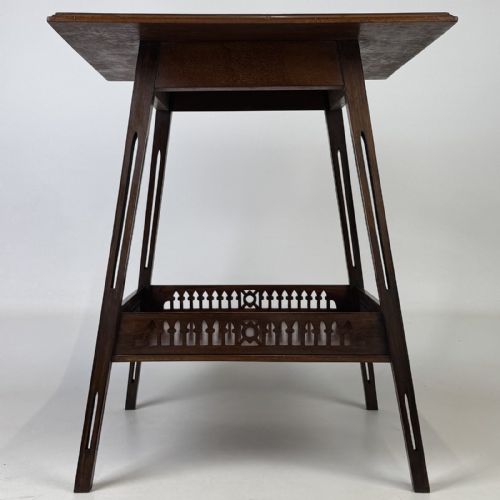
The pieces listed on this page span from Regency and Victorian eras through to Edwardian interpretations, incorporating styles such as Chippendale Revival and Arts and Crafts. Such versatility means you encounter everything from simple wall brackets to elaborate multi-tiered whatnots.
Corner configurations and demi-lune console formats dominate the selection, making efficient use of interior space while showcasing decorative woodwork. The inclusion of pierced fretwork defines the visual character across these diverse forms.
How they were made
Cabinetmakers utilised dense timbers like burr walnut, mahogany, and rosewood to construct the tiers and vertical supports, often employing marquetry inlay for surface enrichment. Brass hardware and glass elements occasionally appear alongside the primary wood structures.
Pierced fretwork and fret-cut details required precise hand-sawing techniques to create delicate geometric or scrolling patterns along the shelf galleries. Joinery methods relied on traditional pegging and fitting to ensure the multiple tiers supported weight stably.
Fretwork Tier Shelf Retail Price Guide 2026
Typical asking prices for fretwork tier shelf among the pieces listed under this phrase on Sellingantiques today, from the lower quarter to the upper quarter. They describe what is for sale here now, not the wider market.
The listings span several centuries of woodworking tradition, featuring prominent Victorian burr walnut alongside earlier Regency mahogany and later Edwardian Arts and Crafts designs.
What varies in quality
The choice of timber grain sets the standard, with richly figured burr walnut and deep-toned mahogany commanding greater visual presence than plain stock. Superior examples display tighter figuring and more ambitious veneering across the console tops and shelves.
Execution of the pierced fretwork separates standard items from exceptional ones, where crisp edges and balanced symmetry demonstrate superior workshop skill. The complexity of the tier arrangement, such as hollow barley twist supports or multiple graduated levels, further distinguishes the grade.
The Fretwork Tier Shelf Glossary
- Fretwork
- Openwork ornamentation cut from thin wood panels using a fine saw. This technique creates intricate geometric or botanical patterns along shelf galleries.
- Whatnot
- A piece of furniture consisting of multiple open shelves for displaying ornaments or books. Originating in the eighteenth century, it became popular throughout the Victorian period.
- Demi-lune
- Half-moon shaped in plan, often applied to console tables and associated shelving units designed to sit flat against a wall. This profile saves floor space in smaller rooms.
- Marquetry
- The art of applying decorative pieces of veneer to a structure to form intricate patterns. Craftsmen use contrasting woods to achieve pictorial or geometric designs on tabletops and tiers.
Fretwork Tier Shelf: Frequently Asked Questions
Where should I place a fretwork tier shelf?
Wall-mounted versions suit hallways or living spaces where floor area remains limited, while corner units fit dead space effectively.
Freestanding multi-tiered examples work well against plain walls to display ceramics or small collections without overwhelming the room.
How do I clean pierced fretwork?
Dust accumulates within the intricate pierced cuts, requiring a soft-bristled brush or compressed air to clear crevices safely.
Avoid liquid polishes that pool in the carved details, opting instead for a dry microfiber cloth to maintain the timber finish.
Can these shelves hold heavy books?
Most tier shelves serve primarily for ornamental display, lightweight volumes, or small curios rather than dense libraries.
Wall-fixed variants depend entirely on the security of the fixings into the wall structure, while freestanding units distribute weight through their vertical supports.
What defines the Victorian style in these shelves?
Victorian examples frequently utilise burr walnut and incorporate elaborate turning, barley twists, or dense marquetry inlay.
They reflect a taste for ornate display and heavier timber proportions compared to earlier Regency or later Arts and Crafts pieces.