


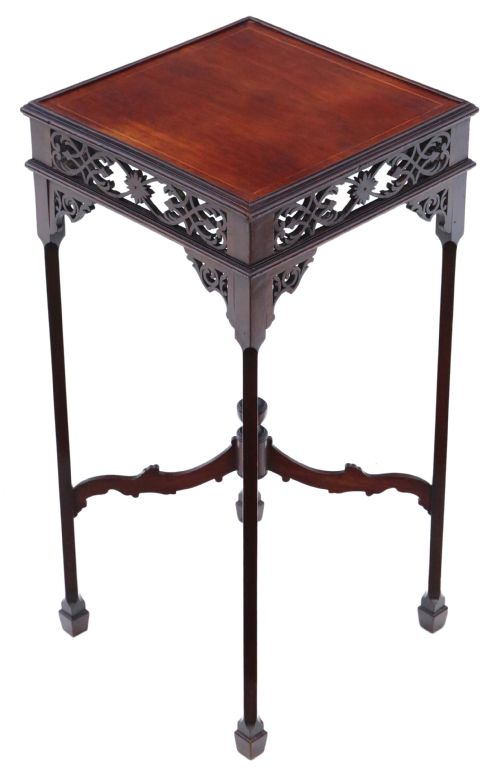

Fretwork Gallery Stand
These fretwork gallery stand pieces bring delicate open woodwork and raised rims to tables and supports across several classic periods.
Fretwork Gallery Stand
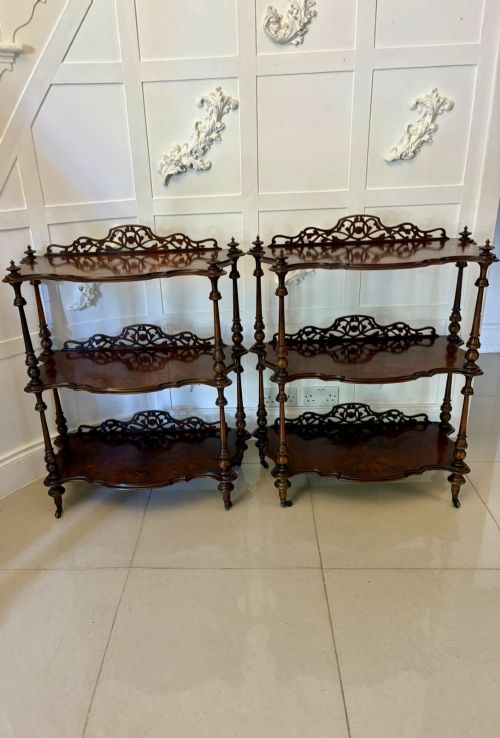
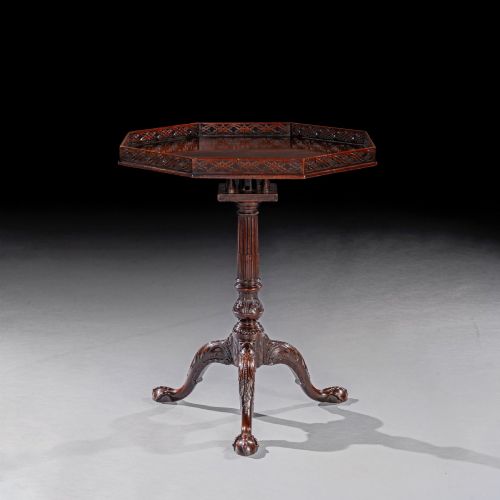
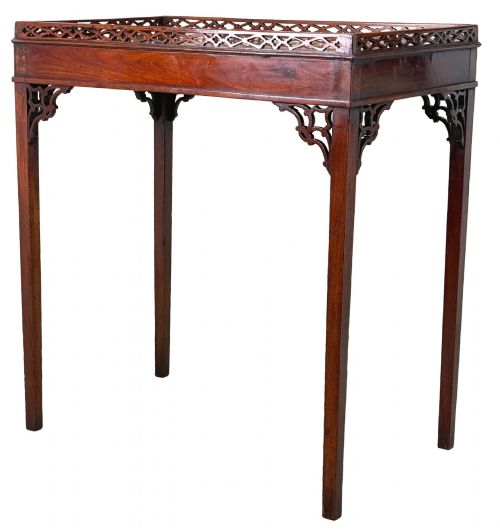
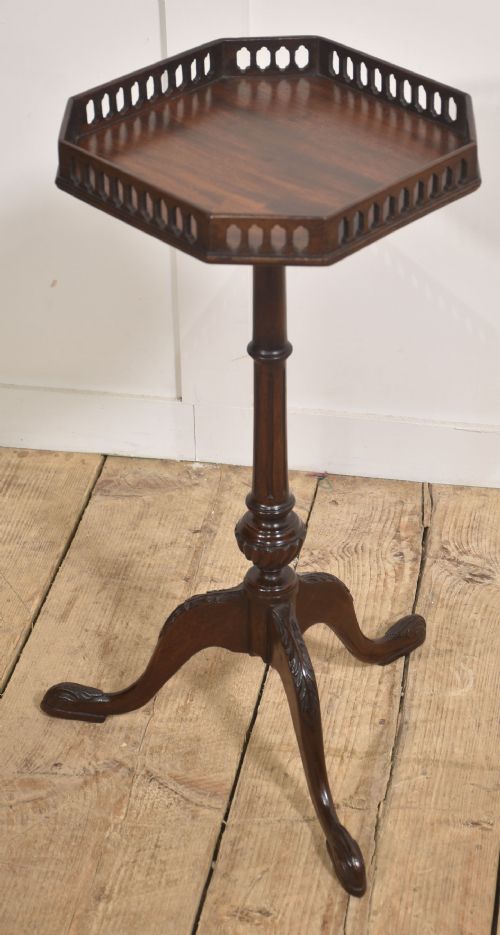
A fretwork gallery stand encompasses small tables and supports defined by pierced wooden fretwork and raised borders around the top surface. When buyers search for a fretwork gallery stand, they encounter forms ranging from occasional wine tables and candlestands to multi-tiered whatnots and plant stands.
The pieces on this page span the eighteenth century up through the nineteen-thirties, incorporating Georgian originals alongside later revivals from the Victorian and Edwardian eras. Makers utilised diverse formats including tripod bases, pedestals, and corner units to suit domestic spaces.
Materials and Construction
Cabinetmakers relied heavily on timbers such as mahogany, walnut, burr walnut, and oak to construct these stands, frequently adding boxwood or satinwood for contrast. Fretwork galleries were pierced by hand or early mechanical saws to create intricate open patterns around the edges of the tops.
Tripod bases, pedestals, and multi-tier frameworks were joined using traditional cabinetmaking techniques to support display items, books, and tea wares. Inlaid details and painted surfaces occasionally supplemented the carved wood elements on later revival pieces.
Fretwork Gallery Stand Retail Price Guide 2026
Typical asking prices for fretwork gallery stand among the pieces listed under this phrase on Sellingantiques today, from the lower quarter to the upper quarter. They describe what is for sale here now, not the wider market.
Current listings demonstrate a broad span of timber choices, ranging from dark mahogany and oak to figured burr walnut and inlaid satinwood.
Assessing Quality
Quality in these stands rests upon the crispness of the pierced fretwork and the selection of timber veneers like burr walnut and satinwood. Finer examples display precise joinery and balanced proportions, particularly where delicate tripod legs meet the central column.
The refinement of the surface finish and the integrity of the gallery edging separate standard production items from masterworks. Consideration of period materials reveals whether a piece adheres to genuine eighteenth-century standards or later revival craftsmanship.
The Fretwork Gallery Stand Glossary
- Gallery
- A raised wooden or metal border running along the edge of a table top to prevent items from sliding off. These galleries often feature pierced fretwork patterns.
- Fretwork
- Ornamental perforated woodwork cut into flat panels or borders. This technique creates intricate geometric or scroll designs.
- Tripod Table
- A small standalone table supported by a central pillar resting on three legs. Such designs provide stable support for candle stands and wine tables.
- Whatnot
- A piece of furniture consisting of multiple open shelves for displaying ornaments or books. These tiers are supported by slender vertical posts.
- Torchere
- A tall, slender stand designed to hold a light source or a potted plant. They appear frequently in various timber forms across multiple periods.
Fretwork Gallery Stand: Frequently Asked Questions
What is a fretwork gallery?
A fretwork gallery is an openwork pierced rim fitted to the perimeter of a table top. It serves both a decorative purpose and a practical one by securing small items.
Such galleries appear on various occasional tables, tea tables, and stand formats across different stylistic revivals.
How were these stands used?
These pieces functioned as versatile small furnishings for holding candles, wine glasses, books, or decorative plants in domestic rooms. Their compact sizes allowed them to sit easily beside seating or in corners.
Multi-tiered versions provided additional display space for ceramics and small household possessions.
How do I spot a revival piece?
Revival items from the Victorian and Edwardian eras often copy earlier Georgian Chippendale designs. Examining the timber grain, secondary woods, and construction methods helps distinguish original eighteenth-century work from later interpretations.
Stylistic cues and hardware types further clarify the exact period of manufacture.
Where do I place one?
These compact stands fit comfortably beside armchairs, in narrow hallways, or as corner accents in reception rooms. Their open fretwork details add visual lightness to interiors without dominating the floor space.
They work well for displaying single decorative objects like lamps or plants.