

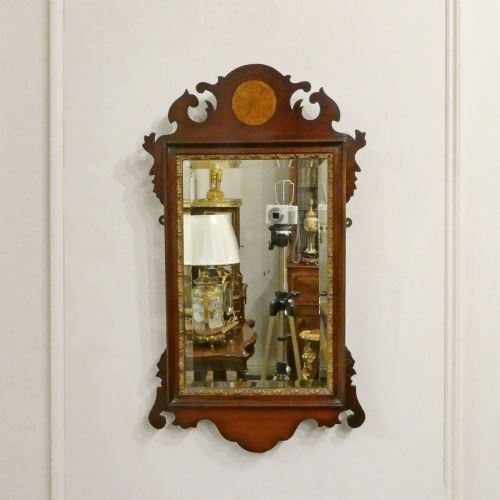
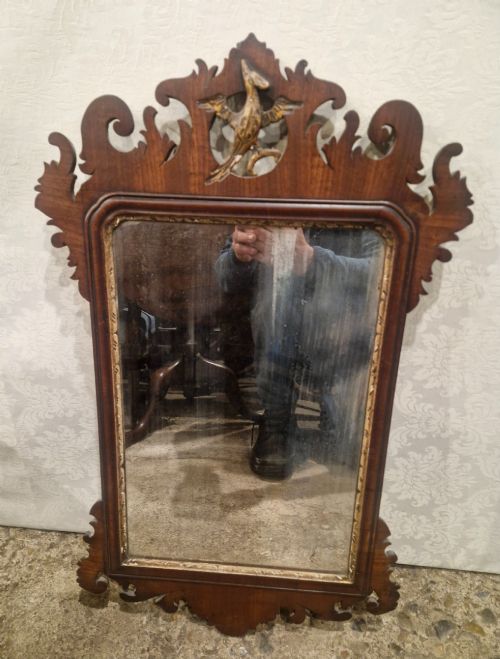
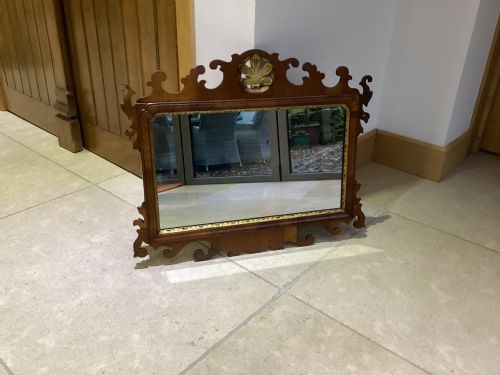
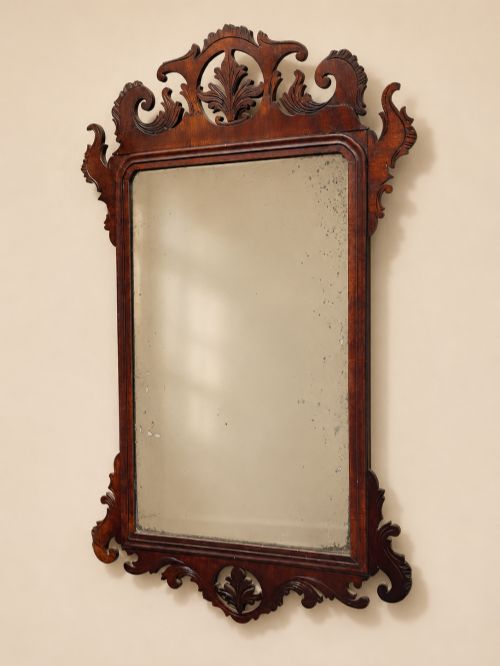
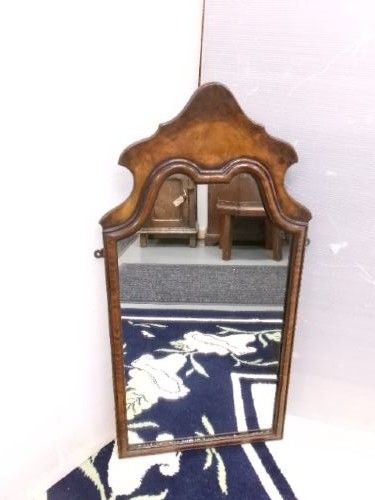
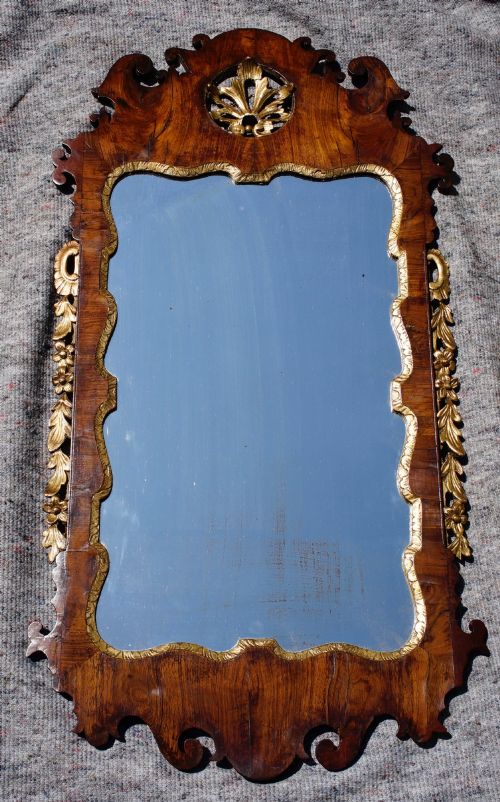
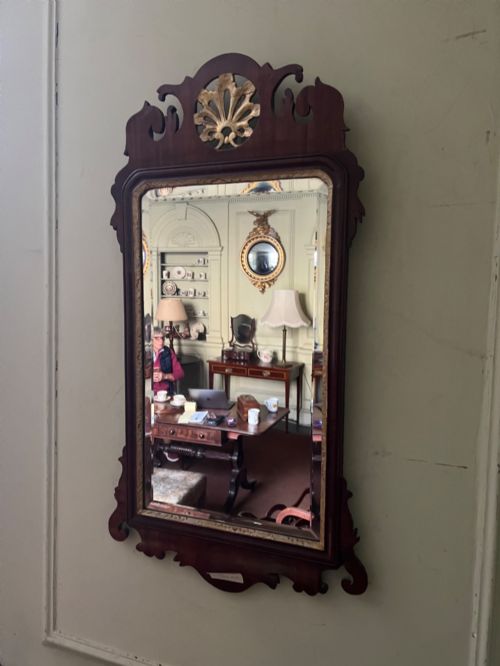
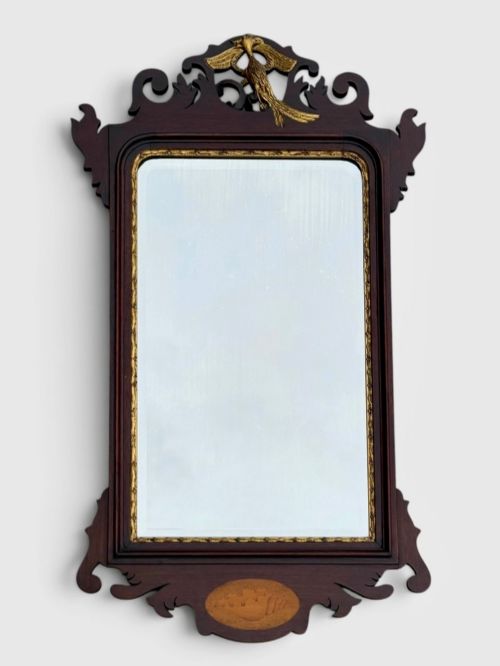


Fretwork Frame Mirror
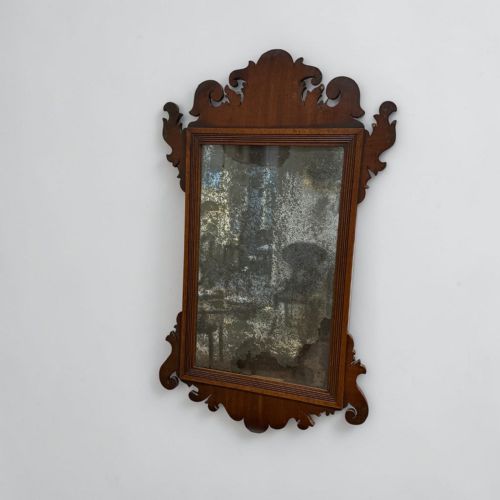
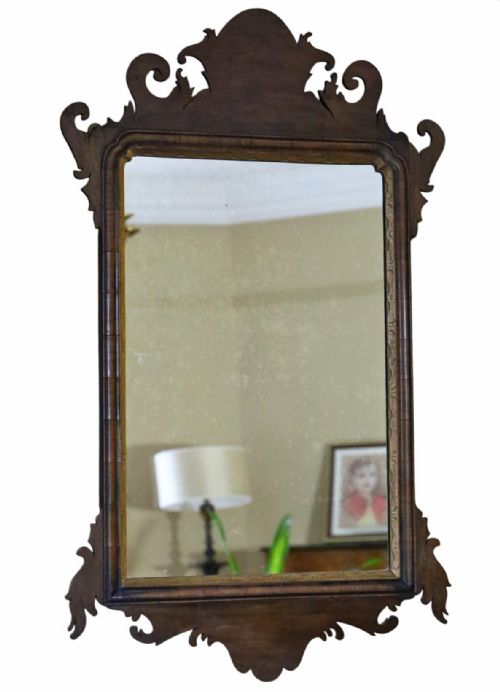
A fretwork frame mirror brings crisp silhouette and warm timber to a room, drawing the eye with pierced scrollwork and historic proportion.
Fretwork Frame Mirror
When you search for a fretwork frame mirror, you encounter wall-hanging and overmantel pieces defined by pierced wooden frames and scrolled outlines. These items trace their lineage directly to the 18th century, though revivals from the Victorian, Edwardian, and 1920 eras appear frequently on this page.
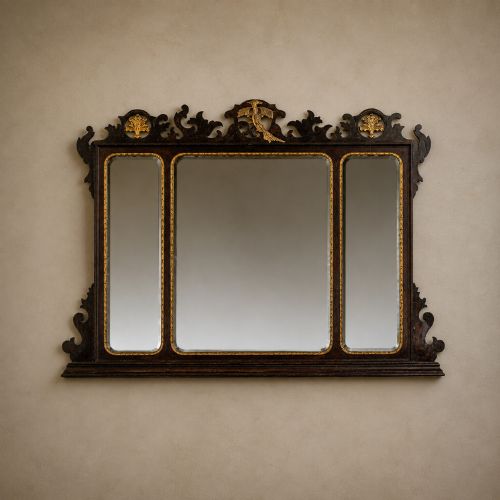
The version you are most likely to meet here is the mahogany or walnut wall mirror, often featuring the distinct fret-cut silhouette associated with the Georgian and Chippendale styles. These pieces range from compact vanity mirrors for a morning room to large triptych overmantels designed for grander reception spaces.
How they were made
Cabinet makers constructed these frames using rich timbers such as mahogany, walnut, and yew wood, sometimes applying gilding, gold leaf, or brass inlay to highlight the pierced edges. The fretwork outline was painstakingly sawn by hand using a fretsaw to create intricate scrolls, brackets, and classical cresting details.
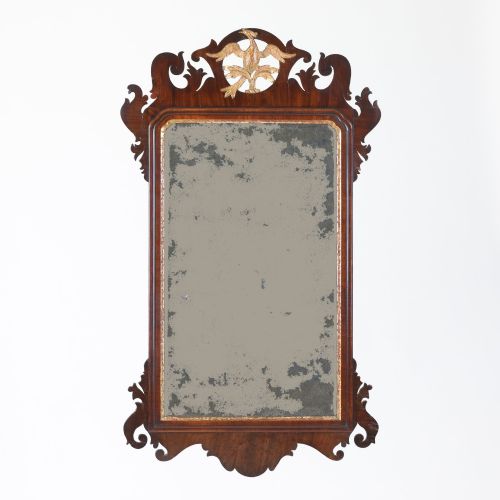
Many examples incorporate specialised glass components like Vauxhall plates, characterised by their bevelled edges and distinct silvering techniques. Frames often feature carved motifs such as the iconic Ho-Ho bird at the crest, demonstrating the maker's skill in combining joinery with delicate surface carving.
Fretwork Frame Mirror Retail Price Guide 2026
Typical asking prices for fretwork frame mirror among the pieces listed under this phrase on Sellingantiques today, from the lower quarter to the upper quarter. They describe what is for sale here now, not the wider market.
Listings feature walnut and mahogany frames spanning the Georgian era through to the 1920s, incorporating giltwood and brass inlay.
What varies in quality
The distinction between ordinary and exceptional pieces lies in the crispness of the fret-cutting and the depth of the timber's grain. Superior examples display sharply defined scrollwork without splintering, utilising dense cuts of mahogany or figured walnut that show natural warmth.
Integration of the glass plate to the frame further separates the tiers of craftsmanship, alongside the survival of original gilt highlights and carved crests like the Ho-Ho bird. Well-executed revival pieces from later centuries match the proportions of their 18th-century predecessors through careful attention to symmetrical balance.
The Fretwork Frame Mirror Glossary
- Fretwork
- Ornamental work consisting of interlaced or pierced designs created by cutting patterns through thin wood. This technique forms the defining silhouette of these mirrors.
- Vauxhall mirror
- A historic mirror plate featuring a distinct bevelled edge, traditionally produced at the London glasshouse of the same name. These plates add depth and historical authenticity to early wall mirrors.
- Chippendale style
- A decorative design vocabulary inspired by the 18th-century cabinet maker Thomas Chippendale, featuring scrolling ears, pierced fret brackets, and avian crests. Pieces in this style emphasise architectural symmetry and organic movement.
- Overmantel mirror
- A large horizontal mirror designed specifically to hang above a fireplace mantelpiece. They often incorporate triptych glass panels and elaborate cresting to anchor the room's proportions.
Fretwork Frame Mirror: Frequently Asked Questions
Where should I hang a fretwork frame mirror?
These mirrors suit spaces where their pierced wooden silhouettes can be fully appreciated against a plain wall. Hallways, reception rooms, and above mantelpieces provide ideal backdrops for their intricate scrolls.
Because many examples originate from periods focused on domestic hospitality, placing one in a morning room or above a console table echoes its historical placement.
How do I distinguish an 18th-century piece from a later revival?
Examining the timber backing, fixings, and the oxidation of the mirror plate helps determine age. Eighteenth-century examples display hand-cut joinery and older glass characteristics compared to Edwardian or 1920s revivals.
Stylistic cues also guide identification, as Victorian and Edwardian makers frequently adopted Georgian proportions while utilising contemporary sawing methods.
What is the significance of the Ho-Ho bird?
The Ho-Ho bird, a stylized phoenix of Chinese inspiration, frequently appears carved onto the crest of Chippendale and Georgian fretwork frames. It represents the 18th-century fascination with chinoiserie design.
Its presence at the apex of a mirror adds both height to the silhouette and a distinct focal point for the scrolled woodwork.
Are these mirrors heavy to hang?
Weight varies depending on the timber density, frame size, and whether the piece includes an overmantel format or heavy glass plates. Solid mahogany and walnut frames require secure wall fixings suited to the specific weight.
Ensuring the hanging wire or integrated brackets are supported by appropriate wall anchors safeguards both the frame and the glass.