



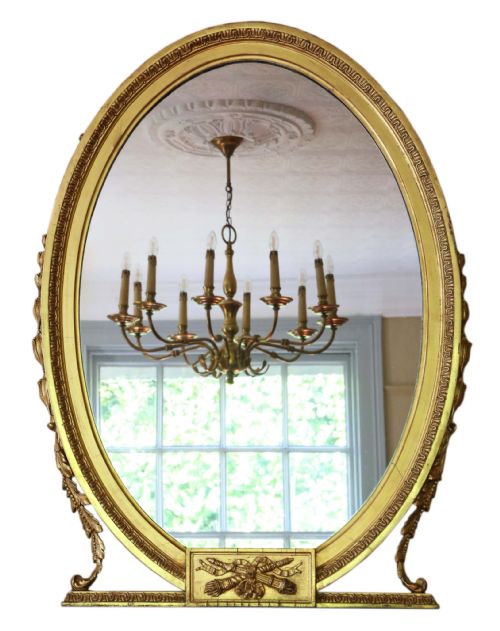

Gilded Detail Wall Mirror
These gilded detail wall mirrors bring warmth and reflective light to a room through centuries-old craftsmanship.
Gilded Detail Wall Mirror
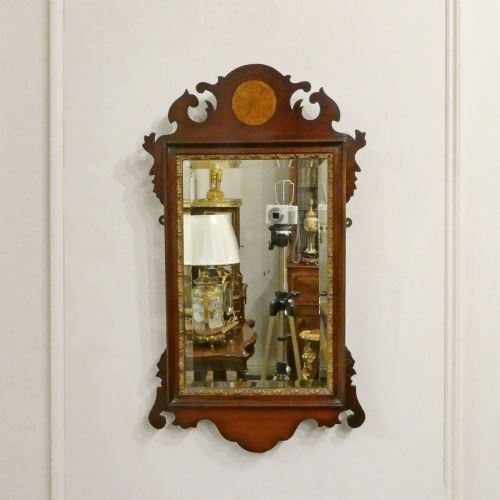
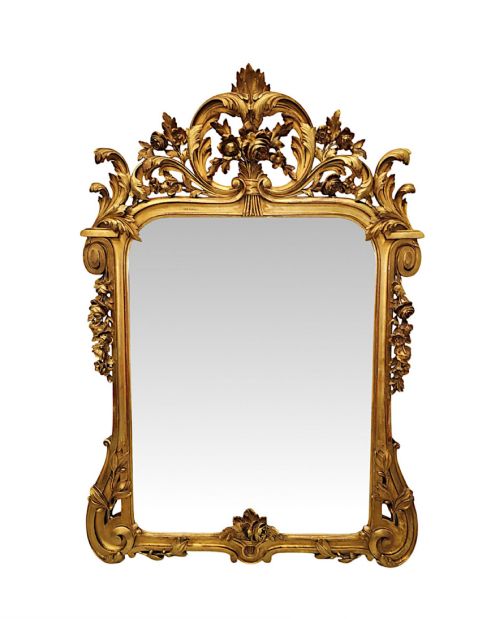
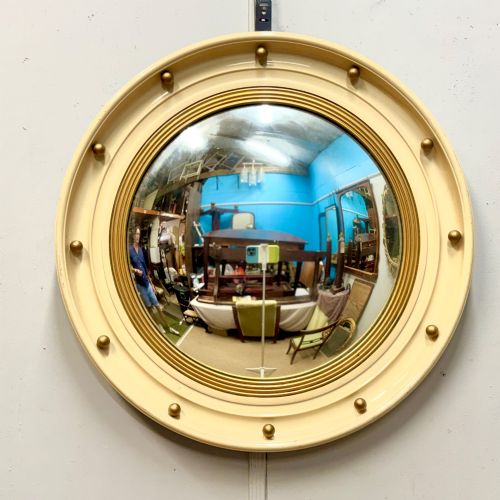
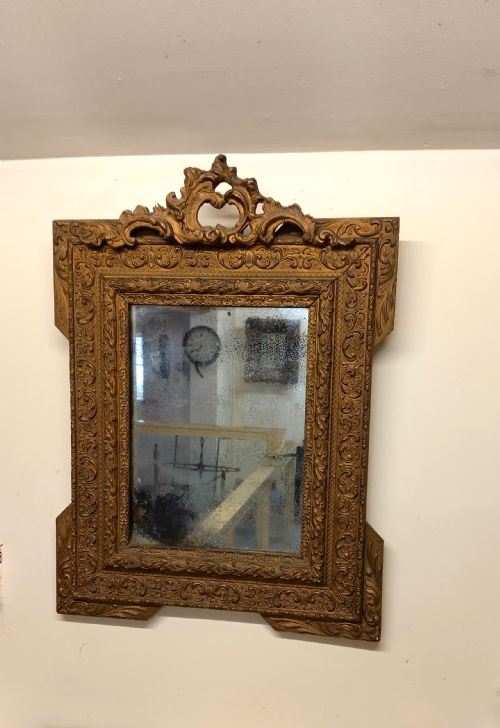
A gilded detail wall mirror brings classical depth and reflected light into a room, utilising ornate frames that draw the eye immediately. When searching for a gilded detail wall mirror, buyers encounter a range of forms spanning from compact round convex glasses to grand arched overmantels designed to sit above a fireplace. The pieces available traverse the nineteenth century, the Edwardian era, and the year nineteen hundred, showing how makers adapted historical motifs for domestic spaces.
Most examples on this page date from the nineteenth century or the Edwardian period, often incorporating wooden structures finished with gilt and gesso. Overmantel mirrors and wall mirrors dominate the selection, frequently displaying elaborate decorative touches like flower and leaf carvings, squirrels, or the iconic Ho Ho bird. Styles lean heavily towards revival aesthetics, including Georgian Revival, Chippendale Revival, and French Rococo.
Origin and regional craftsmanship also shape the offerings, with specific pieces noting Irish influences, French chateau aesthetics, or English cabinet-making traditions. Buyers regularly find round butler mirrors with convex glass alongside large rectangular and oval formats tailored for hallways, reception rooms, and bathrooms. Each piece reflects the decorative priorities of its specific decade, from strict neoclassical symmetry to exuberant rococo curves.
Materials and construction methods
Makers built the foundational frames of these mirrors using solid timbers such as mahogany, alongside softer woods prepared specifically to receive decorative finishes. Artisans then applied layers of gesso - a mixture of plaster of Paris or chalk with glue - over the wooden base to build up low-relief ornaments like vitruvian scrolls, flowers, and leaves. This plaster layer provided a smooth, receptive ground for subsequent gilding.
Gilding involved applying thin sheets of metal leaf onto the prepared gesso surface, often burnished to achieve a brilliant reflective sheen that contrasted with painted wooden sections. Some frames incorporated intricate marquetry details, notably satinwood inlay set within mahogany borders, demonstrating a high level of cabinet-making skill. Paint was occasionally combined with gilt to highlight specific carved motifs and create visual depth across the frame.
Gilded Detail Wall Mirror Retail Price Guide 2026
Typical asking prices for gilded detail wall mirror among the pieces listed under this phrase on Sellingantiques today, from the lower quarter to the upper quarter. They describe what is for sale here now, not the wider market.
Listings feature pieces spanning the 1870s to the Edwardian era, incorporating materials like gesso, mahogany, satinwood inlay, and convex glass.
The markers of finer execution
Quality in these mirrors rests upon the crispness of the carved or moulded gesso detail and the depth of the gilding itself. Finer pieces display sharply defined botanical motifs, birds, and scrolls without the blurring or softness that indicates a worn or poorly cast mould.
The choice of secondary woods and the precision of the joinery beneath the gilt surface separate standard domestic items from exceptional commissions. Additionally, the presence of original glass plates adds considerable merit, though period replacements still maintain the historical integrity of the piece.
The Gilded Detail Wall Mirror Glossary
- Giltwood
- Wood that has been coated with gold leaf or a metallic substitute applied over a prepared ground. This finish provides a luminous, warm surface that catches natural and artificial light.
- Gesso
- A traditional paint mixture consisting of a binder mixed with chalk, gypsum, or pigment. Artisans build up this compound on wooden frames to carve intricate decorative details before gilding.
- Convex glass
- A curved mirror glass that bulges outward, providing a wide-angled, panoramic reflection of the interior space. These glasses are typical of round butler mirrors from the nineteenth century.
- Overmantel mirror
- A large mirror specifically designed to be hung on the wall directly above a fireplace mantelpiece. They often feature horizontal proportions and grand arched tops.
- Vitruvian scroll
- A classical running ornament composed of wave-like scrolls or wave patterns. It appears frequently on neoclassical frames and architectural mouldings.
Gilded Detail Wall Mirror: Frequently Asked Questions
How do I hang a heavy overmantel mirror?
Heavy overmantel mirrors require secure wall fixings anchored directly into masonry or substantial wooden studs to support their considerable weight safely. Professional installation is strongly recommended for large Victorian and Edwardian frames.
Ensure the hanging wire or integrated metal brackets are rated for the specific weight of the mirror. Distributing the load evenly across multiple fixing points prevents strain on the antique wooden frame.
What is a convex mirror used for?
Convex mirrors were historically placed in butler pantries or dining rooms to allow staff to monitor a room discreetly. Today, they serve a decorative purpose by creating an illusion of depth and capturing a wide field of light.
The curved glass produces a miniature, fish-eye reflection that adds a distinctive focal point to hallway walls. Their round frames often feature giltwood or painted finishes suited to traditional interiors.
Are these mirrors fitted with original glass?
Some pieces retain their original antique glass, which often exhibits subtle imperfections, foxing, or light distortion characteristic of historical manufacturing methods. Other pieces may feature replacement glass installed during their long lifespan to update a damaged surface.
Checking the listing details confirms whether the glass is period-correct or a later insertion. Both options possess distinct visual qualities for daily interior styling.