
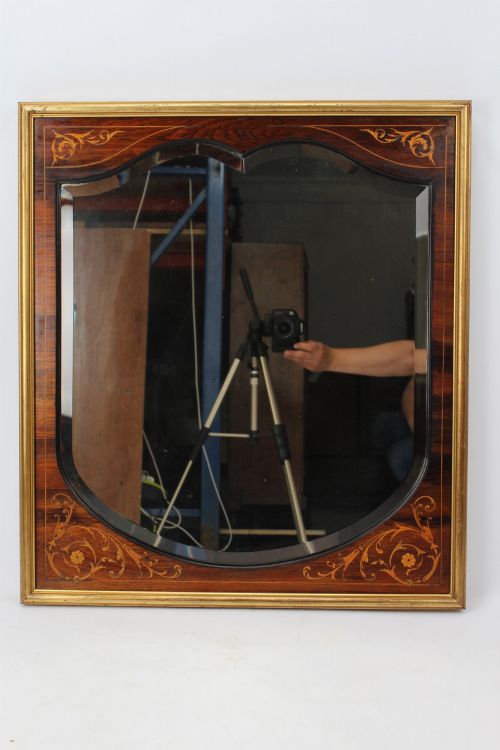


Marquetry Inlay Wall Mirror
A marquetry inlay wall mirror brings patterned woods and deep grain into a room, catching the light across centuries of craftsmanship.
Marquetry Inlay Wall Mirror
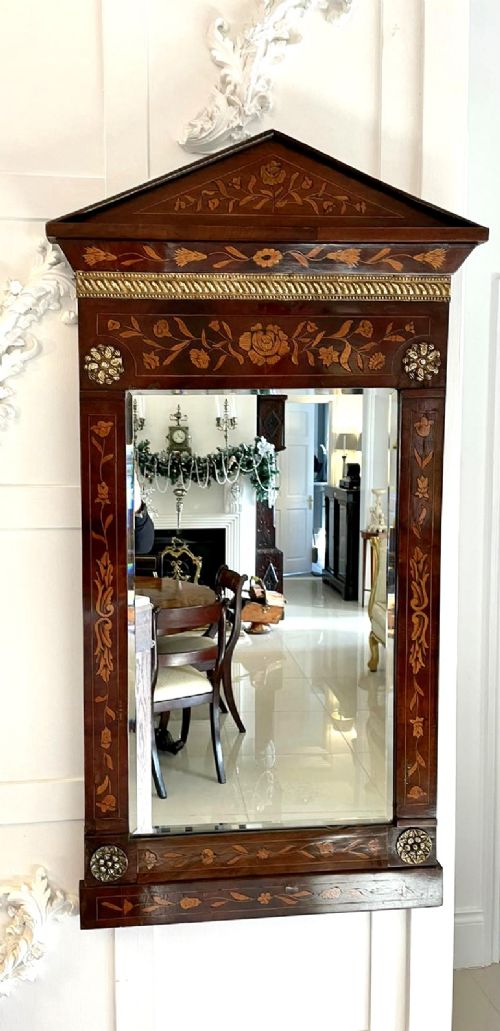
A marquetry inlay wall mirror uses complex wood veneers to form pictorial or geometric patterns across the frame. These pieces range from compact hall mirrors to large overmantels designed to anchor a formal interior.
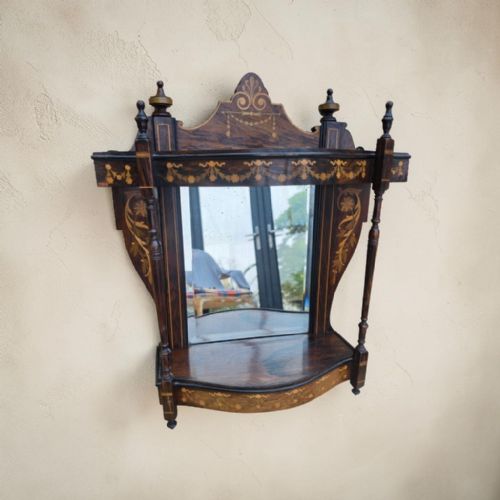
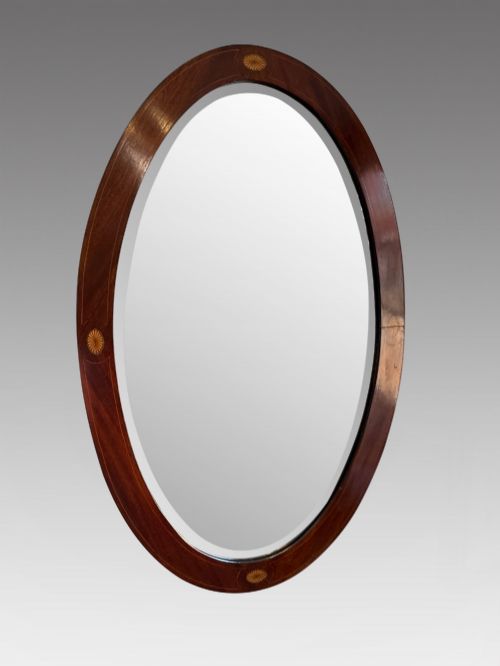
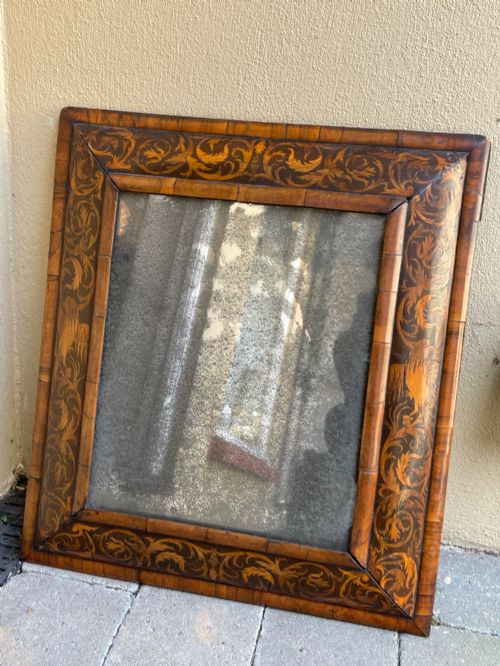
The selection here draws heavily on Edwardian and Victorian designs, alongside earlier interpretations from the Georgian and William and Mary periods. Buyers encounter rectangular wall plates, oval formats, and versions incorporating small display shelves.
Makers utilised distinct regional styles, moving from exuberant Dutch floral marquetry to restrained Sheraton Revival geometry and the hand-finished panels of the Arts and Crafts movement. Each period brings specific proportions and timber choices to the domestic wall.
Assessing quality and execution
The distinction between standard production and exceptional work lies in the precision of the veneer cutting and the complexity of the timber contrast. Finer pieces demonstrate seamless joints between contrasting woods, where boxwood and fruitwood form crisp, sharp lines without filler.
Design cohesion separates ambitious workshop pieces from simpler commercial items, particularly in how the floral or geometric motifs flow around the corners of the frame. The depth and clarity of the original polish further indicate the care taken during finishing.
The integrity of the structural timber beneath the veneer dictates long-term stability, with superior examples avoiding warping or shrinkage around the mirror plate. Original glass plates with minor age spots often accompany the finest frames, preserving their period character.
Rowley Gallery·A.J Rowley
The Marquetry Inlay Wall Mirror Glossary
- Marquetry
- The art of applying thin slices of wood veneer to a structural carcase to form decorative pictorial patterns. This technique allows artisans to use contrasting timbers for botanical or geometric designs.
- Overmantel mirror
- A large horizontal looking glass designed to be hung specifically above a fireplace mantel. These pieces frequently feature integrated shelf structures or ornate crestings.
- Tunbridge Ware
- A distinct form of British wood mosaic work originating from Kent, where tiny blocks of various coloured woods form complex geometric mosaics. It appears on specific Victorian frames within the selection.
- Cushion mirror
- A frame style with a rounded, convex profile that swells outward toward the outer edge. This bold form was particularly popular during the seventeenth century.
- Pier glass
- A tall mirror traditionally hung on the narrow pier of wall space between two windows. These vertical glasses maximise available light in period rooms.
Marquetry Inlay Wall Mirror: Frequently Asked Questions
How do I hang a heavy marquetry mirror safely?
Heavy frames require robust wall fixings secured directly into masonry or solid wooden studs rather than plasterboard alone. Utilising a heavy-duty mirror plate or a French cleat system distributes the weight evenly across the structure.
Ensure the hanging wire or integrated brackets on the back of the frame are checked for strength before installation. Professional framing assistance is recommended for large overmantel mirrors with substantial timber carcases.
What is the difference between marquetry and inlay?
Inlay strictly involves inserting pieces of wood or other materials into a recess carved directly into a solid timber surface. Marquetry covers the entire surface of the carcase with a mosaic veneer puzzle assembled beforehand on paper.
Most decorative mirrors from the Georgian and Edwardian periods use the marquetry technique for complex floral scenes. The terms are frequently used interchangeably in general descriptions, but the construction method differs fundamentally.
Can I place these mirrors in a bathroom?
High humidity and fluctuating bathroom temperatures pose significant risks to antique wood veneers and historic mirror silvering. Moisture can cause the delicate boxwood and fruitwood veneers to lift from their mahogany or walnut carcases.
It is best to keep these pieces in stable indoor environments such as hallways, bedrooms, or living rooms. Regular ambient temperatures preserve both the polished timber and the antique glass plate.
How do I care for antique wood veneers?
Maintain the timber by dusting gently with a dry, soft cloth and avoiding silicone-based sprays or modern polishes. Traditional beeswaxes applied sparingly help nourish dry fruitwood and walnut veneers without building up heavy residues.
Keep the mirrors away from direct sunlight and strong heat sources to prevent the wood from drying out and cracking. Consistent indoor humidity levels prevent the veneer from shrinking away from the structural frame.