

Mahogany Glass Wall Mirror
A mahogany glass wall mirror brings warmth and depth to a room, and the pieces found here span centuries of cabinet-making skill.
Mahogany Glass Wall Mirror
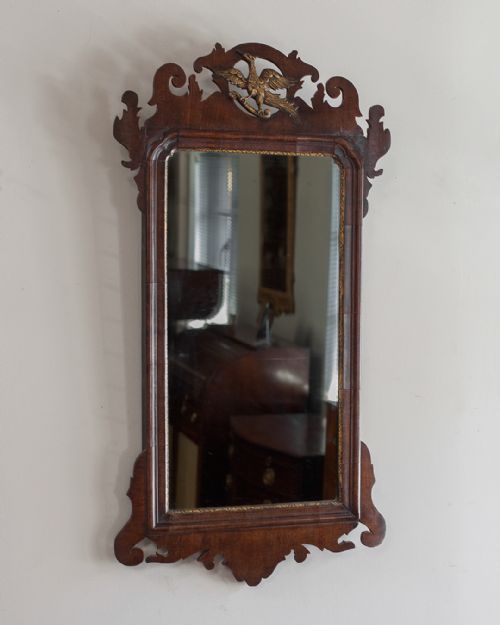
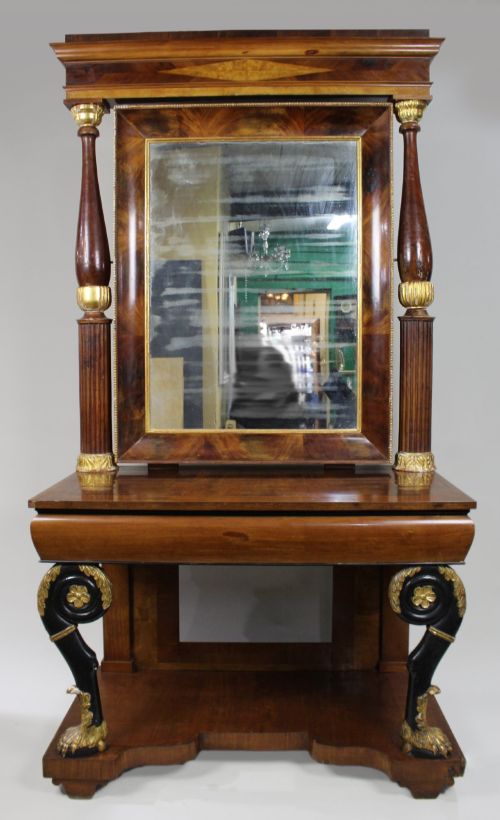
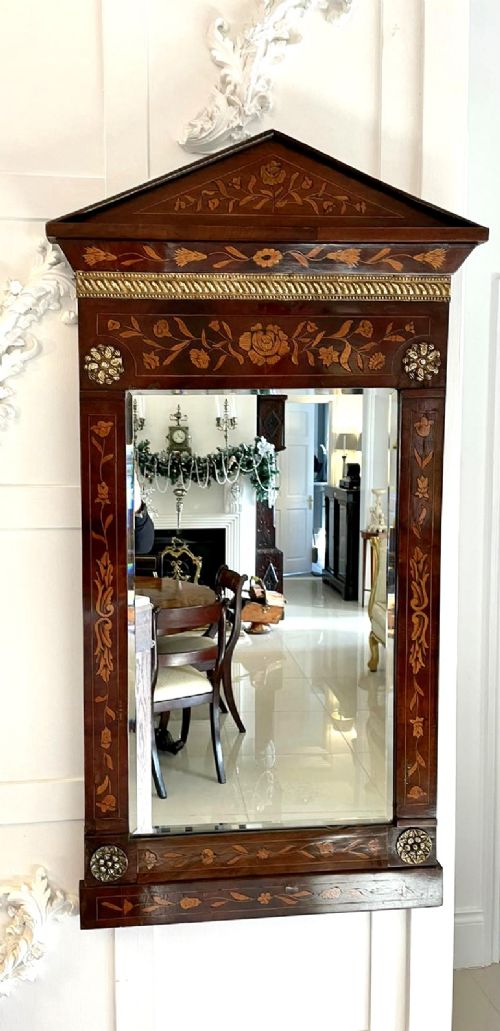
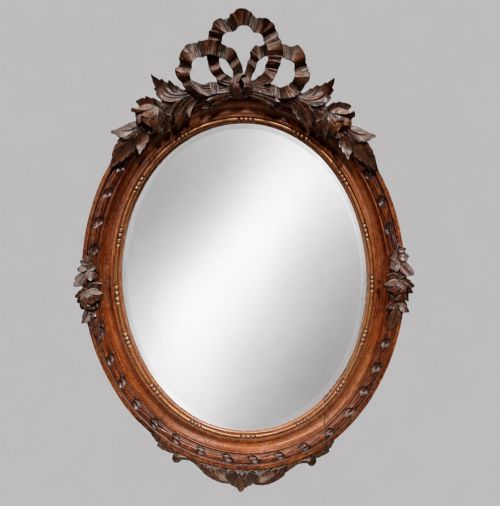
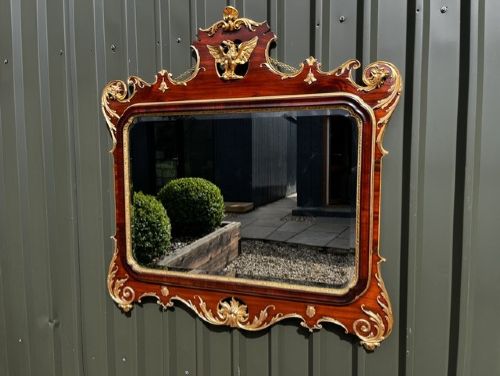
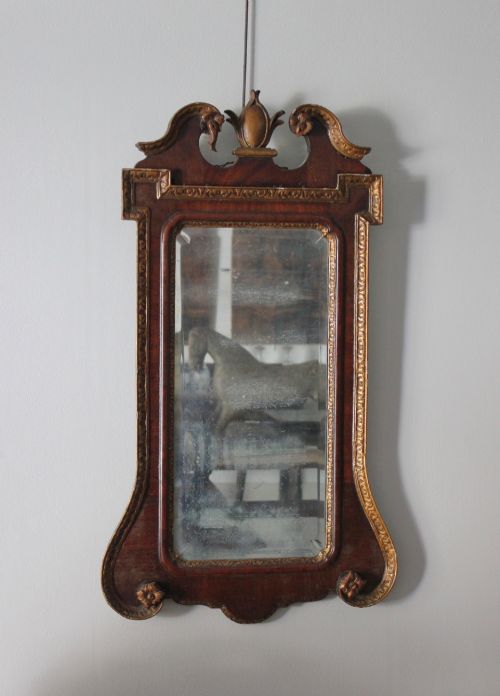
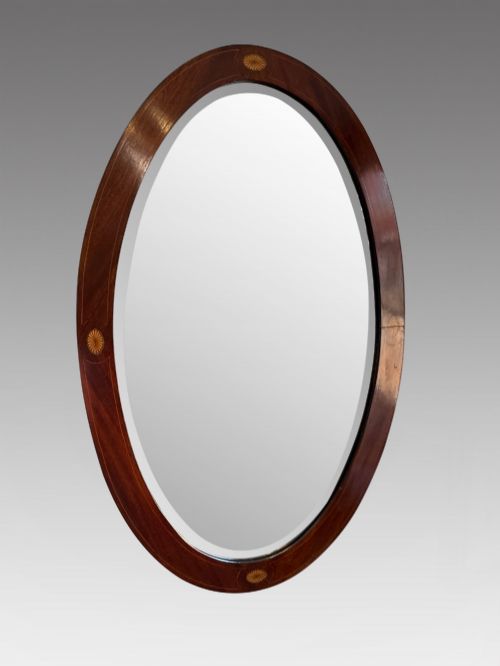
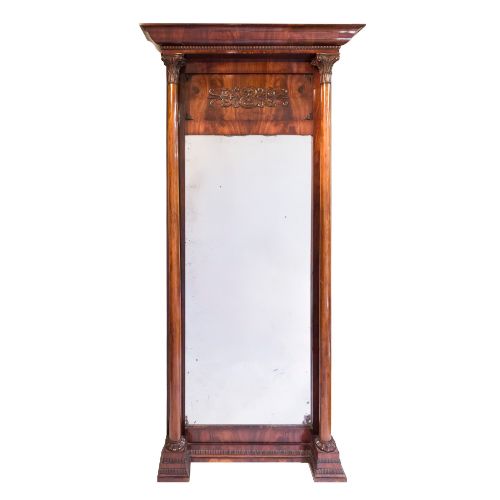
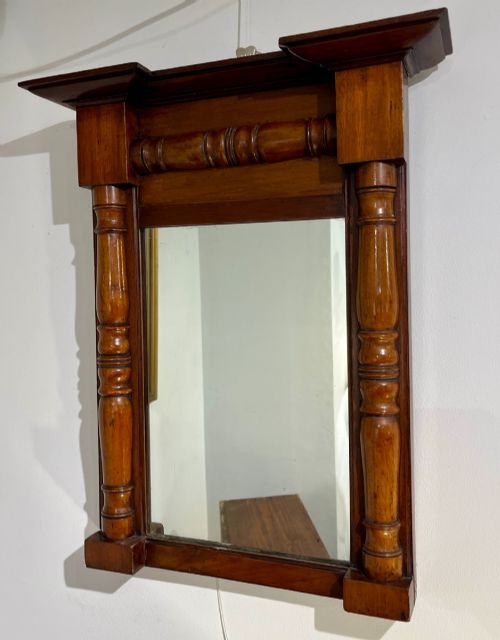
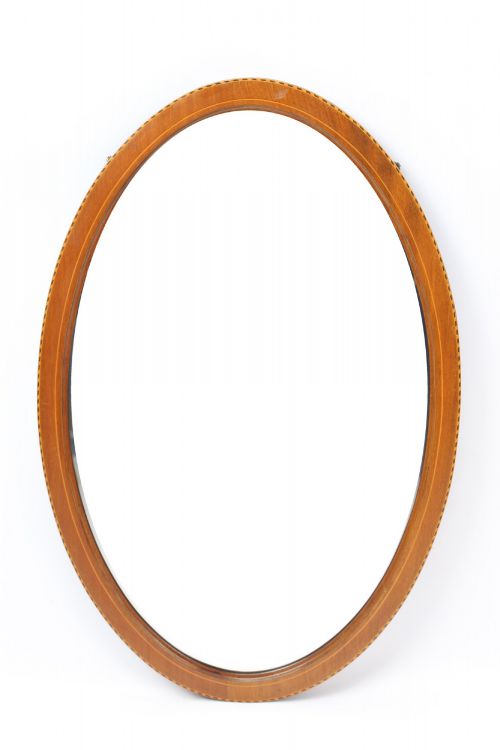
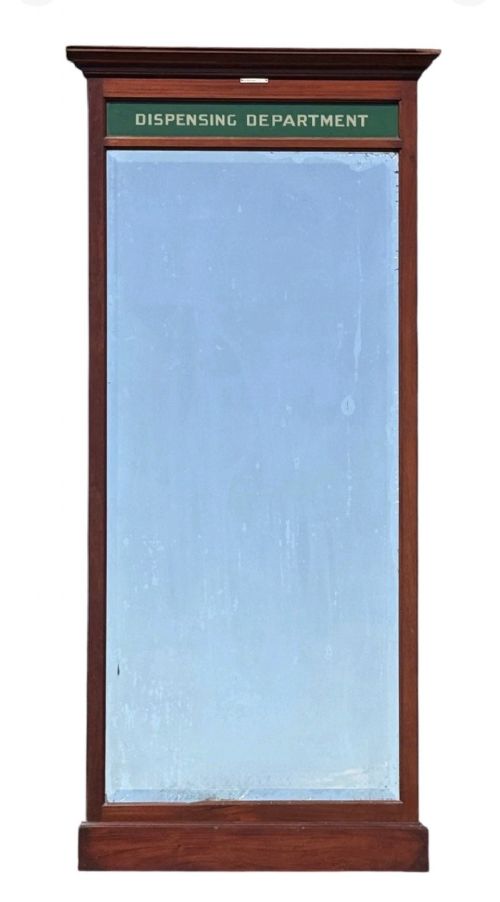
You will see pier mirrors designed to hang between windows, oval wall-hanging frames, and substantial overmantel mirrors intended for placement above a fireplace. Many incorporate parcel-gilt accents, brass details, or marquetry inlay alongside the primary timber.
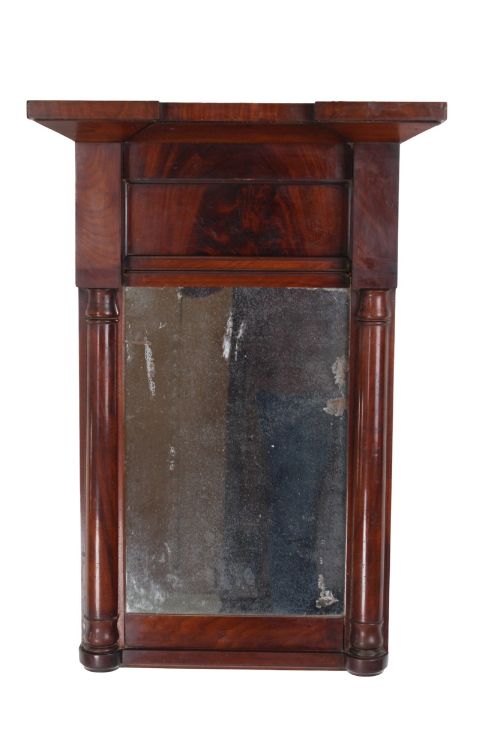
Simpler rectangular wall mirrors appear alongside ornate Chippendale revival pieces and Dutch marquetry examples. Each form reflects the domestic interior fashions of its specific period, from the 18th century onward.
Materials and construction
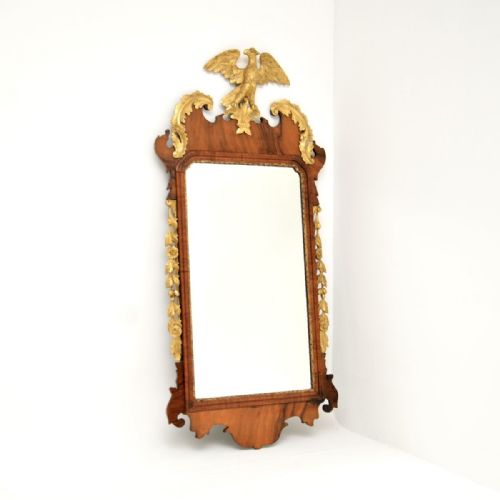
Joiners built these frames using solid mahogany and flame mahogany veneer, often applying gold leaf or giltwood highlights to carved details like scrolling foliage and fretwork borders. Timber selection dictated the visual weight of the frame, with dense grains providing a stable base for intricate carving.
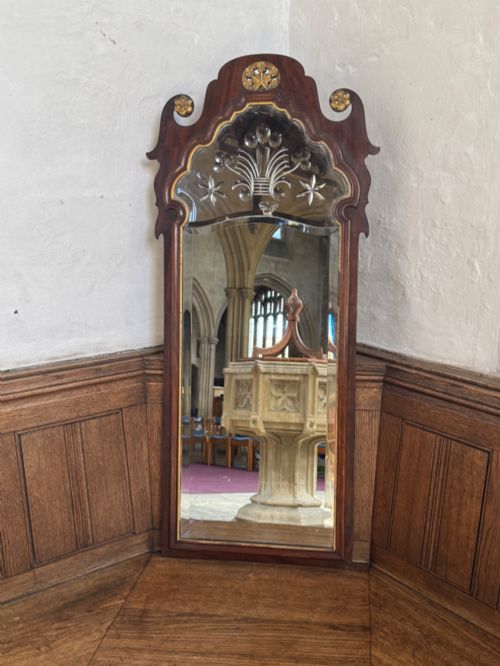
Mirror glass of the period was set into the wooden rebate, sometimes featuring a reverse-cut plate or bevelled edges depending on the date of manufacture. Parcel-gilt elements were achieved by applying thin sheets of gold leaf over a prepared gesso layer on the wooden substrate.
Listings feature mahogany glass wall mirrors spanning the 18th, 19th, and early 20th centuries, incorporating Edwardian, Georgian, and Regency periods.
Assessing quality
The standard of carving sets finer examples apart, particularly in fretwork and parcel-gilt mirror frames where crisp edges indicate skilled hand-tooling. Mass-produced or later revival pieces often display softer detailing and less depth in the wooden relief.
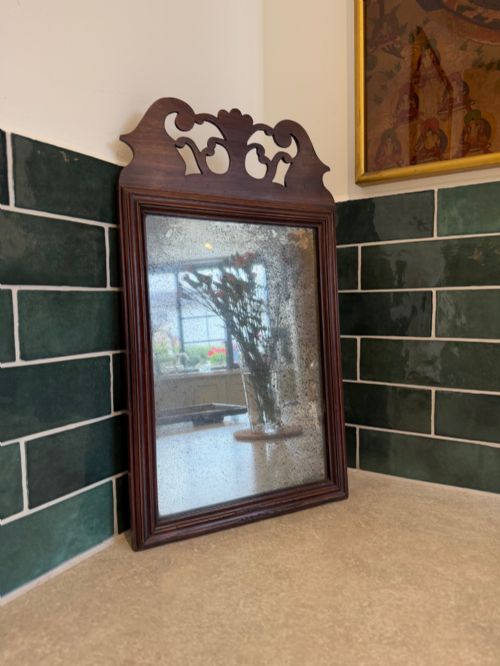
The integrity of the timber and the retention of original gilding and mirror plates dictate the standing of a piece. Original mercury or early silvered glass plates exhibit natural foxing and ageing that distinguish period examples from modern replacements.
William Kent
The Mahogany Glass Wall Mirror Glossary
- Parcel Gilt
- Partially gilded with gold leaf, highlighting specific carved details such as mouldings or inner borders against the dark mahogany background.
- Fret Mirror
- A wall mirror featuring a flat-sawn wooden frame with openwork scroll patterns, typical of 18th-century cabinet work.
- Pier Mirror
- A tall mirror designed specifically to hang on the wall space between two windows, often paired with a console table.
- Overmantel Mirror
- A wide mirror intended to be positioned directly above a fireplace mantelpiece, frequently reflecting light across the main living space.
- Foxed Mirror
- Mirror glass showing spots and discoloration caused by the degradation of the reflective silver or backing layer over time.
Mahogany Glass Wall Mirror: Frequently Asked Questions
How do I hang a heavy mahogany wall mirror safely?
Heavy frames require wall fixings anchored directly into structural studs or masonry rather than relying on standard plaster plugs. Ensure the hanging wire or brackets on the reverse match the substantial weight of the timber and glass.
Professional mirror hangers often utilise a French cleat system to distribute the load evenly across the wall surface. This prevents the frame from tilting forward and protects the antique joints from undue stress.
Are original mirror plates common in these pieces?
Many surviving pieces retain their original glass, which often displays characteristic surface ageing, minor distortion, and foxing. These natural imperfections confirm the age of the object.
Replacement glass does appear in pieces that experienced breakage over the centuries. Examining the reflection and the rear of the plate helps determine whether the glass dates to the same period as the frame.
How should I clean a vintage mahogany frame?
Dust the timber gently with a soft, dry cloth to remove everyday accumulation without disturbing the patina. Avoid using modern aerosol polishes, which can leave silicone residues and soften fragile finishes.
If the surface requires deeper cleaning, a small amount of mild, neutral soap on a damp cloth, followed immediately by drying, preserves the polished wood. Gilt sections demand particular caution to prevent lifting the gold leaf.
What is the difference between a pier mirror and an overmantel?
Pier mirrors are traditionally taller and narrower, built to occupy the specific vertical wall space between windows. Their proportions complement the narrower architectural gaps of formal reception rooms.
Overmantel mirrors are constructed with a wider horizontal format to span the length of a fireplace opening. They were designed to sit lower on the wall, anchoring the visual weight of the hearth below.