

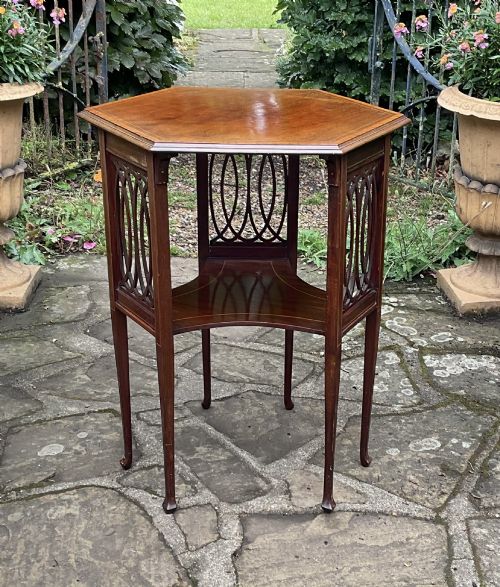


Fretwork Display Stand
A fretwork display stand brings open lattice decoration and tiered shelving into a room to hold ceramics, books and ornaments.
Fretwork Display Stand
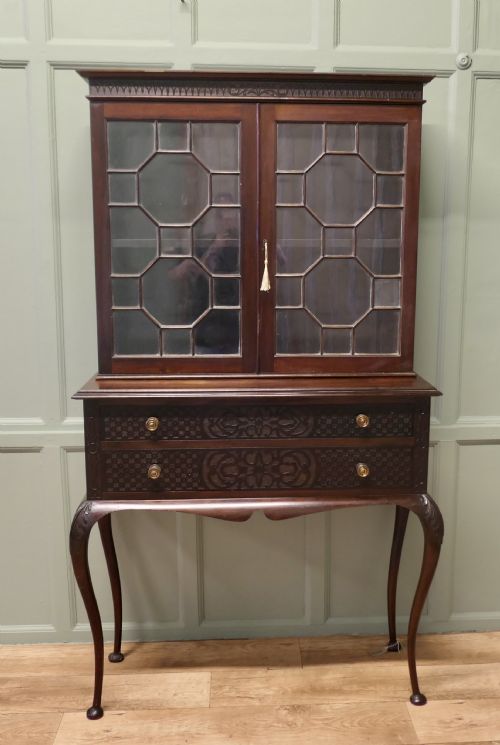
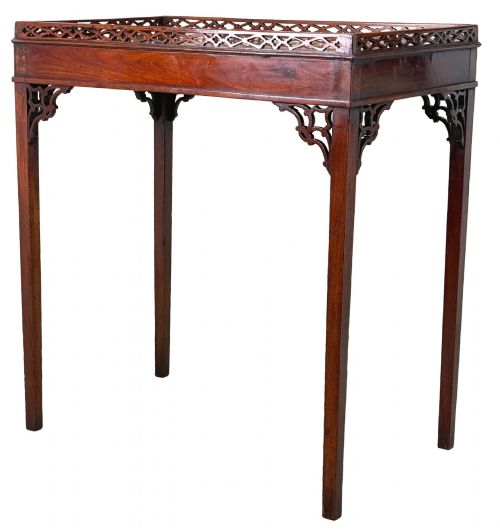
When you search for a fretwork display stand, you are looking at open tier shelving, corner cabinets, whatnots and occasional tables designed to exhibit small decorative objects. The pieces appearing here cross the nineteenth century and the early twentieth century, spanning Victorian, Edwardian and revival periods.
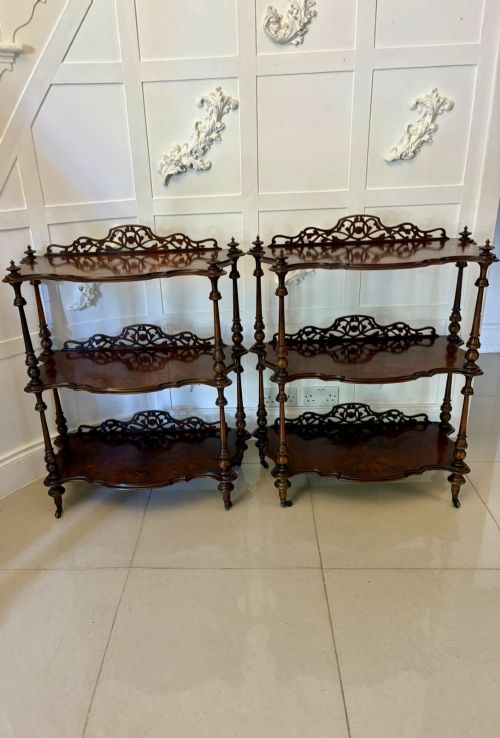
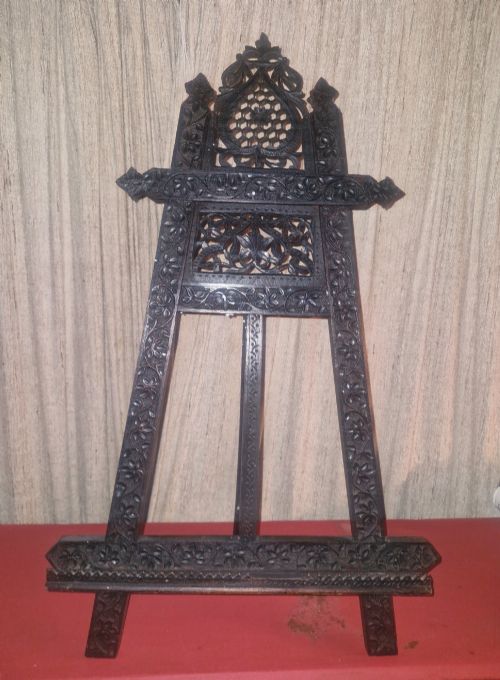
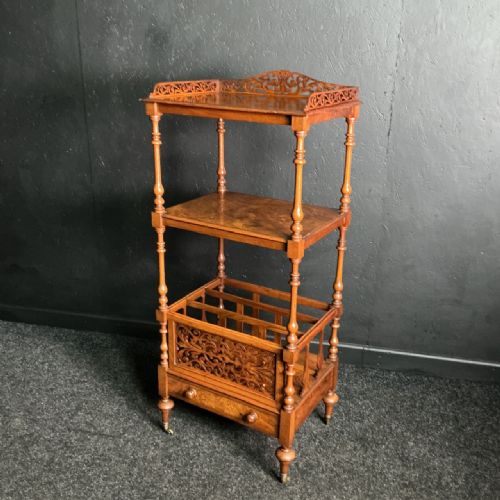
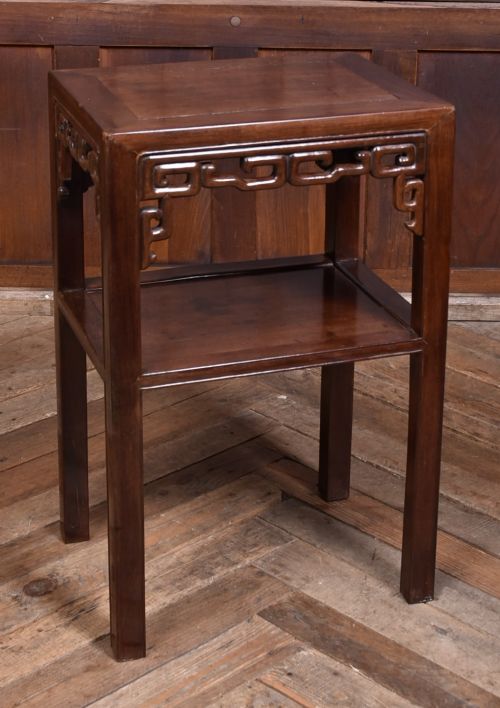
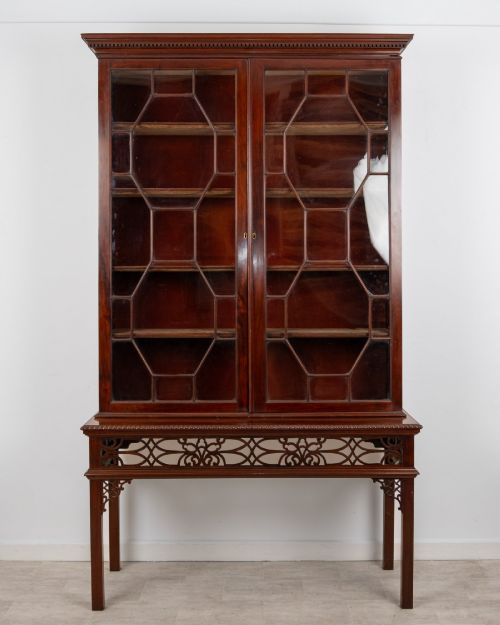
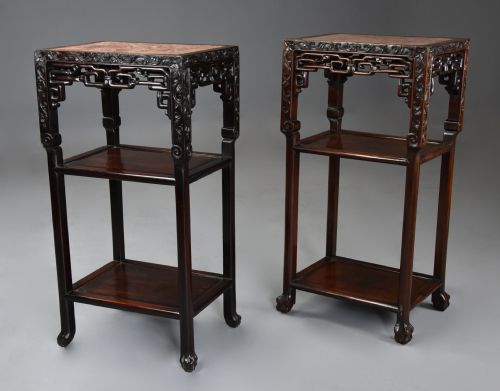
The forms range from multi-tiered burr walnut whatnots and corner shelves to Chinese Chippendale style cabinets and carved hardwood plant stands. These items served functional storage and display purposes in formal rooms across country houses and urban parlours alike.
How they were made
Cabinetmakers utilised dense timbers such as mahogany, walnut, burr walnut, rosewood and oak as the foundational structure for these display items. Marquetry inlay, brass accents and glass panels frequently supplemented the primary timber framework.
Intricate piercing and fret-cutting created the signature open lattice patterns seen on panels and brackets, particularly in Chinese Chippendale and revival pieces. Turning, carving and joinery techniques shaped the multi-tiered shelves, barley twist supports and display easels.
What varies in quality
The choice of timber veneer dictates much of the visual impact, with figured burr walnut and rich mahogany showing deeper grain contrast than standard hardwoods. Finely executed fret-cutting and crisp hand-carving separate ambitious workshop output from simpler commercial production.
Structural integration of multi-tiered shelving and corner brackets determines stability under load. Superior examples maintain tight joinery across complex tiers and balanced proportions throughout the display frame.
The Fretwork Display Stand Glossary
- Fretwork
- Open geometric or scrolling ornamentation cut through thin timber panels. This technique defines the pierced decoration found on brackets and galleries.
- Whatnot
- A piece of furniture consisting of multiple open shelves for displaying objects. These tiered stands appeared frequently in Victorian interiors.
- Astragal
- Moulding used to hold panes of glass within a glazed door or cabinet front. It creates a grid pattern across display enclosures.
- Torcherere
- A tall stand designed to support a lamp, candle or plant. These slender supports elevated decorative items above floor level.
- Marquetry
- Decorative veneer patterns formed by fitted pieces of various woods. It adds pictorial detail to tabletop and cabinet surfaces.
Fretwork Display Stand: Frequently Asked Questions
What is a fretwork display stand used for?
These stands provide open shelving to exhibit ceramics, books and decorative ornaments in domestic rooms.
Their tiered layout maximises display space without dominating the floor plan.
How do I date a Victorian whatnot?
Examine the timber selection, such as burr walnut or rosewood, alongside construction methods like hand-cut dovetails.
Stylistic cues such as barley twist supports or applied marquetry help narrow the production era within the nineteenth century.
Where should I place a corner display shelf?
Corner units fit directly into room angles to utilise dead space for ornament display.
They work effectively in reception rooms or hallways where floor area is restricted.
What is Chinese Chippendale style?
This design approach incorporates fret-cut lattice patterns and asymmetrical elements inspired by Chinese motifs.
Revival versions appeared frequently during the Victorian and Edwardian periods on cabinets and tables.