

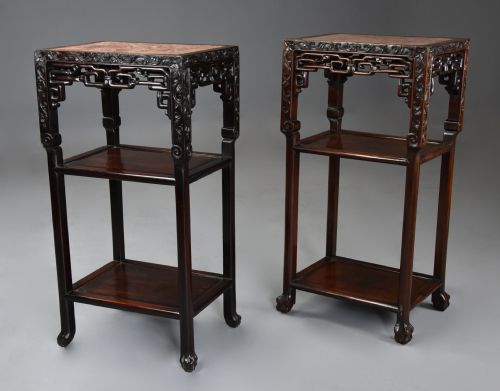
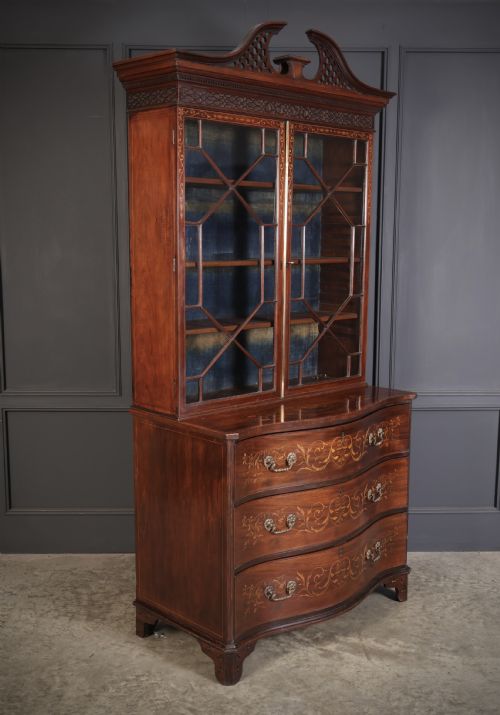
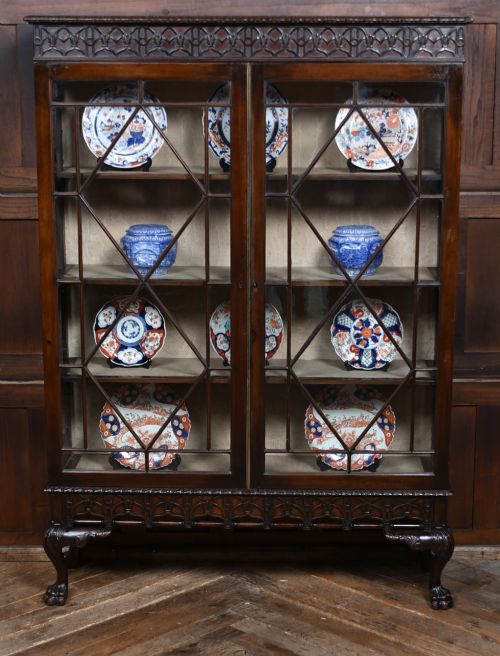


Fretwork Display Cabinet
A fretwork display cabinet brings intricate open woodwork and glass together to showcase treasured objects.
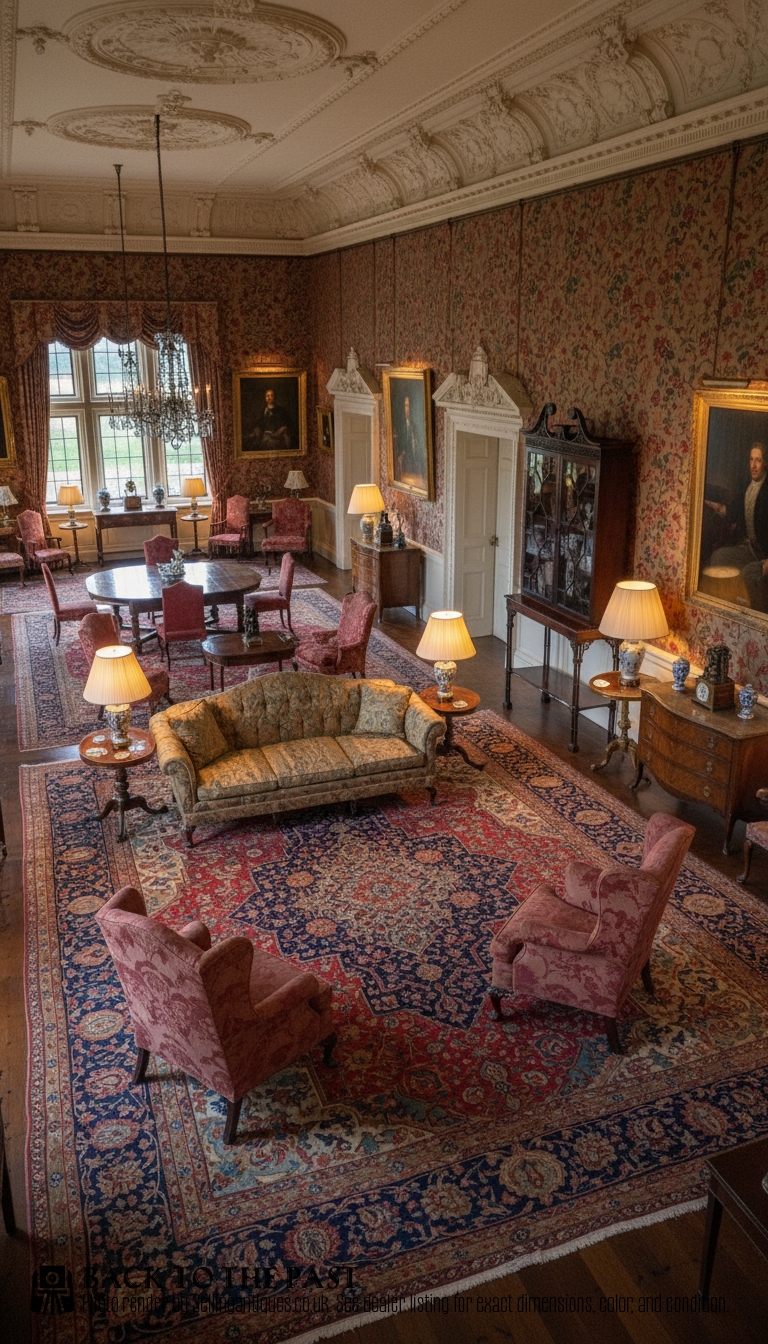
Fretwork Display Cabinet
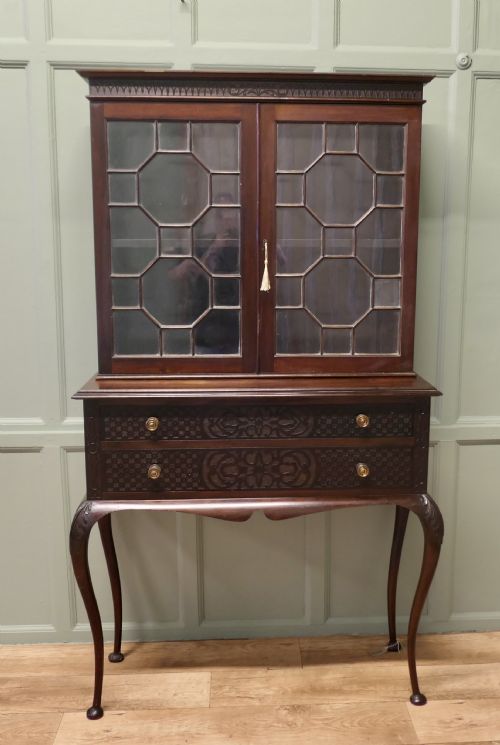
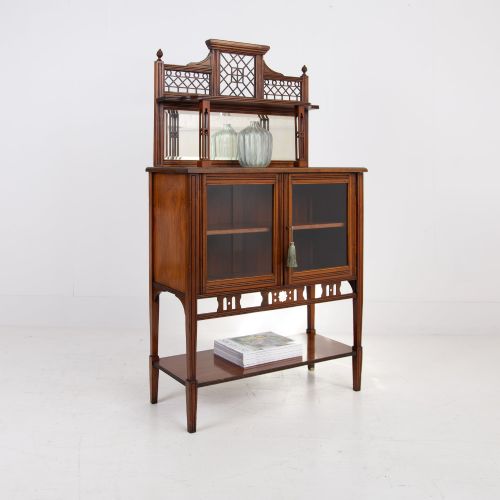
A fretwork display cabinet uses pierced decorative woodwork alongside glass panels to house collections of small objects, china and books. These pieces emerge from the nineteenth century into the Edwardian era, spanning Victorian, Georgian, and revival aesthetics.
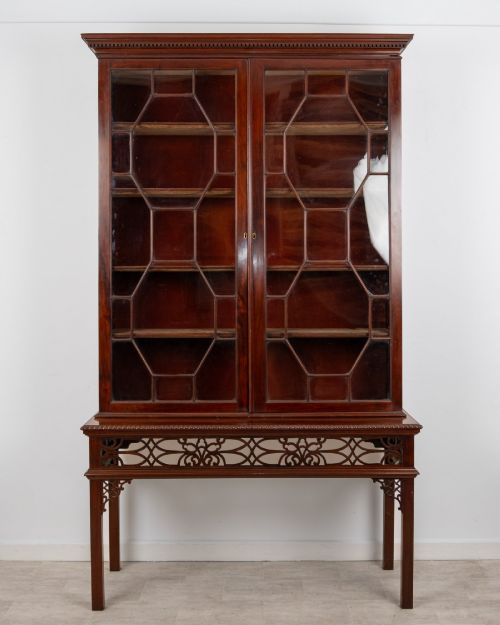
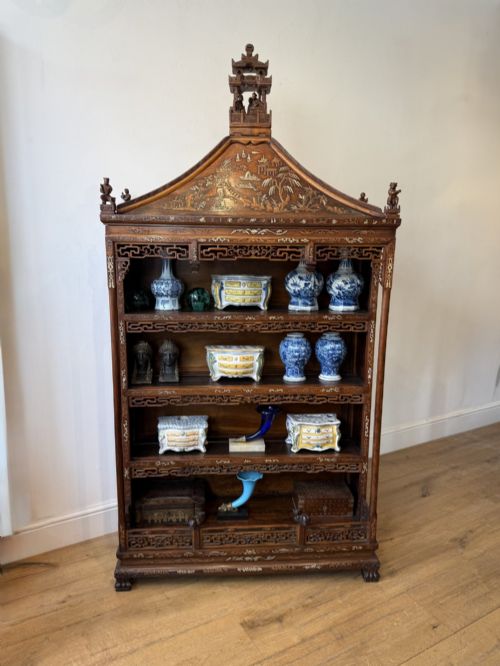
The Chinese Chippendale and Chippendale Revival styles dominate this category, often featuring intricate glazing bars and pagoda-inspired silhouettes. Buyers frequently encounter mahogany and walnut constructions ranging from wall-hung shelves to large breakfront bookcases and corner cabinets.
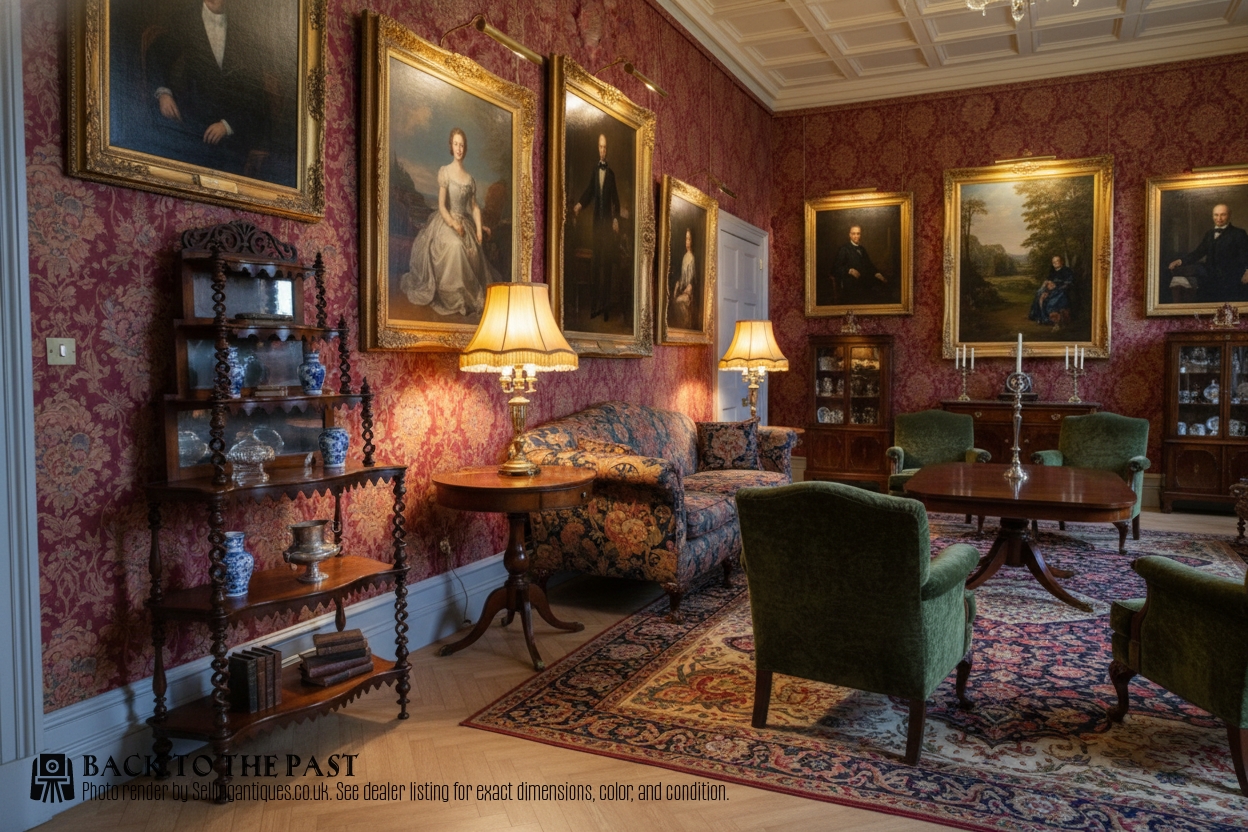
Makers drew on diverse design vocabularies, blending traditional British cabinet-making with Chinoiserie and Aesthetic Movement influences. Freestanding cabinets-on-stand sit alongside tabletop bijouterie tables and tiered whatnots within the broader display furniture family.
Materials and construction
Makers utilised dense timbers such as mahogany, walnut, and exotic hardwoods to support the delicate weight of pierced fretwork panels and glazed doors. Brass hardware and mirrored backs frequently accent the interior, enhancing the reflection of displayed items.
Glazing techniques range from simple astragal bars to complex Chinese Chippendale geometric arrangements that secure individual glass panes. Carved details and bone inlay occasionally supplement the open woodwork to create textural contrast across the facade.
Fretwork Display Cabinet Retail Price Guide 2026
Typical asking prices for fretwork display cabinet among the pieces listed under this phrase on Sellingantiques today, from the lower quarter to the upper quarter. They describe what is for sale here now, not the wider market.
Materials recorded include mahogany, walnut, brass, mirror, bone inlay, and exotic hardwoods used across various display formats.
Assessing quality
The precision of the fretwork defines the standard of the piece, where crisp, cleanly pierced wooden patterns indicate superior hand-tool work over hurried production. The integration of the glazed sections with the structural timber reveals the underlying joinery skill.
Proportion and scale distinguish finer interpretations from standard utility furniture, particularly in revival pieces that emulate eighteenth-century precedents. The choice of timber grain and the execution of carved ornamental motifs further separate workshops of high ambition from routine production.
Gabriel-Frederic Viardot·Robert Strahan
The Fretwork Display Cabinet Glossary
- Fretwork
- Ornamental woodwork perforated with a pattern using a scroll saw or piercing technique. This decorative technique creates lightweight open designs across cornices and galleries.
- Astragal
- A small moulding used to hold glass panes within a sash or door frame. These bars divide the glazed area into smaller geometric sections.
- Bijouterie table
- A glass-topped display table designed specifically for showcasing small valuable objects and trinkets. They often feature hinged lids and fabric-lined interiors.
- Whatnot
- An open set of tiered shelves used for displaying ornaments and books. They appear in corner and freestanding formats throughout the nineteenth century.
- Chinoiserie
- European artistic style reflecting Chinese motifs and techniques. This aesthetic heavily influences nineteenth-century revival display cabinets and pot stands.
Fretwork Display Cabinet: Frequently Asked Questions
What fits inside a fretwork display cabinet?
These cabinets suit porcelain figures, glassware, small silver items, and curated collections of books or curiosities. The internal glass shelves and mirrored backs help illuminate and reflect smaller objects.
Larger breakfront versions accommodate more substantial display arrangements, while table and wall-hung variants suit compact spaces and delicate items.
How do I date a display cabinet?
Dating relies on timber selection, construction methods, and stylistic cues such as Victorian revival idioms or Edwardian mahogany framing. Nineteenth-century pieces often show hand-cut joinery and specific period hardware.
Comparing the fretwork patterns and glazing styles against documented revival periods helps narrow down the decade of manufacture.
Where should I place a display cabinet?
Position these cabinets away from direct sunlight to protect interior fabrics and timber finishes from fading. Placed in reception rooms or hallways, they command attention while keeping delicate items safe behind glass.
Freestanding models require stable, level flooring to ensure the glazed doors hang true and open smoothly.
Are these cabinets purely decorative?
While designed primarily for presentation, they offer functional storage that protects collections from dust and handling. The combination of enclosed lower cupboards and glazed upper shelves provides practical utility.
Cabinets-on-stand and corner units balance exhibition space with sensible room footprints.