
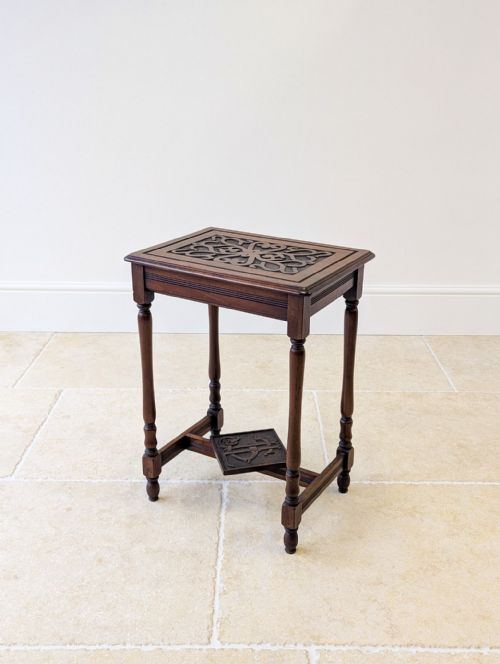
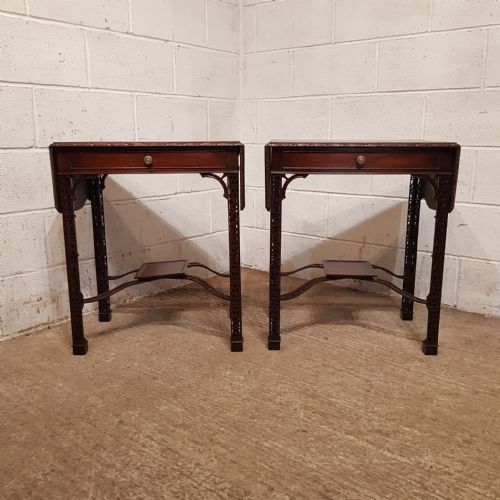
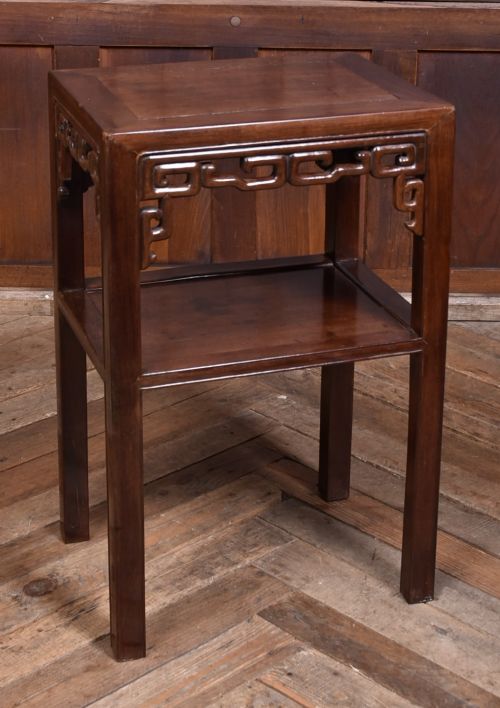
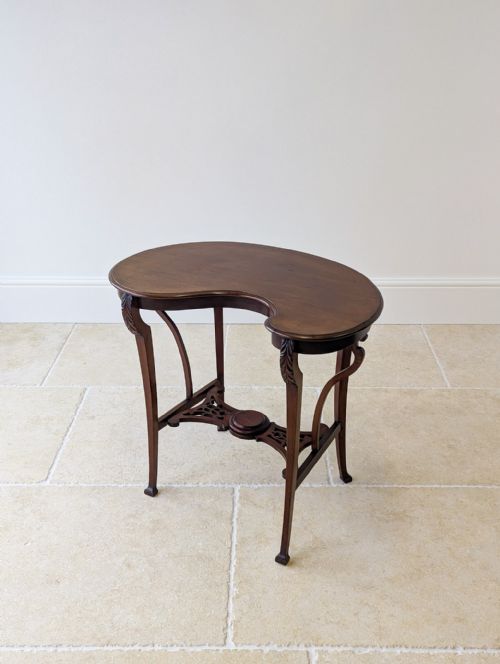




Fretwork Carved Lamp
These fretwork carved lamp pieces bring pierced wooden detail and rich timber to a room, offering both function and craft.
Fretwork Carved Lamp
A fretwork carved lamp search usually uncovers tables, stands, and occasional pieces adapted or built to hold lighting through openwork timber ornament. The listings here span Victorian, Edwardian, and nineteenth-century eras, showing forms from side tables to lantern stands and plant stands.
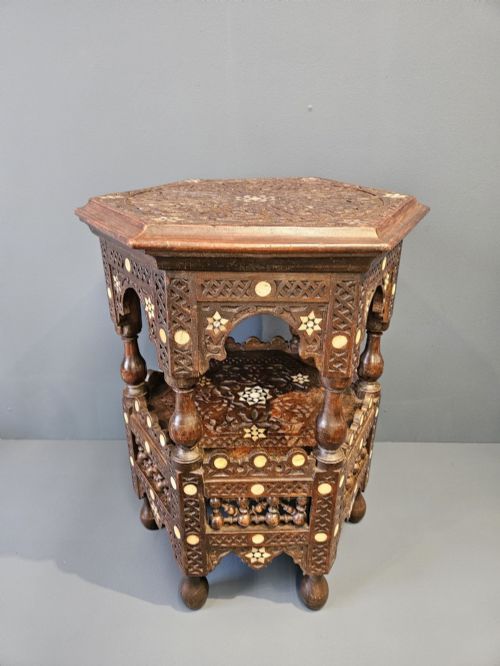
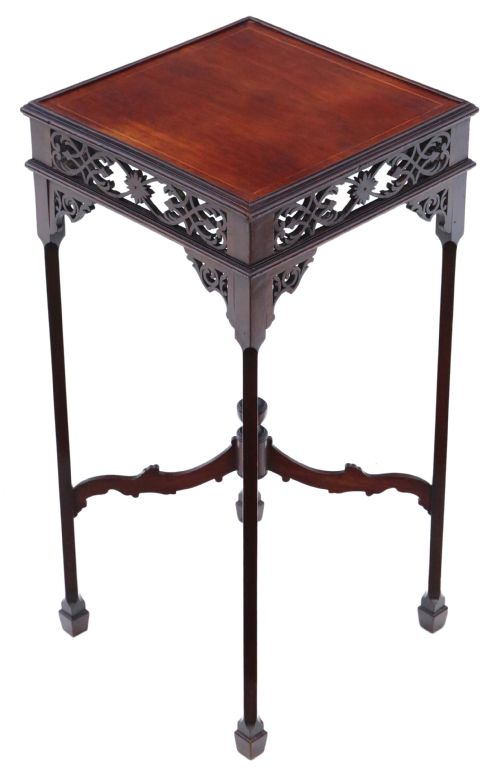
The versions you are most likely to meet on this page include mahogany and oak side tables, alongside occasional tables and lamp tables featuring pierced fretwork panels. Makers from these periods drew on Chippendale Revival, Moorish Revival, Arts and Crafts, and Chinese traditional styles to shape these timber items.
Originating across English, Chinese, and European workshops, these pieces often double as table lamps, side tables, or plant stands. Walnut, hardwood, and brass also appear in the materials, grounding the ornate openwork in sturdy domestic utility.
Materials and construction
Mahogany, oak, walnut, and general hardwood form the primary structural timbers for these items, shaped with hand tools and pierced to create intricate fretwork patterns. Bone inlay and surface inlays frequently accent the timber framework, adding texture and contrast.
Joinery methods range from drop leaf mechanisms and octagonal assemblies to turned supports and solid panel construction. Brass components occasionally integrate into the stands and tables, while open woodwork defines the decorative panels.
Some tables double as magazine holders or lantern stands, proving that Victorian life required reading material within arm's reach of every illumination source.
Judging quality in pierced woodwork
Quality rests in the crispness of the pierced fretwork and the selection of dense, well-figured timber such as mahogany or burr walnut. Sharply defined openings and smooth, stable joints distinguish finer examples from simpler production pieces.
The integration of decorative elements, including bone inlay and precise joinery like drop leaf mechanisms, separates standard utility tables from more ambitious Revival or Arts and Crafts works.
The Fretwork Carved Lamp Glossary
- Fretwork
- Openwork ornamentation carved or pierced through wood, creating geometric or patterned designs. It is the defining decorative feature of these tables and stands.
- Chippendale Revival
- A late nineteenth and early twentieth century design movement that reinterprets eighteenth-century English furniture forms, often incorporating intricate pierced splats and fretwork.
- Canterbury
- A low wooden stand originally designed for sheet music or books, occasionally adapted or styled to serve adjacent to lighting. These pieces feature vertical partitions.
- Moorish Revival
- An architectural and decorative style popular in the Victorian era that uses complex geometric woodwork, ogee arches, and octagonal forms. This influence appears in tables built with multifaceted surfaces.
- Amsterdam School
- An early twentieth-century architectural and design movement focused on expressive brickwork and elaborate timber craftsmanship. Pieces from this school display distinctive wooden forms.
Fretwork Carved Lamp: Frequently Asked Questions
What is a fretwork carved lamp table used for?
These tables provide a sturdy surface for table lamps while incorporating pierced wooden lower shelves or frames for display. They function effectively beside seating or in hallways as decorative occasional furniture.
Their compact dimensions allow them to fit easily into smaller spaces without overwhelming a room's layout.
How do I date a Victorian or Edwardian lamp table?
Dating relies on identifying the prevailing style, such as Arts and Crafts, Moorish Revival, or Chippendale Revival, alongside timber selection like mahogany or oak. Hardware and construction methods also offer clues to the manufacturing decade.
Comparing the specific joinery and inlay details to established period timelines helps confirm the era of production.
Are these tables sturdy enough for daily use?
Solid hardwoods like mahogany, walnut, and oak provide durable foundations for everyday household tasks and lighting support. The joinery is typically built to withstand normal weight distribution.
Care should be taken with delicate fretwork panels and inlay work to avoid accidental impacts during cleaning or moving.
What styles influence these carved wooden tables?
The listings show influences ranging from English Arts and Crafts and Chippendale Revival to Chinese traditional woodwork and Moorish Revival. Each style brings distinct geometric patterns or structural forms to the pierced panels.
Maker preferences and regional aesthetics from the nineteenth and early twentieth centuries heavily shaped these varied designs.