




Vintage Fretwork Lamp
A vintage fretwork lamp brings architectural shadow and pierced timber texture into a room, offering both illumination and intricate decorative form.
Vintage Fretwork Lamp
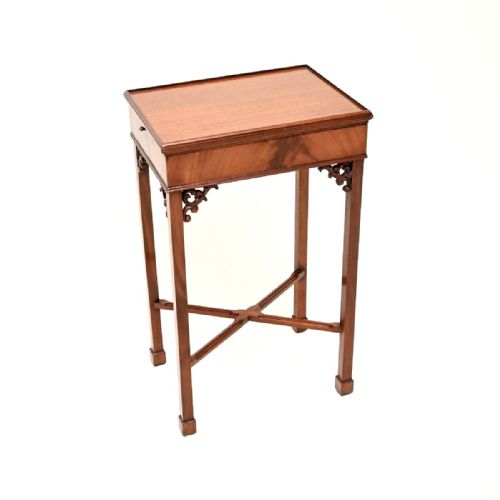
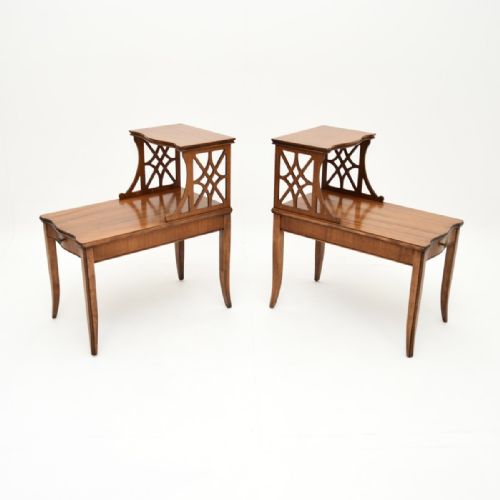
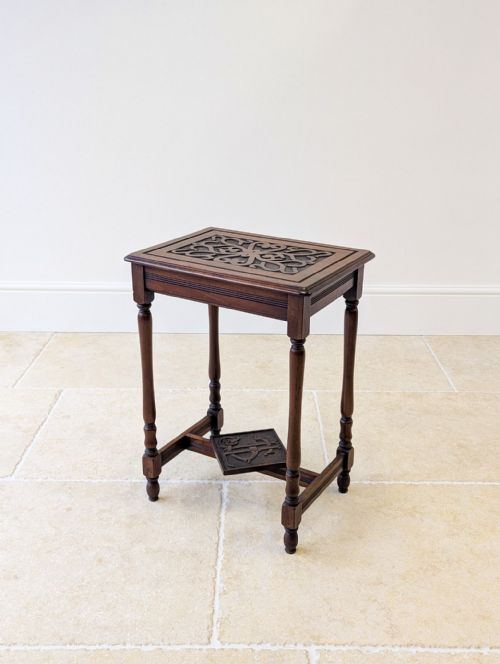
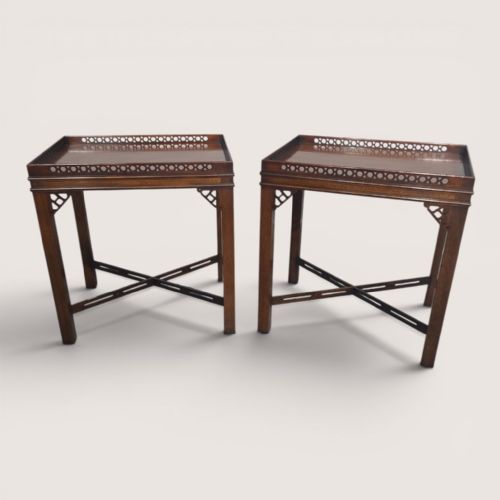
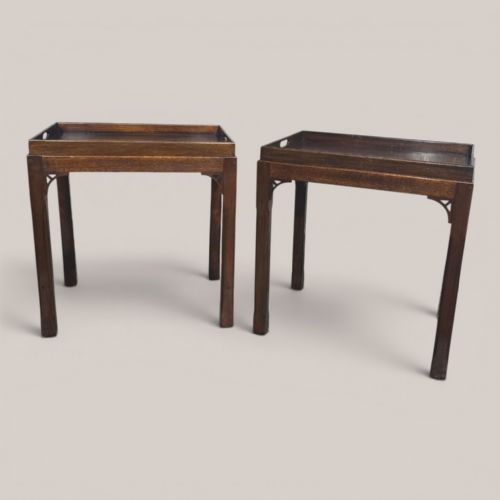
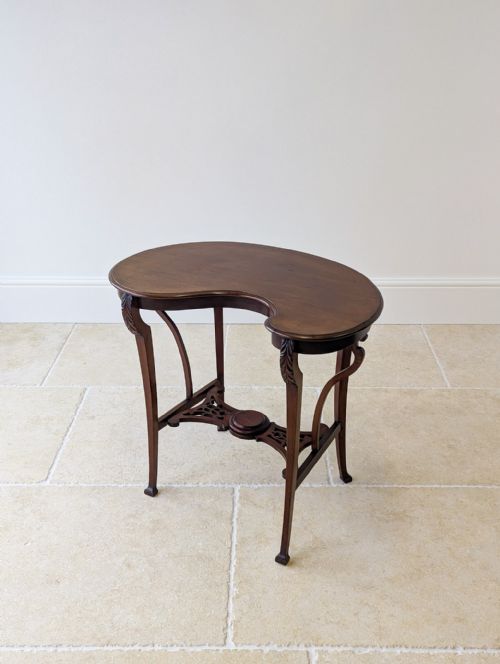
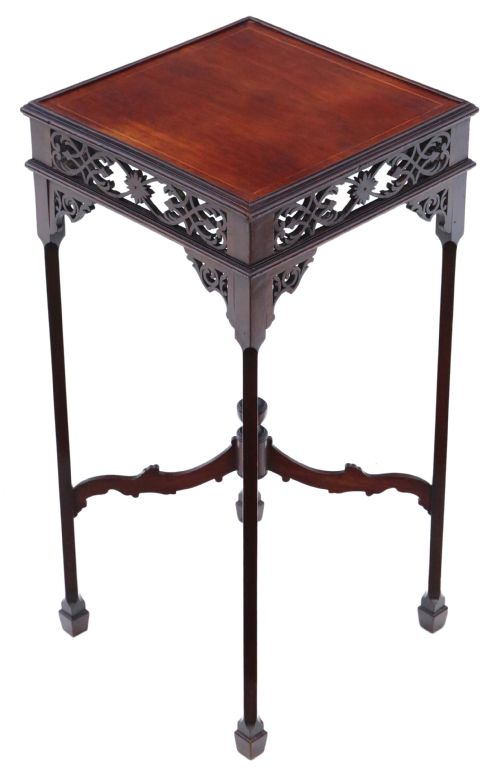
A vintage fretwork lamp search encompasses carved wooden tables and stands from the nineteenth and early twentieth centuries alongside pierced wooden lamp structures. The listings on this page include pieces from the Victorian, Edwardian, and Arts and Crafts periods, shifting between occasional tables and table lamps.
You will encounter mahogany and walnut constructions showing Chippendale revival influences and Amsterdam School design. These pieces combine flat surface utility with pierced or fretted woodwork.
The objects span from side tables and night stands to specific wooden table lamps, reflecting how cabinetmakers utilised pierced decoration across various small domestic furniture forms.
Materials and construction
Makers relied heavily on mahogany, walnut, and satinwood, often selecting dense timbers capable of holding sharp fretwork without splintering. Inlay and painted wood surfaces frequently accompany the structural woodwork.
Joinery involved traditional techniques suited to domestic furniture production, while pierced fretwork patterns were sawed by hand or with early mechanical assistance. Fabric elements sometimes appear alongside timber components in the assembled lamp fittings.
Some tables double as subtle cat observation platforms while holding your reading lamp.
Judging quality in fretwork pieces
Quality rests upon the crispness of the pierced fretwork and the selection of figured timber such as burr walnut or polished mahogany. Sharp interior corners in the cut-out patterns indicate careful hand execution.
The integration of inlay work and the structural stability of two-tier tables or lamp stands separate standard utility items from more ambitious cabinetmaking. Grain alignment and finish preservation also dictate the standing of an individual piece.
The Vintage Fretwork Lamp Glossary
- Fretwork
- Ornamental perforated or cut-out woodwork created by piercing timber panels. This technique produces intricate geometric or organic shadow patterns when light passes through.
- Chippendale Revival
- A late nineteenth and early twentieth-century design movement inspired by the mid-eighteenth-century patterns of Thomas Chippendale. It typically employs mahogany, cabriole legs, and elaborate pierced brackets.
- Occasional Table
- A small, movable table designed for a specific, minor domestic use such as holding a lamp or book. These pieces form a large portion of the current selection.
- Amsterdam School
- An early twentieth-century architectural and design movement known for expressive, rounded brickwork and imaginative use of timber. Pieces from this tradition display distinct sculptural qualities.
- Inlay
- A decorative technique where contrasting materials are inserted into recessed cavities of a wood base. Satinwood and darker timbers are often paired in this manner.
Vintage Fretwork Lamp: Frequently Asked Questions
What is a fretwork lamp table?
A fretwork lamp table is a small occasional piece of furniture featuring pierced wooden panels or brackets designed to hold a light source.
These tables were produced across the Victorian and Edwardian eras to serve as decorative display surfaces in sitting rooms.
How do I date an Edwardian table?
Edwardian tables generally date from 1901 to 1910 and often feature lighter mahogany timbers compared to heavier Victorian predecessors.
They frequently incorporate inlay work or subtle Art Nouveau influences alongside traditional revival motifs.
Are these lamps electric or oil?
The lighting elements in these listings include wooden table lamp structures adapted for modern electrical use.
Many pieces originated as occasional or side tables that now function as lamp stands within period interiors.
How do I care for mahogany woodwork?
Mahogany furniture requires stable indoor humidity and protection from direct sunlight to prevent timber shrinkage and fading.
Regular dusting with a dry cloth maintains the polished surface without the need for heavy chemical waxes.