


French Wooden Credenza
A french wooden credenza brings substantial storage and distinct continental character to a room, ranging from rustic provincial oak to ornate walnut.
French Wooden Credenza
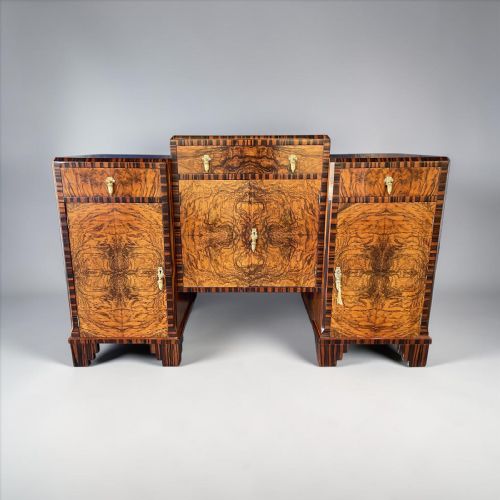
A french wooden credenza search reveals heavy case furniture designed for storage, encompassing sideboards, buffets, enfilades, and side cabinets. These items originate primarily from the eighteenth and nineteenth centuries, alongside Victorian interpretations and later Art Deco designs.
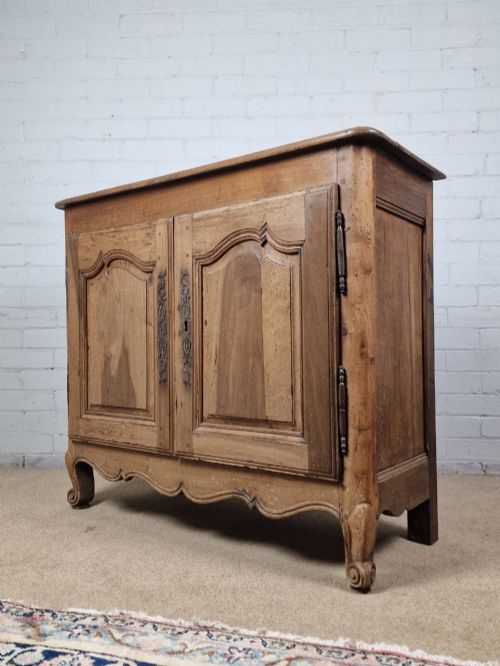
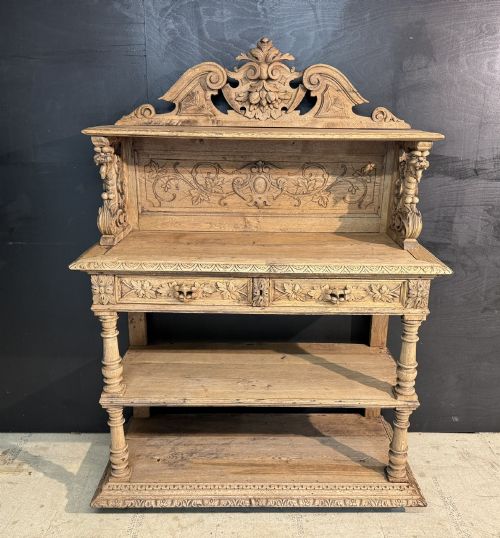
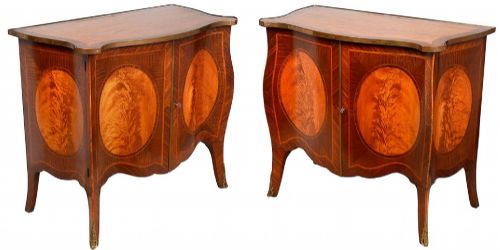
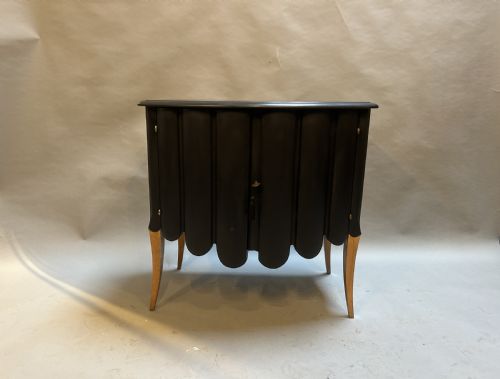
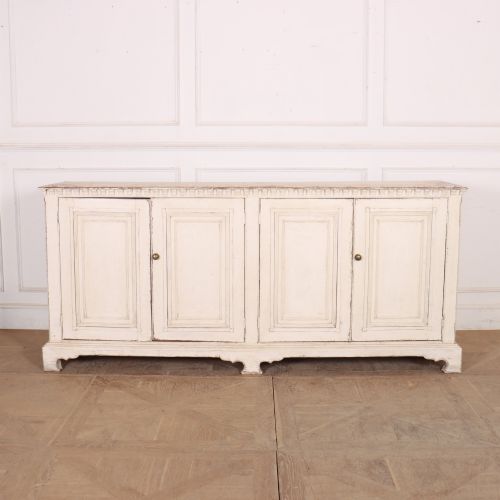
The versions most commonly met on this page are eighteenth and nineteenth-century provincial buffets and walnut side cabinets. They take forms from low sacristy cupboards to tall cherrywood housekeeper cabinets and serpentine commodes.
Makers and workshops constructed these pieces for dining rooms, hallways, and drawing rooms across France and continental Europe. Regional variants display specific local woods and carving traditions tied to their geographic origins.
How they were made
Cabinet makers built these pieces using solid timbers like walnut, oak, cherrywood, and mahogany, often applying burr ash or exotic veneers for decorative surfaces. Joinery relied on traditional hand-cut methods suited to heavy domestic furniture.
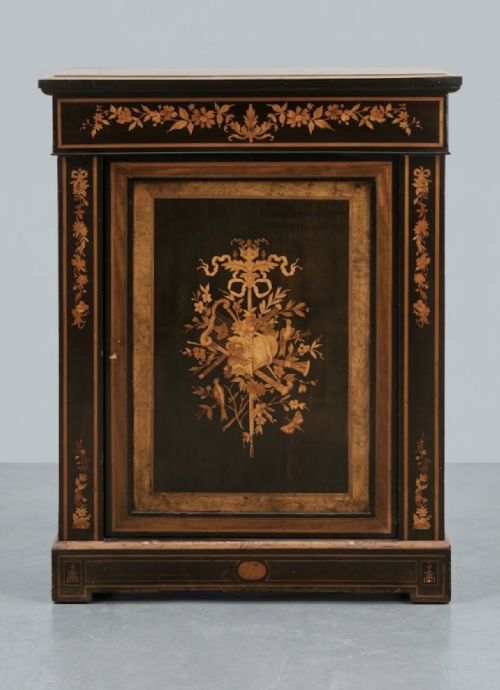
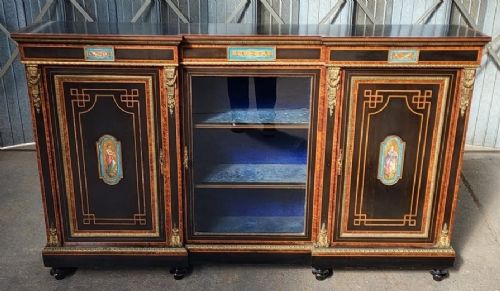
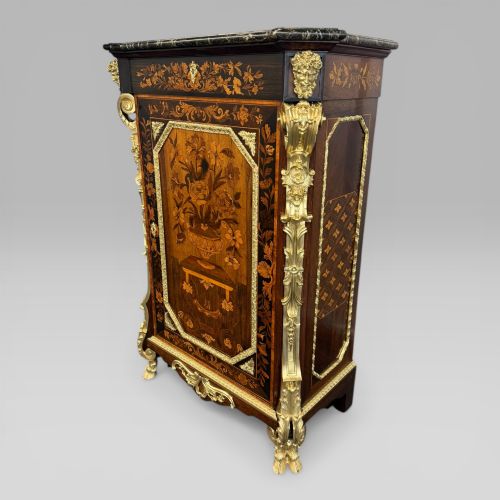
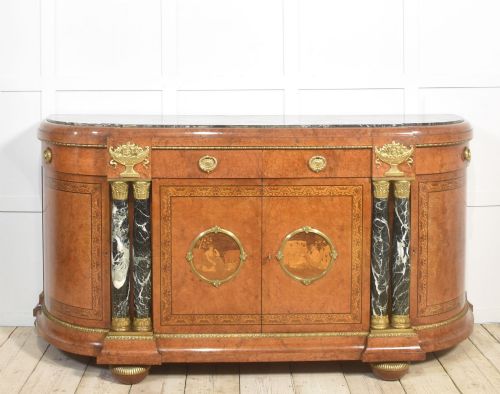
Decoration incorporated hand carving, marquetry inlay, and ebonised wood details. Ormolu mounts, brass fittings, porcelain plaques, and marble tops were added to refine the appearance of formal nineteenth-century pieces.
Materials recorded include walnut, oak, cherrywood, marble, glass, brass, iron, and ormolu.
What varies in quality
Quality rests upon the selection of timber and the precision of the cabinet work, from plain provincial utility boards to highly ornate Revival and Art Deco examples. The integration of decorative elements such as ormolu mounts, marble slabs, and complex marquetry distinguishes finer commissions.
The integrity of the structural timber and the retention of original surface patination separate standard examples from important survivals. Subtle distinctions in hand carving and proportions dictate the standing of each piece.
Edward Holmes Baldock
The French Wooden Credenza Glossary
- Ormolu
- Gilded bronze mounts applied to furniture. This technique added metallic sheen and formal ornamentation to nineteenth-century cabinet work.
- Marquetry
- Fitted wood veneer patterns forming decorative pictures or geometric designs. Craftsmen utilised contrasting timbers such as kingwood and walnut for visual depth.
- Enfilade
- A long sideboard or buffet designed for formal dining rooms. These low storage pieces often feature multiple doors and drawers across a linear front.
- Provincial
- Furniture made in regional areas rather than capital cities. These items typically exhibit local timber choices and simpler, sturdier construction.
- Ebonised
- Wood treated to imitate ebony. This dark finish gained popularity in Victorian and nineteenth-century cabinet design.
French Wooden Credenza: Frequently Asked Questions
Where were these cabinets placed originally?
These pieces stood in dining rooms, drawing rooms, and hallways to hold tableware and household goods.
Larger buffets served kitchens or serving areas, whilst refined cabinets occupied formal reception spaces.
How do I identify eighteenth-century pieces?
Eighteenth-century examples show regional characteristics in solid woods like oak and cherrywood, with hand-cut joinery.
They display simpler provincial lines or restrained carving compared to later nineteenth-century revival styles.
What is the difference between a buffet and a credenza?
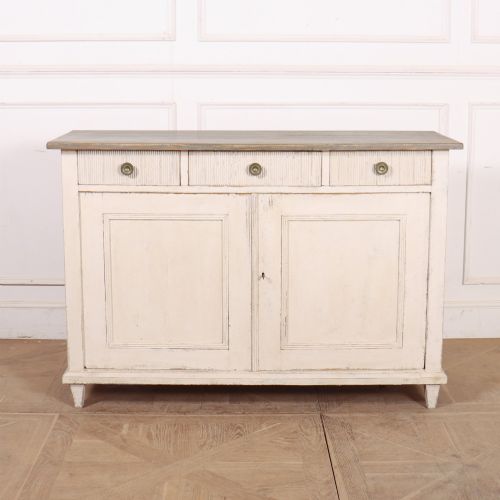
Buffets generally provide lower storage with doors and drawers suited to dining spaces.
Credenzas and side cabinets often incorporate display shelving, glass doors, or decorative ormolu mounts for drawing rooms.
How do I care for marble-topped cabinets?
Marble tops require gentle cleaning with neutral soap and water to avoid staining the porous stone.
Wooden bases benefit from regular waxing to maintain the natural finish of walnut, oak, or cherrywood.