


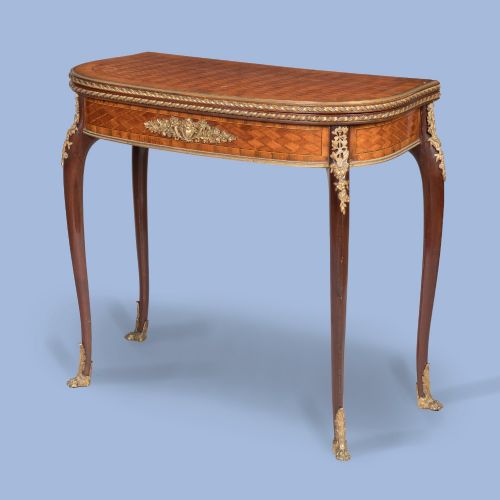
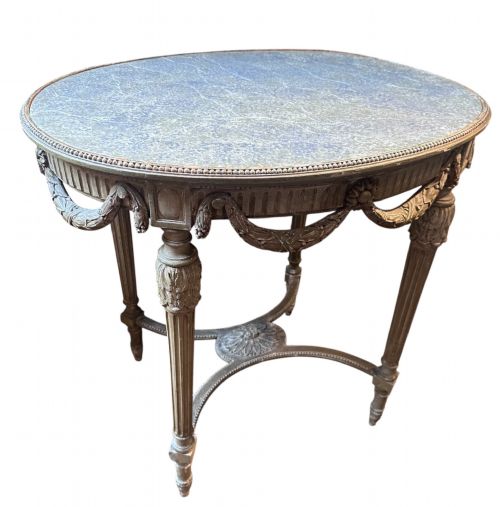

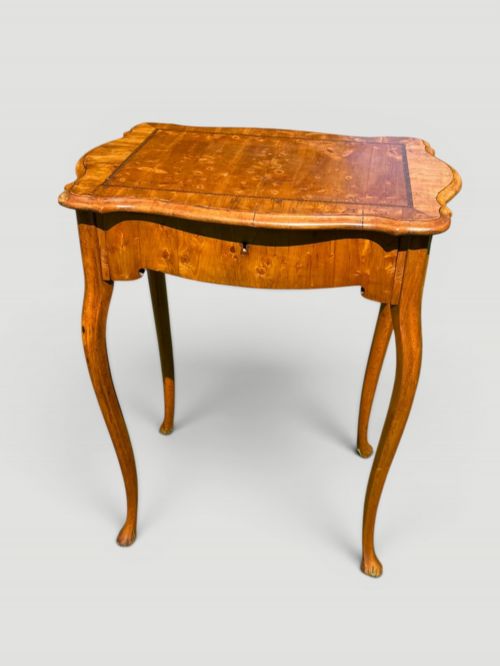


French Wood Accent Table
When you select a french wood accent table, you introduce a versatile nineteenth or early twentieth-century piece built for display.
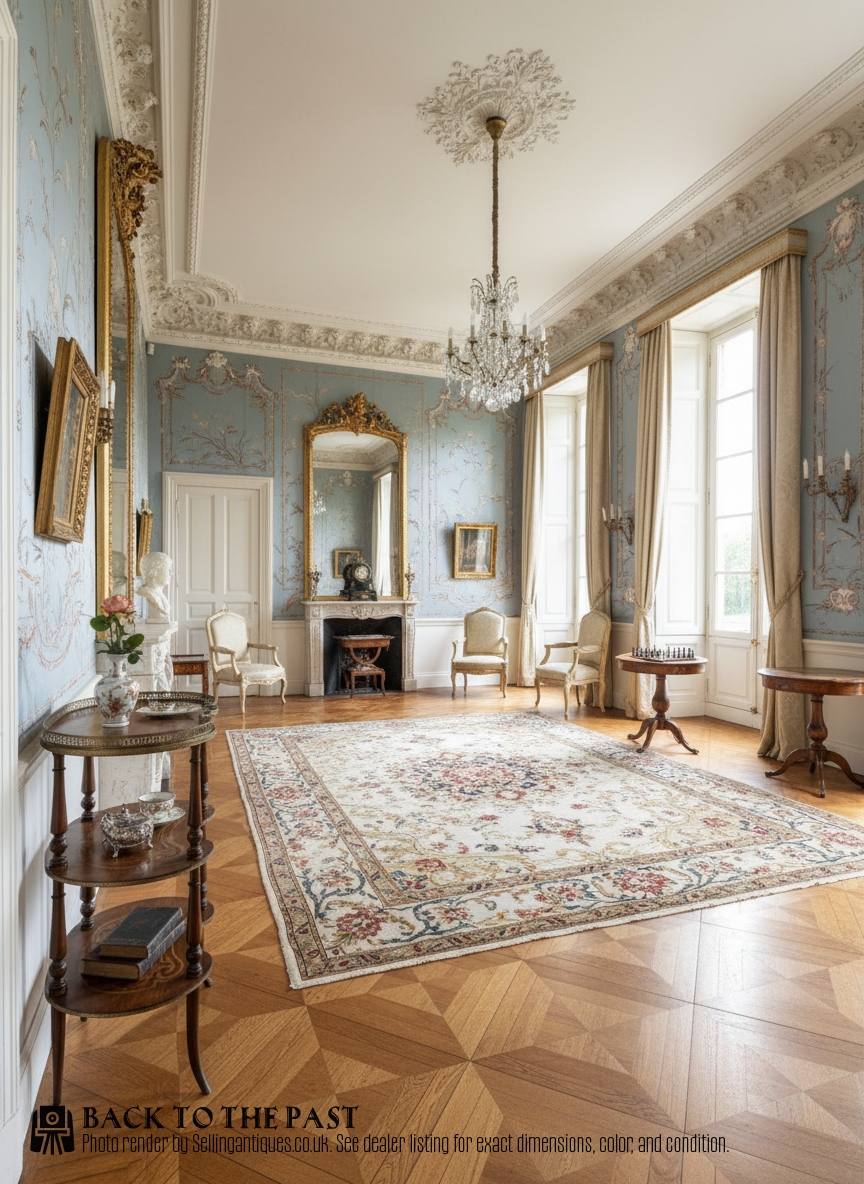
French Wood Accent Table
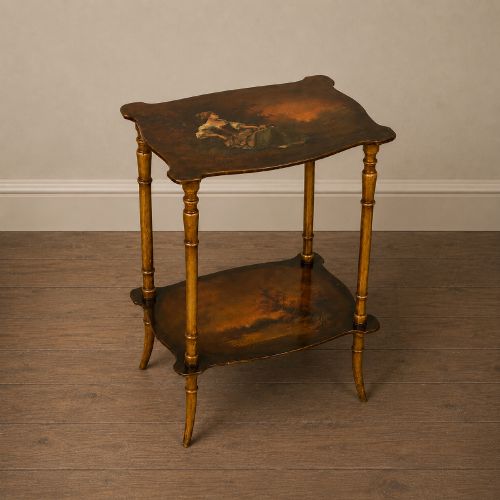
A french wood accent table encompasses smaller occasional pieces designed to complement a larger interior scheme rather than anchor a dining room. You encounter forms ranging from circular gueridons and two-tier etageres to compact side tables and folding faux bamboo designs.
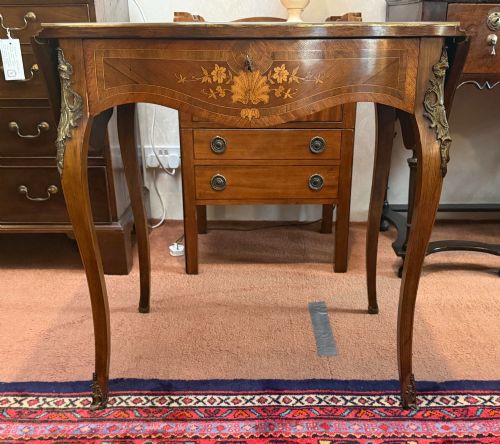
The material foundation rests predominantly on walnut, mahogany, rosewood, and kingwood, often elevated by decorative techniques such as marquetry, parquetry, and hand-painted surfaces. Many examples incorporate contrasting elements like marble tops or gilt bronze mounts.
The listings here lean heavily into nineteenth-century revivals, particularly Louis XV and Louis XVI styles, alongside Napoleon III and Art Nouveau expressions. These pieces reflect continental tastes spanning from the eighteen-sixties through the early twentieth century.
Materials and construction
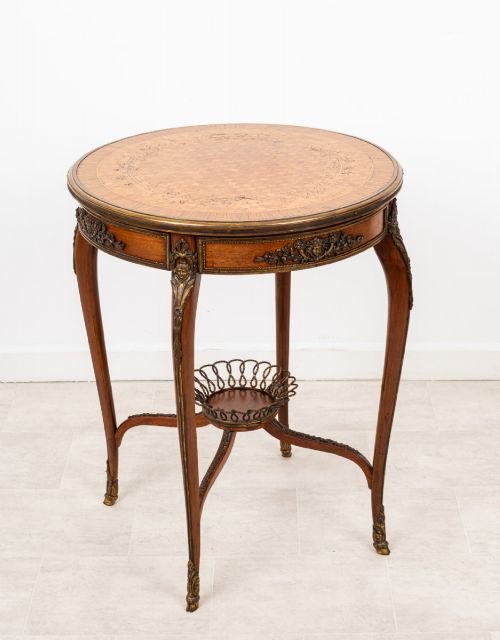
Cabinetmakers utilised dense hardwoods like walnut, mahogany, and exotic veneers such as kingwood and thuya to form the structural carcasses and decorative surface patterns. Marquetry and parquetry veneers were meticulously sliced and laid in geometric or floral arrangements across table tops.
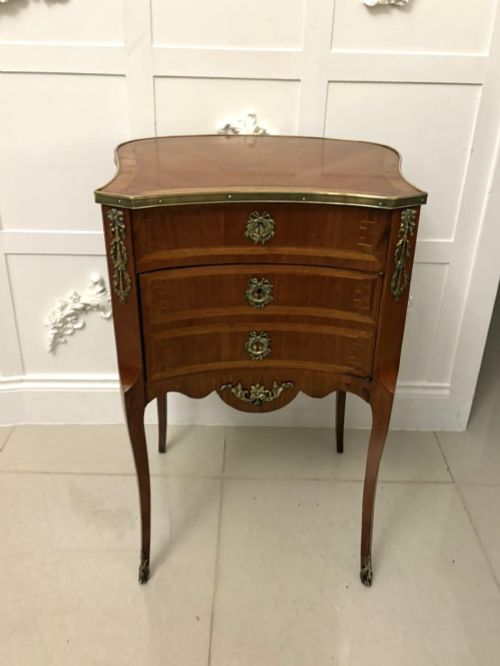
Metal ornamentation played a central role, with cast ormolu, gilded brass, and silvered bronze mounts applied to corners, legs, and aprons. Marble inserts, frequently white or coloured, were channelled into wooden frames to provide durable, smooth upper surfaces.
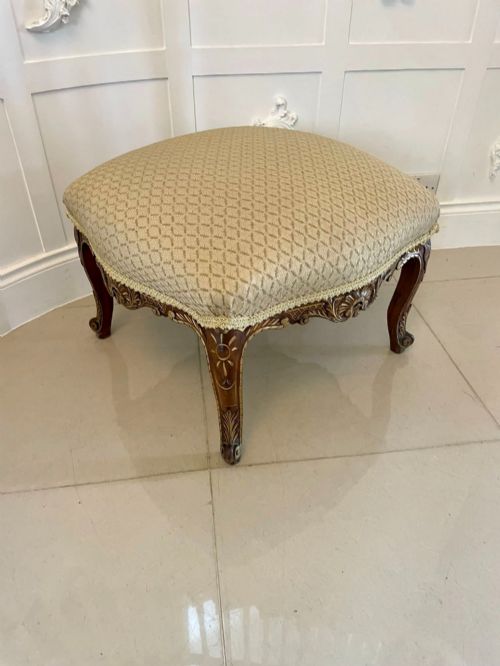
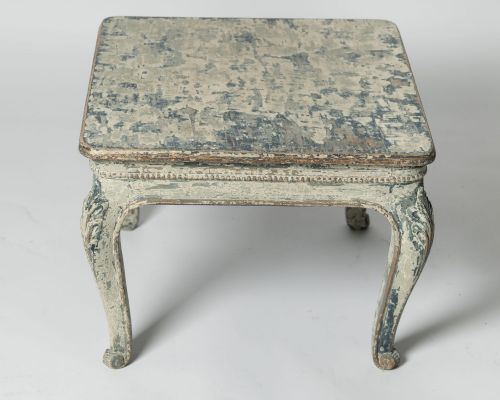
Surface finishing relied on traditional polish and hand-painted decoration, including Vernis Martin techniques on tiered tables. Carved elements in giltwood or walnut were shaped by hand to define cabriole legs and scrolled supports.
The current selection spans multiple periods from 1800 through the 1930s, featuring walnut, mahogany, rosewood, and painted finishes.
Distinctions in manufacture
The standard of a french wood accent table is dictated by the precision of its veneer work and the crispness of its bronze mounts. Finer pieces display seamless marquetry patterns that align accurately across joints and drawer fronts.
Workshop attribution elevates certain examples, particularly those bearing the marks or distinct characteristics associated with notable makers like Francois Linke, Emile Galle, or Edwards & Roberts. The depth and definition of hand-carving on the wooden framework also separate standard production items from masterworks.
The integration of secondary materials defines the tier of execution, such as heavy inset marble slabs with profiled edges rather than thin replacements, and substantial fire-gilded ormolu rather than lightweight plated brass.
Francois Linke·Edwards & Roberts·Gabriel Viardot
The French Wood Accent Table Glossary
- Gueridon
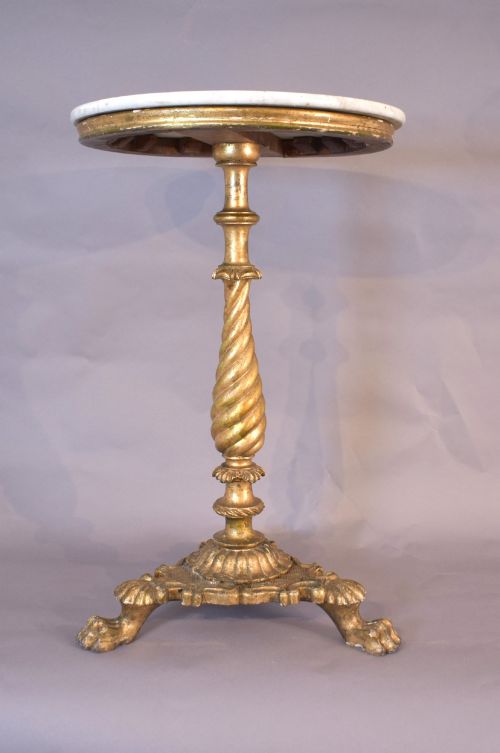
- A small circular occasional table, often featuring a marble top and three legs. These pieces originated in the seventeenth century and remained popular throughout the nineteenth century.
- Ormolu
- Gilded bronze used extensively for decorative mounts on furniture. It provides metallic contrast against dark hardwoods like rosewood and mahogany.
- Marquetry
- The art of applying small pieces of veneer to a structure to form decorative patterns or pictures. Master cabinetmakers used contrasting timbers to achieve tonal shading.
- Etagere
- A set of open shelves or tiered small tables used for displaying ornaments. Edwardian and nineteenth-century examples often incorporate delicate marquetry.
- Poudreuse
- A small dressing or work table fitted with compartments and mirrors. These multi-functional pieces frequently feature folding lids and intricate internal layouts.
French Wood Accent Table: Frequently Asked Questions
What is a french wood accent table used for?
These pieces function primarily as movable display surfaces for lamps, clocks, and decorative objects within reception rooms or bedrooms. Their compact dimensions allow them to sit beside seating or fill narrow wall spaces.
Historically, specific variants served dedicated tasks, such as holding writing materials, cards, or vanity accessories. Today, they primarily provide architectural interest and functional surface area in contemporary interiors.
How do I identify a Louis XVI style table?
Louis XVI style pieces, which appear frequently across nineteenth-century revivals, are characterised by straight, tapered, and fluted legs rather than curved cabriole supports. The overall geometry tends to be more rectilinear and neoclassical.
You will often notice architectural motifs such as beaded mouldings, paterae, and symmetrical gilt bronze mounts. This restrained aesthetic contrasts sharply with the earlier flowing curves of the Rococo period.
Are marble tops original to these tables?
Many nineteenth-century occasional tables and gueridons were manufactured specifically to house inset marble slabs, which offered a durable and cool surface for lamps and drinks. These marble inserts are generally rebated directly into the wooden frame.
When examining a piece, look for consistent ageing between the stone and the timber chassis. The marble should fit snugly within its designated wooden channel without awkward gaps.
How do I care for marquetry surfaces?
Marquetry relies on fine veneers secured with traditional animal glues that are sensitive to extreme humidity and direct sunlight. Keep these tables away from heat sources and radiators to prevent the wood from shrinking or lifting.
Dust regularly with a dry cloth and apply a quality furniture wax sparingly to nourish the timber. Avoid liquid cleaning products and chemical sprays that can degrade the polish.