




French Marquetry Display Table
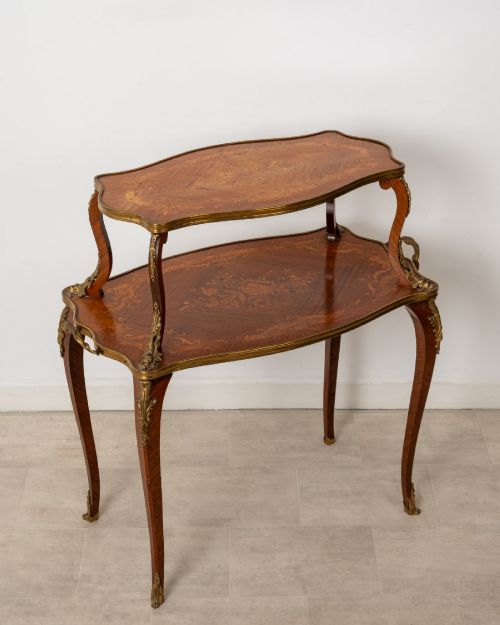
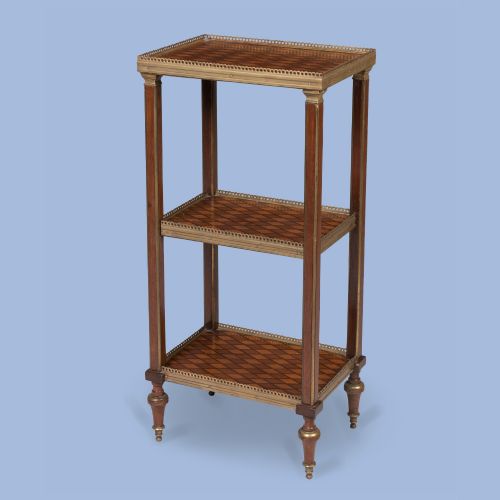
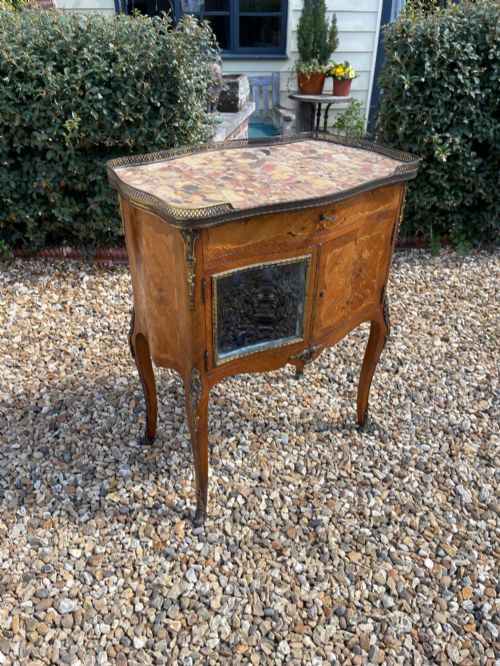
A French marquetry display table brings together precise floral wood inlay and glazed cabinetry to showcase small treasures in the drawing room.
French Marquetry Display Table
A french marquetry display table search centres on multitiered étagères, glazed bijouterie cases, and occasional furniture from the nineteenth and early twentieth centuries. These pieces reflect revivalist tastes, particularly Louis XV and Louis XVI styles, incorporating elaborate inlaid surfaces designed to catch the eye.
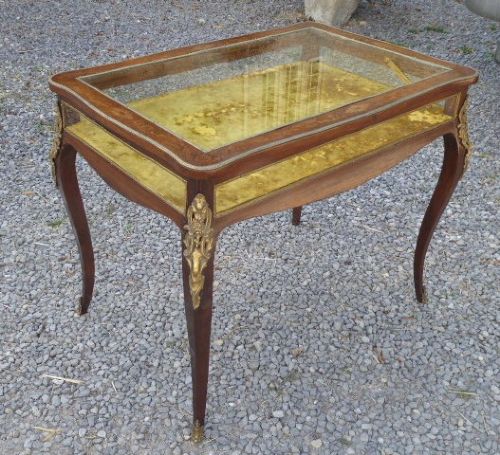
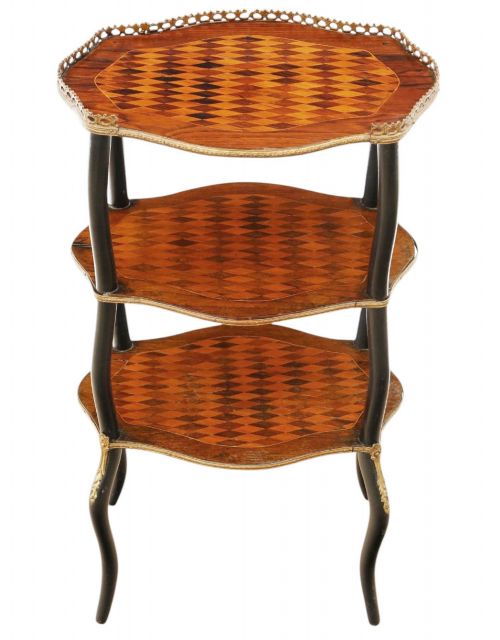
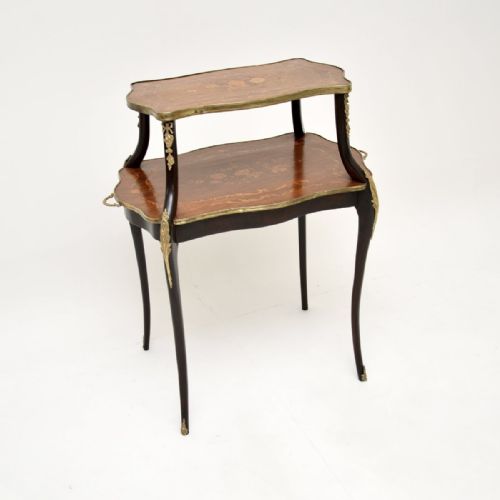
Most examples encountered here take the form of freestanding etagere stands with multiple tiers or glass-topped display tables intended for precious objects. Walnut, kingwood, rosewood, and satinwood form the foundation for detailed floral and geometric wood patterns executed by period makers.
Materials and construction
Cabinetmakers built these items using dense timbers such as walnut, kingwood, and rosewood, sliced into fine veneers for elaborate marquetry and parquetry compositions. Craftsmen arranged contrasting woods by hand to produce floral motifs and geometric arrangements across tabletops and shelves.
Gilded bronze ormolu mounts, brass stringing, and glazed panels complete the construction, framing the wooden inlays and glass display compartments. The structural frame often relies on ebonised wood or mahogany to support the multitiered étagère and side table forms.
Current listings feature pieces spanning the Victorian and Edwardian eras, incorporating walnut, kingwood, rosewood, and ormolu.
Judging execution and finish
The distinction between ordinary and superior items rests on the precision of the veneer work and the crispness of the cast bronze mounts. Finer pieces display seamless grain matching and delicate tonal variations within the floral marquetry.
Structural heft and the quality of the timber selection separate standard production from workshop pieces bearing attribution or superior craftsmanship. Heavier ormolu castings and well-figured kingwood or satinwood indicate a higher standard of manufacture.
Edwards & Roberts·Donald Ross
The French Marquetry Display Table Glossary
- Marquetry
- Decorative veneer work arranged in pictorial patterns using various coloured woods. It distinguishes the tabletops and shelves of these display pieces.
- Ormolu
- Gilded bronze mounts applied to furniture edges and legs. This technique adds metallic contrast to the timber surfaces.
- Étagère
- A piece of furniture with open shelves for displaying small objects. These tiers are often supported by slender uprights.
- Bijouterie table
- A glass-topped display table specifically designed for showing jewellery and trinkets. The glazed compartment keeps contents visible yet protected.
- Parquetry
- Geometric wood inlay forming repetitive patterns such as cubes or squares. It frequently appears alongside floral marquetry on period surfaces.
French Marquetry Display Table: Frequently Asked Questions
What were display tables used for?
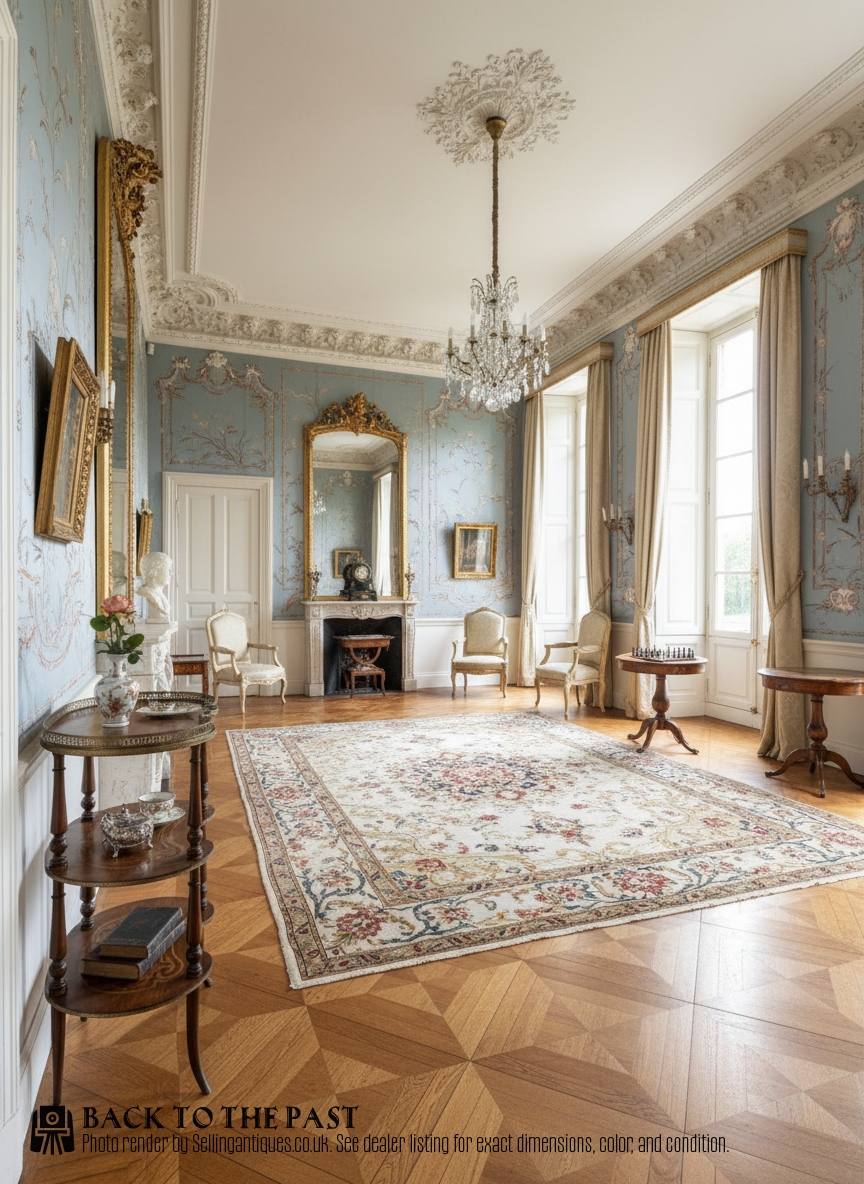
These tables served as focal points in Victorian and Edwardian drawing rooms for exhibiting delicate personal possessions, portrait miniatures, and small curiosities.
Their glazed compartments and open tiers allowed hosts to display items of conversation safely while complementing fashionable revival interiors.
How do I care for marquetry wood?
Protect the veneered surfaces from direct sunlight to prevent the natural timber colours from fading over time.
Apply a traditional wax polish sparingly and maintain stable room humidity to keep the delicate wood inlays from lifting.
Are these tables purely decorative?
While primarily designed to exhibit ornamental objects and small collections, multitiered etagere forms also functioned as lamp stands or occasional tables.
The lower shelves provided practical surface space for books or small decorative accessories alongside the main display area.
How do I identify a French style piece?
Look for characteristic design elements such as cabriole legs, asymmetrical curves inspired by Louis XV aesthetics, and extensive use of floral wood veneers.
The presence of gilt bronze ormolu mounts and brass stringing further points towards French revival influences common in the nineteenth century.