
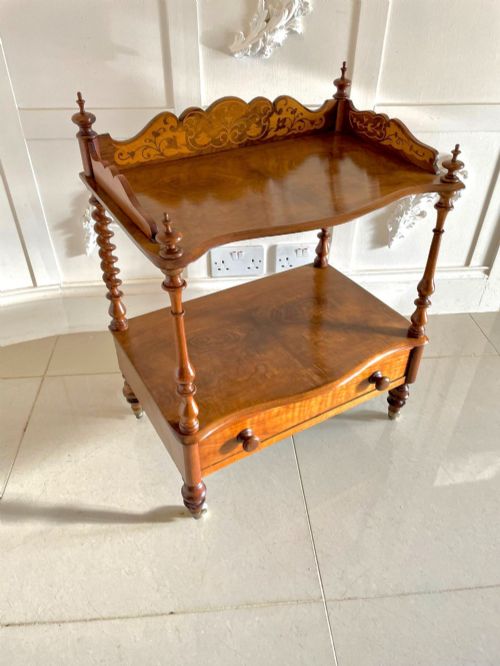
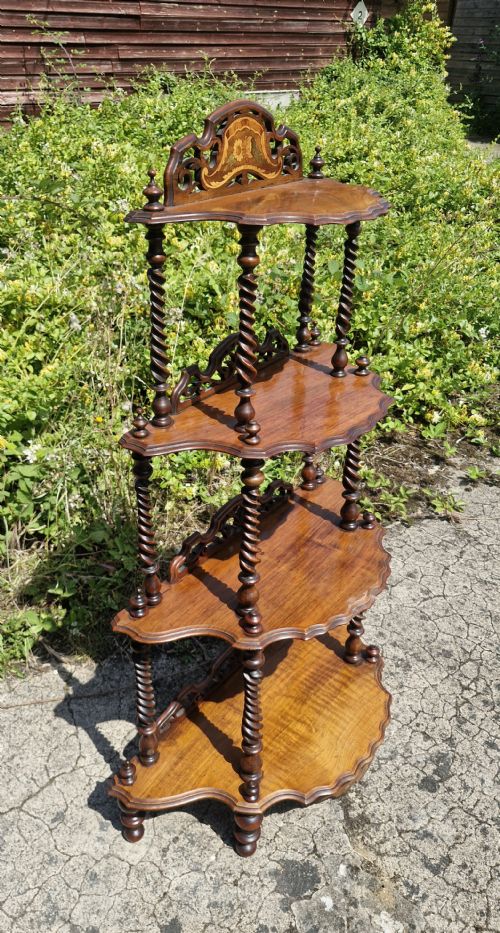
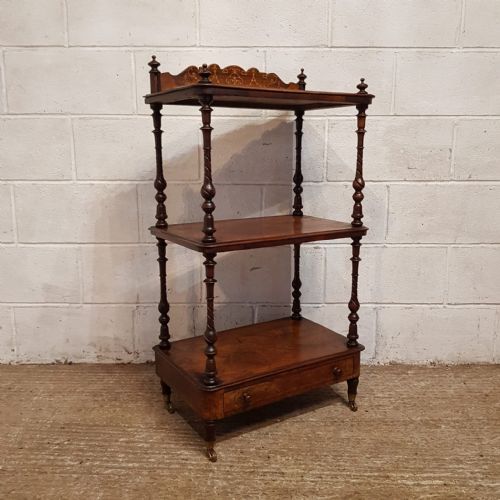


Walnut Marquetry Tier Stand
A walnut marquetry tier stand brings tiered display surfaces and intricate floral inlay into a room, offering both practical shelving and striking period decoration.
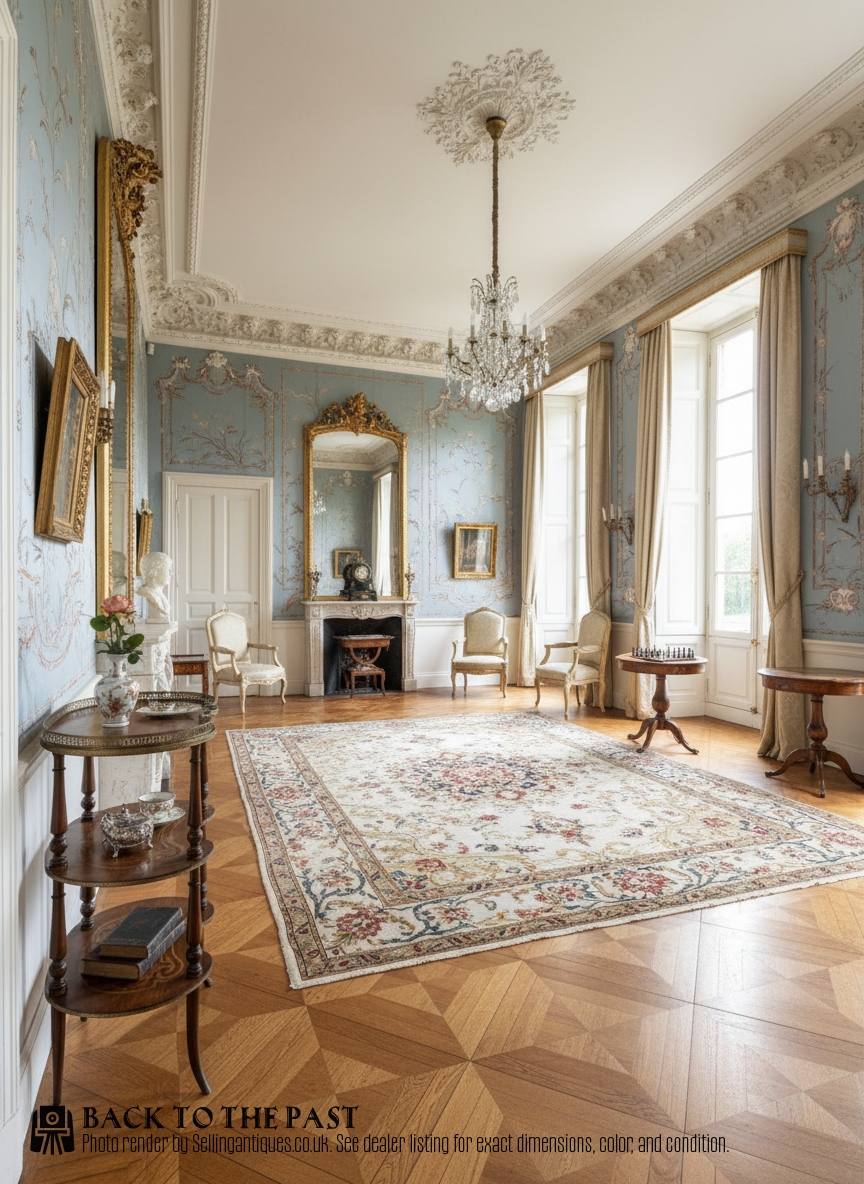
Walnut Marquetry Tier Stand
A walnut marquetry tier stand encompasses multi-level etageres, whatnots, corner stands and display shelving designed to hold ornaments and small objects. These pieces primarily date from the Victorian period through to the Edwardian era and the early twentieth century.
The version most commonly encountered on this page is the Victorian walnut whatnot or multi-tier etagere, often featuring inlaid marquetry decoration across several graduated shelves supported by slender uprights.
How they were made
Cabinet makers utilised walnut and burr walnut as the primary timber foundation, frequently applying marquetry veneer and detailed inlay work in contrasting woods such as satinwood. Structural stability and decorative enhancement often relied on cast brass mounts, ormolu details and gilded metal galleries.
The tiered construction required precise joinery to support multiple open shelves, while floral or geometric marquetry patterns were meticulously hand-cut and fitted into the surface veneers before polishing.
Some tier stands double as jewellery cabinets, proving that Victorians loved hiding their treasures inside display furniture.
What varies in quality
The standard of execution in the marquetry inlay distinguishes finer examples, where crisp lines and varied timber tones create distinct pictorial motifs without lifting veneer edges. The choice of burr walnut figures heavily in the upper tier of execution, offering richer natural grain patterns across the primary surfaces.
Structural harmony also marks the difference between standard production and superior craftsmanship, visible in the elegance of the supporting columns, the strength of tier junctions and the refinement of any applied ormolu or brass galleries.
Donald Ross·Gordovil Spain
The Walnut Marquetry Tier Stand Glossary
- Marquetry
- Decorative inlay work using various tinted woods to form pictorial or geometric patterns on a furniture surface. This technique creates detailed floral or scroll designs across table tops and tier shelves.
- Etagere
- A piece of furniture consisting of a set of open shelves for displaying small objects or ornaments. These typically feature two to four tiers arranged vertically.
- Whatnot
- A multi-tiered shelving unit popular in the nineteenth century for holding books, ornaments or display items. Corner versions were especially common for utilising limited room space.
- Burr walnut
- Timber harvested from a tree growth or burl, yielding a highly swirled and mottled grain pattern. Cabinet makers prize this wood for its decorative surface movement.
- Ormolu
- Gilt bronze mounted onto furniture as decorative feet, trims or gallery rails. The material adds metallic contrast to the dark walnut timber.
Walnut Marquetry Tier Stand: Frequently Asked Questions
What is a walnut marquetry tier stand used for?
These tiered stands serve primarily as display furniture for holding small decorative items, porcelain or books. Multiple open shelves allow items to be shown from various angles.
Historically, they occupied prominent positions in drawing rooms and parlours as both functional storage and decorative centrepieces.
How do I date a Victorian tier stand?
Dating relies on examining the timber grain, construction joints and prevailing decorative styles such as French Rococo Revival or Louis XV influence. Mid nineteenth century pieces often display heavier burr walnut veneers and robust pillar supports.
Later Edwardian examples tend towards lighter framing and more stylised floral marquetry inlay across the various tier levels.
Where should I place a corner whatnot?
Corner stands fit directly into ninety-degree room angles to make use of otherwise empty space. They work well in living rooms or hallways to display collections without obstructing walkways.
Keep them away from direct sunlight and strong heat sources to protect the delicate walnut veneer and marquetry inlay.
What is the difference between an etagere and a whatnot?
An etagere generally refers to a light, open-shelved piece of French influence designed specifically for display. A whatnot represents the broader British terminology for multi-tiered shelving units used across the Victorian interior.
In practice, both forms overlap considerably in their tiered construction and decorative use of marquetry and brass galleries.