


French Wingback Chair
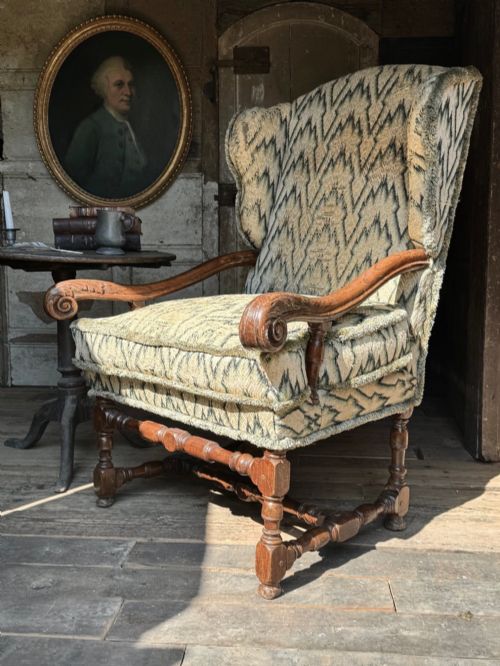
A french wingback chair brings deep upholstery and high protective sides into a room, offering an enclosed seat shaped by centuries of European seating design.
French Wingback Chair
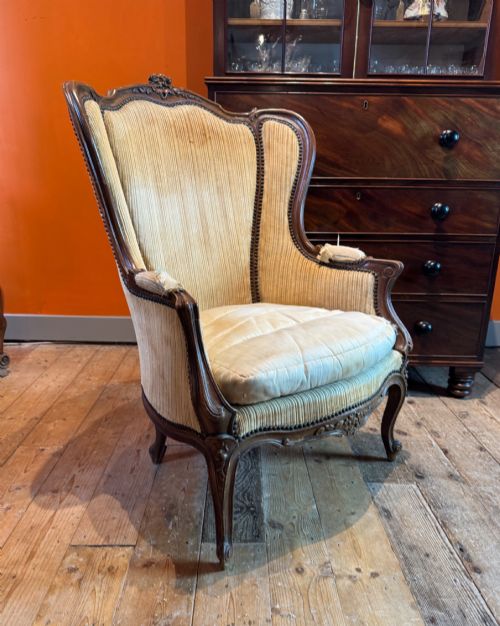
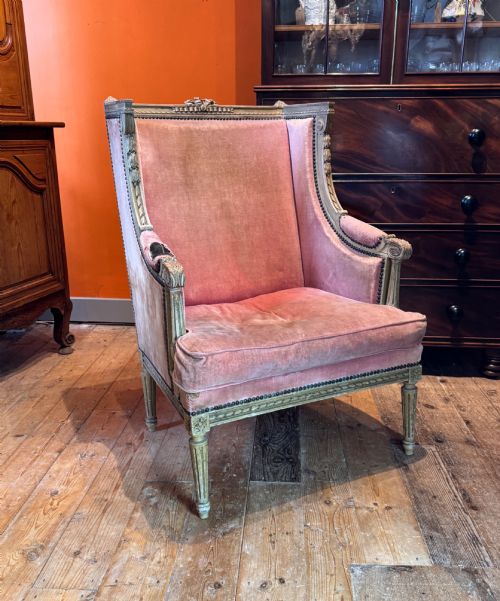
A french wingback chair is a substantial upholstered seat designed to shield the occupant from drafts, appearing in forms ranging from early oak frames to elaborate gilded revival pieces. You will most frequently encounter nineteenth-century interpretations of earlier court styles, particularly pieces influenced by Louis XV and Louis XVI designs originating from chateaux and provincial houses.
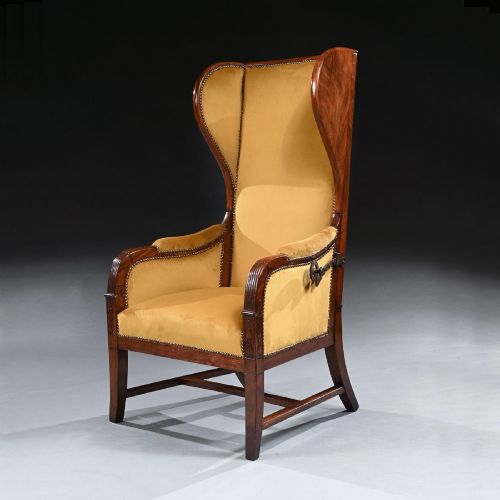
The selection encompasses deep-seated armchairs, reclining frames in mahogany and walnut, and bergere variants with upholstered arms. These pieces span the eighteenth, nineteenth, and early twentieth centuries, reflecting both formal salon aesthetics and more functional seating requirements.
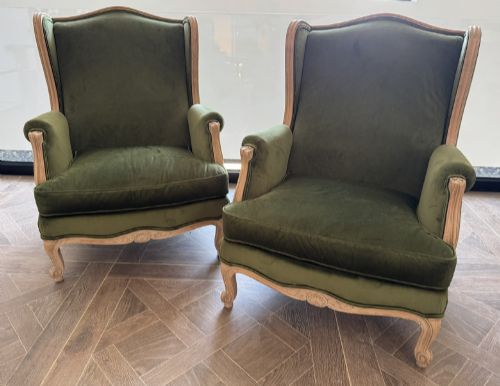
Makers and craftsmen adapted the classic winged silhouette through successive periods, producing walnut frames with carved details, ebonised finishes, and pieces retaining original paint. The variety includes matched pairs and individual armchairs upholstered in velvet, leather, linen, and silk.
Materials and Construction
Frames are constructed from dense timbers such as walnut, oak, mahogany, and giltwood, providing the structural integrity required to support deep upholstery and extensive carving. Artisans shaped these woods into flowing cabriole legs, exposed carved crests, and supportive wing assemblies.
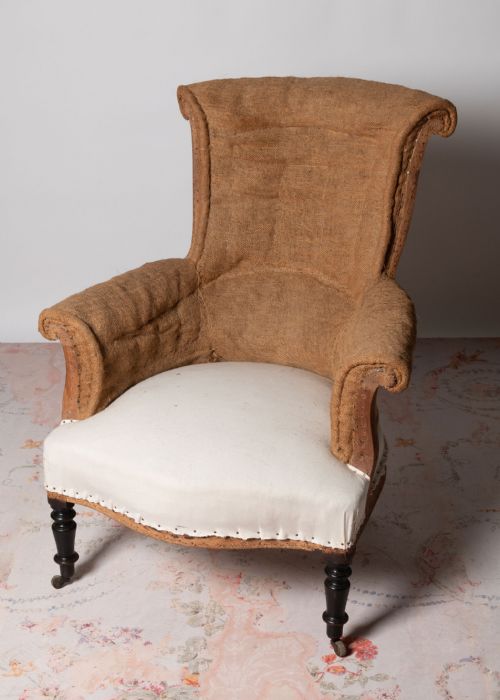
Upholstery techniques involve traditional stuffing secured within textiles ranging from sheep's hide and leather to velvet, linen, and silk tapestry. Brass tacks frequently secure the edges of the covering materials to the wooden frame.
Decorative surface treatments include original paint finishes, parcel-gilding, and ebonising. Carved floral and foliate motifs adorn the wooden components, distinguishing pieces intended for formal salons from simpler provincial seating.
French Wingback Chair Retail Price Guide 2026
Typical asking prices for french wingback chair among the pieces listed under this phrase on Sellingantiques today, from the lower quarter to the upper quarter. They describe what is for sale here now, not the wider market.
Several chairs include built-in reclining mechanisms, proving that nineteenth-century readers appreciated a nap just as much as we do.
Distinctions in Quality
Quality rests upon the crispness of the timber carving and the integrity of the underlying wooden frame. Finer examples display deeply sculpted walnut, oak, or giltwood detailing executed by skilled hands rather than mechanical replication.
The proportion and balance of the winged silhouette dictate the visual success of the piece. Superior chairs maintain harmonious lines between the height of the back, the sweep of the wings, and the stance of the legs.
The survival of original surface finishes, such as early paint layers, genuine gilding, or period leather, elevates the historical integrity of an armchair. Pieces retaining their initial structural components and early textiles offer greater authenticity for collectors.
The French Wingback Chair Glossary
- Giltwood
- Timber treated with a thin layer of gold leaf applied over a prepared surface. This finish is commonly found on formal revival armchairs from the nineteenth century.
- Louis XV Style
- A decorative aesthetic characterised by asymmetrical curves, cabriole legs, and naturalistic floral carvings. It draws inspiration from the mid-eighteenth-century French court.
- Louis XVI Style
- A neoclassical design language defined by straight lines, fluted columns, and symmetrical geometric forms. Pieces in this style often incorporate oval backs and ribbon carvings.
- Reclining Chair
- An adjustable seating form engineered with a moveable back mechanism. Nineteenth-century examples often combine this function with mahogany frames and leather upholstery.
French Wingback Chair: Frequently Asked Questions
How do I identify a true period french wingback chair?
Examine the construction methods visible on the underside and frame joints, looking for hand-cut joinery and traditional tool marks consistent with older manufacturing practices.
Compare the timber patina, carving depth, and stylistic details against known design periods like Louis XV or Louis XVI to determine the likely era of production.
How should I care for leather and hide upholstery?
Maintain historical leather by applying appropriate conservation-grade balms periodically to prevent the hide from drying and cracking over time.
Keep these chairs away from direct sunlight and heat sources to preserve the natural suppleness of sheep's hide and leather coverings.
Are these chairs suitable for daily seating?
Many nineteenth-century and twentieth-century examples provide robust structural support and comfortable proportions suited for regular domestic use.
Consider having the internal webbing and padding assessed by a specialist conservator if you plan to sit in an antique chair frequently.