
French Walnut Writing Desk
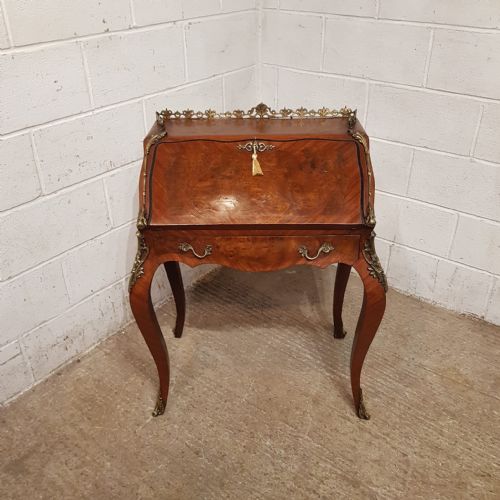
A french walnut writing desk brings continental warmth and intricate marquetry into a room, offering a dedicated space for correspondence.
French Walnut Writing Desk
A french walnut writing desk appears across multiple periods including the eighteenth, nineteenth, and early twentieth centuries, spanning revival styles and art deco forms.
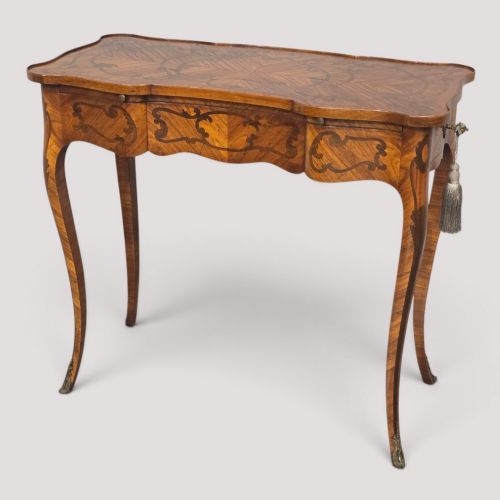
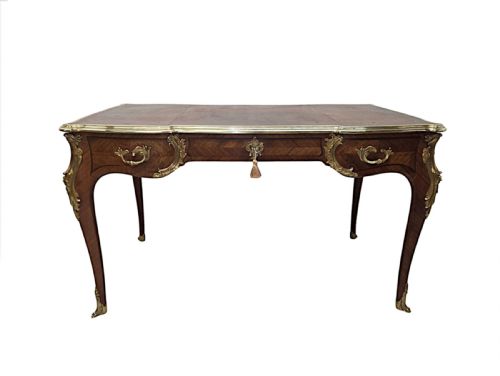
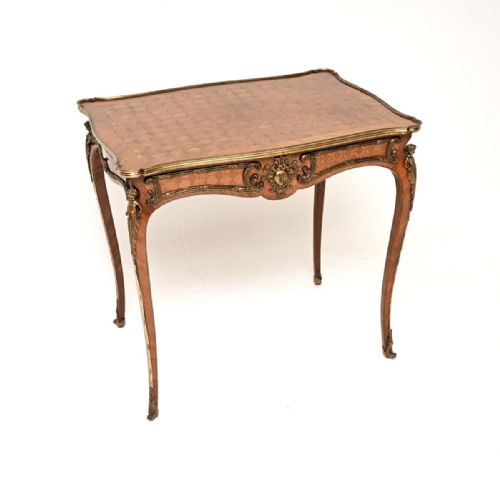
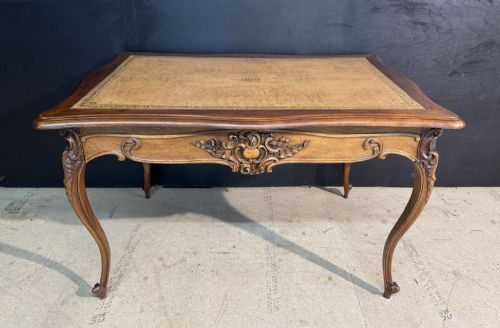
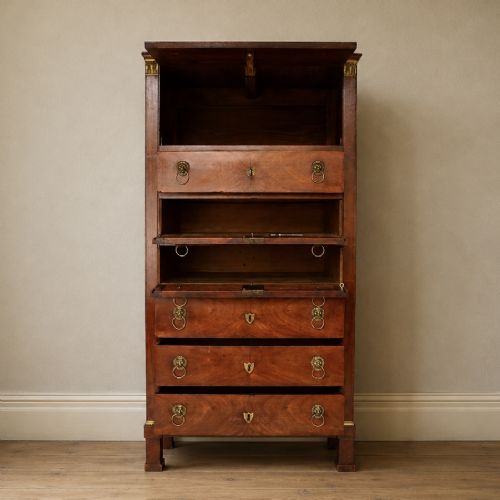
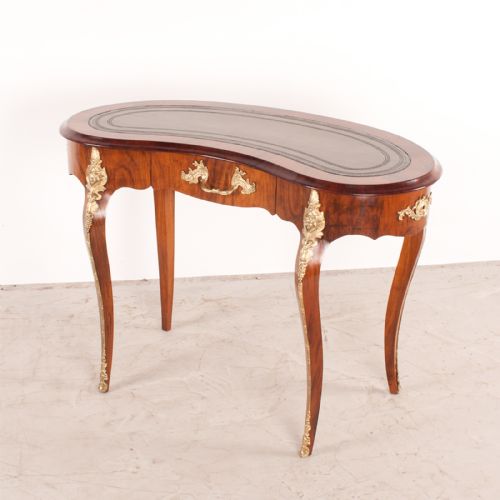
Buyers commonly encounter bureau plats, bonheur-du-jours, and freestanding writing tables that showcase veneered surfaces and shaped cabriole legs.
Origins range from formal cabinet workshops in France to nineteenth-century Victorian interpretations produced in Britain using imported timbers.
Materials and Techniques
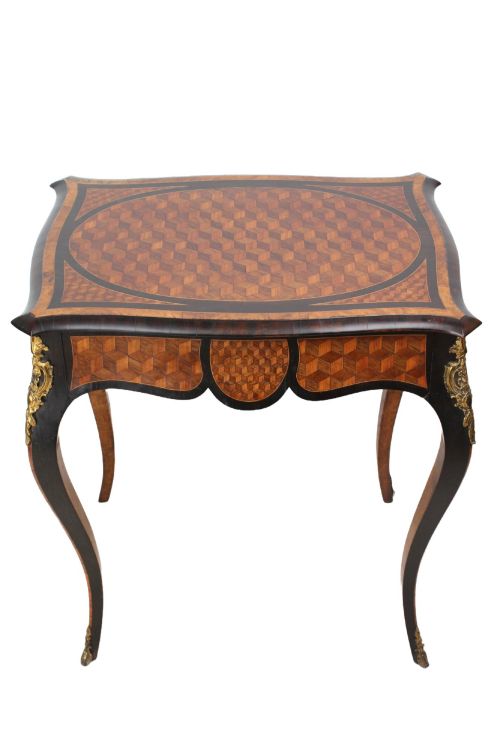
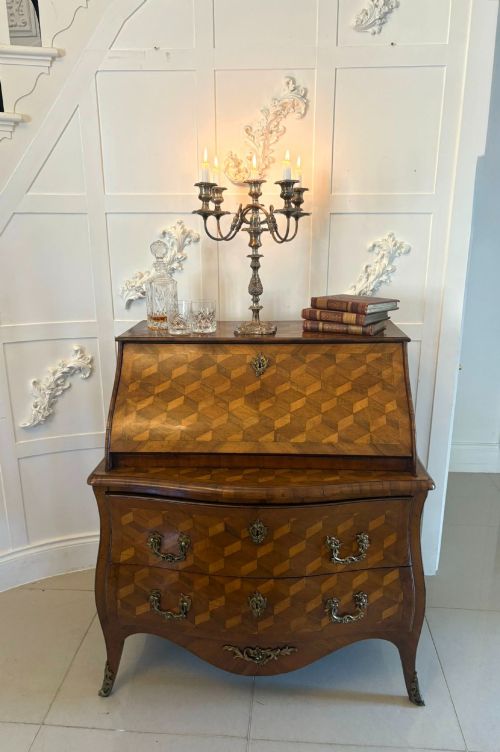
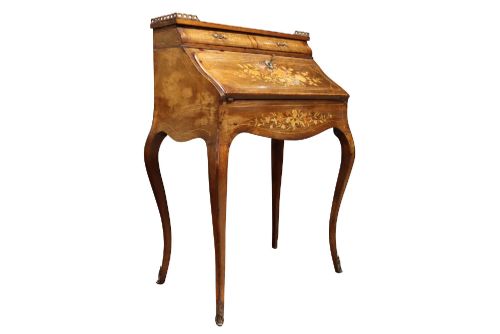
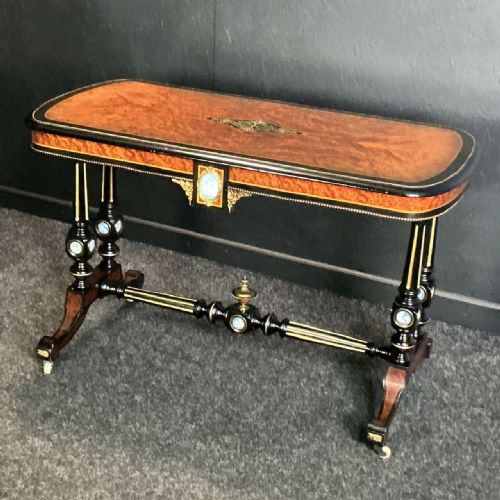
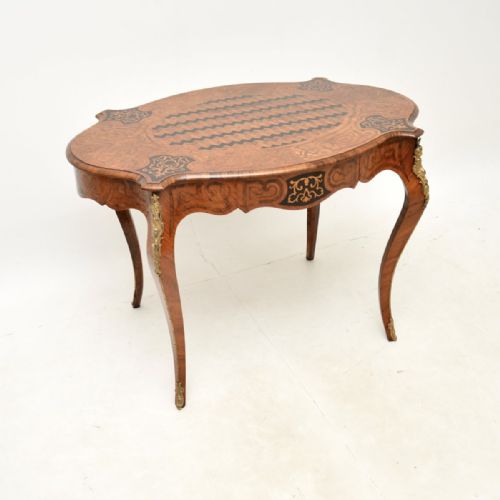
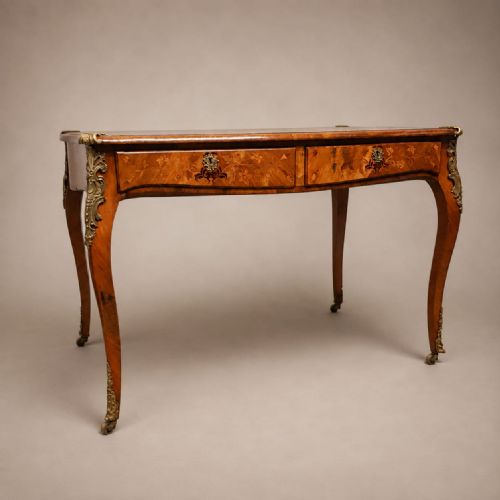
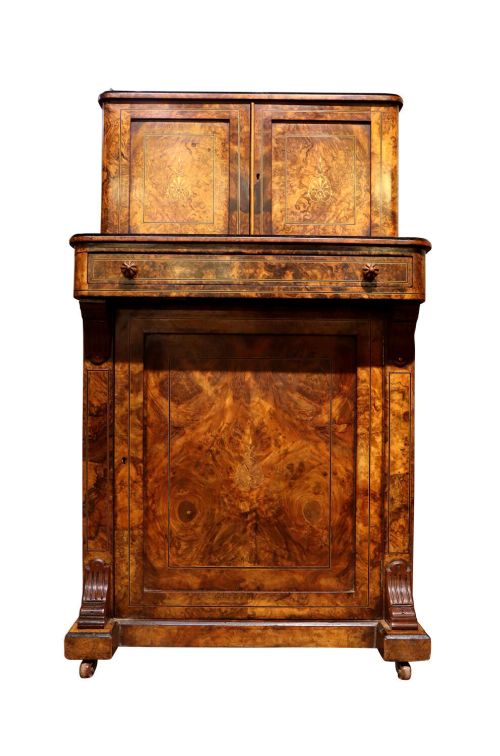
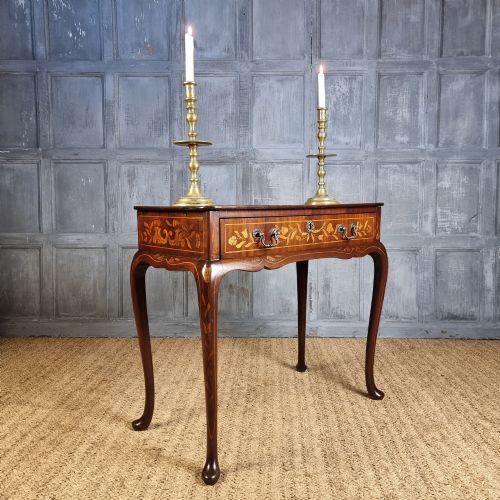
Craftsmen utilised figured walnut and burr walnut veneers laid over solid secondary timbers, often accenting the grain with intricate floral marquetry and parquetry patterns in contrasting woods.
Surface detailing frequently incorporates cast ormolu and gilt bronze mounts, brass stringing, inset leather writing surfaces, and marble tops on heavier secrétaires.
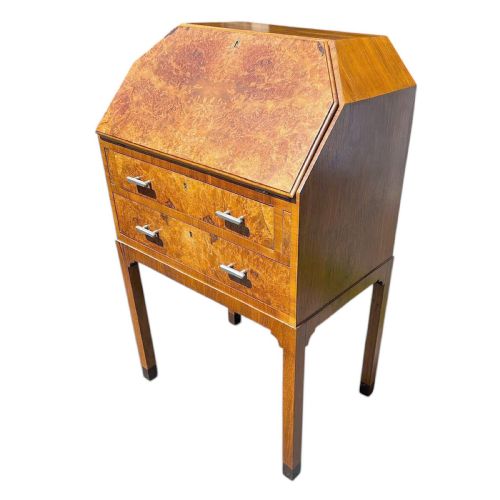
Periods represented span from the eighteenth century through Victorian revivals to nineteen-thirties art deco.
Standard and Execution
Superior examples distinguish themselves through the precision of the parquetry inlay, the depth and figuring of the walnut veneer, and the crispness of chased ormolu mounts.
Construction methods, such as hand-cut dovetails within drawer boxes and the retention of original patination, separate standard production pieces from master cabinetmaker output.
JAS Shoolbred·Edward And Roberts·Étienne Kohlmann
The French Walnut Writing Desk Glossary
- Bureau plat
- A freestanding writing table fitted with drawers across the frieze, typically featuring an inset leather writing surface.
- Bonheur-du-jour
- A light lady's writing desk featuring a raised superstructure with small drawers, shelves, or a cabinet above the main writing surface.
- Marquetry
- Decorative veneer work forming pictorial or geometric patterns using various coloured and textured timbers.
- Ormolu
- Gilded bronze used for decorative mounts, feet, and edge banding on nineteenth-century furniture.
- Parquetry
- Geometric wood inlay arranged in repetitive patterns such as cubes or chequers.
French Walnut Writing Desk: Frequently Asked Questions
How do I identify a bonheur-du-jour?
A bonheur-du-jour is recognised by its light proportions and the small superstructure mounted on the rear of the writing surface. This upper section typically includes pigeonholes, tiny drawers, or a small cupboard.
Such pieces were traditionally designed as ladies' writing desks for private correspondence.
What is burr walnut?
Burr walnut is taken from the gnarled growth on a walnut tree, producing a swirling, highly figured grain pattern. Cabinetmakers sliced this wood into thin veneers to display across desk tops and drawer fronts.
Its complex grain makes every veneered surface entirely unique.
How should I care for a leather writing surface?
Leather surfaces benefit from occasional light dusting and conditioning with specialised leather balms to prevent drying and cracking. Avoid using harsh chemical cleaners or excess moisture during maintenance.
Protecting the inset panel from direct sunlight preserves both the colour and the gilded tooling.