
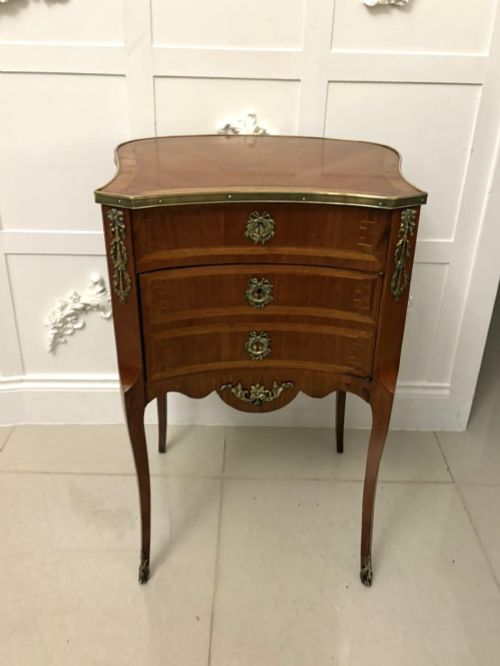

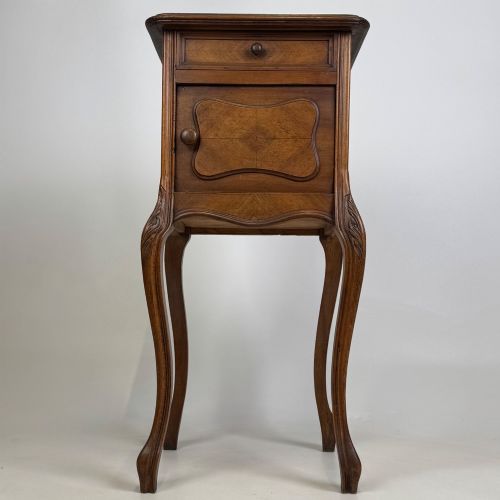
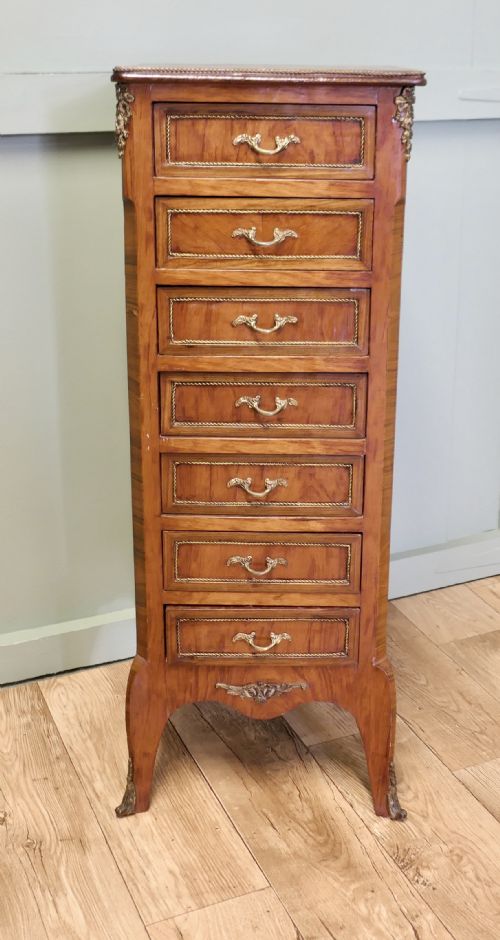
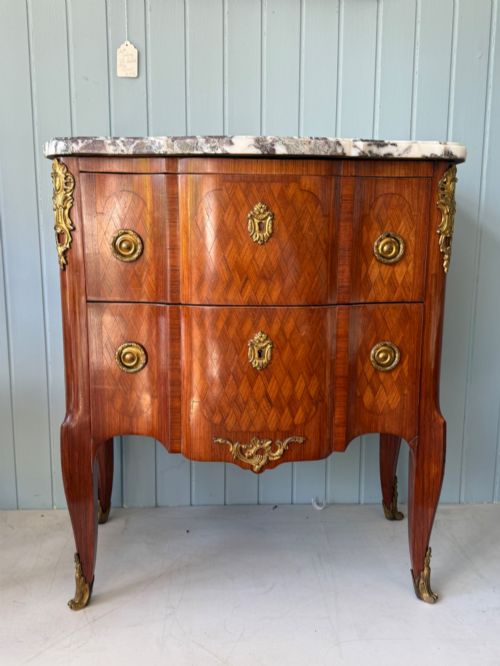
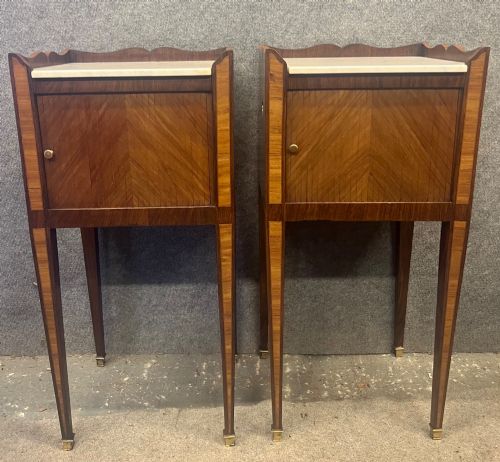
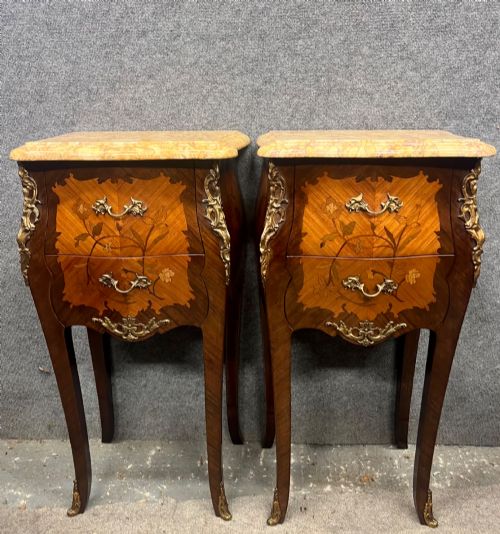
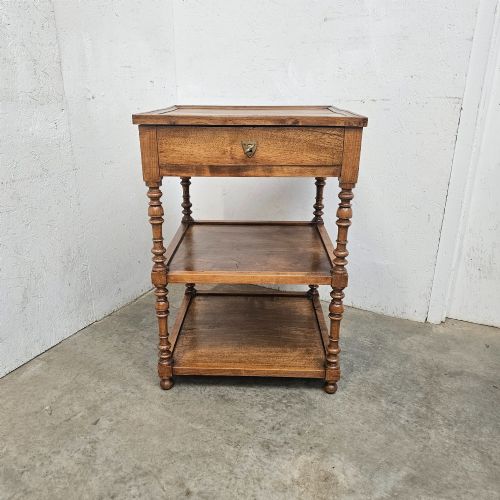
French Walnut Side Cabinet
A french walnut side cabinet brings distinct continental elegance and practical storage to a room through rich timber grain and classic proportions.

French Walnut Side Cabinet
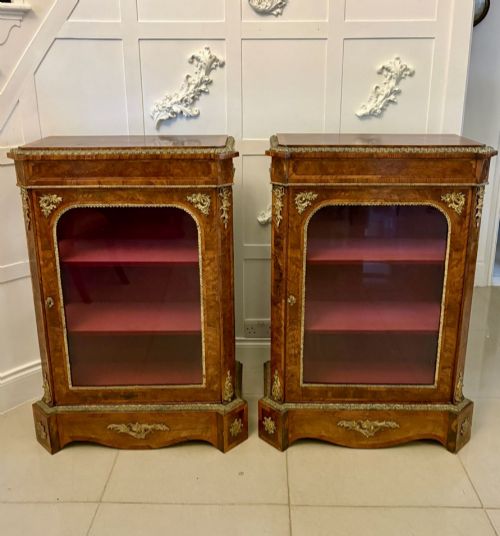
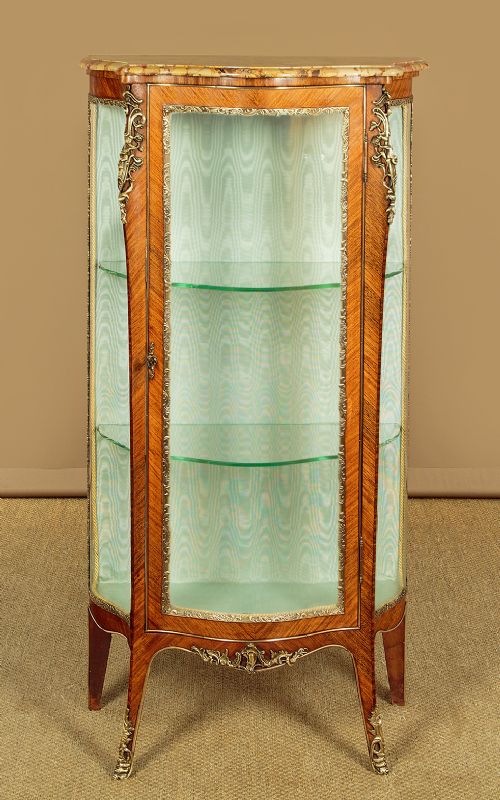
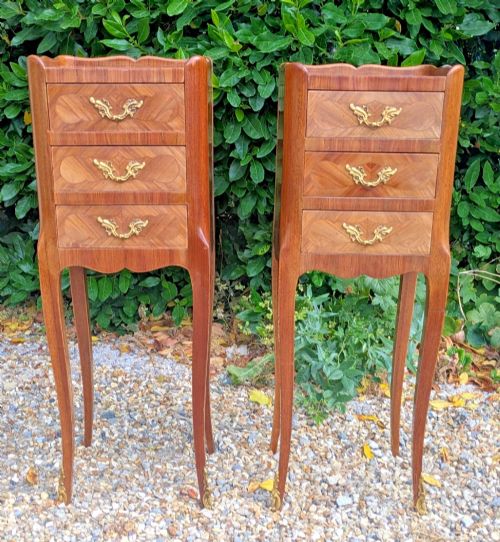
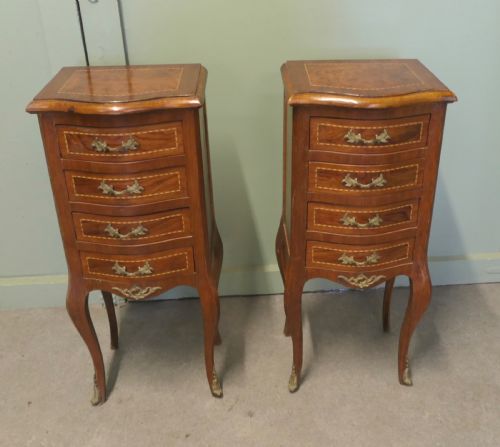
Originating across Victorian, Edwardian, and twentieth-century periods, these pieces often reflect revivalist tastes including Louis XV and Louis XVI styles. Buyers frequently encounter symmetrical pairs designed for bedroom or salon placement alongside single display cabinets and vitrines.
The fundamental utility centres on enclosed cupboard space and drawer storage combined with decorative surface areas. Walnut and burr walnut dominate the timber palette, frequently paired with contrasting veneers and stone surfaces.
Markers of quality
The standard of a french walnut side cabinet rests upon the depth of the timber grain, the precision of the marquetry, and the crispness of any cast metal mounts. Burr walnut selections with matched veneer panels indicate superior cabinet making.
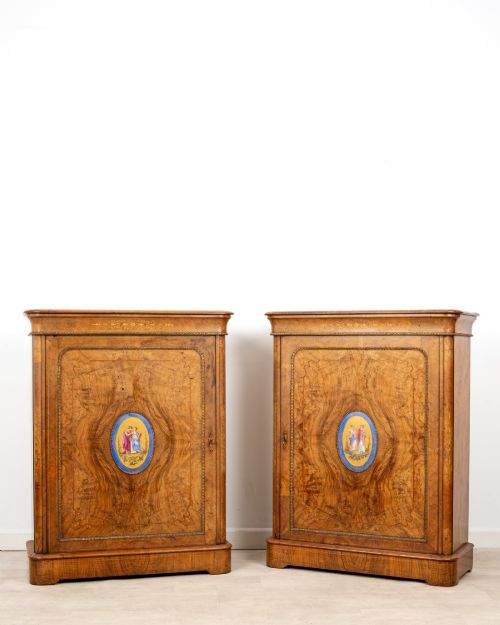
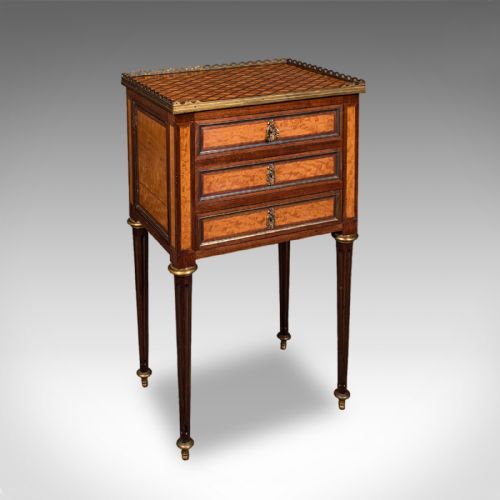
Originality of components, including marble tops, brass hardware, and porcelain plaques, elevates the integrity of a piece. Finesse in structural proportions, such as neatly turned legs and smoothly operating drawers, separates standard utility items from finer decorative examples.
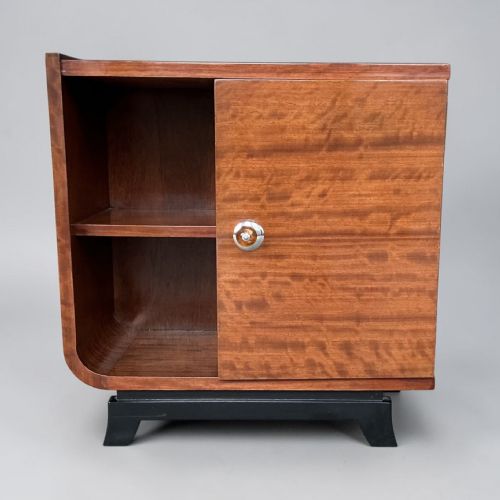
Listings span the nineteenth and twentieth centuries, incorporating Victorian, Edwardian, and Art Deco design vocabularies alongside traditional French revival styles.
The French Walnut Side Cabinet Glossary
- Chevet
- A small bedside table or cabinet designed to hold nighttime necessities. These typically feature a single drawer above a small enclosed cupboard.
- Ormolu
- Gilded bronze mounts applied to the exterior corners and legs of furniture for decorative contrast. This technique was widely utilised during revival periods.
- Marquetry
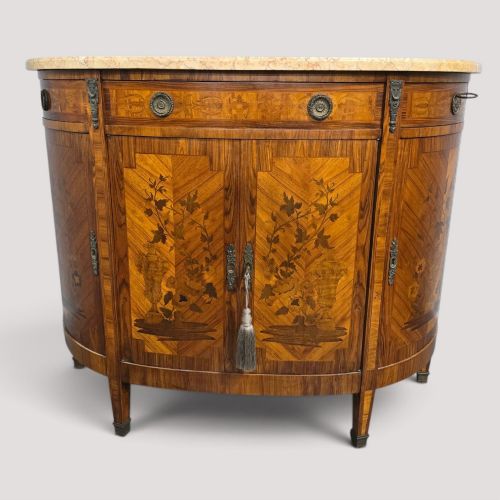
- Inlaid patterns formed from pieces of coloured wood veneer fitted into a supportive background. Craftsmen used this method to create floral and geometric designs.
- Credenza
- A long side cabinet originally used for displaying plate, evolving into a principal piece of dining or salon furniture. Victorian examples frequently incorporate glass doors and inlaid panels.
- Demi lune
- A half-moon shape applied to the plan of tables and small cabinets. This form allows the furniture to sit flush against a wall while occupying minimal floor depth.
French Walnut Side Cabinet: Frequently Asked Questions
What is a french walnut side cabinet used for?
These cabinets serve as versatile storage units for living areas, hallways, and bedrooms. They provide concealed space for small items while offering surface display areas for lamps and decorative objects.
Smaller formats function primarily as bedside tables or lamp chests. Larger credenzas and commodes accommodate dining ware or general household storage.
How do I date a french walnut side cabinet?
Dating relies on observing construction techniques, timber choices, and stylistic revival cues. Pieces from the mid nineteenth century often display heavier Victorian proportions and elaborate ormolu mounts.
Twentieth-century examples, including art deco pieces, feature streamlined geometry and simpler veneering. The presence of specific revival styles such as Louis XV indicates nineteenth or early twentieth-century manufacture.
Are marble tops original to these cabinets?
Original marble tops were cut specifically to fit the recessed upper profile of the cabinet frame. They served a practical purpose in resisting liquid and heat damage.
Inspecting the underside reveals whether the marble sits naturally within the original wooden rebate. Period pieces generally retain their fitted stone surfaces without modern replacement edges.
How do I care for burr walnut veneer?
Burr walnut requires stable indoor humidity away from direct sunlight to prevent veneer lifting or timber fading. Gentle dusting with a dry cloth maintains the polished surface.
Harsh chemical cleaners strip the historic finish. Occasional application of appropriate furniture wax preserves the natural lustre of the grain.