

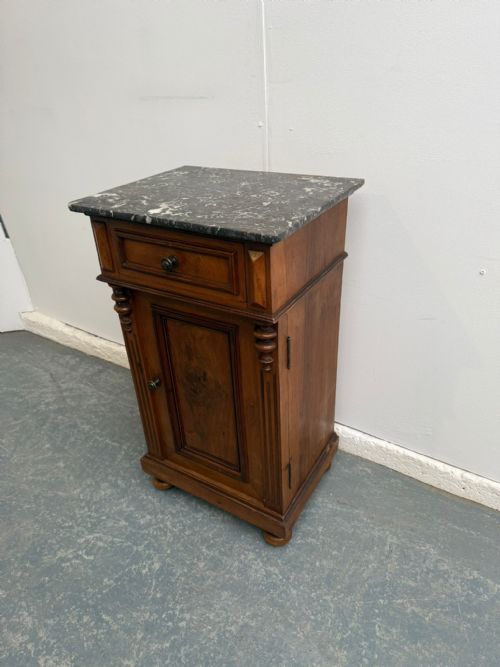


Victorian Walnut Pot Cupboard
A victorian walnut pot cupboard is a practical bedside companion that brings rich timber grain and compact storage to a bedroom.

Victorian Walnut Pot Cupboard
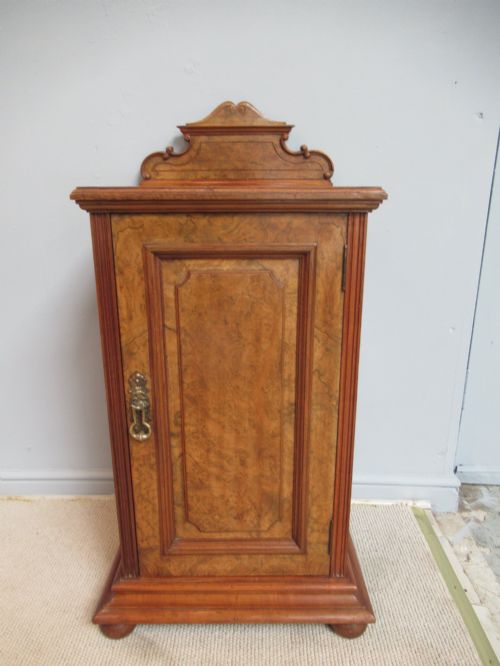
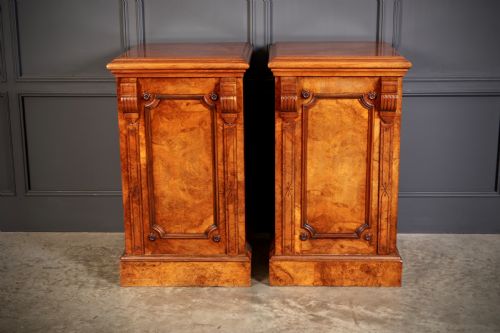
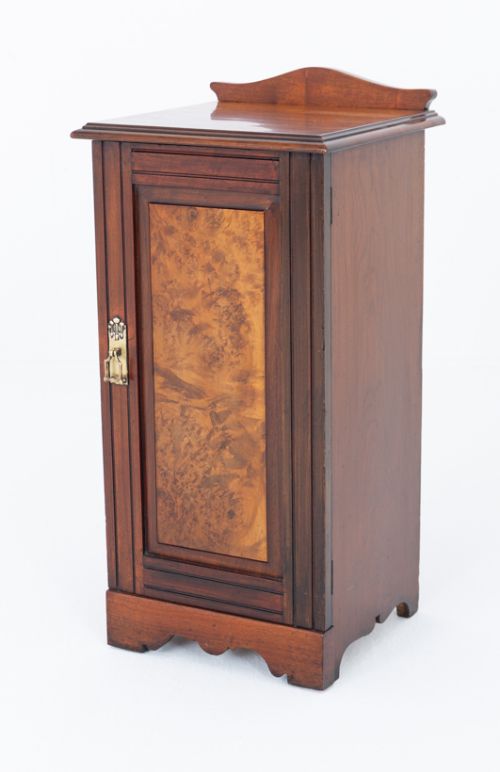
A victorian walnut pot cupboard is typically encountered as a compact bedside cabinet or pedestal cabinet dating from the nineteenth century. These pieces were designed to stand beside a bed, often concealing a chamber pot on a shelf behind a single panelled door.
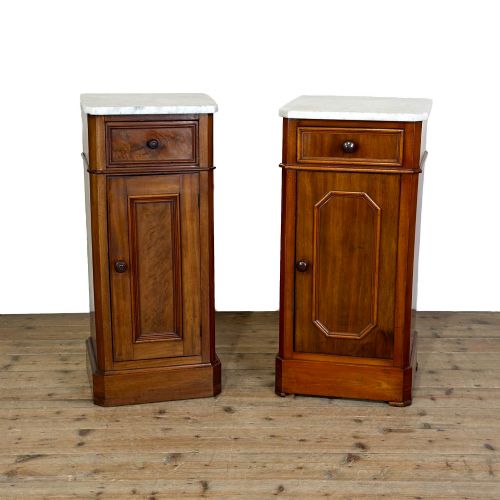
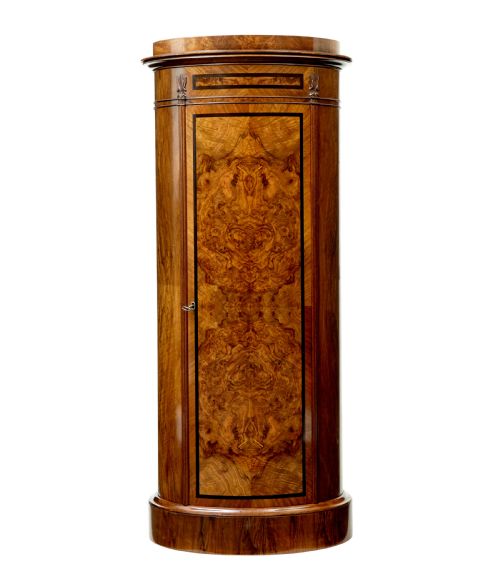
The selections span standard English forms alongside French revival styles, including cylindrical shapes and marble-topped variations. Makers utilised walnut, burr walnut, and figured walnut veneers to create striking grain patterns on the exterior surfaces.
Materials and Construction
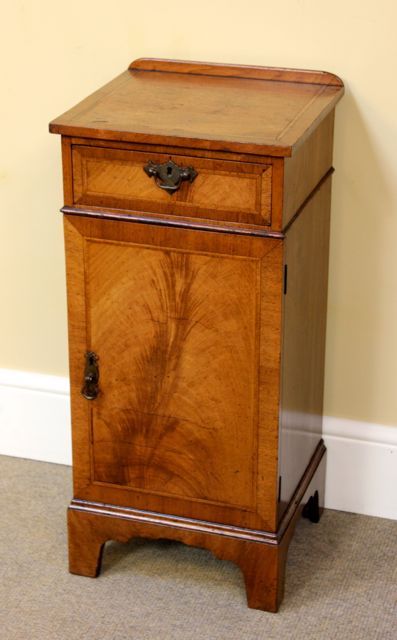
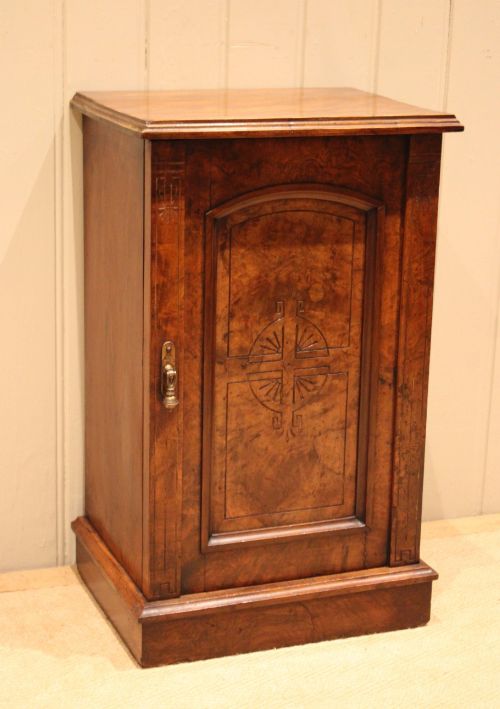
Cabinets are constructed from pine carcasses faced with decorative walnut veneers, frequently incorporating burr walnut or figured walnut to display rich natural patterns. Many examples incorporate inset marble tops and brass handles, while French models introduce marquetry inlay and ebony details.
Joinery methods rely on traditional cabinet-making techniques suited to compact furniture, accommodating interior shelving and occasionally mirror glass. The integration of stone slabs onto wooden frames provides a durable, washable surface suited to daily bedroom use.
Many a Victorian night owl relied on these discreet wooden boxes to hide their chamber pot from polite morning view.
Grading Quality
Quality rests upon the selection of timber veneers and the crispness of any carved decoration or marquetry inlay. Cabinets displaying heavily figured burr walnut and intact, well-fitted marble tops occupy the higher tier of these pieces.
Structural integrity and the preservation of original brass hardware further distinguish standard examples from finer commissions. Pieces exhibiting balanced proportions and clean interior construction demonstrate superior workshop origins.
Trapnell and Gane
The Victorian Walnut Pot Cupboard Glossary
- Burr walnut
- A timber harvested from the growths or burrs of a walnut tree, producing swirling, highly decorative grain patterns highly prized for cabinet veneers.
- Pot cupboard
- A small bedside cabinet originally designed to house a chamber pot behind a closed door, ventilation often being provided through discrete apertures.
- Marquetry
- The art of applying pieces of veneer to a structure to form decorative patterns, frequently seen in floral or geometric motifs on cabinet doors.
- Pedestal cabinet
- A tall, freestanding vertical cabinet supported on a plinth base, offering enclosed shelving within a minimal floor footprint.
- Cylindrical
- Built with a rounded, circular body rather than a traditional square or rectangular carcass, requiring curved doors and specialised joinery.
Victorian Walnut Pot Cupboard: Frequently Asked Questions
What is inside a pot cupboard?
Inside these cabinets you will typically find a single wooden shelf dividing the interior space into compartments. Historically, this space held a ceramic chamber pot, though today it serves as convenient storage for books or bedside items.
The interior floor often includes a recessed section or panel designed to keep a chamber pot secure while the cabinet door remained closed.
Why do some have marble tops?
Marble tops were added to provide a durable, heat-resistant, and easily cleaned surface for placing water jugs, glasses, or candles during the night. This stone surface protected the underlying walnut timber from spills.
White or grey marble slabs were commonly inset into the wooden frame of late nineteenth-century cabinets, particularly on French models.
How do I date a walnut cabinet?
Dating relies on examining construction methods, hardware, and stylistic indicators such as revival French influences or plain Victorian paneling. Pieces from the middle decades of the nineteenth century often feature simpler lines compared to heavily figured or marquetry-inlaid examples from the eighteen-eighties.
Secondary woods like pine visible inside the carcass and the type of drawer dovetailing also help establish the period of manufacture.
Are these suitable for modern bedrooms?
Their compact dimensions make them ideal as bedside tables or lamp stands in contemporary homes where floor space is limited. The enclosed storage keeps modern electronics and nighttime essentials neatly out of sight.
The warm tones of walnut timber and the varied grain patterns allow these cabinets to integrate easily alongside modern interior furnishings.