

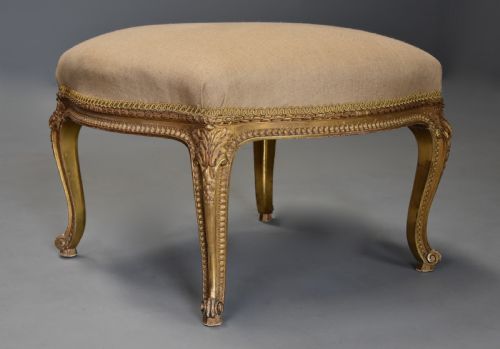

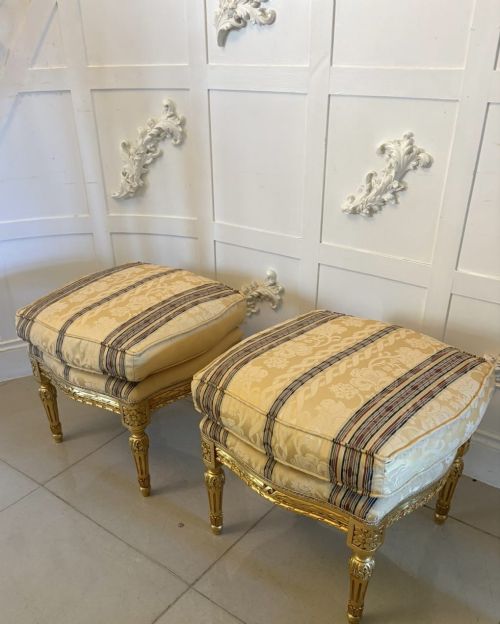
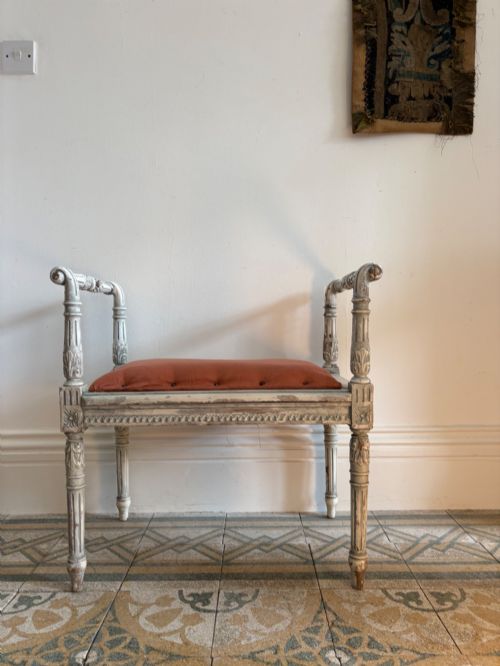
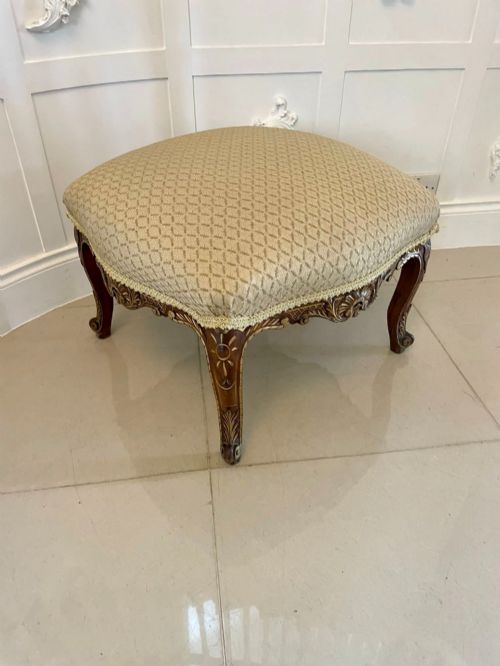


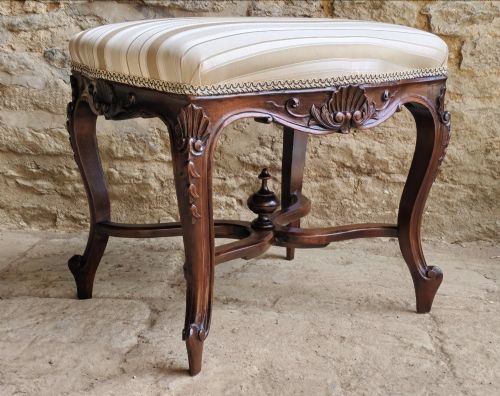
French Vanity Stool
A french vanity stool brings classical Continental elegance to a bedroom, offering a low, upholstered seat designed for dressing tables.
French Vanity Stool
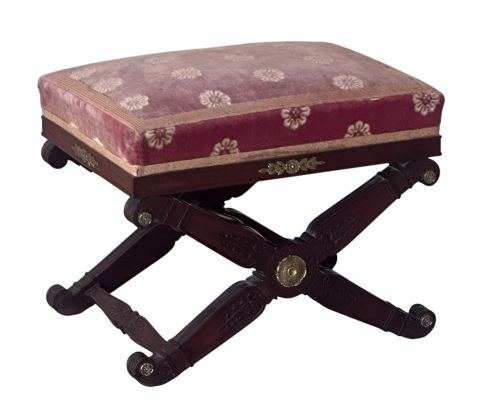
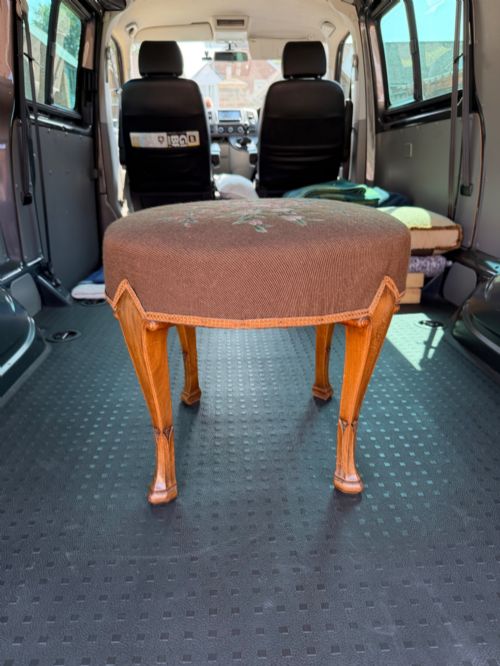
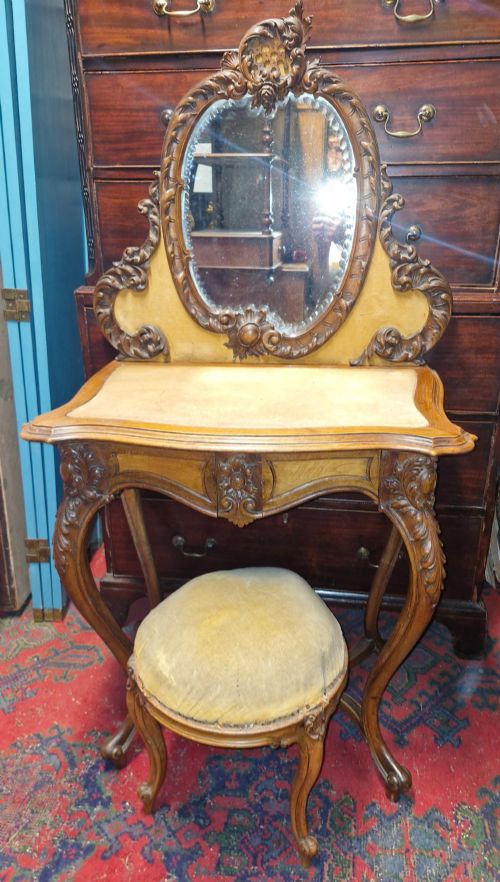
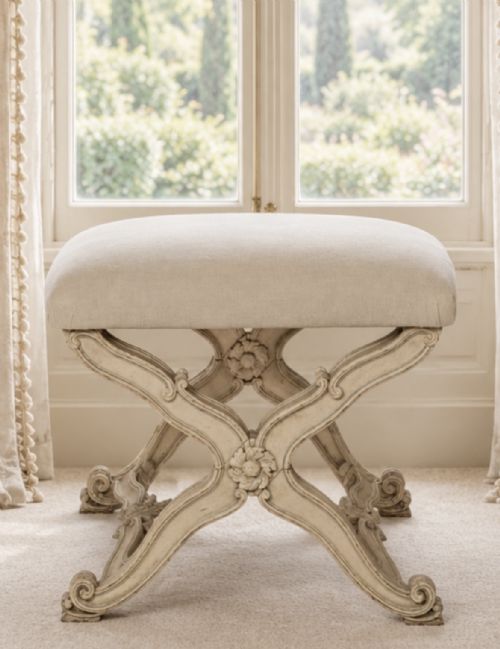
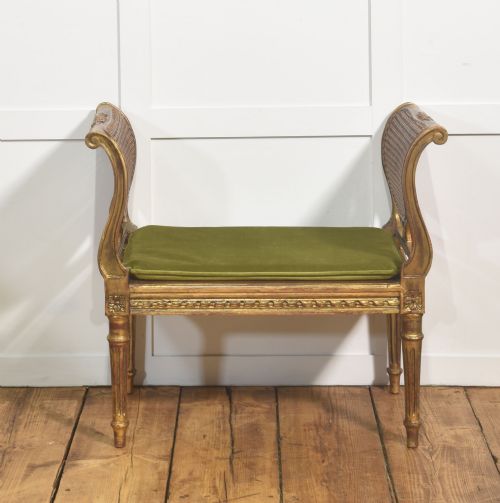
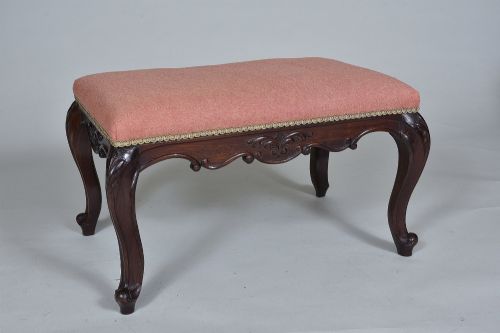
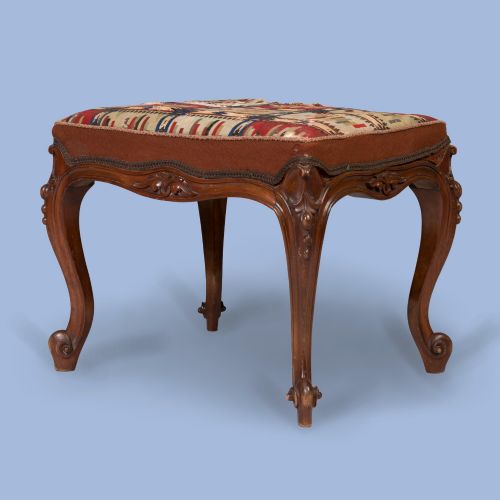
When you search for a french vanity stool, you encounter low seating forms designed for dressing areas and boudoirs. The selection spans the nineteenth century up to nineteen hundred, encompassing footstools, ottomans, and window seats.
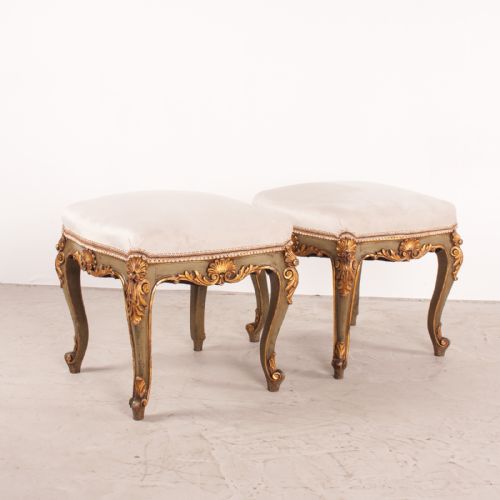
Most examples align with the Louis XV and Louis XVI styles or French Provincial traditions. These decorative pieces provide functional seating while introducing traditional Continental character to domestic interiors.
How they were made
Carpenters constructed these frames from solid timber, utilising painted wood, giltwood, and carved wood finishes. Artisans shaped the structural timber by hand, applying intricate decorative carvings to the rails and legs.
Upholstery completed the pieces, utilising traditional textiles such as damask fabric, linen, and tapestry seats. Brass accents occasionally appeared as decorative mounts or sabots on the lower legs.
French Vanity Stool Retail Price Guide 2026
Typical asking prices for french vanity stool among the pieces listed under this phrase on Sellingantiques today, from the lower quarter to the upper quarter. They describe what is for sale here now, not the wider market.
What varies in quality
The distinction between standard and superior pieces lies in the crispness of the hand carving and the integrity of the timber frame. Fine examples exhibit deep, fluid relief work on the wooden structure rather than shallow or mechanical shaping.
Surface finishes also dictate the tier of craftsmanship, whether through meticulously applied gilding or carefully layered paintwork. The choice of original upholstery fabric and the precision of the joinery further separate ordinary items from finer creations.
The French Vanity Stool Glossary
- Louis XVI Style
- A neoclassical aesthetic characterised by straight tapered legs, geometric symmetry, and classical architectural motifs. It emerged in eighteenth-century France and inspired later nineteenth-century revivals.
- Giltwood
- Timber coated with a thin layer of gold leaf or gilt powder over a prepared ground. This finish created a bright, opulent surface common on high-status seating.
- Damask
- A reversible, figured fabric woven on a jacquard loom with patterns formed by contrasting warp and weft threads. It provided a rich, textured surface for period upholstery.
- French Provincial
- A rustic yet refined style originating from French rural areas, combining sturdy construction with simple decorative curves. It reflects regional interpretations of courtly fashions.
French Vanity Stool: Frequently Asked Questions
Where do I put a french vanity stool?
These low seats fit naturally in front of a bedroom dressing table or vanity desk. They also serve as small accent seats in corners or as window seats.
Because of their compact size, they move easily between rooms to provide additional occasional seating.
How do I clean a fabric seat?
Maintenance depends entirely on the specific textile used, whether linen, damask, or tapestry. Gentle surface brushing removes loose dust without disturbing the fibres.
Professional textile cleaning is recommended for antique upholstery to prevent damage to historic fabrics.
Are these seats comfortable?
These low stools were designed for short periods of sitting while dressing or grooming. Their primary purpose combined decorative boudoir elegance with functional utility.
Padding varies across nineteenth-century examples depending on the original stuffing materials and internal construction.
How do I identify Louis XVI style?
Louis XVI pieces feature straight, fluted legs and rectilinear forms that contrast with earlier curving designs. Look for classical motifs such as acanthus leaves, ribbons, and beaded mouldings.
This aesthetic draws directly on classical antiquity, favoring symmetry and restraint.