
French Travelling Clock
A french travelling clock is a portable timepiece designed for the journey, combining heavy brass and glass cases with intricate mechanical movements.
French Travelling Clock
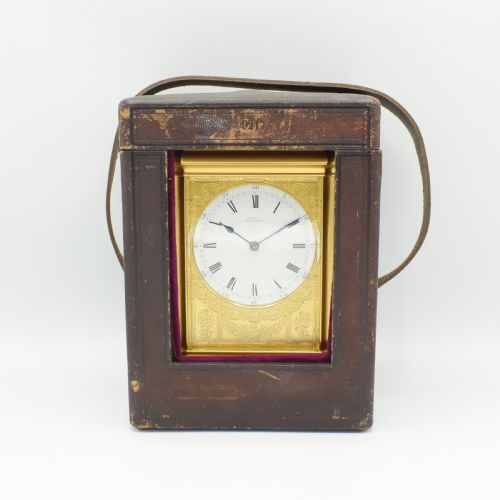
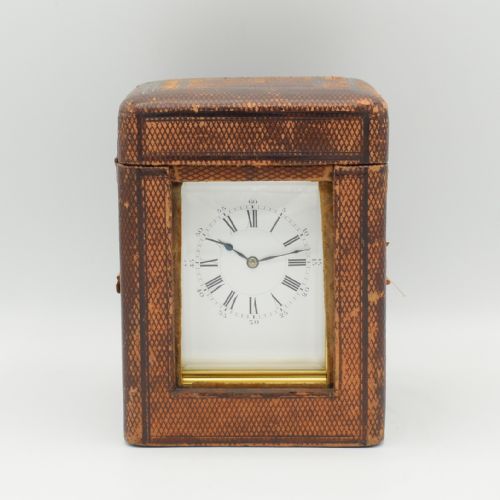
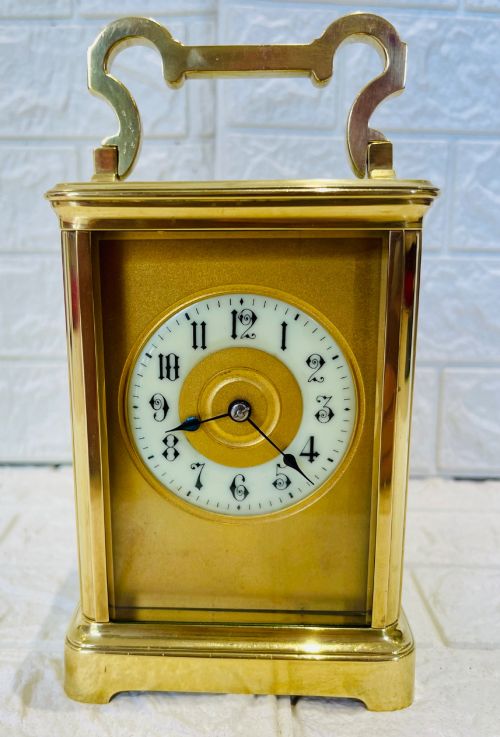
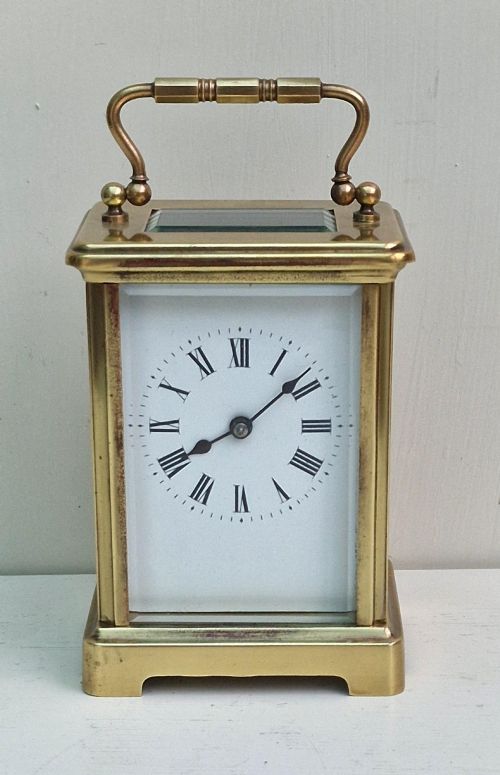
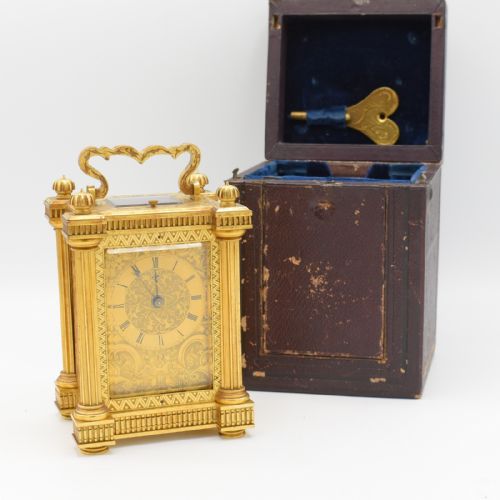
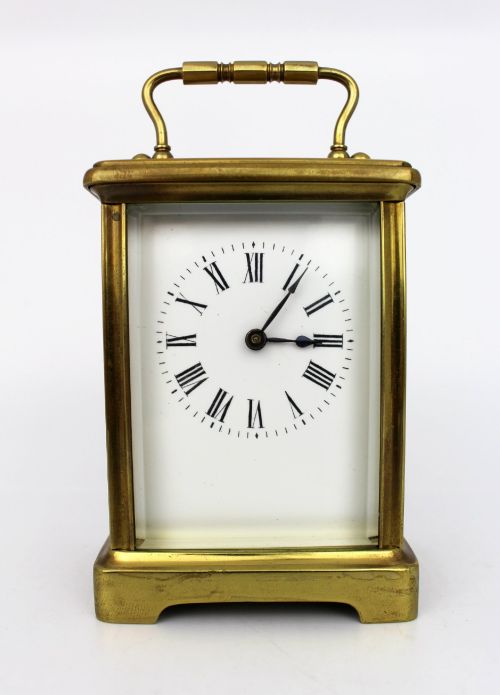
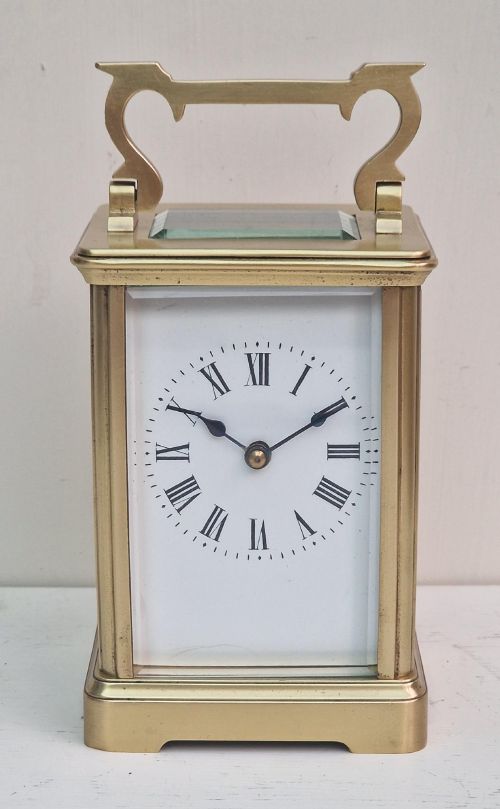
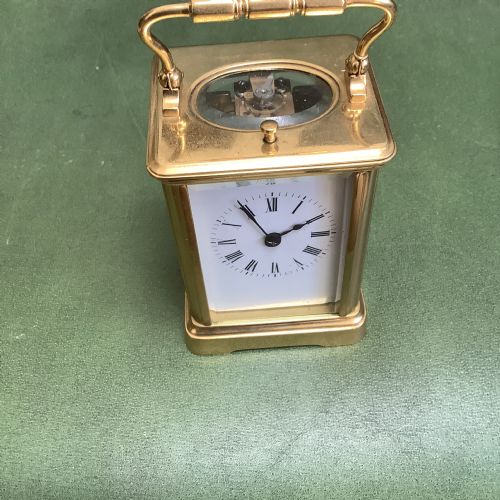
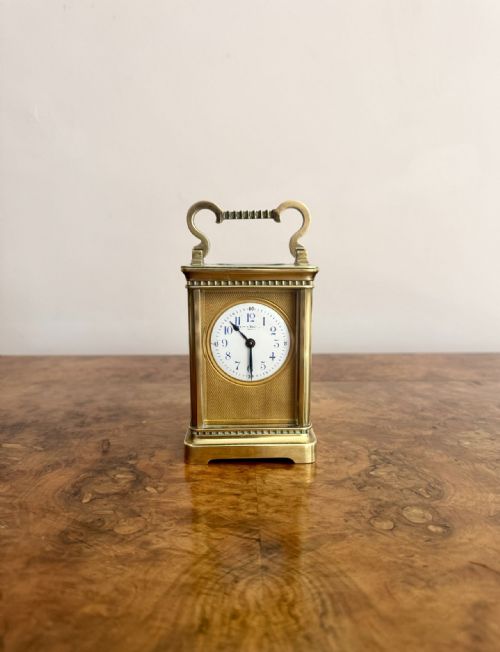
A french travelling clock is primarily encountered in brass and gilt brass formats, frequently housed in protective leather travel cases alongside their winding keys. These pieces span from the mid-nineteenth century through the Edwardian period, encompassing Victorian examples and late nineteenth-century French designs.
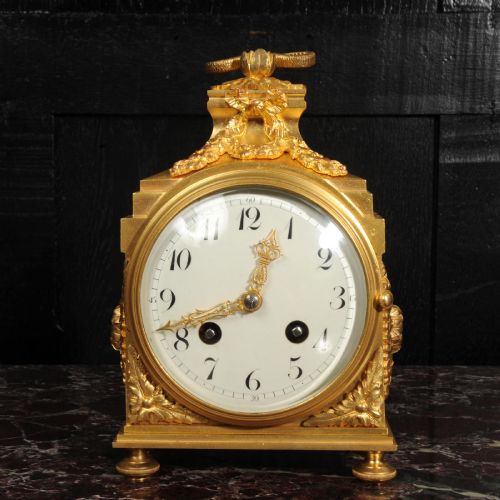
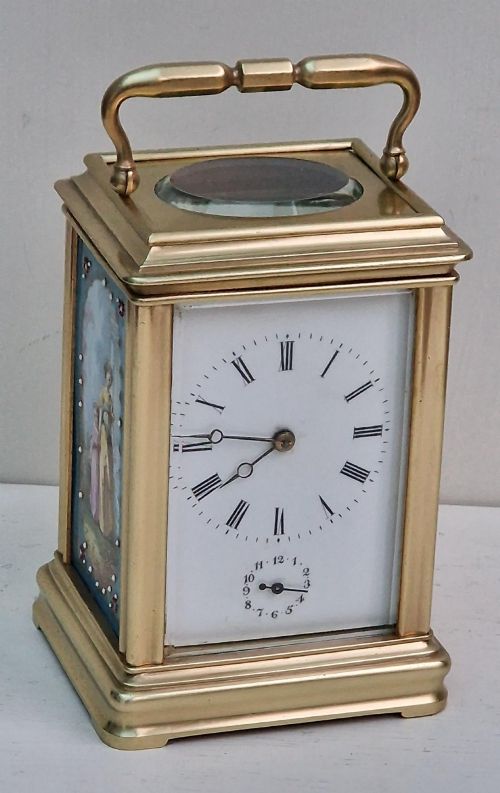
The forms range from standard carriage clocks and striking carriage clocks to miniature versions and porcelain panel carriage clocks. Alongside standard timepieces, buyers meet repeating carriage clocks and specialist designs featuring enamel panels or engraved gilt brass cases.
Materials and technique
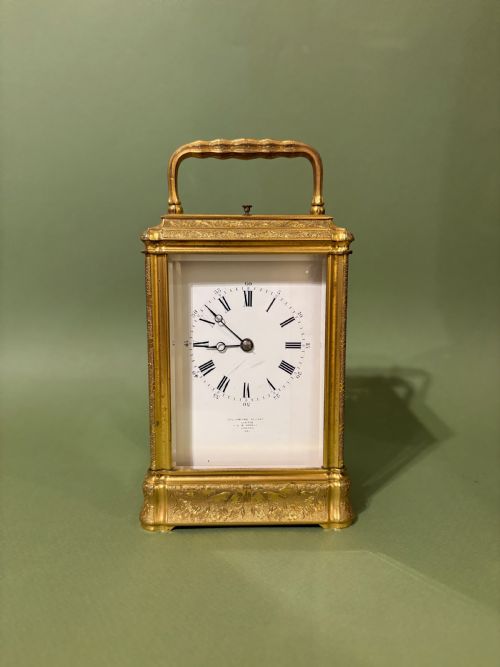
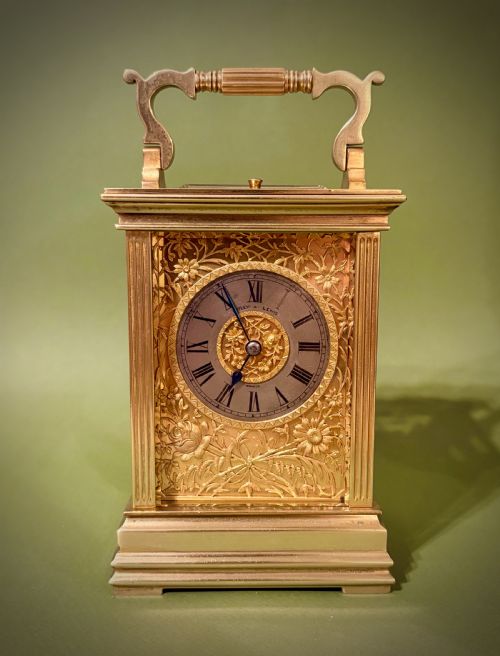
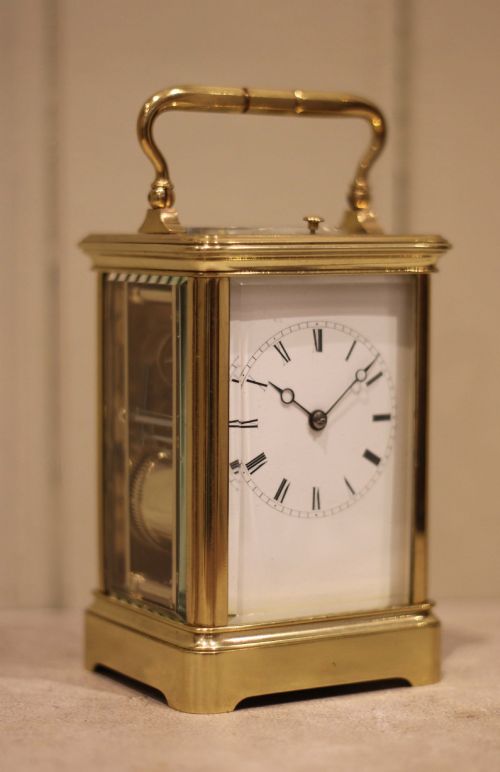
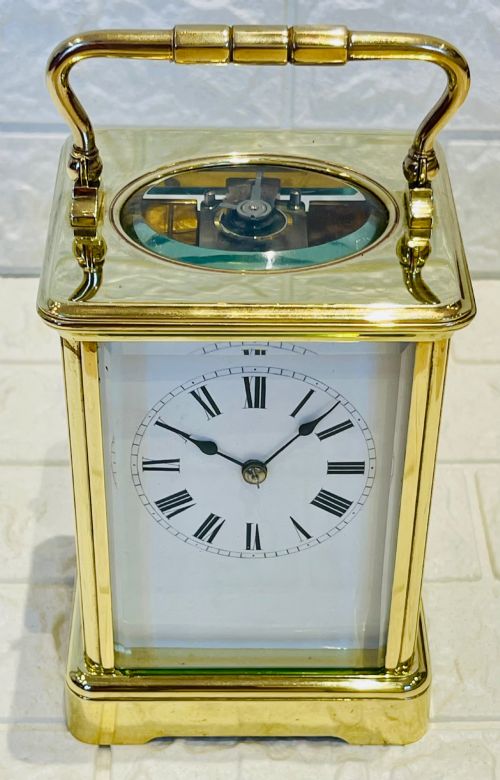
Construction relies heavily on brass, gilt brass, and glass, permitting a clear view of the mechanical movement contained within. Cases often feature delicate engravings, while dials incorporate painted porcelain or enamel panels.
Movements are engineered for portability and precision, incorporating eight-day mechanisms, strike and repeat functions, and occasionally alarm complications. Original leather travel cases complete the construction, preserving the exterior brasswork from the knocks of transit.
Antoine Redier patented an alarm clock specifically designed to wake travellers inside jolting horse-drawn carriages without snapping the mainspring.
What varies in quality
Quality rests in the crispness of the gilt brass casting, the depth and execution of the case engraving, and the presence of original components such as travel cases and keys. Examples by notable makers demonstrate superior finishing in both the exterior brasswork and the complexity of the internal movement.
The incorporation of decorative elements like hand-painted porcelain panels or multi-train striking and repeating mechanisms separates standard timepieces from finer horological examples.
HENRI JACOT·Howell & James London·Drocourt Paris·T. Martin & Co·C. Detouche Paris·Antoine Redier of Paris·Margaine Of France·Pickford of London
The French Travelling Clock Glossary
- Carriage clock
- A portable spring-driven clock designed for travelling, featuring a brass and glass case with a handle on top. These originated in France during the nineteenth century.
- Repeating carriage clock
- A timepiece that chimes the last hour or quarter-hour on demand when a button or pendant on the case is pressed. This complication required sophisticated internal gear work.
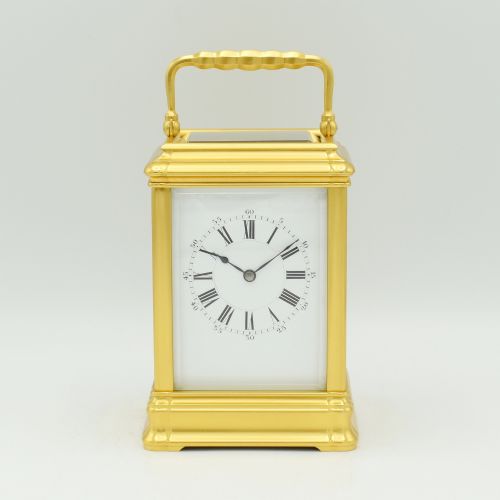
- Gorge case
- A distinct rectangular brass case style with stepped mouldings at the top and bottom, commonly found on nineteenth-century French carriage clocks. It provides a robust housing for the glass panels.
- Pendule d'officier
- An early French military or travelling clock style precursor to the carriage clock, often featuring an Ormolu or brass case. These portable clocks were designed for officers on campaign.
- Platform escapement
- The small, self-contained assembly holding the balance wheel and escapement, mounted visibly near the top of a carriage clock movement. It allowed portable clocks to keep accurate time despite movement.
French Travelling Clock: Frequently Asked Questions
Why does my clock have a repeating function?
The repeating mechanism allows the owner to check the time in the dark by pressing a button on the top of the case. It strikes the hours and quarters previously recorded by the gear train.
This complication was especially useful for travellers staying in coaching inns before the widespread availability of electric lighting.
Are original travel cases important?
Original leather travel cases add historical context and protect the brass and glass exterior from damage. They often feature fitted interiors lined with velvet or silk to cradle the clock securely.
Clocks retaining their original cases and keys are particularly sought after by collectors who value completeness.
How can I tell the age of a carriage clock?
Dating relies on stylistic clues, case design, escapement type, and any maker signatures engraved on the backplate. Earlier nineteenth-century examples often feature platform cylinder escapements, while later Victorian versions frequently use lever escapements.
Serial numbers and patent stamps can also help narrow down the decade of production.