


Antique Corniche Clock
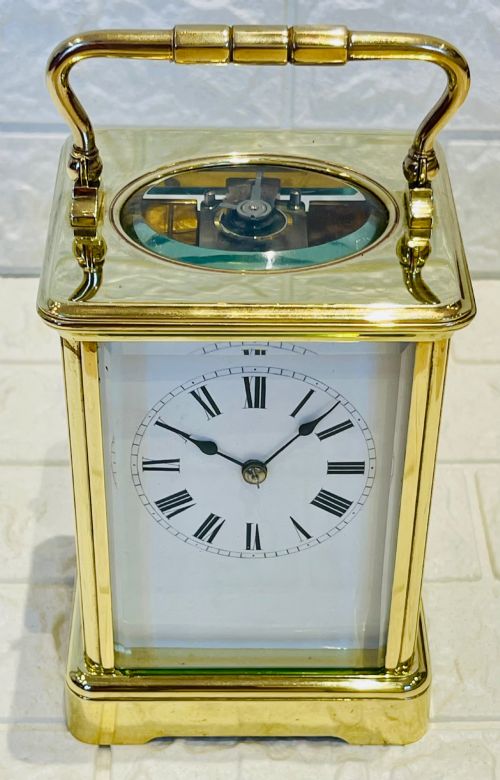
An antique corniche clock offers a solid brass case and bevelled glass panels built to travel through the nineteenth century.
Antique Corniche Clock
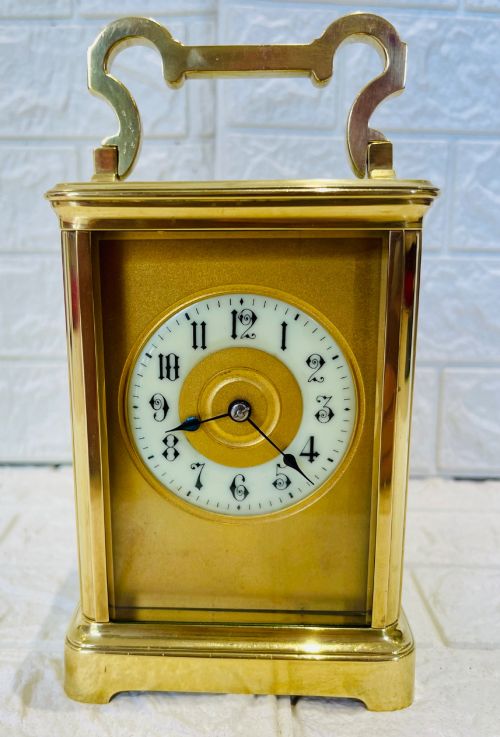
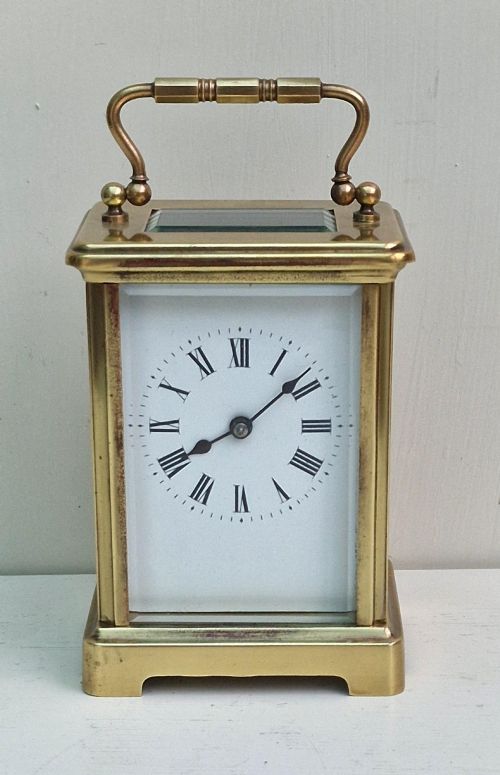
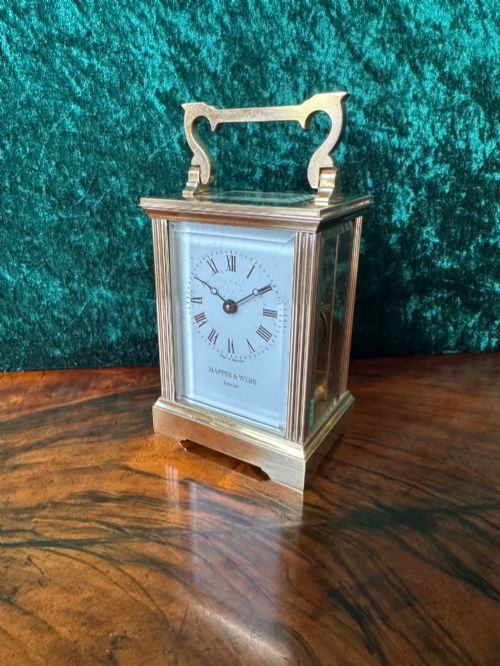
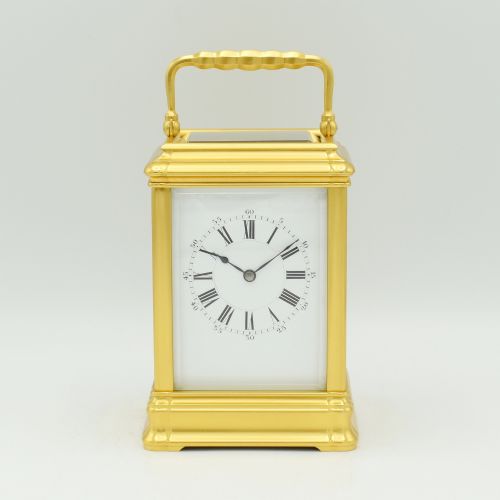
When you search for an antique corniche clock, you are looking at a portable timepiece defined by its distinctive rectangular brass case with flat top glass and carrying handle. The specimens found here stem predominantly from the nineteenth century and the Edwardian era, bearing French craftsmanship.
Most examples you meet on this page utilise a heavy brass frame housing an eight-day movement, often featuring striking or repeating complications. The form evolved to serve travellers who required precise timekeeping on the move.
Victorian and late nineteenth-century iterations dominate the selections, frequently showcasing white enamel dials with Roman numerals behind bevelled glass windows that display the escapement.
Materials and Construction
The primary structural material is cast or rolled brass, which makers frequently gilded or polished to a bright finish. Steel components operate within the gear trains and escapements, while heavy glass panels protect the delicate inner mechanism from dust.
Dial faces consist of white enamel fired onto copper plates, hand-painted with minute tracks and numerals. Makers housed these mechanisms in heavy cast brass corniche cases designed for durability during travel.
Original leather travelling cases often survive alongside the clocks, preserving tool-stamped compartments built to cradle winding keys on Victorian journeys.
Distinctions in Quality
The sophistication of the internal movement separates standard timepieces from superior examples. Clocks possessing striking mechanisms, quarter-chiming petite sonnerie functions, or alarm complications require greater skill from the maker.
The weight and thickness of the gilt brass case and the clarity of the bevelled glass panels indicate the grade of manufacture. Heavier castings and finely finished escapements demonstrate superior craftsmanship within the period.
Henri Jacot·T. Martin and Co·Paul Garnier·Drocourt·Richard and Co
The Antique Corniche Clock Glossary
- Corniche case
- A rectangular brass clock case with a flat top and simple rounded or stepped mouldings framing the glass panels. This architectural housing style became standard for portable French clocks.
- Platform escapement
- The tiny self-contained assembly mounted on the upper movement plate that regulates the release of power. It replaced the pendulum to allow portable clocks to keep time while moving.
- Repeating mechanism
- A complication activated by pushing a button on top of the case that causes the clock to restrike the hours and quarters. It allowed owners to check the time in darkness.
- Petite-sonnerie
- A striking system that automatically chimes the hours and the current quarter on bells or gongs as each quarter-hour passes. It represents a high level of horological complexity.
- Bevelled glass
- Heavy window panes possessing angled, polished edges that fit snugly into brass door frames. This edge treatment adds visual depth and reflects light across the dial.
Antique Corniche Clock: Frequently Asked Questions
What is a corniche clock?
A corniche clock is a portable timepiece housed in a rectangular brass frame with bevelled glass panels and a flat top supporting a sturdy handle. The style originated in France during the nineteenth century to serve travellers who needed reliable timekeeping on journeys.
The defining architectural feature is the simple stepped frame surrounding the glass, distinguishing it from carriage clocks with Corinthian columns or elaborately cast handle mounts.
How do you wind an antique carriage clock?
You wind these mechanisms using a matching key inserted into square arbors located on the underside or the back plate of the movement. Most period examples utilise an eight-day spring barrel that requires weekly attention.
Take care not to overwind the mainspring when resistance increases near the end of the winding cycle, as antique steel can snap under excessive tension.
What does an eight-day movement mean?
An eight-day movement is a clock mechanism designed to run continuously for slightly more than one week on a single wind. This duration reduced the frequency of winding required by owners.
Spring-driven barrels store the energy required to power the gear train and escapement throughout this multi-day period without losing operational stability.
How do you set the time safely?
You set the time by moving the minute hand forward by hand around the white enamel dial. Moving hands backward through striking sequences can damage the internal rack and snail components.
Allow the strike train to finish its sequence fully if you pause while adjusting the hands on clocks equipped with hourly or quarter-striking functions.