






French Timber Bedstead
A French timber bedstead brings substantial presence to a bedroom, combining continental proportion with rich period detail.
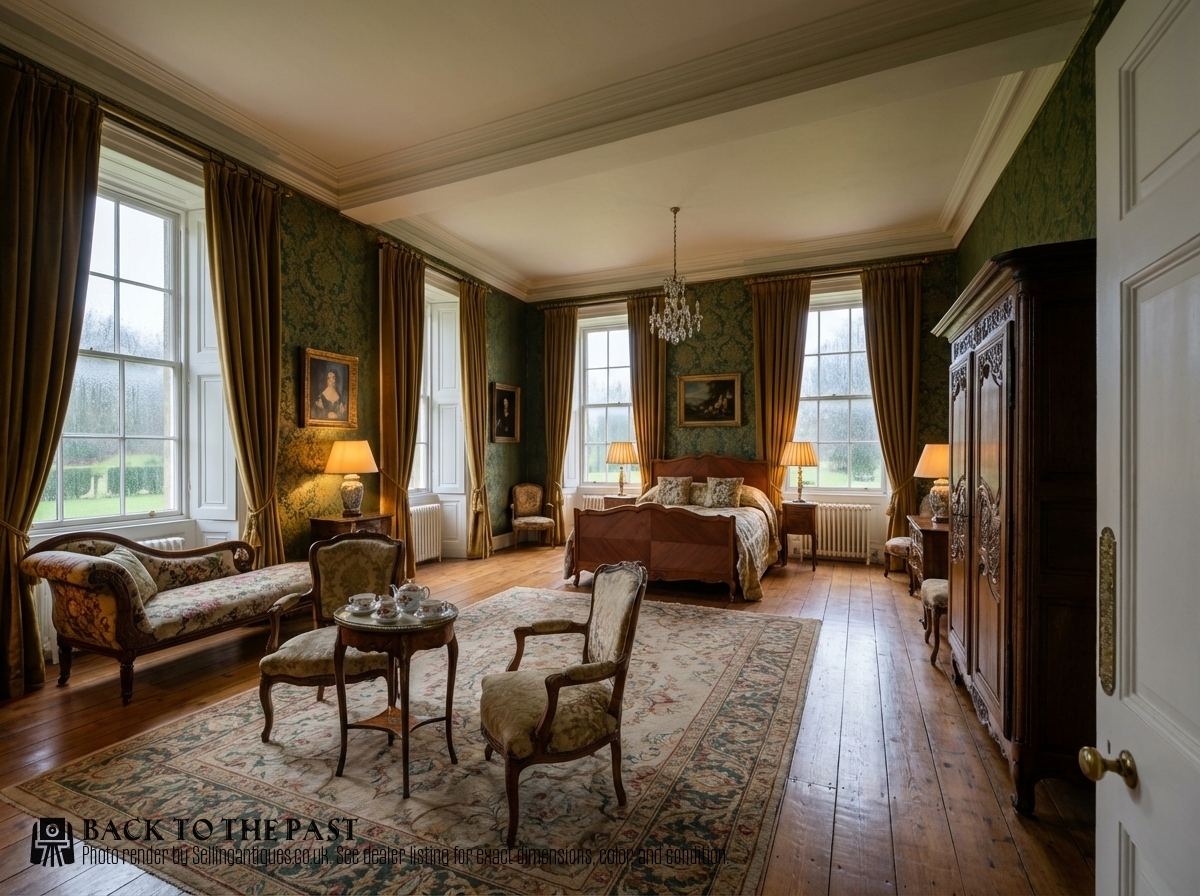
French Timber Bedstead
When searching for a french timber bedstead, you encounter large sleeping frames originating from continental workshops alongside domestic interpretations. The forms span double and king sizes, built to anchor principal bedrooms with architectural weight.
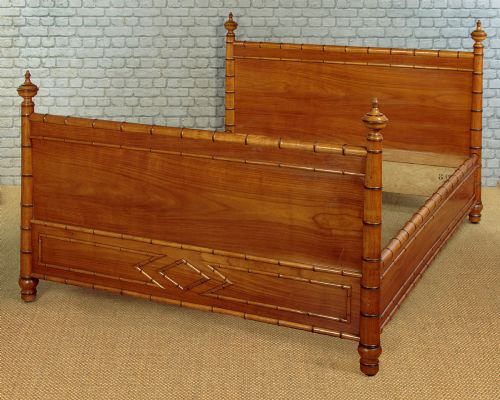
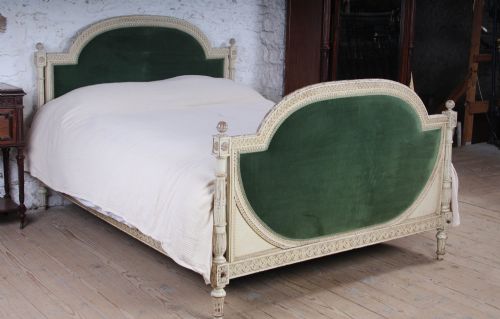
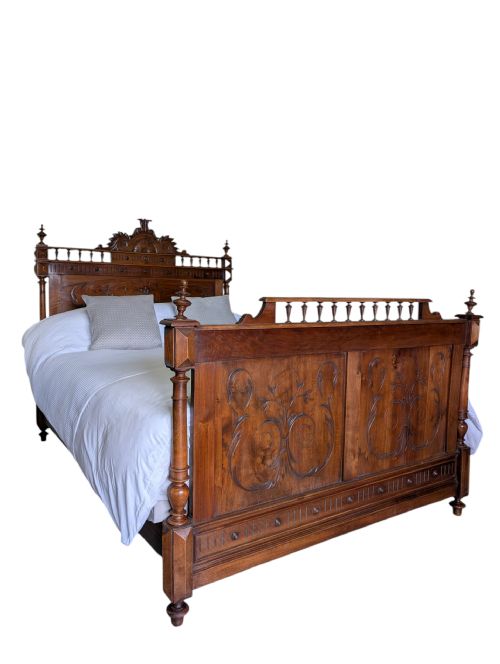
The pieces appearing on this page date predominantly from the nineteenth and early twentieth centuries. You will find styles ranging from restrained Louis XVI revival designs to decorative painted finishes and carved walnut constructions.
How they were made
Carpenters utilised solid timber frames constructed from walnut, mahogany, and painted wood, often enriched with carved mouldings and floral panels. Structural elements relied on traditional joinery to support substantial headboards and footboards.
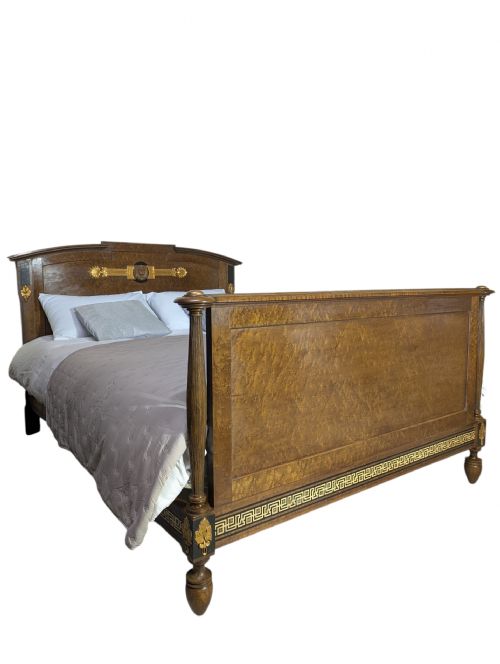
Metal mounts in brass and ormolu frequently accent the timber surfaces, while specific examples incorporate caning or original fabric upholstery. Surface treatments vary from natural wood polishes to decorative hand-painted finishes.
Listings feature walnut as the primary timber, alongside mahogany and painted wood surfaces spanning the nineteenth and early twentieth centuries.
What varies in quality
The standard of a french timber bedstead depends upon the depth of hand-carved detail and the selection of timber veneers. Superior examples display crisp moulding work and balanced proportions that reflect the specific revival style of their period.
Hardware integration and secondary metal detailing also distinguish the work, alongside the preservation of original painted decoration or fabric panels. The integrity of the timber framework dictates the overall substance of the piece.
The French Timber Bedstead Glossary
- Bedstead
- A framework supporting a mattress and spring, typically comprising a headboard, footboard, and side rails. This forms the complete wooden structure before bedding is added.
- Ormolu
- Gilded bronze or brass applied as decorative mounts to furniture. This technique adds metallic contrast against dark timber surfaces.
- Marquetry
- The art of applying pieces of veneer to a structure to form decorative patterns. This technique appears on revival bedroom furniture to create pictorial surface designs.
- Caning
- Woven rattan material used for panel inserts in headboards and footboards. This method provides lighter textural contrast within solid wooden frames.
- Faux bamboo
- Wood turned and painted to imitate natural bamboo stalks. This decorative finish became popular during the nineteenth century.
French Timber Bedstead: Frequently Asked Questions
Will a standard mattress fit?
Many older frames vary slightly from modern standard dimensions due to historical sizing conventions. Checking the internal length and width specifications against your mattress size ensures a correct fit.
Adjustment of slats or hidden internal supports may be necessary to accommodate contemporary bases securely within the antique wooden rails.
How do I care for the timber?
Maintaining the wood involves regular dusting with a dry cloth and occasional application of appropriate furniture wax to nourish the surface. Avoiding direct sunlight and sustained moisture prevents the timber from warping or drying out.
Polished walnut and mahogany benefit from minimal intervention to preserve the original patina developed over decades of use.
Are these beds easy to assemble?
Most period frames utilise traditional iron bolts or drop-in side rail brackets rather than modern cam-lock systems. Two people are usually required to handle the substantial headboards and footboards safely during assembly.
Keeping the original metal fixings well-oiled ensures the joints tighten smoothly without straining the surrounding timber.
How do I identify the style?
Stylistic clues lie in the carved motifs and overall silhouette, such as the straight tapered legs of Louis XVI revival or the curvaceous outlines of Rococo pieces. Examining the symmetry and ornament reveals the particular historical movement influencing the maker.
Matching the decorative elements against known nineteenth-century design vocabulary helps clarify the exact period of manufacture.