




French Style Walnut Bed
A french style walnut bed brings warmth and historic continental character to a bedroom through rich timber figures and graceful period curves.
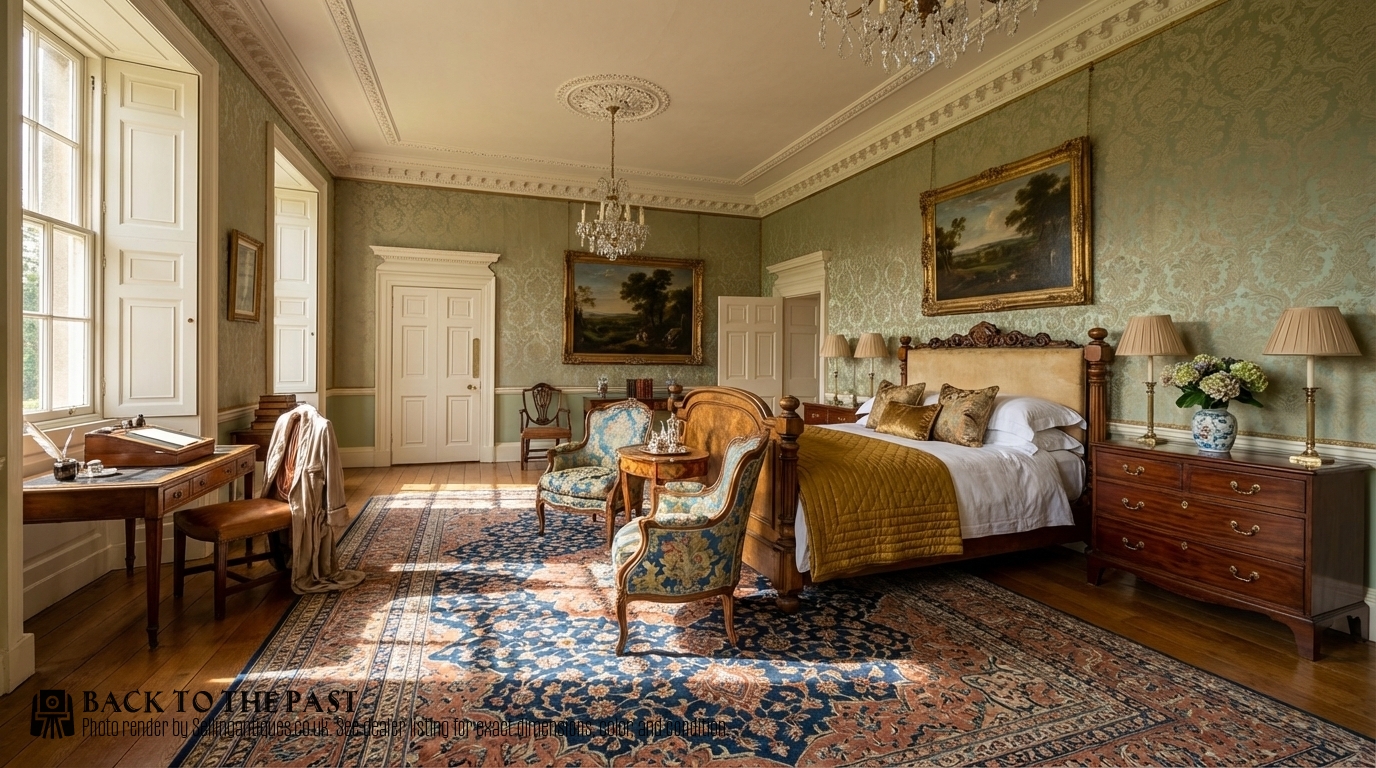
French Style Walnut Bed
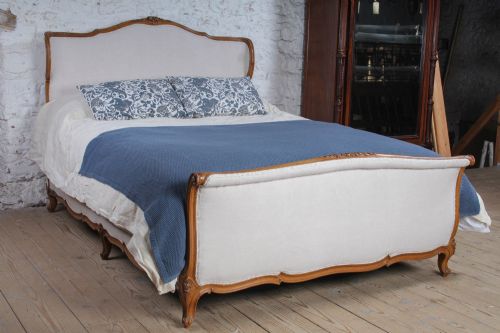
A french style walnut bed combines rich timber with continental proportions, originating across periods from the nineteenth century into the twentieth century. These pieces appear most frequently in double, king, and emperor sizes, often accompanied by matching bedside cabinets.
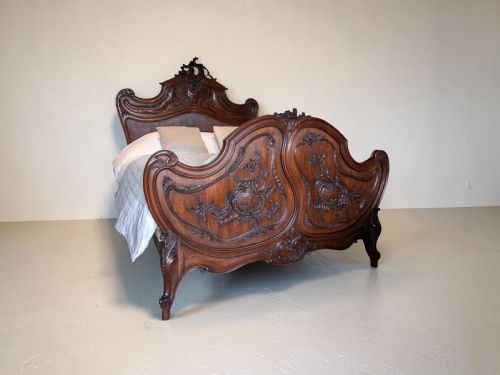
The aesthetic draws heavily on historical design languages, displaying regional interpretations from provincial workshops and grander chateau settings. Louis XV and Louis XVI revivals dominate the forms, alongside Empire and Henri II influences.
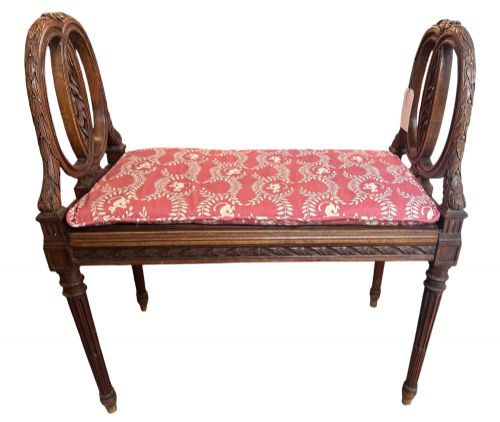
Makers utilised solid timber and veneers to construct large headboards, footboards, and matching daybeds or window seats. The resulting framework provides a substantial focal point for traditional and eclectic bedroom interiors alike.
Materials and Construction
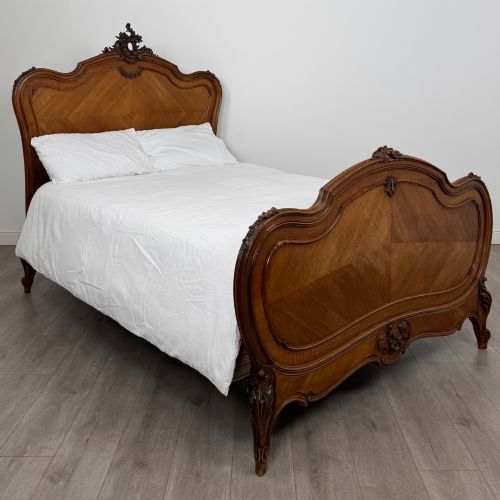
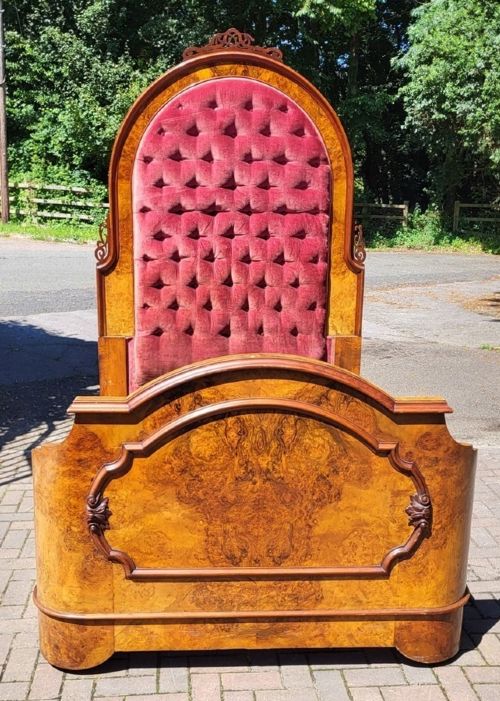
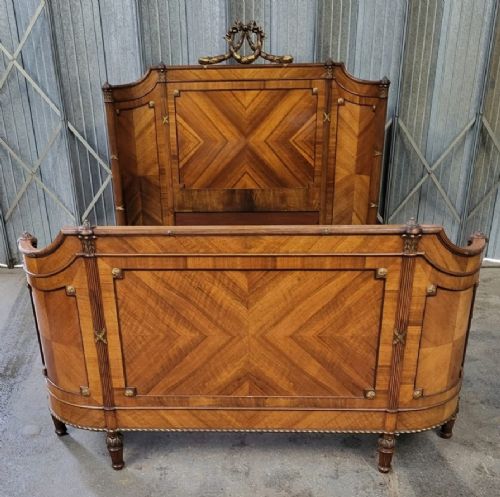
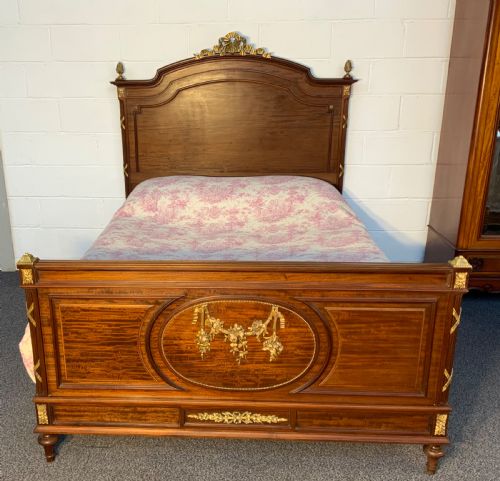
Cabinetmakers constructed these frames using walnut, burr walnut, and quarter-veneered panels laid over sturdy timber carcases. Ormolu mounts, brass detailing, and parcel gilt accents frequently highlight the structural lines and carved motifs.
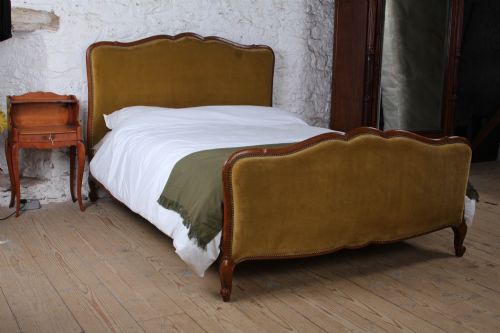
Upholstery fabrics such as velvet feature prominently on button-backed headboards and daybeds, secured with traditional nailing techniques. Carved wooden details range from restrained linear mouldings to elaborate Rococo scrolls and floral crestings.
Even sleeping quarters required a dash of theatre, as evidenced by grand carved walnut frames designed to mimic the sweeping curves of a river-faring boat.
Assessing Craftsmanship and Visual Depth
Quality rests in the selection of the timber, where figured walnut, burr patterns, and symmetrical quarter-veneers elevate the visual impact of the headboard. Plain timber surfaces rely entirely on the crispness of the hand-carved mouldings and balanced proportions.
The integration of decorative metalwork, whether cast ormolu mounts or subtle brass framing, distinguishes higher workshop output from simpler commercial pieces. Cohesion with matching bedside cabinets or auxiliary seating further indicates a well-preserved original suite.
The French Style Walnut Bed Glossary
- Burr walnut
- A prized timber harvested from tree growths, yielding intricate swirling grain patterns used for decorative veneer panels.
- Ormolu
- Gilded bronze or brass applied as decorative mounts to enrich the appearance of furniture frames.
- Louis XV style
- A design movement characterised by asymmetrical curves, cabriole legs, and naturalistic scrollwork originating in eighteenth-century France.
- Lit bateaux
- A French sleigh bed design featuring curved head and footboards resembling the hull of a boat.
French Style Walnut Bed: Frequently Asked Questions
What mattress sizes fit these historic beds?
Many older European frames differ slightly from modern standard British dimensions. Adjusting standard mattresses or commissioning custom bases ensures a proper fit within antique wooden side rails.
Checking internal length and width measurements before purchase avoids compatibility issues with modern bedding.
How do I care for antique walnut wood?
Maintaining walnut timber involves regular dusting with a soft, dry cloth and avoiding placement near direct heat sources or strong sunlight. Periodic application of appropriate wax preserves the natural lustre of the French polish.
Excessive moisture damages both the polished finish and the underlying veneer, so liquid spills require immediate attention.
How are these beds assembled?
Most antique wooden bed frames utilise traditional bolt-and-tenon iron fixings connecting the headboard, footboard, and side rails. Assembling the structure usually requires two people to ensure the joints square up correctly.
A stable foundation rests upon wooden slats or modern slatted roll bases placed securely within the internal frame ledges.
How do I identify a revival period piece?
Nineteenth and early twentieth-century revival pieces display construction methods, timber patination, and hardware consistent with Victorian and Edwardian cabinetmaking. Stylistic markers echo earlier royal reigns while retaining later manufacturing signatures.
Examining internal secondary timbers and joint construction helps distinguish nineteenth-century revival work from later reproductions.