
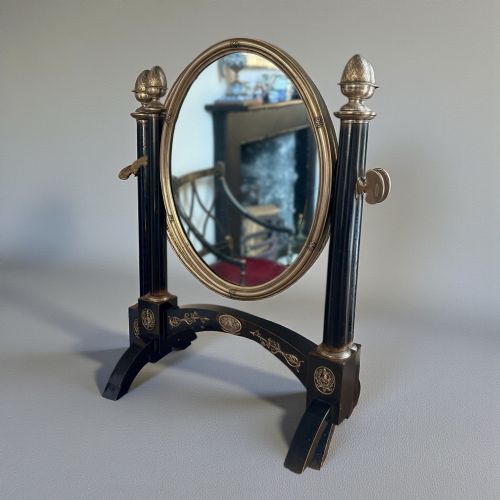
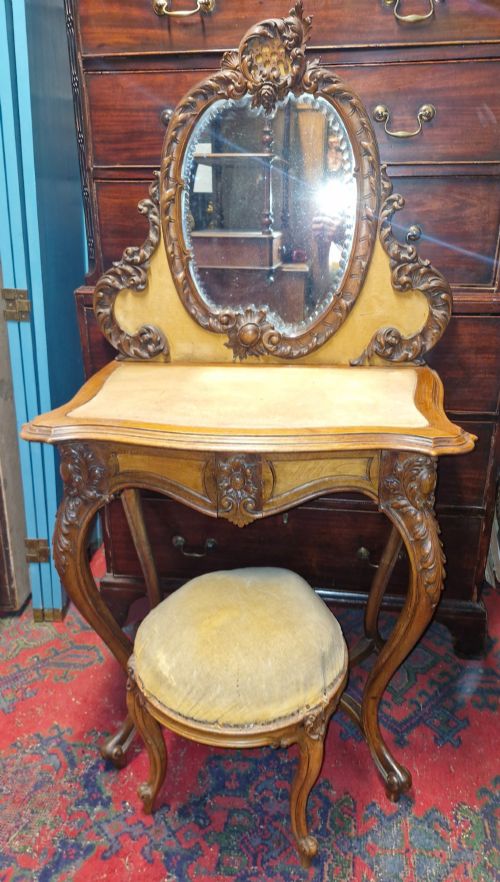
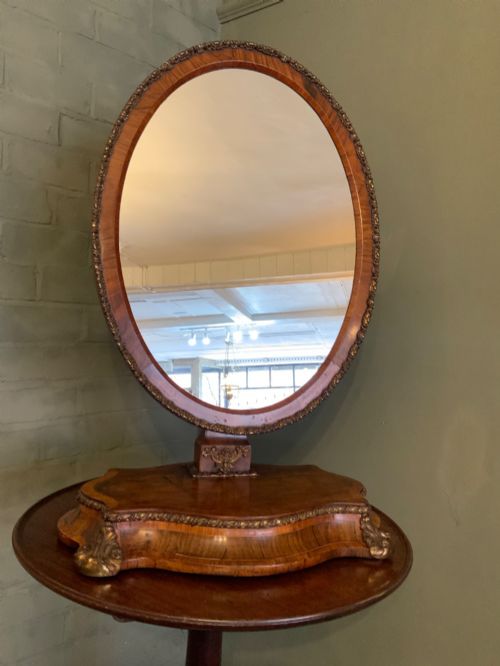
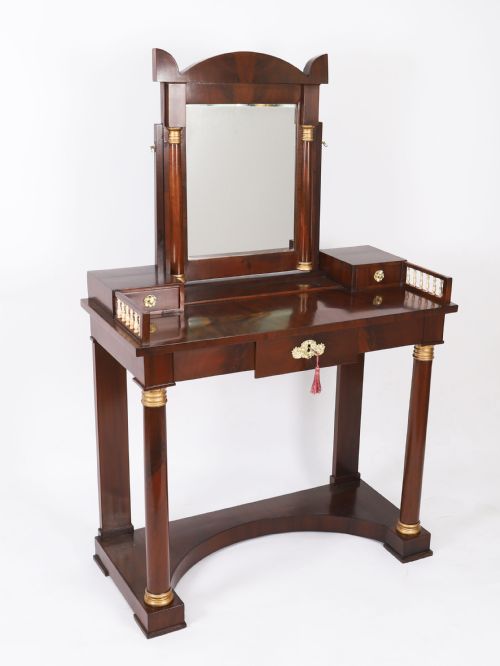




French Style Toilet Mirror
These french style toilet mirror pieces bring continental elegance to a dressing surface, offering practical reflection with decorative presence.
French Style Toilet Mirror
A french style toilet mirror sits on a dressing table or chest, providing a pivoting glass surface for grooming and dressing. The pieces listed now span from the nineteenth century into the early twentieth century, showing sustained popularity for continental revival designs.
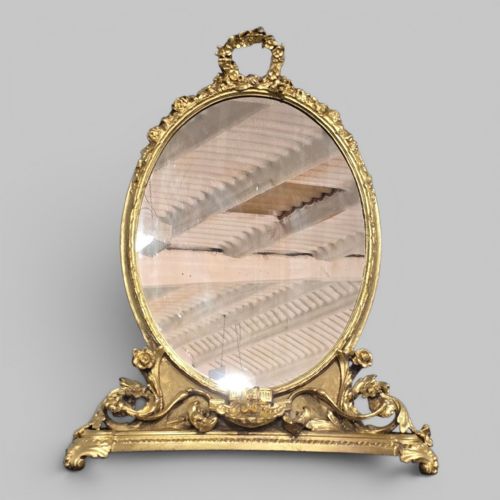
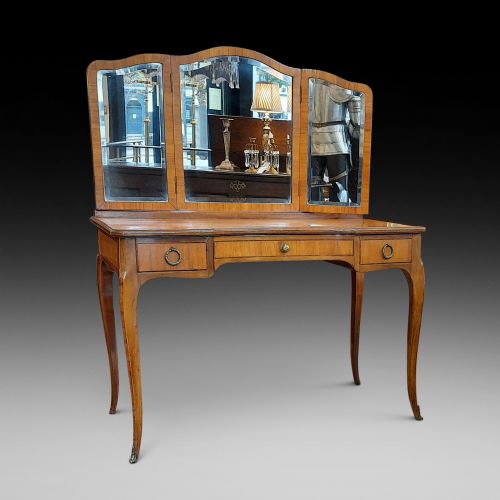
Most examples take the form of table mirrors, dressing table mirrors, or standalone toilet mirrors, occasionally accompanied by trinket drawers or matching stools. You will encounter forms ranging from compact table mirrors to large oval designs and multi-panel trio mirrors.
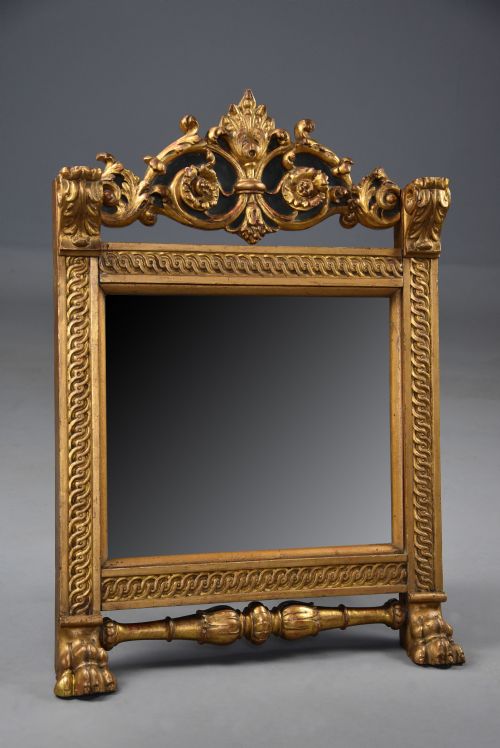
The aesthetic draws heavily on historical continental revivals, specifically French Empire, Rococo, and Renaissance styles. These pieces function both as daily dressing accessories and as decorative accents for a bedroom or boudoir.
How they were made
Cabinetmakers utilised timber carcasses of mahogany, walnut, kingwood, and rosewood, frequently applying crossbanding to enhance the surface grain. Frames and mounts incorporate cast metals such as ormolu, brass, and gilt bronze to introduce classical and botanical ornamentation.
Decorative detailing relies on carved giltwood and gesso, particularly on revival pieces featuring elaborate scrolls and architectural motifs. The reflective glass is held within adjustable or easel frames, allowing the user to alter the angle of the mirror plate.
Some dressing table mirrors come equipped with hidden trinket compartments, perfect for stashing midnight sweets away from prying eyes.
What varies in quality
Quality rests in the crispness of the timber carving and the weight of the metal mounts, where hand-chased ormolu or cast gilt bronze elevates an ordinary frame. Finer examples display meticulous crossbanding and tightly joined corners on the mirror supports and trinket boxes.
The depth and clarity of the original glass plate also distinguish better pieces, alongside the mechanical smoothness of the pivoting hinges or easel stands. Proportion dictates the visual success of the object, balancing the heft of the timber frame with the scale of the mirror glass.
The French Style Toilet Mirror Glossary
- Ormolu
- Gilded bronze mounts applied to furniture and mirror frames for decorative effect. This technique was widely utilised during the nineteenth century revival periods.
- Gesso
- A plaster-based mixture applied to wood frames and carved before gilding. It provides the smooth base required for intricate relief ornamentation.
- Crossbanding
- A strip of veneer laid across the grain of the primary wood panel. It forms a decorative border around table tops and mirror surrounds.
- Easel mirror
- A table mirror supported by a hinged leg at the back rather than fixed side pillars. This construction allows the frame to tilt freely.
- Trio mirror
- A three-panel dressing mirror with hinged side wings. It permits the user to view angles from multiple directions simultaneously.
French Style Toilet Mirror: Frequently Asked Questions
Where should I place a toilet mirror?
These mirrors sit comfortably on top of a heavy chest of drawers, a dedicated dressing table, or a sideboard. Ensure the supporting surface is deep enough to accommodate the footprint of the frame and any attached trinket drawers.
Because many examples feature adjustable pivots or easel backs, position the piece where natural light from a window strikes the glass at a useful angle for daily use.
How do I date these mirrors?
Dating relies on identifying the underlying timber, the casting style of the metal mounts, and the revival aesthetic of the carved frame. Nineteenth-century pieces often display heavier mahogany or walnut construction with Empire or Rococo revival motifs.
Later examples from around nineteen hundred incorporate lighter satinwood or rosewood crossbanding, reflecting the Edwardian taste for refined continental cabinetwork.
Can I adjust the mirror angle?
Most table mirrors use side pivots mounted on vertical uprights, allowing the glass frame to tilt forward and backward. Others rely on a sturdy easel strut attached to the rear of the backing board.
When adjusting an older mechanism, support the weight of the glass with one hand while gently tightening or loosening the screws to prevent strain on the wooden frame.
What is the difference between Empire and Rococo styles?
Empire style pieces draw on classical Roman and Napoleonic motifs, favouring symmetrical mahogany frames, architectural columns, and restrained ormolu mounts of laurel leaves or sphinxes. They project a formal, monumental character.
Rococo revival pieces embrace asymmetry, scrolling foliage, C-scrolls, and heavily carved giltwood or walnut. Their forms are softer, more organic, and theatrical in movement.