


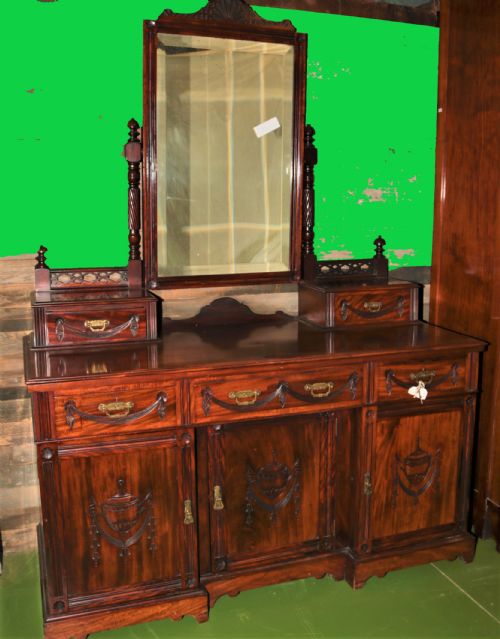


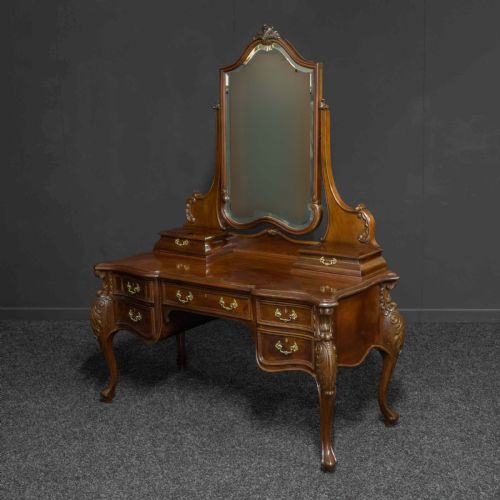
Carved Wooden Desk Mirror
These carved wooden desk mirror examples bring period timber and adjustable glass directly to the dressing surface.
Carved Wooden Desk Mirror
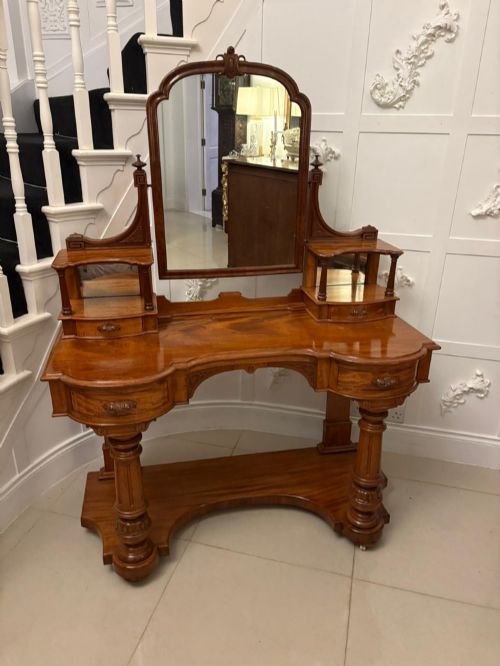
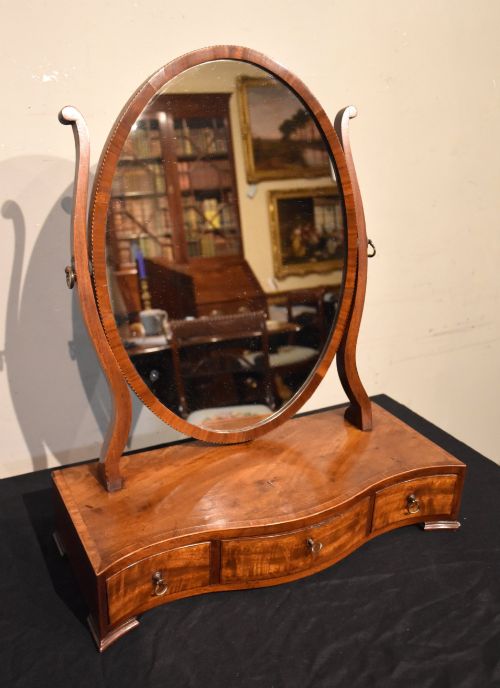
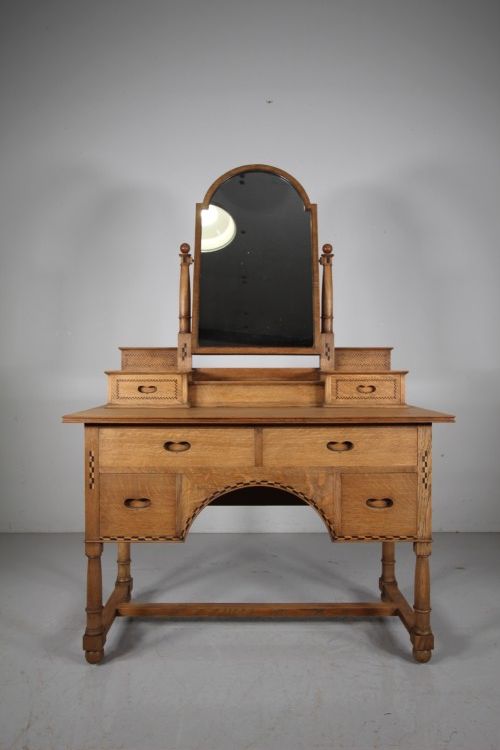
A carved wooden desk mirror represents a functional accessory designed for the dressing table or surface, providing a tilting reflective plate supported by a timber frame and stands. Buyers browsing this selection encounter various formats ranging from small table mirrors to larger dressing table mirrors associated with larger chests and dressing furniture.
The pieces appearing in this category span several distinct eras, notably the Victorian period, Edwardian era, and Georgian times, alongside specific examples from the nineteenth century and the early twentieth century. Common timber forms involve mahogany, oak, and walnut, frequently incorporating carved details, gesso, or wood inlay.
How they were made
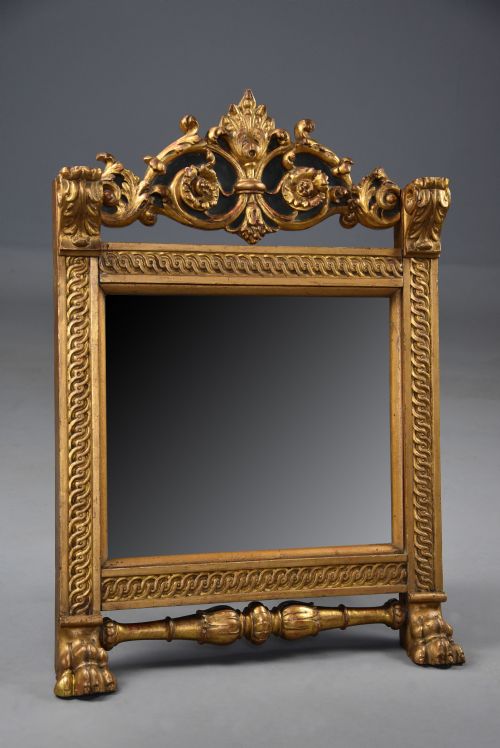
Cabinetmakers constructed these frames using solid hardwoods like mahogany, oak, and walnut, often shaping the timber with carved ornamentation or applying gesso and giltwood details. Joinery techniques varied from traditional mortise and tenon joints to secure upright supports and pivoting arms that hold the glass plate.
Glass production involved silvering flat mirror plates, which were then fitted securely into rebated wooden frames or held with brass fittings. Decorative elements frequently included marquetry or wood inlay, alongside moulded serpentine fronts and carved crests reflecting prevailing periods from the Georgian era through to the Edwardian years.
Materials recorded across the inventory include mahogany, oak, walnut, glass, brass, giltwood, and gesso.
What varies in quality
Distinctions in quality often rest upon the selection of timber and the precision of the carving work executed on the frame and supports. Superior pieces display crisp, hand-carved mouldings and well-figured mahogany or oak, whereas simpler examples rely on plain timber surfaces with minimal decoration.
The construction of the pivoting mechanism and the condition of the original mirror plate also influence the character of each piece. Finely made mirrors maintain stable joints in the upright standards and retain clear glass, while later replacements or heavily restored mounts alter the original presentation.
Heals
The Carved Wooden Desk Mirror Glossary
- Dressing mirror
- A table-standing glass mounted on pivoting side supports above a small base or box. These items sat upon chests of drawers or dedicated dressing tables.
- Bureau mirror
- A small mirror plate mounted above a sloping writing flap or small drawers. This form combines storage compartments with an adjustable reflective surface.
- Giltwood
- Timber that has been coated with a thin layer of gold leaf or gold paint over a preparation of gesso. It appears on decorative frames from revival periods.
- Marquetry
- Decorative veneer work arranged in geometric or pictorial patterns using various coloured woods. It decorates the surfaces of oak and mahogany carcases.
- Serpentine front
- A curved furniture front featuring a convex centre flanked by concave ends. This contour appears on Georgian and Victorian dressing furniture.
Carved Wooden Desk Mirror: Frequently Asked Questions
What is a carved wooden desk mirror used for?
These mirrors provided a portable or table-standing reflective surface for grooming and dressing within bedrooms and dressing rooms. They allowed users to adjust the angle of the glass for personal use.
Over time, many served both a practical function and a decorative role on top of chests of drawers, dressing tables, and writing desks.
How do I date a carved wooden desk mirror?
Dating relies on identifying the timber species, construction methods, and stylistic details such as carving motifs and mirror plate bevelling. Pieces from the Georgian era often show simpler, elegant proportions, whilst Victorian examples frequently feature heavier carved mahogany or walnut.
Later Edwardian and early twentieth-century items often reflect revival tastes or incorporate oak with simpler architectural lines.
Are these mirrors attached to tables?
The selection includes both standalone table mirrors designed to sit on any flat surface and mirrors integrated into larger dressing tables or chests. Standalone versions typically feature small box bases or shaped feet.
Integrated variants form part of a larger piece of case furniture, sometimes secured with side arms attached directly to the dressing table top.