


Giltwood Table Mirror
A giltwood table mirror brings warmth and reflective depth to a room, channelling centuries of decorative craft into a compact, usable form.
Giltwood Table Mirror
A giltwood table mirror sits upon a dressing chest, console or sideboard, combining reflective glass with a decorative gilded frame. Buyers seek these pieces for their ability to bounce light around a room while adding an antique focal point to a surface.
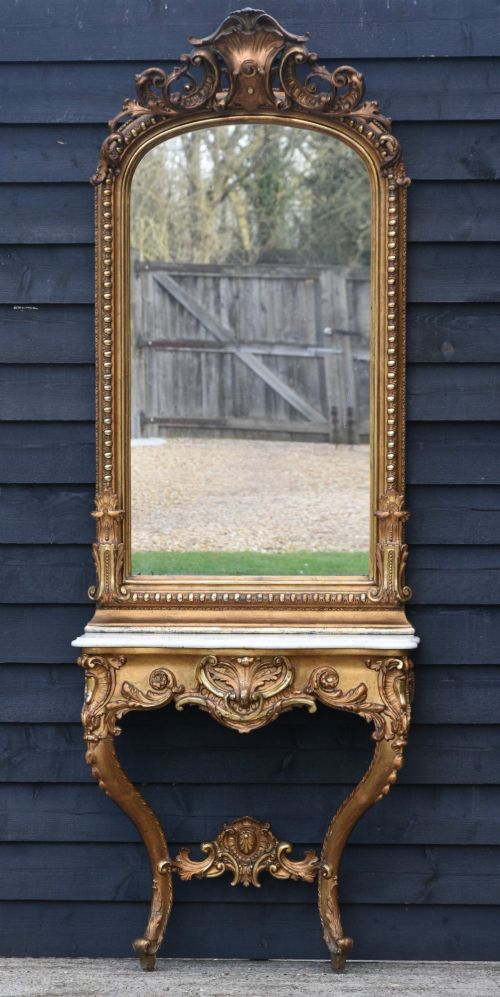
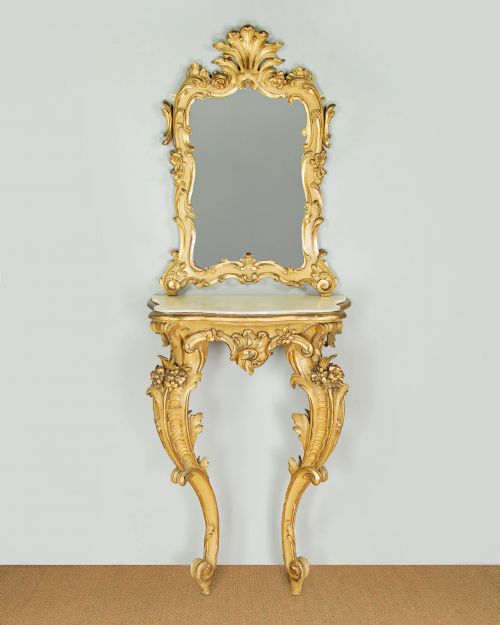
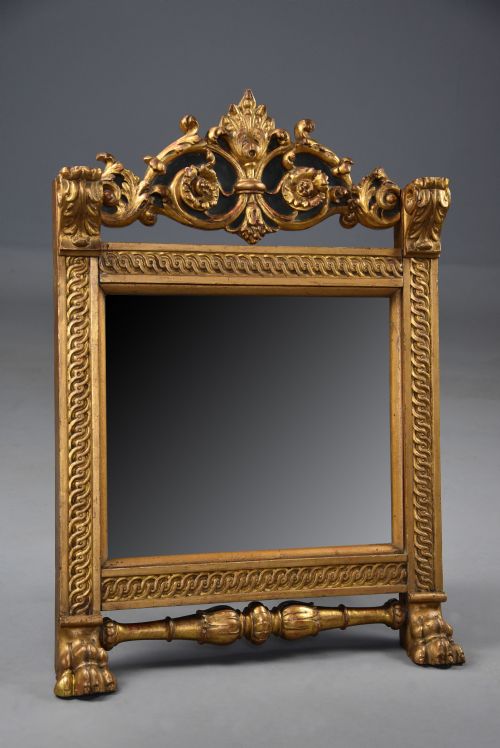
The selections span from compact nineteenth century easel designs to grander console table and mirror combinations. French Rococo revival pieces and Italian Baroque examples appear frequently alongside simpler twentieth century folding dressing mirrors.
Originating from periods stretching from the eighteenth century through to the early twentieth century, these objects range from intimate toilet mirrors to substantial wall and pier mirrors paired with matching console tables.
Materials and construction
Carved wood provides the primary armature for these frames, often built from pine or softer timbers that accept intricate detailing. Artisans applied gesso over the wooden base to smooth the surface before laying down thin sheets of gold leaf.
Many pieces incorporate specialist mirror glass held within carved giltwood or parcel-gilt frames, sometimes accompanied by marble tops on associated console bases. Painted wood and gilt finishes frequently appear together to create contrasting textures.
Listings feature items spanning the eighteenth century to the 1920s, utilising gesso, marble, and hand-applied gold leaf.
Factors determining quality
The crispness of the hand-carving separates standard items from finer examples. Deeply undercut foliage, scrolls and figurative elements demonstrate superior skill from the maker compared to shallow, moulded ornament.
The integrity of the gilding surface dictates the visual impact of the piece. Hand-applied gold leaf retains a rich, nuanced lustre over centuries, whereas inferior or later repaint interventions appear flat and uniform.
The Giltwood Table Mirror Glossary
- Giltwood
- Wood coated with gold leaf or powder. This finish provides the characteristic metallic gleam seen across antique frames.
- Gesso
- A plaster mixture applied to wood as a preparation layer. It allows artisans to carve intricate relief details before gilding.
- Rococo Revival
- A nineteenth century style mimicking eighteenth century French asymmetry and scrollwork. It dominates many ornate mirror frames.
- Console Table
- A table designed to stand against a wall, frequently paired with a matching mirror. They often feature marble tops.
- Trumeau
- A decorative wall mirror incorporating a painted panel or artwork above the glass. These units often integrate with console tables.
Giltwood Table Mirror: Frequently Asked Questions
Where should I place a giltwood table mirror?
These mirrors suit dressing tables, sideboards and console tables where they anchor the space visually. Position them opposite a window to maximise reflected daylight in smaller rooms.
Ensure the supporting surface is deep and sturdy enough to bear the weight, particularly with heavier nineteenth century carved frames and marble pairings.
How do I clean an antique giltwood frame?
Dust the carved surface gently using a very soft, dry brush or feather duster. Moisture and modern chemical cleaners will strip or darken delicate gold leaf.
Keep glass cleaning liquids away from the wooden edges to prevent staining or lifting the historical gesso beneath the metallic leaf.
How do I date a giltwood mirror?
Examine the backboards, fixings and the composition of the glass itself for clues to the manufacturing era. Hand-beveled plates and older screw types point to nineteenth century production, while crisp gesso work often aligns with specific revival periods.
Stylistic cues such as heavy Baroque scrolls or lighter Edwardian folding mechanisms help narrow down the decade of creation.