

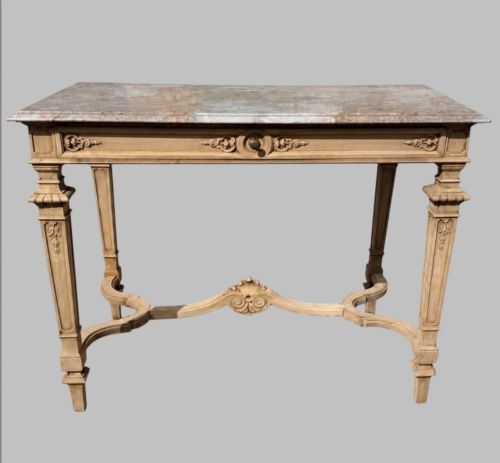


French Style Server Table
These french style server table pieces bring practical surface space and enduring continental character into a room.
French Style Server Table
When you search for a french style server table, you are looking at substantial timber serving pieces, console tables, and buffets designed for display and utility. The examples gathered here span the nineteenth century, including Victorian and Edwardian interpretations alongside pieces dated to specific decades such as eighteen eighty and eighteen ninety.
You are most likely to meet mahogany, oak, and cherrywood forms finished in styles that reference French provincial, Renaissance revival, Louis sixteenth revival, and Napoleon the third aesthetics. These tables often incorporate marble tops and brass mounts, reflecting the functional elegance demanded by nineteenth century dining and reception rooms.
How they were made
The construction relies heavily on cabinet timbers like mahogany, oak, and cherrywood, shaped into sturdy frames and panelled carcases. Timber surfaces are frequently paired with inset marble slabs to provide a durable and cool top for food or objects.
Decorative detail is added through applied brass and ormolu mounts, intricate wood carving, and gilt highlights. Mirror glass and painted finishes also appear across the selection, showing a variety of surface treatments applied to the underlying timber structures.
French Style Server Table Retail Price Guide 2026
Typical asking prices for french style server table among the pieces listed under this phrase on Sellingantiques today, from the lower quarter to the upper quarter. They describe what is for sale here now, not the wider market.
Materials documented across the available pieces include mahogany, oak, cherrywood, marble, brass, ormolu, and mirror glass.
What varies in quality
The distinction between standard and finer examples rests on the crispness of the wood carving and the weight of the bronze or brass ormolu mounts. Better pieces display precise joinery and well-figured timber grain that has been finished with care.
The choice and thickness of the inset marble top also signal quality, with superior tables featuring finely veined stone fitted flush into the surrounding timber framework.
KRIEGER of Paris·Gillows
The French Style Server Table Glossary
- Ormolu
- Gilded bronze mounts applied to furniture for decorative contrast. This technique was widely utilised during the nineteenth century on French revival pieces.
- Console table
- A table designed to be fixed against a wall, often supported by front legs or brackets. These pieces frequently feature marble tops and elaborate carvings.
- Chiffonier
- A tall sideboard or cabinet with drawers and shelves. The form developed in the nineteenth century for storage in dining rooms and parlours.
- Buffet
- A sideboard or serving table used for holding food and tableware. They are typically constructed from dense timbers like mahogany and oak.
- Etagere
- A small open shelving unit or side table with multiple tiers. These tables offer accessible display space for decorative objects.
French Style Server Table: Frequently Asked Questions
What is a French style server table?
A French style server table is a nineteenth century console, buffet, or side table designed for serving food or displaying decorative objects in reception rooms.
These pieces typically feature timber frames made from mahogany, oak, or cherrywood, often complemented by marble tops and brass mounts.
How do I identify the period?
Dating relies on stylistic clues such as the revival movement evident in the carving, alongside timber selection and construction methods typical of the nineteenth century.
Specific dates or eras like Victorian, Edwardian, and Napoleon the third offer further context for when a piece was constructed.
Where were these tables used?
Historically, these tables stood in dining rooms, halls, and parlours to hold dishes during meals or to display ornaments.
Today, they serve similar functions in domestic interiors as console surfaces or serving stations.
Are the marble tops original?
Marble tops on nineteenth century servers were generally fitted during the initial construction to provide a durable and heat resistant surface for food.
Inspecting the fit and the stone edges helps confirm that the marble belongs to the frame.