
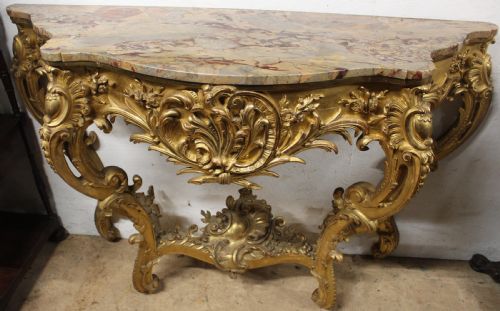
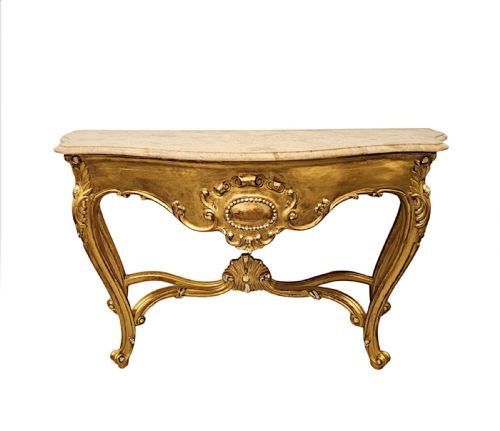


French Style Entry Table
These french style entry table pieces bring classic continental elegance to a hallway, combining rich marbles and gilded wood in striking historical forms.

French Style Entry Table
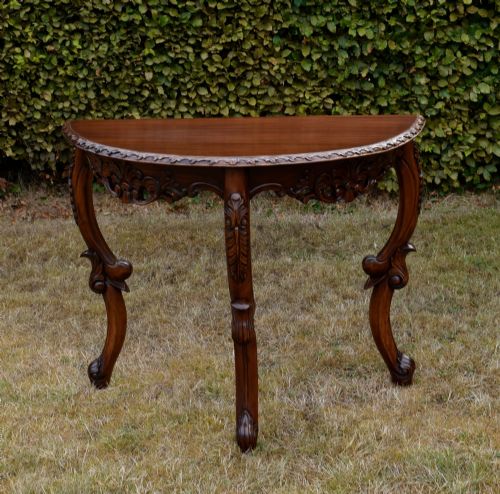
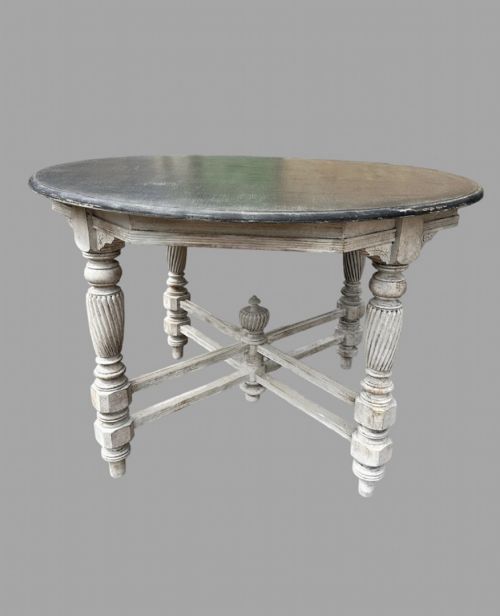
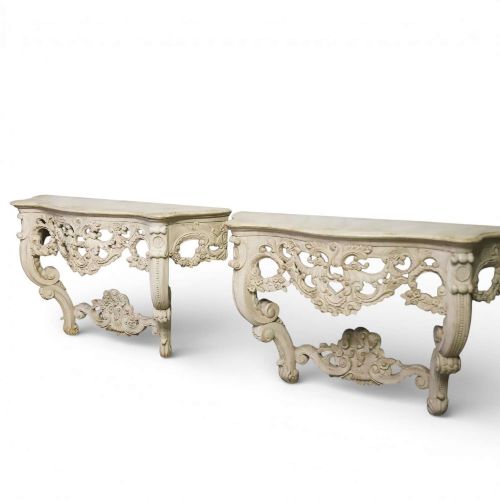
When you search for a french style entry table, you encounter console tables, centre tables, and occasional matched table and mirror sets designed for halls and reception rooms. The selection ranges from nineteenth-century Empire and Rococo revival pieces to twentieth-century painted or bleached variations.
Console tables typically sit flat against a wall, while centre tables stand freely to anchor a room. Many examples feature fitted marble tops paired with carved wooden frames reflecting historic French design movements.
Materials and construction
Carpenters utilised solid woods such as mahogany, walnut, and kingwood as foundational structures, frequently applying decorative veneers and parquetry inlay. Giltwood, gesso, and painted finishes provided decorative surface detail.
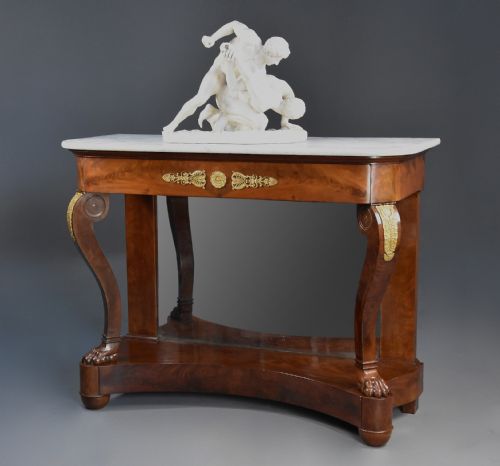
Heavy marble slabs form the tabletops on numerous examples, occasionally accented by cast or chased ormolu, brass, and bronze mounts secured directly to the wooden framework.
The listings show nineteenth-century pieces dominating the selection, with materials ranging from solid mahogany and walnut to carved giltwood and heavy marble.
What separates the finest pieces
The refinement of hand-carving distinguishes superior examples, particularly in the crispness of acanthus leaves, putti, or classical mounts. Heavy, high-grade marble tops with natural veining indicate greater ambition in original manufacture.
The integration of detailed parquetry and the depth of gilding over gesso separate standard production items from exceptional workshop creations.
The French Style Entry Table Glossary
- Console table
- A table designed to stand against a wall, historically supported by brackets or console legs rather than four standard uprights.
- Centre table
- A freestanding table meant to be viewed from all sides, frequently placed in the middle of a grand entrance hall or reception room.
- Ormolu
- Gilded bronze mounts applied as decorative ornaments to furniture frames, popular in neoclassical and Empire designs.
- Giltwood
- Timber coated with a thin layer of gold leaf over a prepared gesso base, giving a brilliant metallic surface.
- Parquetry
- Geometric wood inlay patterns assembled from small veneer pieces to form decorative tabletops or borders.
French Style Entry Table: Frequently Asked Questions
Where should I place a console table?
These tables suit narrow entrance halls, corridors, or living spaces where floor space is limited. Their shallow depth allows them to sit neatly against a wall without obstructing movement.
Pairing a wall-mounted console with a matching mirror creates a traditional entryway arrangement that reflects light and adds functional surface area.
How do I care for a marble top?
Marble requires gentle cleaning with warm water and a soft cloth to avoid scratching the polished surface. Acidic liquids such as wine or citrus can etch the stone, so coasters are essential.
Applying a specialist stone wax periodically helps protect the finish from moisture and everyday wear.
What is the difference between a console and a pier table?
A console table is supported by wall brackets or front legs, whereas a traditional pier table stands specifically against the wall space between two windows.
In practice, antique dealers often use these terms interchangeably when describing decorative hallway tables of nineteenth-century origin.
How do I identify French Empire style?
French Empire pieces favour clean architectural lines, dark mahogany timbers, and classical ornamentation cast in bronze or ormolu. Motifs often draw inspiration from ancient Roman, Greek, and Egyptian military campaigns.
The overall aesthetic prioritises symmetry, dignity, and substantial proportions over the flowing curves of earlier Rococo designs.