


French Style Ebonised Credenza
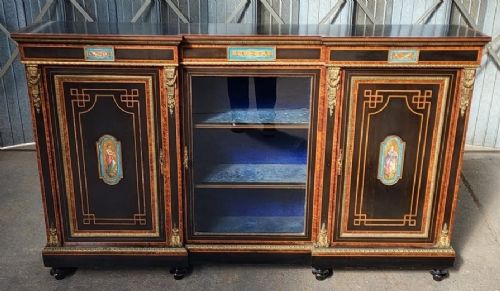
A french style ebonised credenza brings dark polish, gilt mounts and porcelain plaques to a Victorian or Napoleon III interior.
French Style Ebonised Credenza
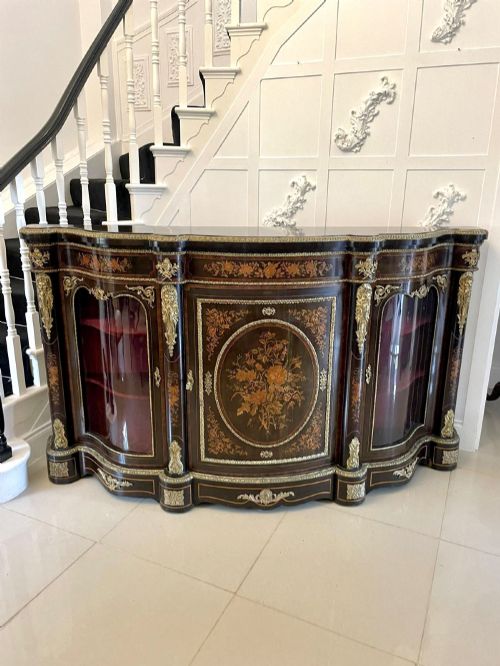
A french style ebonised credenza is a low display or storage cabinet defined by its dark, often blackened timber finish and continental revival forms. When you browse this page, you encounter side cabinets, pier cabinets and serpentine credenzas that date mainly from the Victorian era and the nineteenth century.
Makers and designers of these pieces drew heavily upon French Napoleon III, Louis XVI and Second Empire styles. The form frequently serves as a grand focal point in a principal reception room, combining glazed display doors with central cupboards.
Most examples rely on contrasting timbers and decorative inlays, with burr walnut and rosewood often appearing alongside the dominant ebonised wood. Surviving pieces range from single pier cabinets to substantial three-door side cabinets mounted with gilt metal.
How they were made
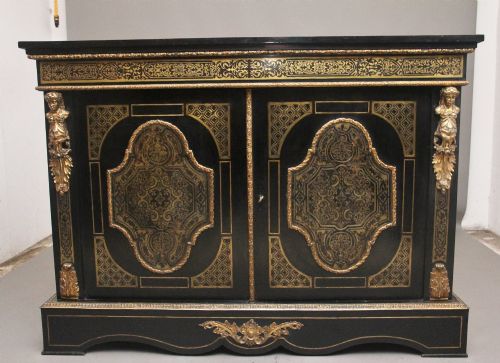
The characteristic black finish of an ebonised credenza was achieved by staining and polishing fruitwood or other timbers to imitate costly ebony. Cabinet makers then embellished these dark surfaces with intricate floral marquetry, brass stringing and tortoiseshell boullework.
Cast ormolu and gilt bronze mounts define the angles, frames and friezes of these cabinets, alongside decorative porcelain plaques painted in the Sevres manner. Many pieces are topped with shaped white or coloured marble slabs.
Internal construction typically involved carcases of softwood or walnut lined with veneered shelves and mirror glass backings. Joinery methods relied on traditional dovetailed drawer boxes and close-fitted door frames to support heavy stone tops and cast metal mounts.
Materials appearing across these records include ebonised wood, burr walnut, rosewood, ormolu, porcelain plaques, marble and pietra dura.
What varies in quality
Quality in a french style ebonised credenza rests upon the crispness of the gilt bronze mounts and the precision of the marquetry inlays. Finer workshops employed heavier, more deeply chased ormolu and hand-painted porcelain plaques rather than mass-produced metal stampings.
The choice of secondary woods and the depth of the ebonised polish also distinguish superior examples. Cabinets featuring substantial marble tops, complex serpentine shapes and dense tortoiseshell and brass boullework generally represent the more ambitious end of nineteenth-century production.
The French Style Ebonised Credenza Glossary
- Ebonised
- Wood treated with stain and polish to resemble solid ebony. This dark finish was widely favoured in Victorian and Napoleon III cabinet making.
- Ormolu
- Gilt bronze mounts applied to furniture for decorative effect. The metal is cast and chased before being gilded.
- Marquetry
- Decorative patterns formed by fitting together contrasting veneers of wood, ivory or metal. Floral designs appear frequently on nineteenth-century credenzas.
- Boulle
- A technique of inlaying brass and tortoiseshell developed in France. It creates elaborate metallic patterns across cabinet doors and panels.
- Pier cabinet
- A narrow display cabinet designed to fit wall spaces between windows. These pieces often feature glazed doors and velvet-lined interiors.
- Sevres style
- Ceramic plaques decorated with hand-painted pastoral scenes and rich coloured grounds. They imitate porcelain produced at the famous French factory.
French Style Ebonised Credenza: Frequently Asked Questions
Where should I place a credenza?
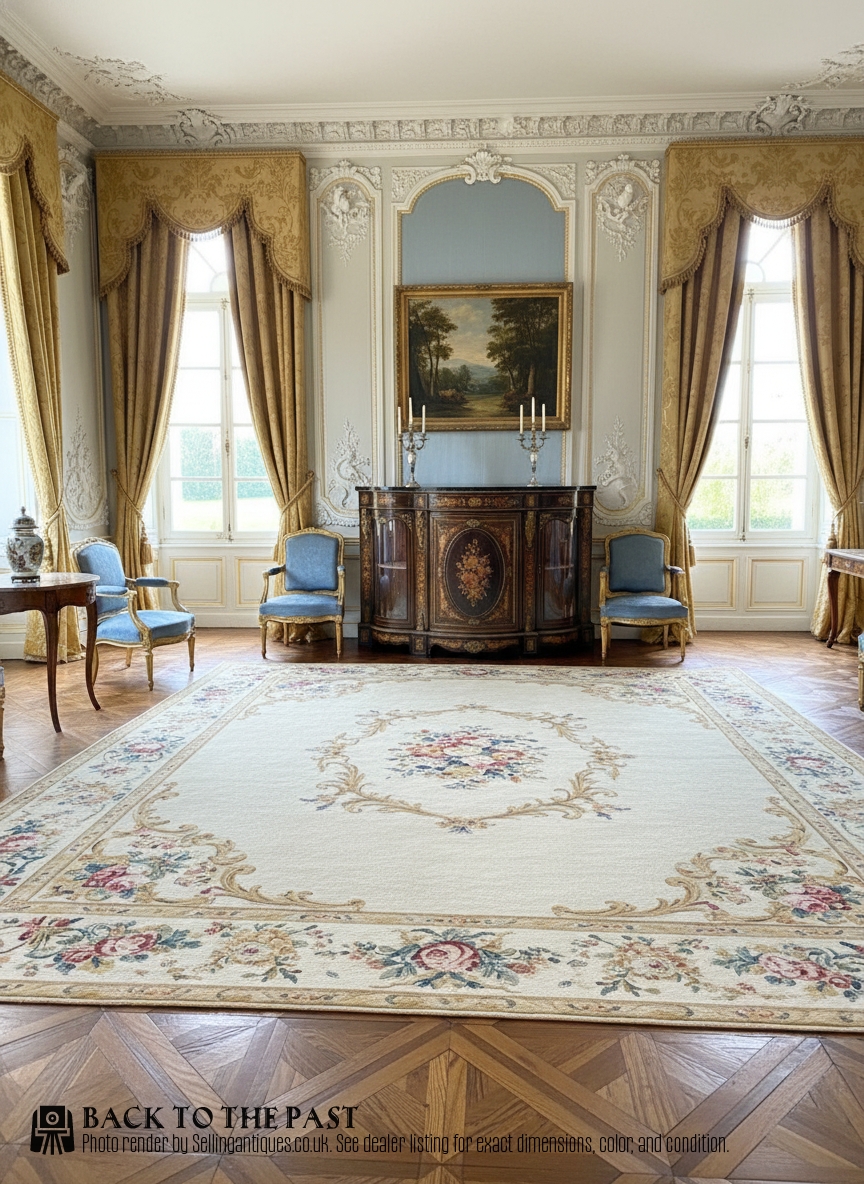
These cabinets suit principal reception rooms and large hallways where their dark finishes and gilt mounts can be appreciated. They function well against a substantial wall as a focal point for displaying ceramics or glass.
Because many examples incorporate glazed doors or velvet-lined interiors, they require placement away from direct heat sources and strong sunlight to protect the timber and veneers.
How do I care for ebonised wood?
Dust the surface regularly with a soft, dry cloth to prevent grit accumulation on the polished finish. Avoid using modern spray polishes that contain silicone, which can build up over time and dull the dark lustre.
Maintain a stable room humidity to prevent the underlying timber from expanding and cracking the delicate marquetry or brass stringing. Wax polish applied sparingly helps nourish the traditional finish.
What is the difference between a credenza and a pier cabinet?
A credenza is typically a broad, low cabinet featuring central cupboards flanked by curved or straight glazed display sections. They often stand against wide walls in dining rooms and drawing rooms.
A pier cabinet is narrower and taller, designed specifically to occupy the wall space between two windows. These single-door pieces focus primarily on vertical display.
How do I identify Napoleon III furniture?
Napoleon III pieces date from the French Second Empire period and combine historical revivals with lavish ornamentation. Look for dense floral marquetry, boullework, and heavy ormolu mounts on ebonised carcases.
These cabinets often display serpentine fronts and incorporate Sevres style porcelain plaques, reflecting an eclectic taste for eighteenth-century court styles.