
French Style Bureau
When you choose a french style bureau, you invite centuries of continental elegance and refined craftsmanship into your study.
French Style Bureau
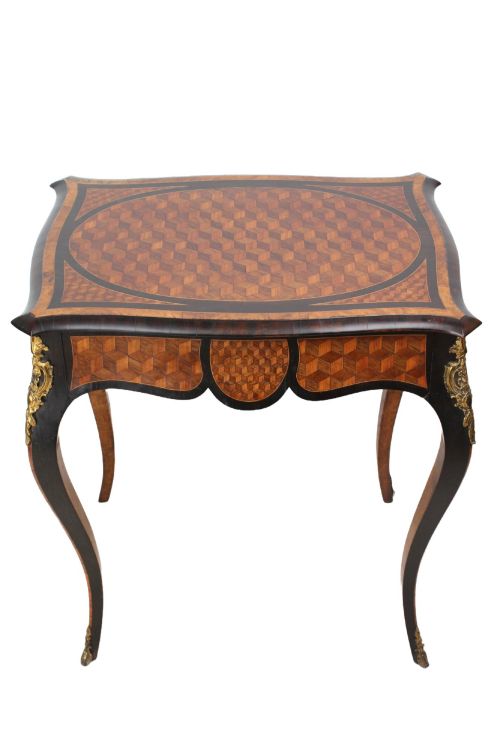
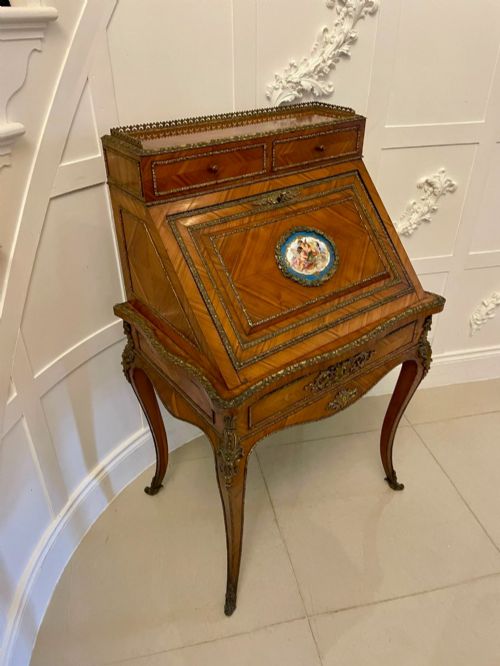
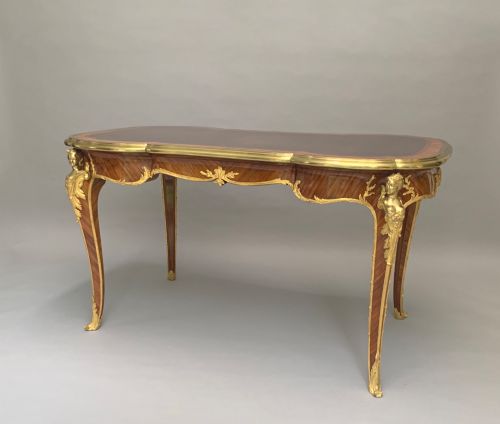
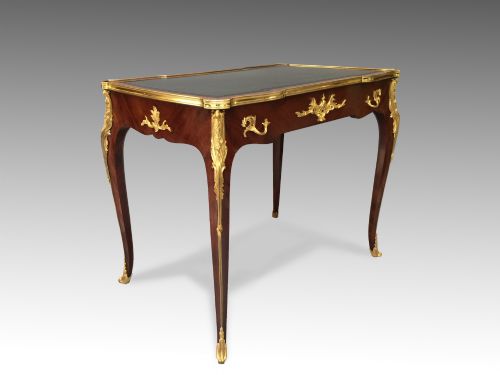
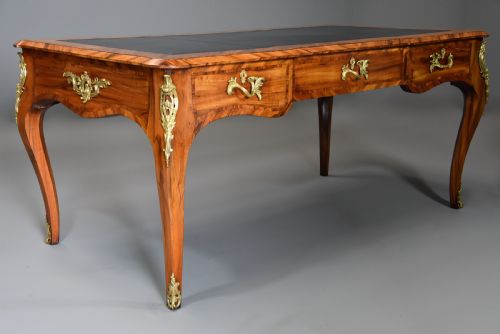
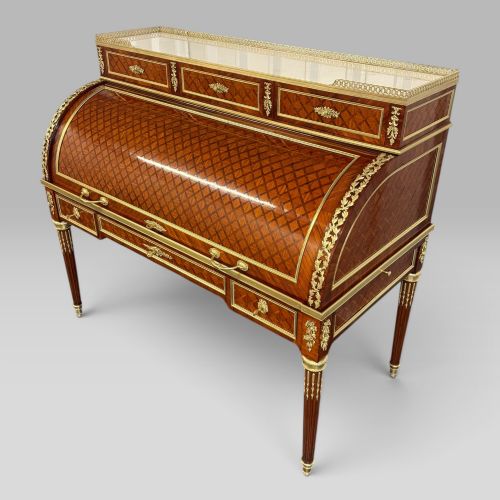
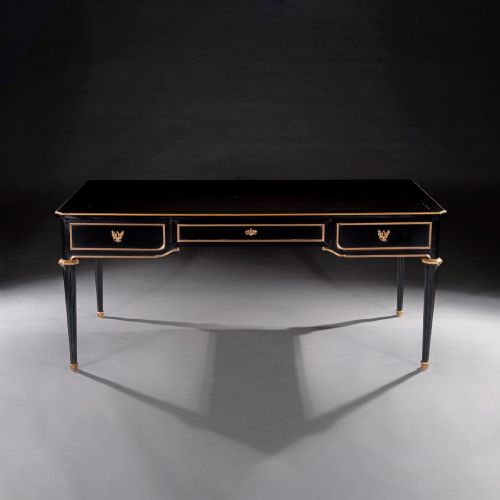
A french style bureau encompasses sophisticated writing furniture rooted in continental aesthetics, primarily drawing from Louis XV, Louis XVI, and Empire design traditions. These pieces range from open writing tables and bureau plats to enclosed cylinder desks and the delicate bonheur-du-jour.
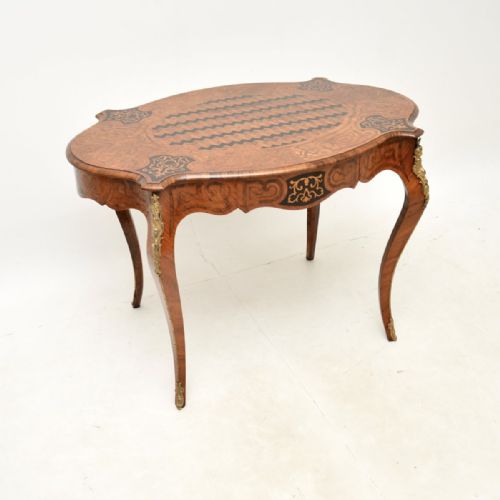
The pieces appearing on this page span the nineteenth century into the early twentieth century, showing both British interpretations and direct imports from France. Makers often utilised traditional forms like the slant-front desk or writing table while incorporating revived Rococo and Neoclassical ornamentation.
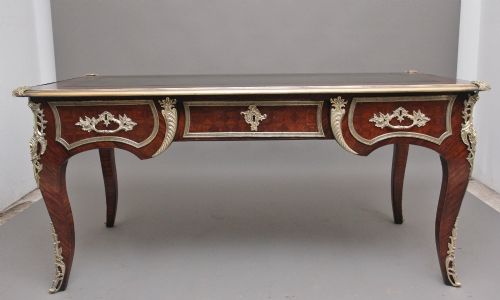
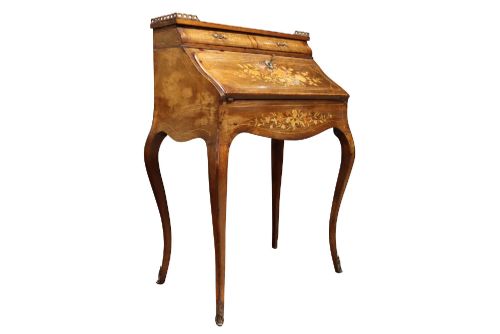
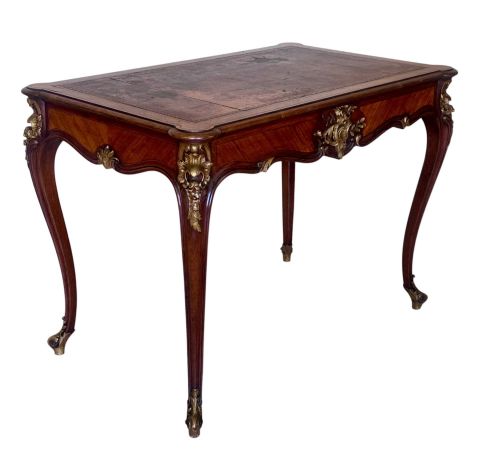
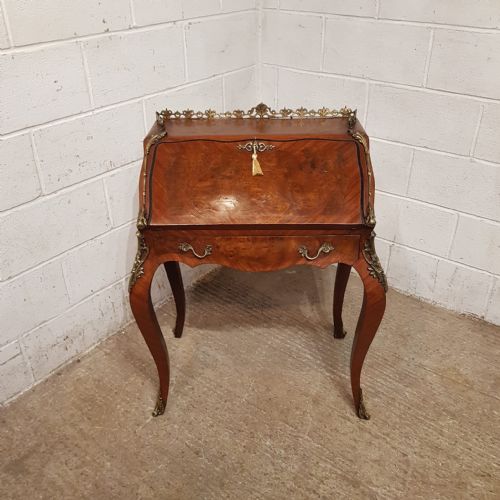
Buyers meet varied iterations, from compact walnut ladies' writing desks to large mahogany bureau plats designed for grand libraries. Each variation maintains a focus on dedicated writing surfaces, often inset with leather, accompanied by concealed drawers or compartments.
Materials and construction
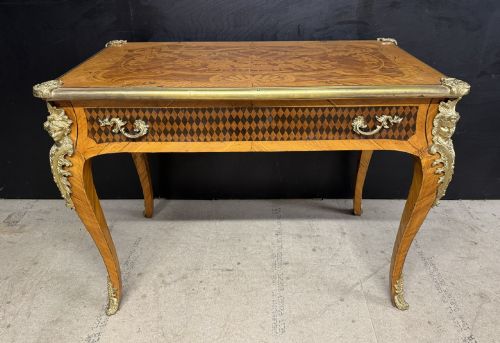
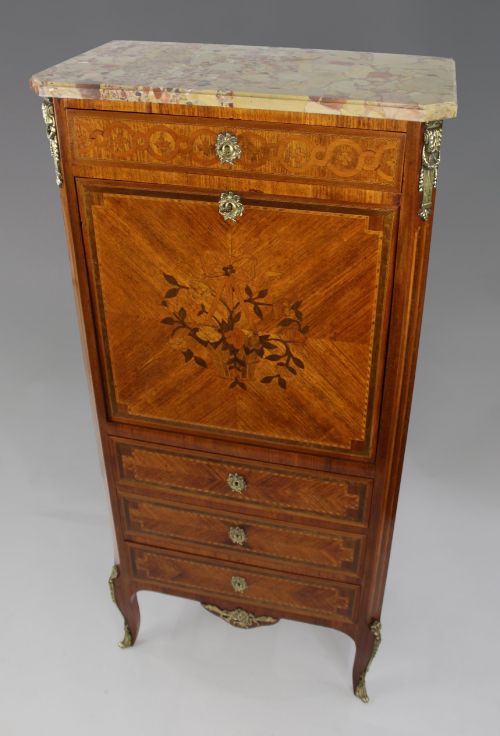
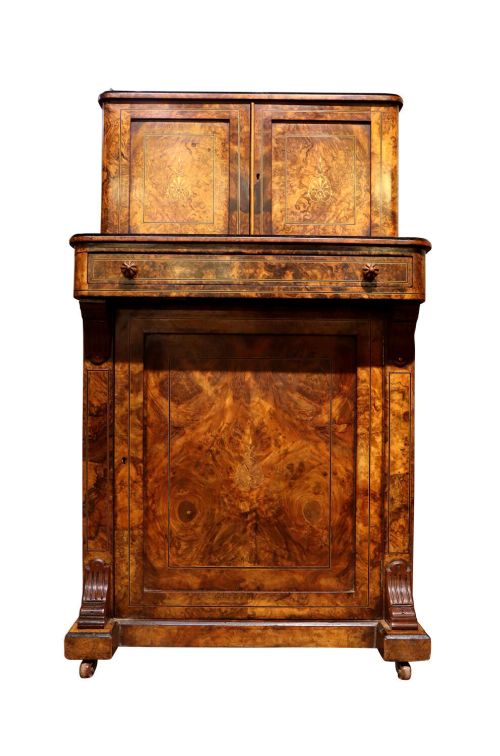
Cabinetmakers constructed carcass frames using sturdy foundational timbers such as mahogany and walnut, frequently applying exotic decorative veneers like kingwood, rosewood, and tulipwood. Parquetry and marquetry patterns form intricate geometric or floral designs across tabletops and fall-front panels.
Cast ormolu and gilt bronze mounts embellish corners, legs, and aprons, accentuating the sweeping contours typical of Louis XV and XVI revivals. Leather writing inserts, secured with gold-tooled borders, provide a durable and tactile surface for correspondence.
Keep watch for secret compartments designed to hide love letters from prying eyes.
Markers of distinction
Excellence in these desks rests upon the precision of the marquetry and the crispness of the cast ormolu mounts. Finer examples display hand-chased bronze details and carefully selected veneer grains that align harmoniously across the entire carcass.
The integrity of internal secondary timbers, original marble tops, and functional secret drawers elevates a piece's standing among collectors. Maker attribution, through stamps or known workshop signatures, further distinguishes exceptional furniture.
JAS Shoolbred·Francois Linke·Edwards and Roberts·CH Jeanselme and Co·Durand·Blake·Gillows of Lancaster
The French Style Bureau Glossary
- Bureau plat
- A freestanding writing table, typically with a rectangular leather-inset top and one or more drawers in the frieze.
- Ormolu
- Gilded bronze used for decorative mounts and accents on furniture, cast and chased to achieve fine detail.
- Marquetry
- Inlaid wood veneers arranged in pictorial or decorative patterns across the surface of a furniture piece.
- Bonheur-du-jour
- A small, light ladies' writing desk featuring a tiered superstructure with shelves or small drawers above the main work surface.
- Secrétaire à abattant
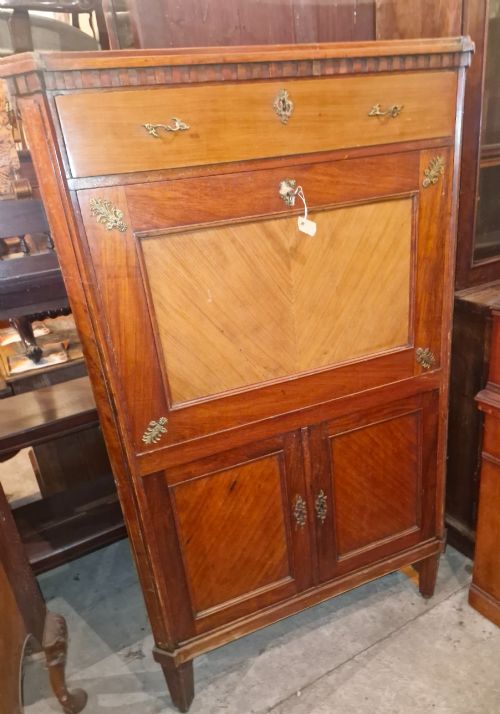
- A tall cabinet with a vertical drop-front panel that conceals a fitted interior of pigeonholes and small drawers.
French Style Bureau: Frequently Asked Questions
What is a bureau plat?
A bureau plat is a flat-topped writing table designed to stand free in the centre of a room rather than against a wall. These tables typically feature drawers integrated into the frieze and often showcase decorative mounts.
Originally utilised in grand French salons, they offer a spacious writing surface usually bordered by leather and supported by cabriole or tapered legs.
How do I care for leather top desks?
Leather writing surfaces require gentle maintenance to prevent drying and cracking over time. Regular dusting and occasional treatment with specialist leather balms keep the material supple.
Avoid placing these desks in direct sunlight or near heat sources, which can fade both the leather and the surrounding timber veneers.
Where were these desks placed originally?
These pieces occupied private studies, drawing rooms, and boudoirs in wealthy homes during the nineteenth-century revival periods. Freestanding desks allowed writers to sit facing the room.
Today, they adapt well into modern home offices or living spaces as functional focal points that combine historic craftsmanship with practical utility.