

French Study Desk
A French study desk brings continental elegance and practical writing space into a room, combining fine timbers with decorative metal mounts.
French Study Desk
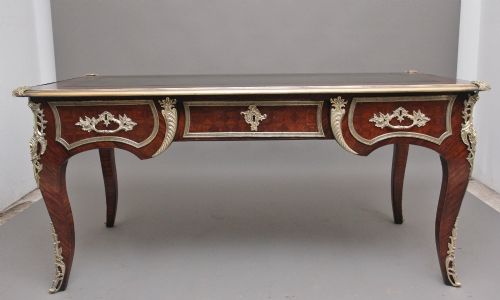
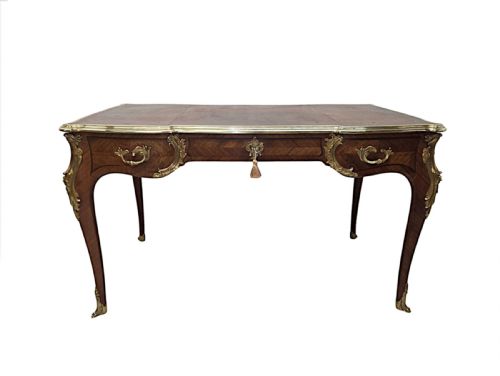
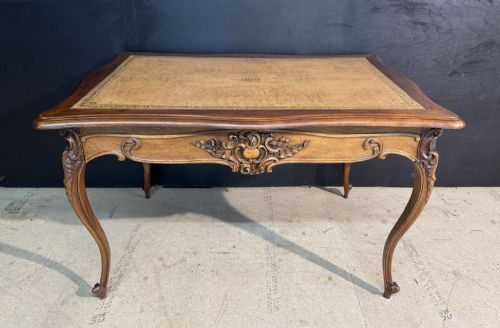
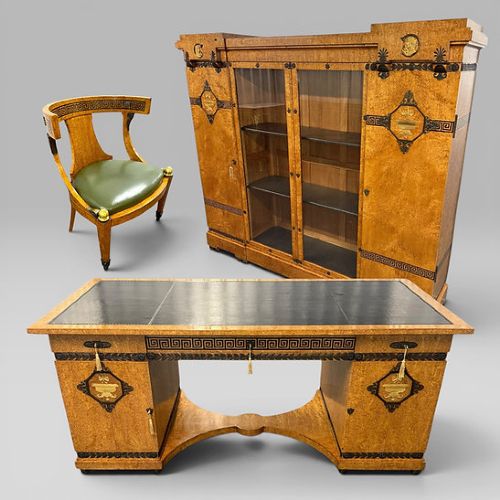
A french study desk encompasses various writing tables and bureau plat forms designed for domestic work. These pieces emerge across the nineteenth and early twentieth centuries, drawing on revival aesthetics such as Louis XV, Louis XVI, and Empire styles.
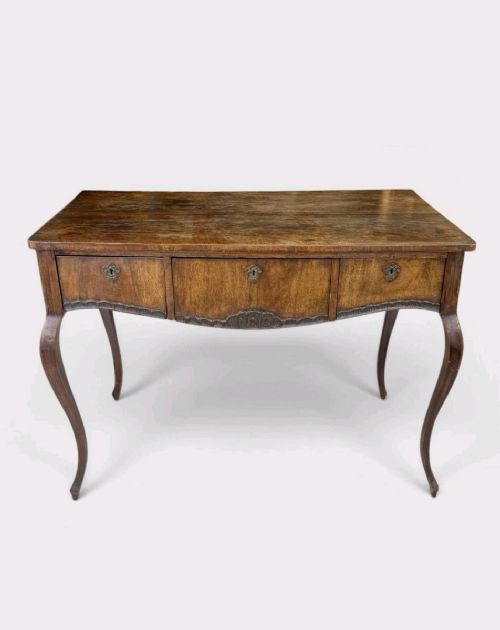
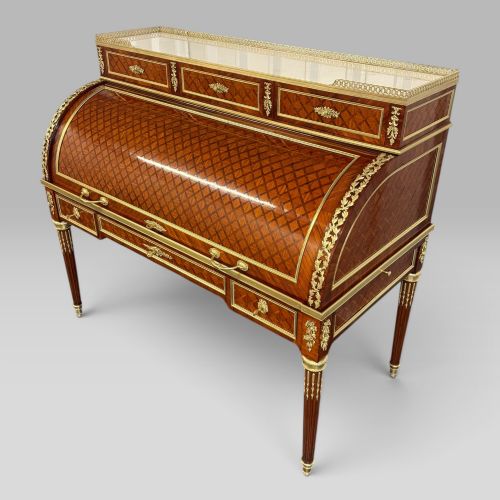
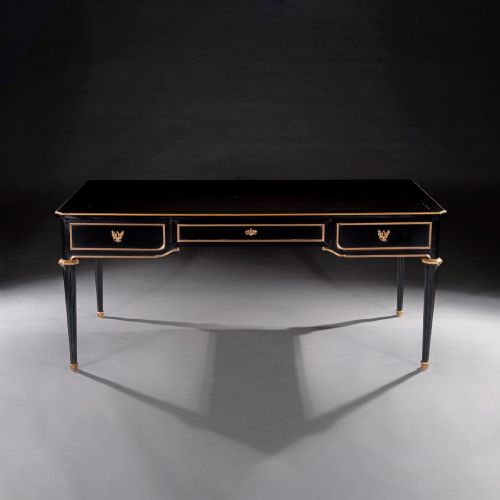
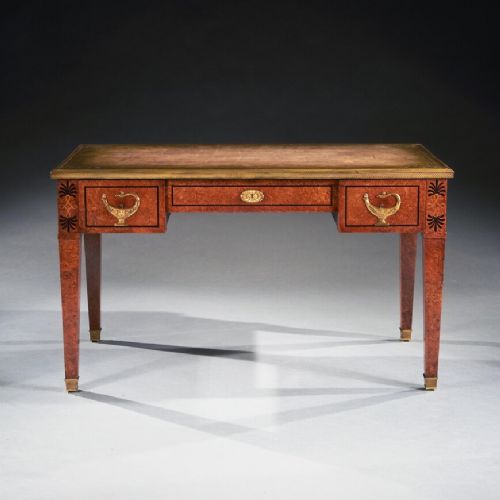
Buyers encounter freestanding writing tables, cylinder desks, and partner tables within this selection. Originating mainly from continental workshops, they utilise traditional forms like the bureau plat alongside kidney-shaped or kneehole variants.
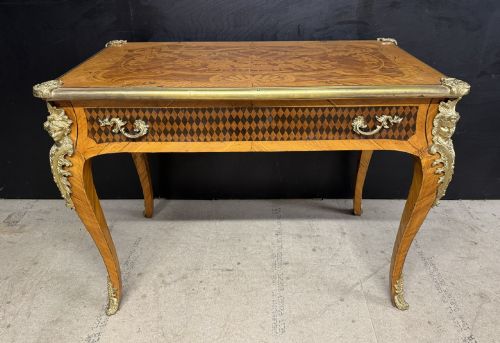
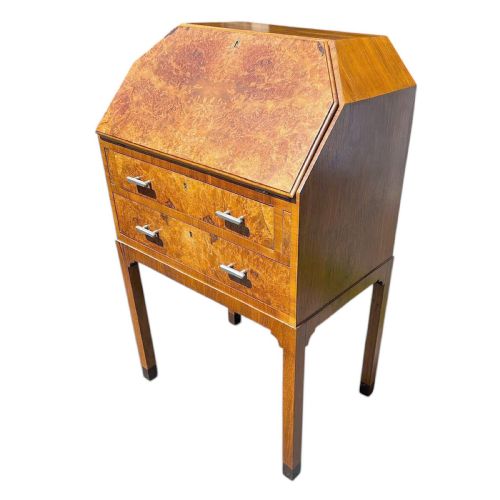
The objects span periods from the Victorian era into the art deco epoch. Makers and makers' workshops apply marquetry, parquetry, and painted finishes to mahogany, walnut, kingwood, and satinwood.
Materials and Construction
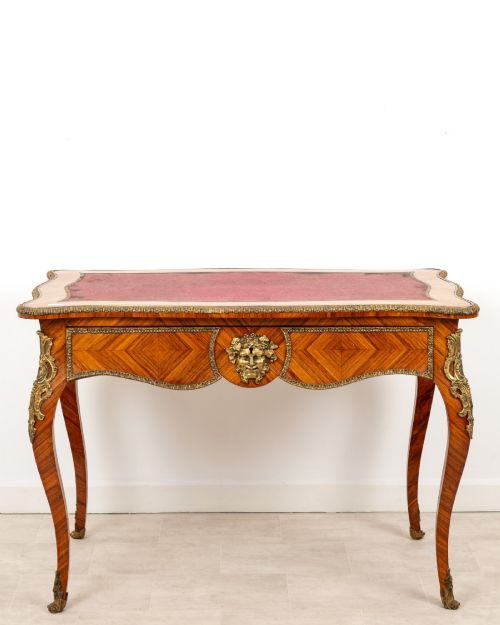
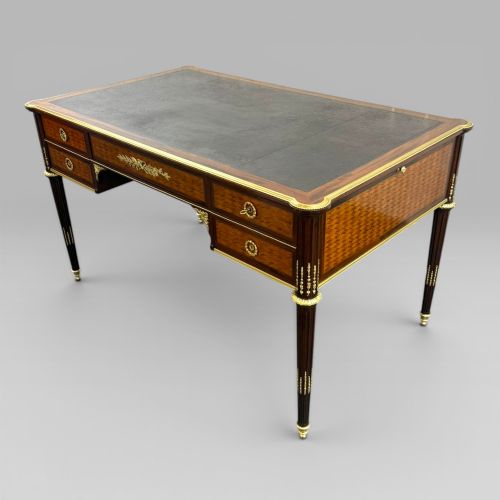
Cabinetmakers select dense hardwoods such as mahogany, walnut, and kingwood as the structural foundation. Surface decoration frequently employs intricate parquetry and marquetry patterns utilising contrasting timbers.
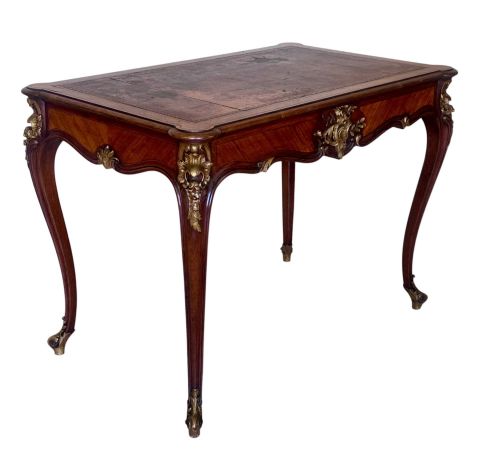
Mounts and decorative details rely on cast brass, ormolu, and gilt bronze. Many writing surfaces integrate inset leather panels surrounded by timber borders.
Listings feature mahogany, kingwood, burr walnut, and ormolu mounts across nineteenth and twentieth-century pieces.
Assessing Quality and Execution
The refinement of the ormolu mounts and the precision of the parquetry inlay dictate the distinction between standard and exceptional pieces. Master cabinetmakers ensure that bronze castings are crisply chased and fitted flush to the timber carcass.
Structural integrity relies on the quality of the timber selection and the joinery within the drawer construction. Finer examples display balanced grain matching across the writing surface and harmonious proportions derived from classical revival designs.
CH. Jeanselme and Co·Mercier Freres
The French Study Desk Glossary
- Ormolu
- Gilded bronze used for decorative mounts and sabots. This material adds metallic contrast to dark woods like mahogany and kingwood.
- Marquetry
- The art of applying thin veneers of various woods to create pictorial or geometric designs. Craftsmen arrange these pieces carefully onto the desk surface.
- Parquetry
- Geometric wood inlay forming repeating patterns such as cubes or chequers. This technique decorates the top and sides of many writing tables.
- Cylinder Desk
- A writing desk featuring a quarter-cylinder rolling shutter that conceals pigeonholes and small drawers. When closed, it protects the writing surface.
French Study Desk: Frequently Asked Questions
What is a bureau plat?
A bureau plat is a freestanding writing table with a finished back, allowing it to sit centrally within a room rather than against a wall.
These tables typically feature frieze drawers and a leather inset writing surface bordered by decorative wood veneers.
How do I identify Louis XVI style desks?
Louis XVI style desks display straight tapered fluted legs and classical architectural motifs, moving away from earlier curved rococo lines.
Cabinetmakers incorporated symmetrical parquetry and restrained ormolu mounts during this revival period.
Where were these desks placed?
These desks functioned in studies, libraries, and private drawing rooms for correspondence and administrative tasks.
Freestanding models allowed the user to sit away from walls while managing documents.
What woods were commonly used?
Cabinetmakers utilised dense hardwoods including mahogany, walnut, kingwood, and satinwood for both structure and veneer.
Exotic timbers provided rich background tones for marquetry patterns and gilt bronze mounts.