


French Sevres Style Urns
When you search for french sevres style urns, you find ornate nineteenth-century decorative pieces combining hand-painted porcelain with gilded metal mounts.
French Sevres Style Urns
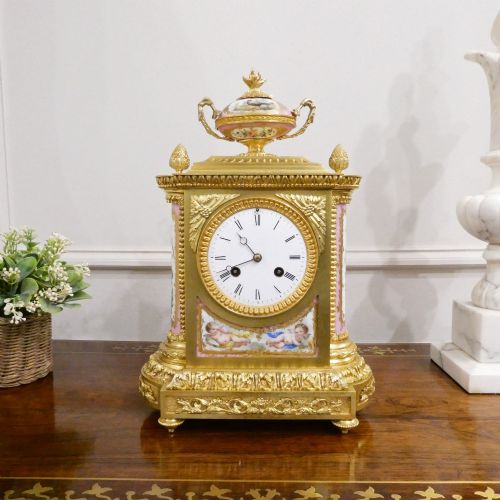
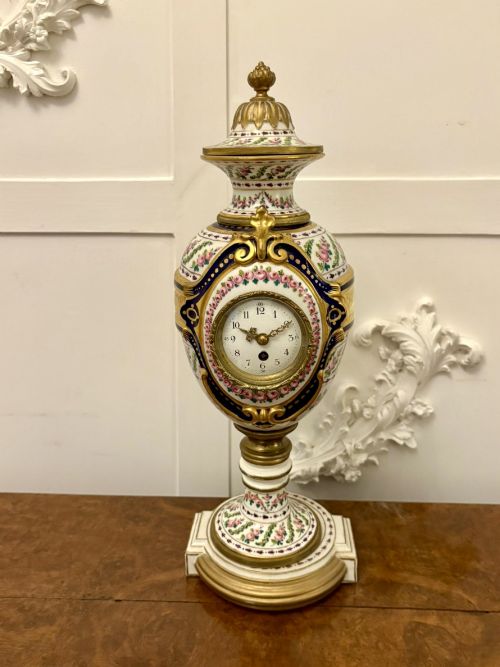
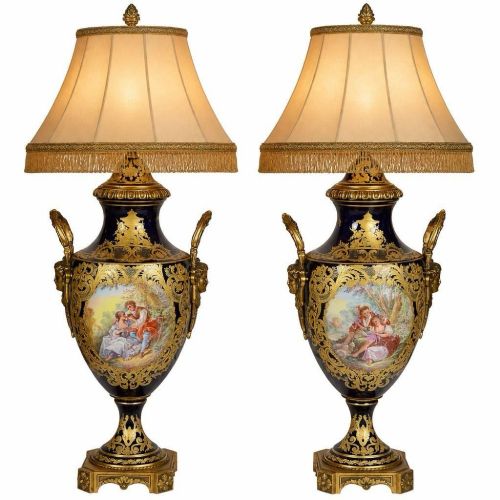
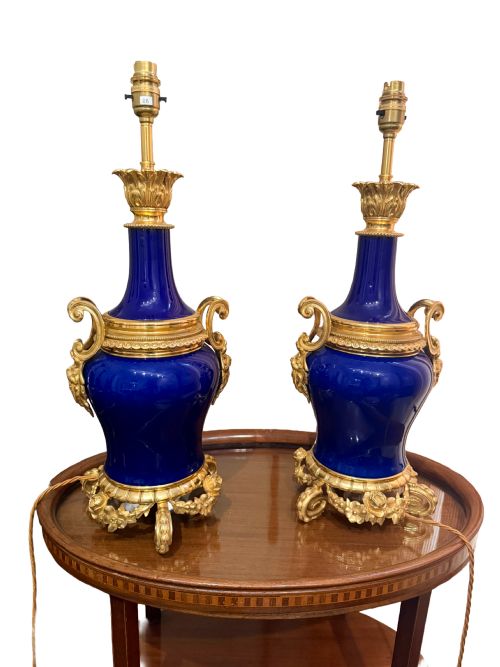
When searching for french sevres style urns, buyers encounter nineteenth-century decorative objects originating from French workshops, dating primarily between eighteen-fifty and nineteen-hundred. These pieces combine hand-painted ceramic bodies with metallic mountings, appearing as lidded vases, table lamps, and clock garnitures.
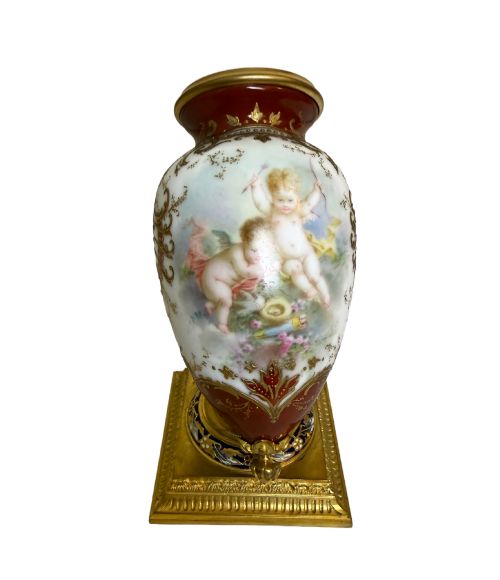
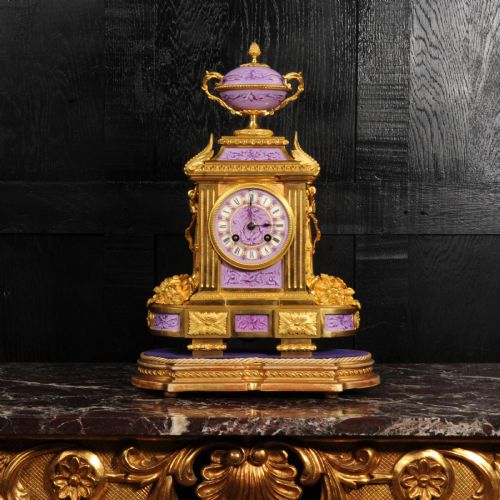
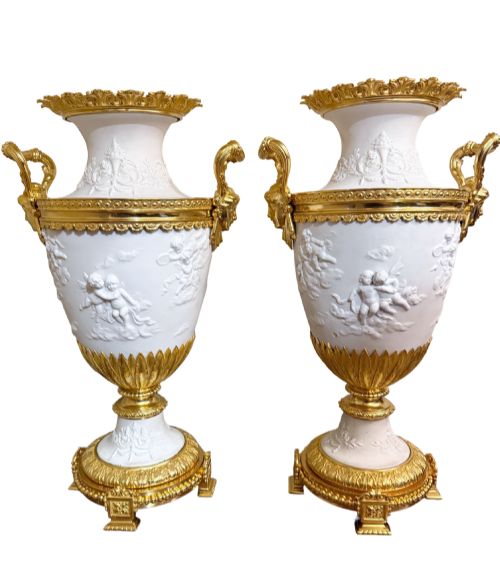
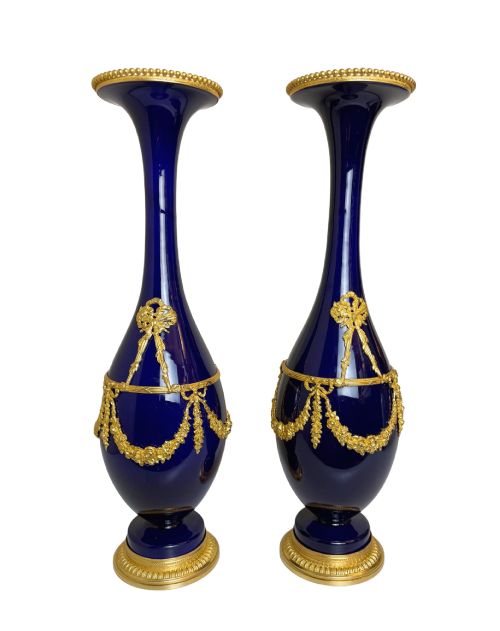
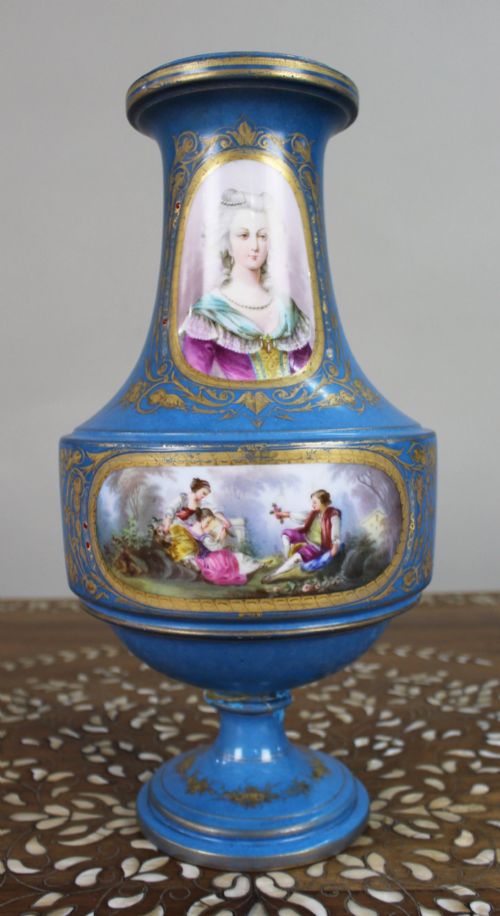
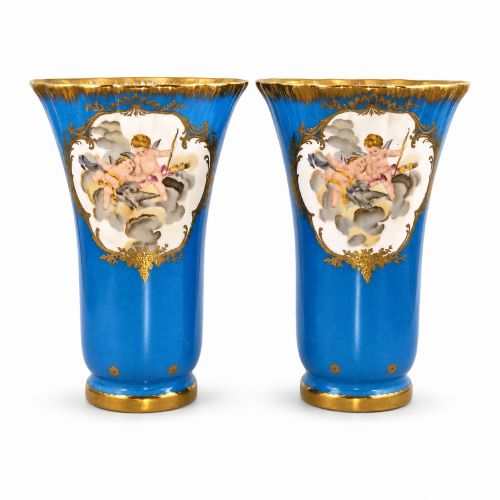
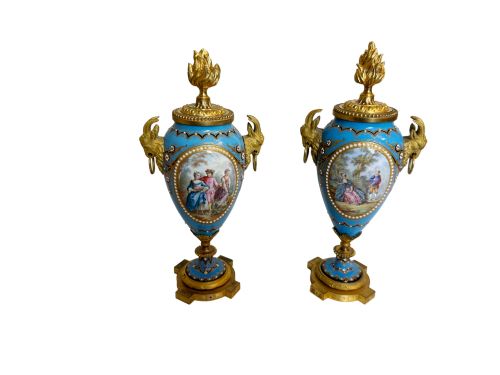
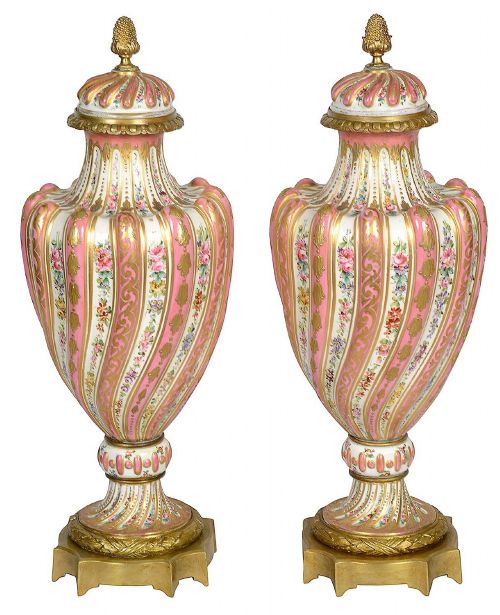
The most common versions on this page are pairs of lidded vases finished in cobalt blue, turquoise, or pink porcelain. They frequently feature classical figure painting or landscape panels enclosed by gilded scrollwork.
Makers and clockmakers of the period integrated these ceramic vessels into functional household objects such as mantel clocks and cassolettes. They reflect nineteenth-century revivals of Rococo and Neoclassical design aesthetics.
How they were made
Potters shaped the ceramic bodies from porcelain and majolica before applying enamel decoration and hand-painted scenes by brush. Artisans then fired these pieces at high temperatures to set the colours and glaze.
Foundries produced the decorative mounts using ormolu, gilt bronze, gilt metal, and brass. Craftsmen chased and gilded these metallic components before securing them around the porcelain bases, handles, and rims.
Some lidded vases stand over a metre tall, requiring sturdy nineteenth-century mantelpieces to support their massive porcelain and bronze weight.
What varies in quality
The refinement of the hand-painted porcelain panels separates standard production from exhibition pieces. Superior examples display detailed brushwork in classical figures and landscapes, framed by carefully tooled gilding.
The weight and casting precision of the ormolu and gilt bronze mounts dictate the overall standard of a piece. Finer mounts exhibit crisp detailing in the cast foliage and scrollwork rather than soft edges.
Jean-Baptiste Delettrez·Achille Brocot·Samson Paris·Japy Frers·Vincenti of Paris
The French Sevres Style Urns Glossary
- Ormolu
- A technique of applying finely ground high-carat gold to a bronze base object. This process creates a rich golden finish characteristic of nineteenth-century French metalwork.
- Bleu Céleste
- A bright sky-blue porcelain ground colour developed at the Sèvres factory. It serves as a background for hand-painted panels and gilt decoration.
- Garniture
- A set of matching decorative objects, typically comprising a mantel clock flanked by matching vases or urns. These sets were designed to display together on a mantelpiece.
- Cassolette
- A decorative vessel shaped like an urn, designed to function as a perfume burner or diffuser. Many examples feature reversible lids that conceal or reveal perforations.
- Majolica
- A type of earthenware coated with an opaque tin-glaze and painted with metallic oxide colours. It appears on nineteenth-century classical urns and decorative wares.
French Sevres Style Urns: Frequently Asked Questions
What periods do these pieces date from?
These decorative works date primarily from the nineteenth century, specifically between eighteen-fifty and nineteen-hundred. Makers produced them during revival periods spanning the reign of Napoleon III through the late Victorian era.
Most items carry nineteenth-century datings, reflecting popular classical and Rococo design revivals in France and across Europe.
How were these urns used originally?
Nineteenth-century households displayed these urns as decorative garnitures on mantelpieces, tables, and cabinets. They served purely to demonstrate wealth and taste rather than for practical storage.
Some variants functioned as lamp bases or housed clock movements, combining utility with ornamental porcelain and gilt bronze.
How do I care for ormolu and porcelain?
Dust porcelain and metal mounts gently with a soft, dry cloth to prevent accumulation. Avoid chemical cleaners and polishes, which can strip the thin gold leaf and damage hand-painted enamel surfaces.
Keep pieces away from direct sunlight and moisture to preserve the integrity of the gilt bronze mounts and painted ceramic glaze.
What is a clock garniture set?
A clock garniture is a matching set consisting of a central mantel clock accompanied by two matching side pieces such as vases or urns. Makers designed these sets to sit together symmetrically on a fireplace mantel.
The individual elements share identical porcelain colours, hand-painted motifs, and ormolu mounts to create a unified decorative scheme.