


French Semainier Cabinet
A french semainier cabinet offers seven stacked drawers for each day of the week, combining vertical storage with refined Continental elegance.
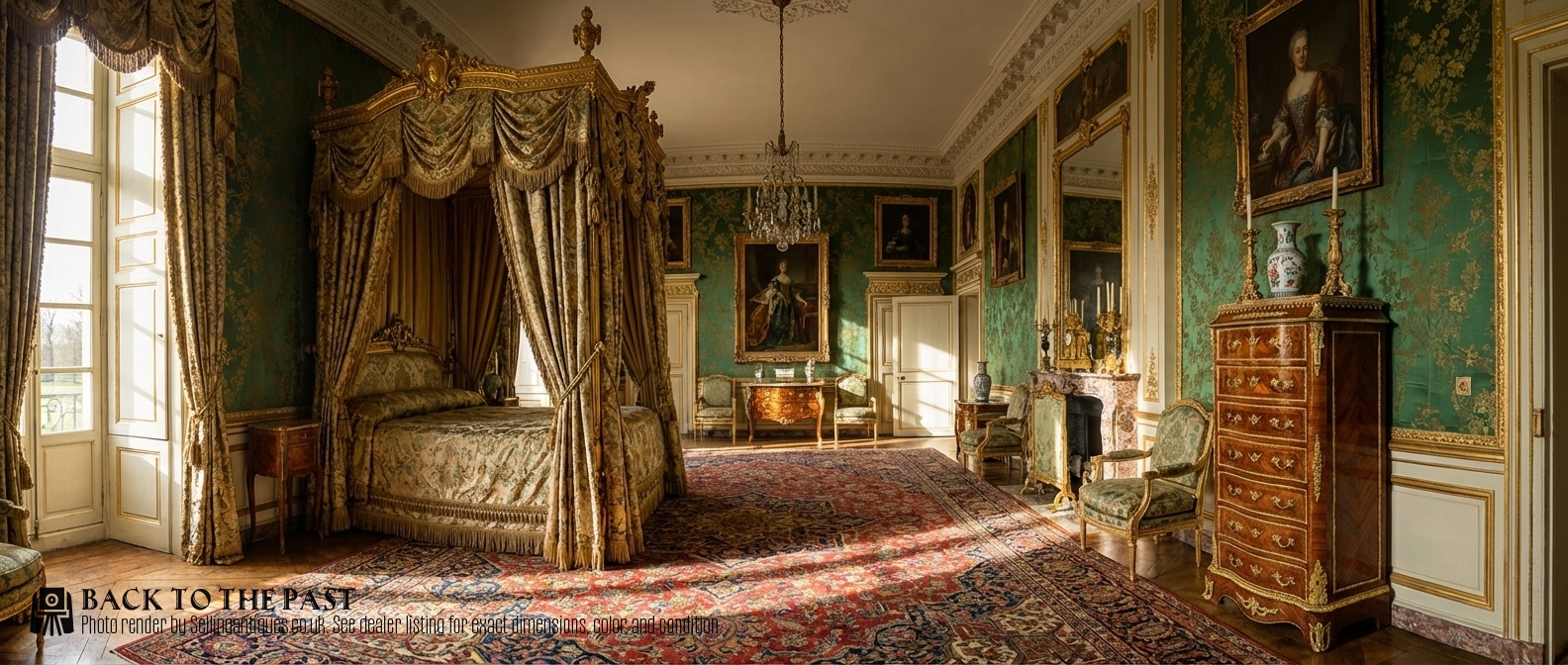
French Semainier Cabinet
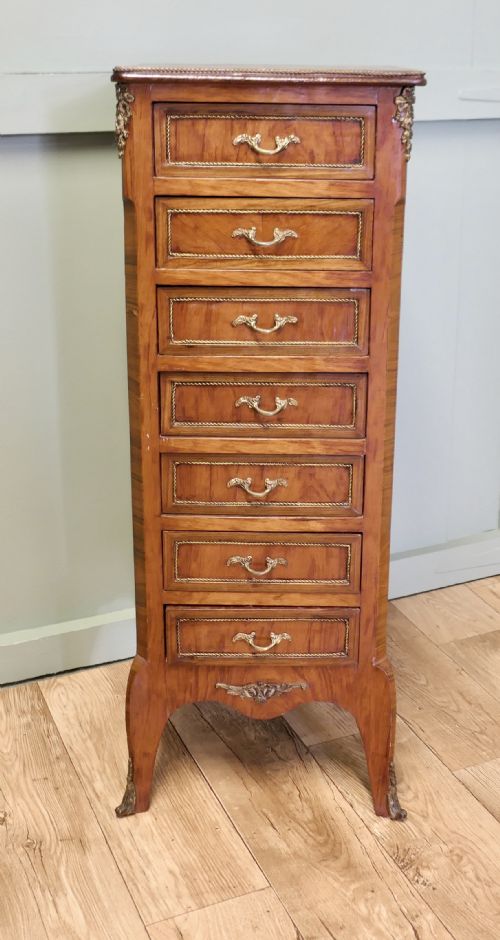
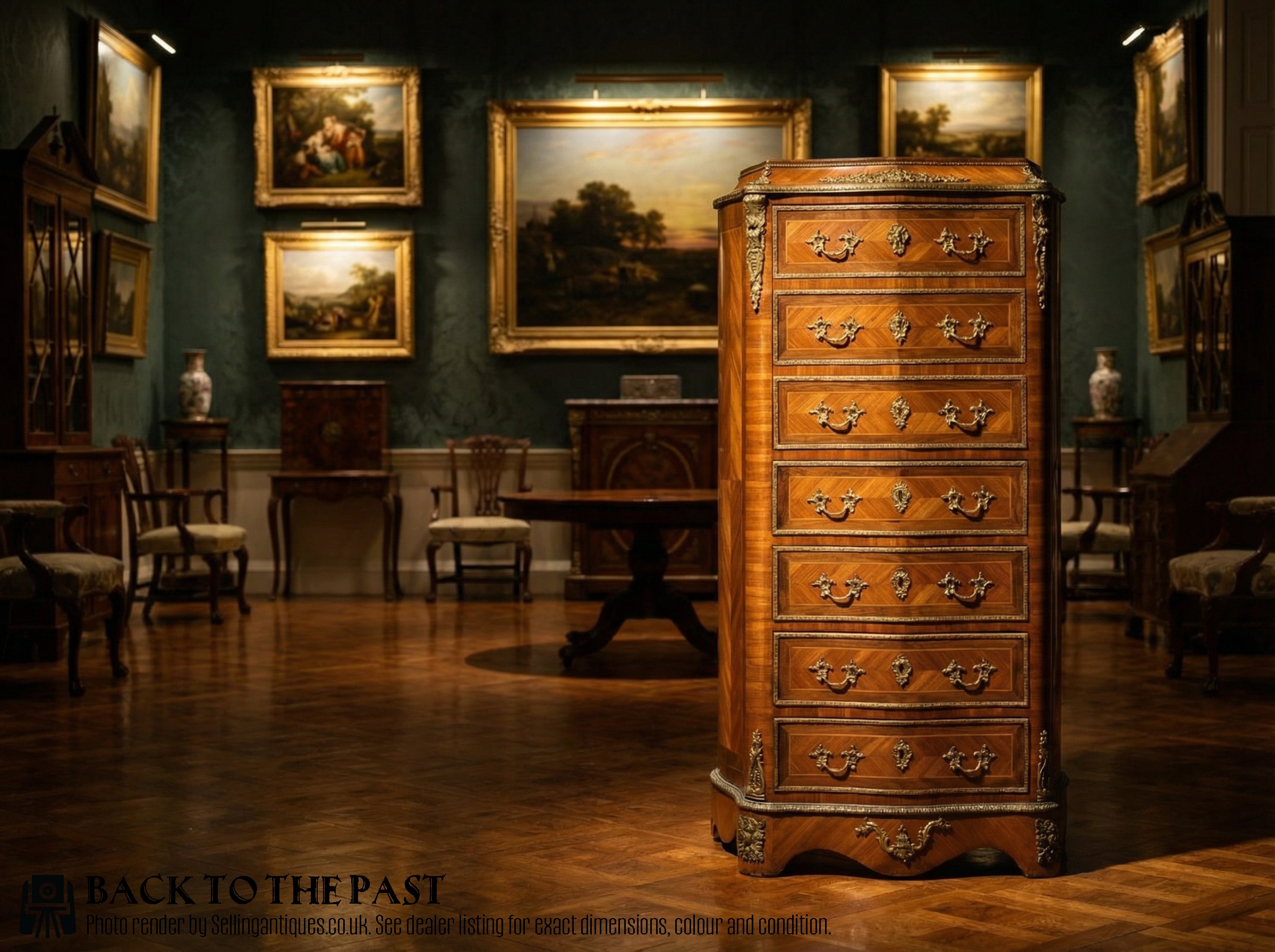
A french semainier cabinet stands tall and narrow, designed specifically to hold the daily necessities of a bedroom or dressing room across its characteristic seven drawers. You will most frequently encounter these pieces originating from the nineteenth century, finished in rich timbers and frequently topped with marble.
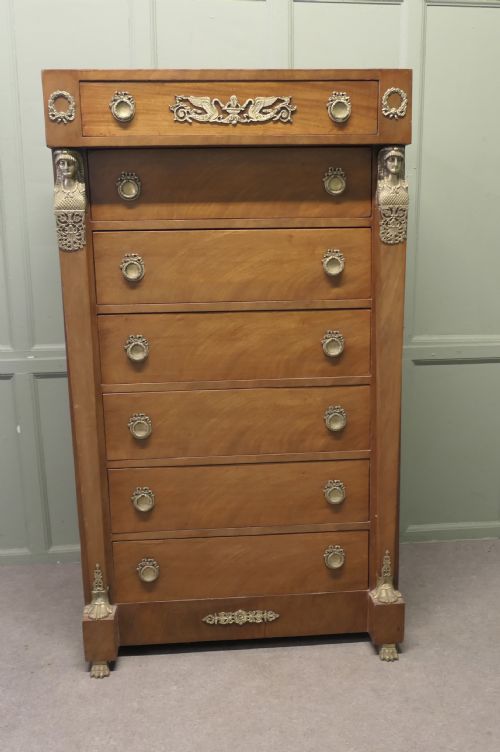
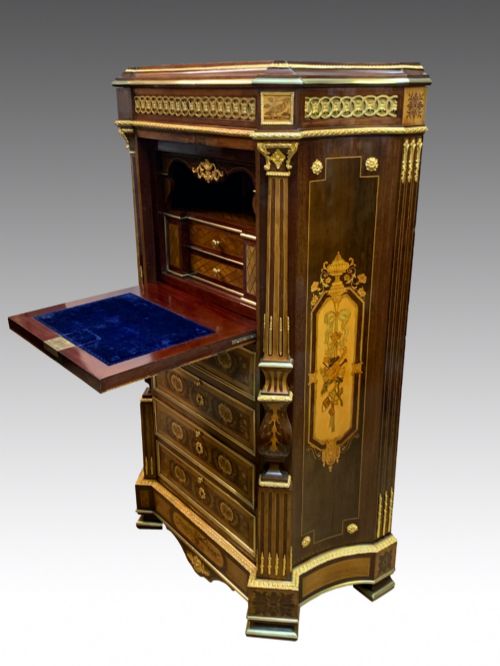
The form appears across several stylistic revivals including Louis XV and Louis XVI, alongside French Empire and Transitional designs. Makers adapted this tall chest format into secretaire variations with fall-front desks or narrower bedside versions while maintaining the towering proportions.
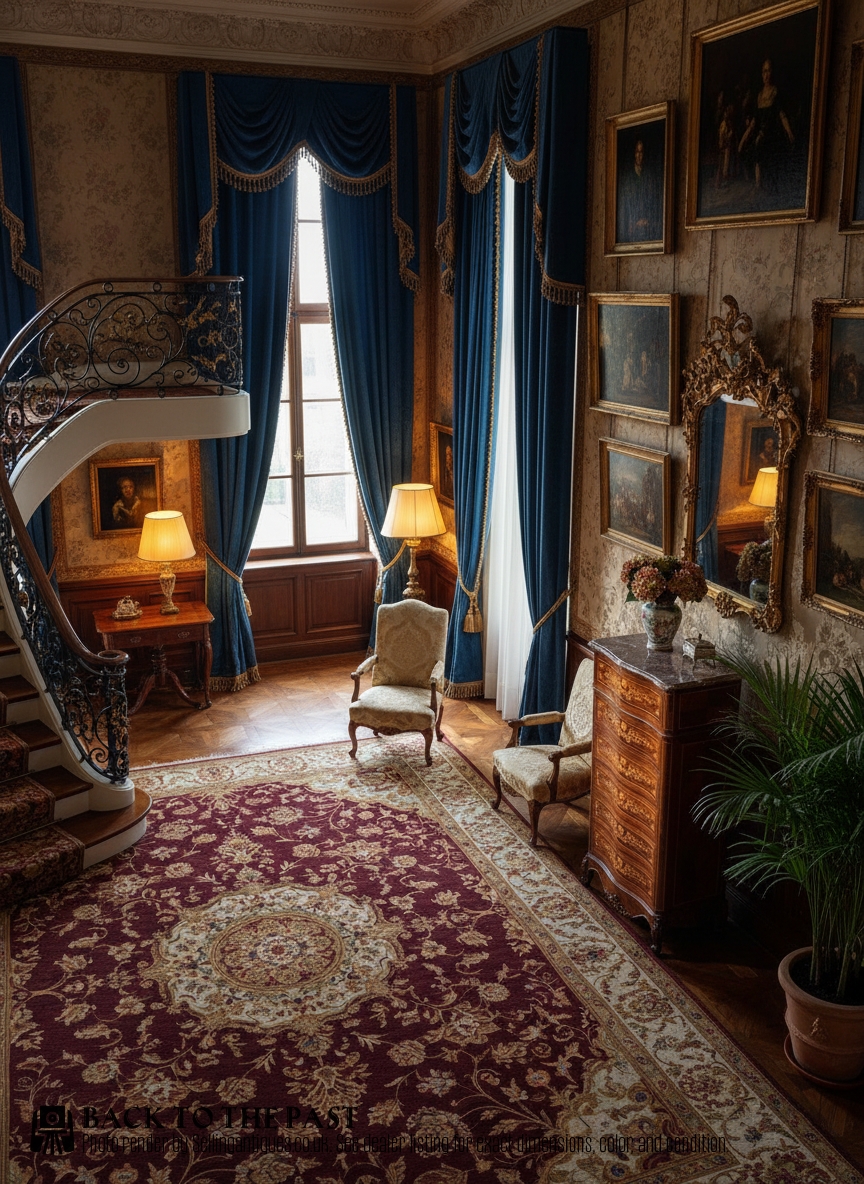
Materials and Construction
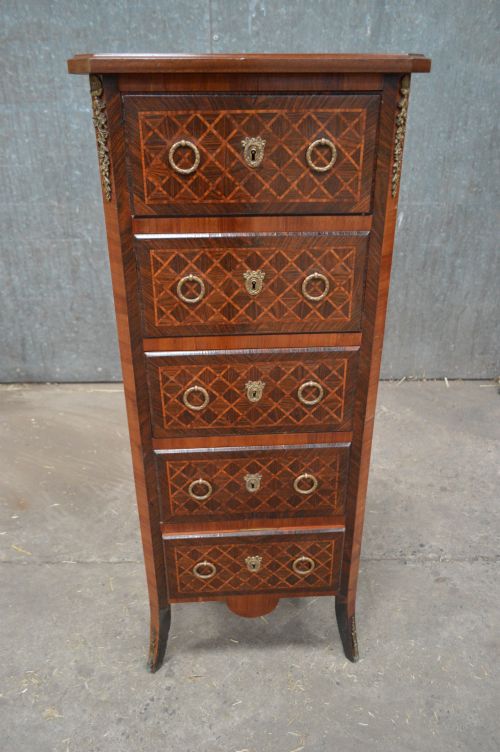
Cabinet makers utilised dense hardwoods such as mahogany, walnut, rosewood, and kingwood as foundations for intricate parquetry and marquetry veneers. These timbers were expertly cut and laid out in geometric patterns or floral designs across the drawer fronts and sides.
Gilt bronze and ormolu mounts punctuate the corners and key escutcheons, adding structural definition and decorative contrast to the timber. Heavy marble slabs form the top surfaces, providing a cool, durable finish above the stack of drawers.
Having seven drawers meant a fresh pair of stockings for every single day, keeping aristocratic drawers wonderfully organised.
Distinctions in Quality
The refinement of the surface marquetry and the precision of the parquetry geometry separate standard workshop production from exceptional cabinet work. Artisans who spent hours aligning grain patterns and cutting delicate floral motifs achieved a distinct visual depth.
The weight and crispness of the gilt bronze mounts also dictate the standing of a piece, as does the integration of fitted secretaire drawers with leather writing surfaces. Furthermore, the selection of the marble top - ranging from plain grey slabs to variegated coloured stone - reflects the original commission's ambition.
Maison Krieger·Leonard Boudin
The French Semainier Cabinet Glossary
- Semainier
- A tall chest of drawers traditionally built with seven tiers, one for each day of the week. This form originated in France during the eighteenth century.
- Secretaire abattant
- A tall cabinet featuring a hinged fall-front panel that drops down to reveal a writing surface and small pigeonholes. It combines storage with a compact desk.
- Ormolu
- Gilded bronze mounts and decorative hardware applied to furniture. The technique involves treating metal with a mercury and gold amalgam.
- Marquetry
- Inlaid wood veneers assembled to form pictorial or decorative designs. Cabinet makers used contrasting coloured timbers to create floral or geometric scenes.
- Parquetry
- Geometric patterns formed by fitting small pieces of wood veneer together. This technique often creates parquet flooring effects on drawer fronts.
French Semainier Cabinet: Frequently Asked Questions
What is a semainier?
A semainier is a traditional tall chest of drawers featuring seven separate tiers. The design stems from the French tradition of dedicating one drawer to each day of the week.
These cabinets were built with a narrow, vertical footprint to maximise storage capacity while taking up minimal floor space in a bedroom or dressing room.
What is a secretaire semainier?
A secretaire semainier integrates a drop-front writing desk into the upper portion of the seven-drawer stack. This dual purpose offered a private writing space alongside everyday clothing storage.
When closed, the drop-front blends seamlessly into the rhythm of the drawer fronts, maintaining the clean vertical lines of the cabinet.
How do I identify French Empire style?
French Empire furniture displays architectural symmetry, dark mahogany timbers, and classical gilt bronze mounts. The aesthetic draws inspiration from ancient Rome and Greece.
Cabinets from this period favour strict rectangular lines and military-inspired or mythological ornamentation rather than the curved flourishes of earlier Louis periods.