



French Seascape Oil Painting
A french seascape oil painting captures the changing light of the Atlantic and Mediterranean coasts through brushwork passed down across decades.
French Seascape Oil Painting
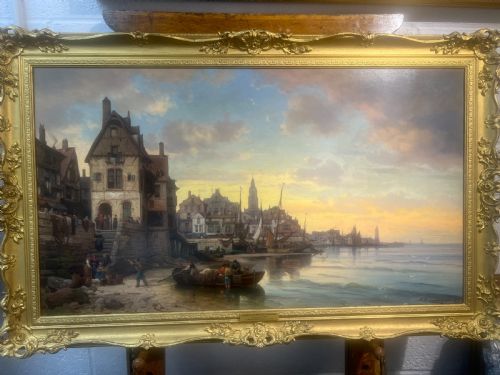
A french seascape oil painting records maritime views, harbours, and coastal towns from the nineteenth and twentieth centuries. These works range from nineteenth-century academic harbour scenes to mid-century impressionist coastlines along the Côte d'Azur and Brittany.
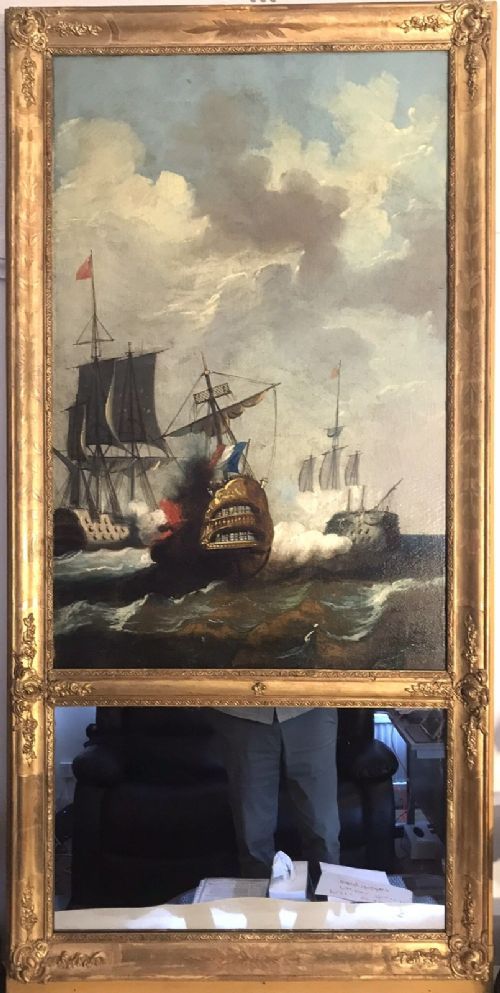
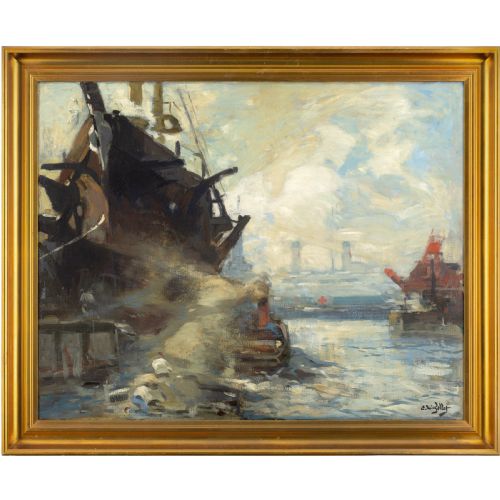
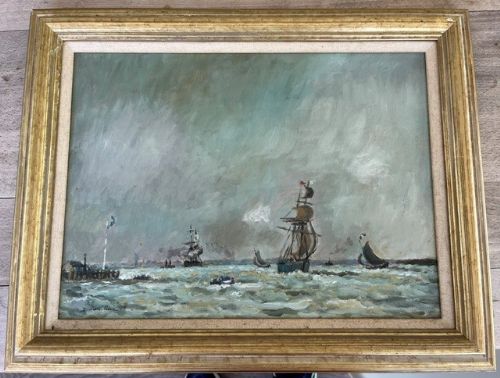
Buyers encounter subjects spanning quiet fishing ports, sailing yachts, and galleons at sea, rendered in styles from post-impressionism to mid-century modern. Works appear on canvas, wood panels, and board, frequently housed within period giltwood frames or trumeau mirrors.
The material record includes nineteenth-century pieces alongside works dated through the 1920s, 1930s, and 1950s. Regional depictions centre on specific locations such as Toulon, Marseille, Cannes, and Concarneau.
Materials and methods
Artists painted primarily using oil paint applied to woven canvas stretched over wooden frames, or directly onto wooden panels and board. Pigments were layered to capture the specific play of light on water and coastal architecture.
Frames frequently utilise giltwood or carved wood, sometimes integrating paintings directly into architectural trumeau mirrors. Impasto techniques appear in twentieth-century works, building tactile texture into the painted surface.
French Seascape Oil Painting Retail Price Guide 2026
Typical asking prices for french seascape oil painting among the pieces listed under this phrase on Sellingantiques today, from the lower quarter to the upper quarter. They describe what is for sale here now, not the wider market.
The archive records styles ranging from nineteenth-century French realism to mid-century modernism and abstract impressionism.
Markers of quality
Quality rests in the fidelity of light capture and brushwork confidence, distinguishing casual decorative items from master studies of marine atmosphere. Nuanced handling of coastal luminosity marks the upper tier of works.
The preservation of original canvas tension, pigment stability, and untouched period frames influences the integrity of each piece. Signed compositions by documented artists command closer attention than anonymous regional studies.
Eugène-Louis Gillot·Charles Euphraisie Kuasseg·Erich Mercker·Elisabeth Bardon·Louis Suire·Gustave Vidal·Jean-Baptiste Olive·Raymond Picque·Charles Malfroy·Roger de la Corbiere·Edward Henry Holder·Owen Bowen·Henri Cadiou
The French Seascape Oil Painting Glossary
- Trumeau
- A decorative architectural mirror fitted with an oil painting panel above the glass. These items originated in eighteenth-century French interiors and continued into the nineteenth century.
- Impasto
- Paint applied thickly to a canvas or board so that it stands out from the surface. This technique preserves the physical gesture of the artist's brush.
- Giltwood
- Wood carved and coated with gold leaf or gilt gesso. It provides ornate framing for nineteenth and twentieth-century canvases.
- Post-Impressionism
- An art movement following impressionism that extends its vivid use of light while maintaining distinct structural forms. It shapes many French coastal scenes from the early twentieth century.
- Panel
- A rigid wooden support used by artists instead of stretched canvas. Panels offer a smooth, stable ground for oil paint application.
French Seascape Oil Painting: Frequently Asked Questions
What periods do these paintings cover?
The available selection spans from the mid-nineteenth century through the mid-twentieth century. Works date across specific decades including the 1850s, 1910s, 1930s, and 1950s.
Nineteenth-century academic approaches transition into impressionist and post-impressionist interpretations by the interwar period. Mid-century modernist and outsider styles represent the later decades of the record.
Where are the coastal locations depicted?
Scenes focus primarily on French maritime regions along the Atlantic and Mediterranean coasts. Frequently named locations include Brittany, Marseille, Cannes, Toulon, and the Côte d'Azur.
Specific ports and harbours such as Concarneau and the Gulf of Morbihan appear alongside general coastal townscapes and open sea views.
How should I hang a framed oil painting?
Ensure the wall anchor securely supports the combined weight of the canvas and its wood or giltwood frame. Position the artwork away from direct sunlight and excessive humidity.
Stable indoor temperatures protect the oil paint and canvas substrate from warping or cracking over time.
Are these works signed by artists?
Many listings feature signed compositions by known French and European painters, while others represent anonymous studies or regional works. Signatures often appear in the lower corners of the canvas or board.
Documented signatures help anchor the date and regional school of the marine composition.