




French Rococo Tea Table
A french rococo tea table brings lively serpentine lines and rich marquetry into a room, offering both surface and presence.
French Rococo Tea Table
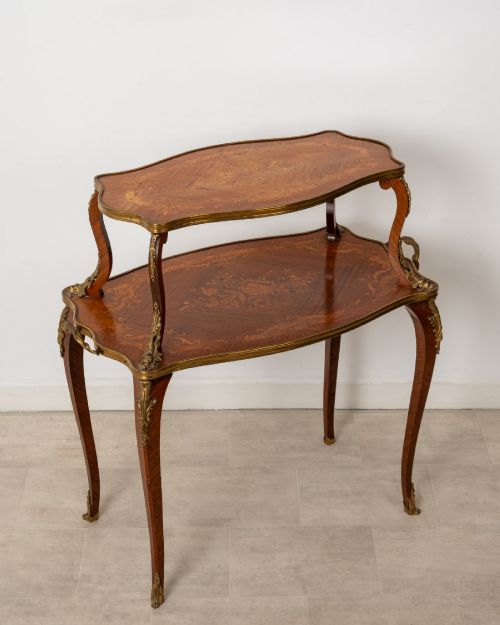
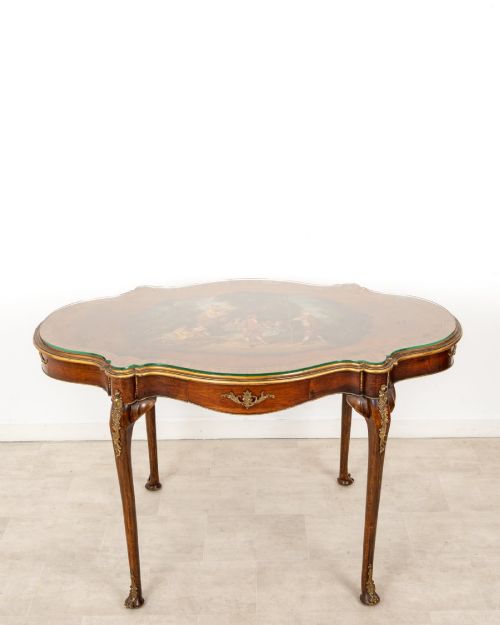
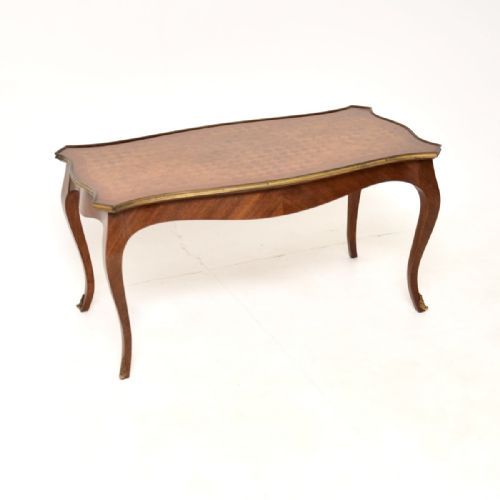
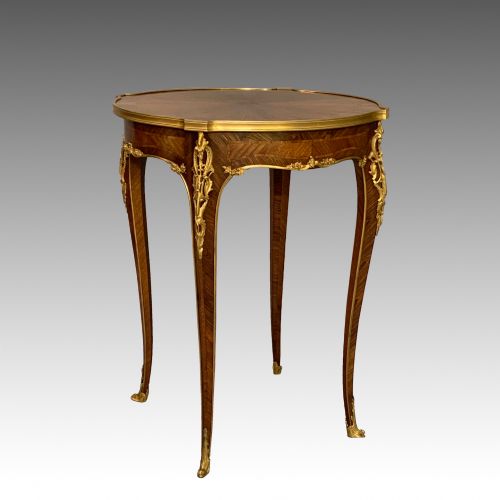
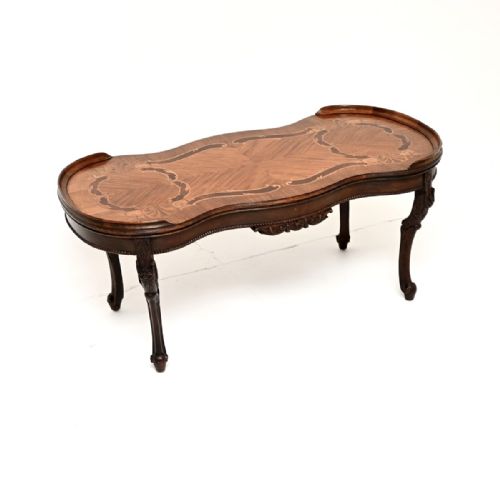
When you search for a french rococo tea table, you encounter decorative occasional, centre, and coffee tables shaped by revival movements of the nineteenth and early twentieth centuries. These pieces draw directly on eighteenth-century Louis XV design principles, prioritising asymmetry, curves, and natural motifs over rigid geometry.
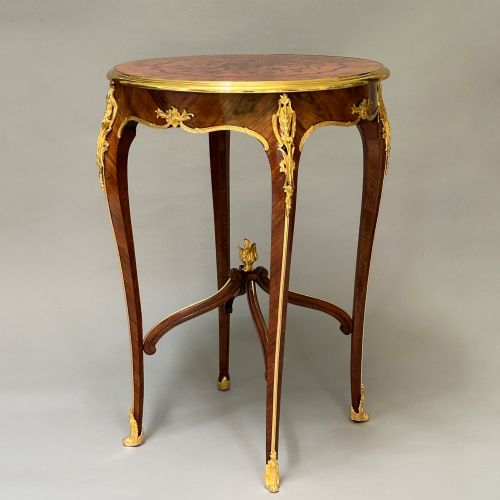
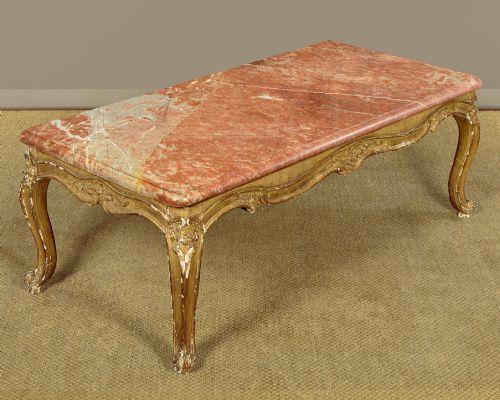
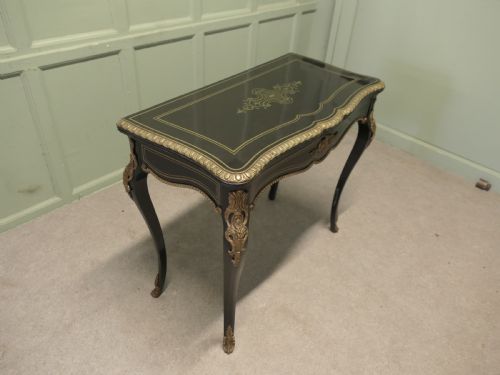
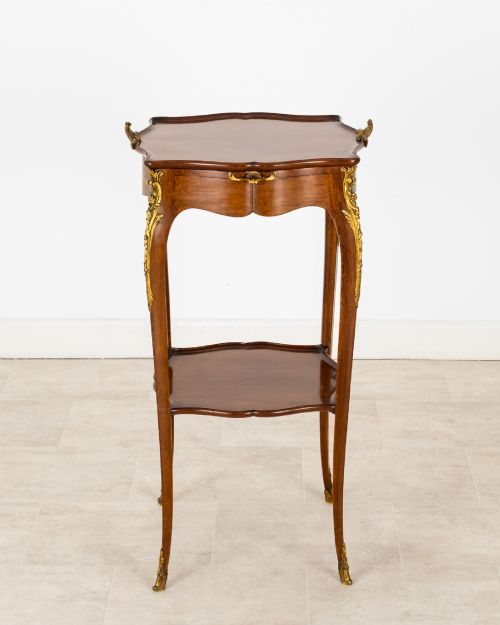
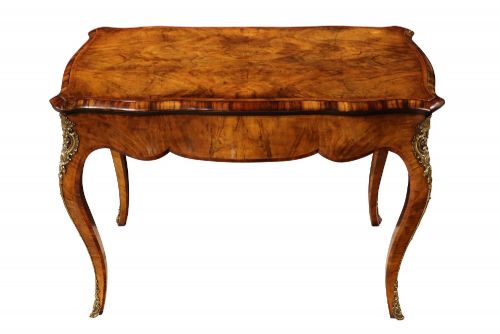
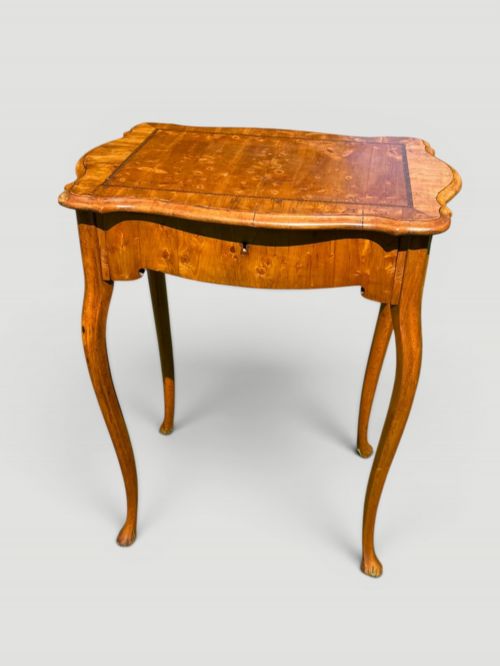
You are most likely to meet walnut, kingwood, or mahogany tables featuring marquetry and parquetry, often supported by slender cabriole legs. Many examples adopt formats such as two-tier étagères, fold-over card tables, and guéridons topped with marble or glass.
The selections span various decades from the mid-nineteenth century through to the interwar period, reflecting enduring tastes for French chateau interiors. Makers working in London and Paris during the Victorian and Edwardian eras produced much of the surviving stock.
Materials and construction
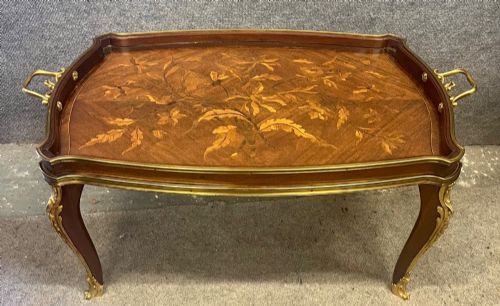
Cabinetmakers constructed these tables using a hardwood carcase, frequently walnut, mahogany, or beech, overlaid with decorative veneers of kingwood, satinwood, and rosewood. Intricate marquetry and parquetry patterns involved cutting contrasting timber species by hand and setting them into geometric or floral arrangements.
Gilt bronze and ormolu mounts were cast and chased to highlight the corners, rims, and feet, protecting vulnerable edges while enhancing the sculptural quality. Marble tops, hand-painted details, and brass stringing further distinguished the more elaborate workshops.
Several tables feature fold-over tops designed for card games, hiding green baize beneath elaborate floral marquetry.
Distinctions in quality
The hierarchy of these tables rests on the precision of the cabinetwork and the weight of the cast metal mounts. Master workshops employed heavy fire-gilded bronze that was meticulously hand-chased after casting, whereas lesser pieces relied on stamped brass or lightweight alloys.
Marquetry execution separates standard production from superior examples through the variety of timbers used and the tightness of the veneer joints. Grain selection in the underlying walnut or kingwood also dictates visual depth across the top.
Joseph-Emmanuel Zwiener·François Linke·Edwards & Roberts·Zwiener Jansen Sucesseur
The French Rococo Tea Table Glossary
- Ormolu
- Gilt bronze mounts applied to furniture. This technique involves coating cast bronze with a gold amalgam and heating it to drive off the mercury.
- Marquetry
- Decorative veneer patterns formed by fitting together small pieces of various coloured woods. It creates pictorial or floral designs across table tops.
- Cabriole leg
- A furniture leg that bends outward and then tapers inward, finishing in a pad or scroll foot. It mimics the natural shape of an animal limb.
- Étagère
- A set of open shelves for displaying small objects. These tiered tables provide multiple levels of surface space.
- Guéridon
- A small round table supported by a central pillar or several legs. Nineteenth-century versions frequently feature inset marble tops and bronze galleries.
French Rococo Tea Table: Frequently Asked Questions
How do I date a french rococo tea table?
Dating relies on timber species, construction methods, and the style of the cast mounts. Mid-nineteenth-century examples often display heavier walnut carcases, whereas Edwardian pieces lean toward lighter satinwood and refined marquetry.
Makers' signatures or stamps found on the bronze mounts or underside provide definitive attribution. Comparing the patination of the timber to the wear on the feet confirms age.
Where were these tables made?
Production centred in Paris and London during the nineteenth and early twentieth centuries. French workshops supplied much of the heavy ormolu-mounted stock, while English firms interpreted the Louis XV style for local drawing rooms.
Cabinetmakers across Europe embraced the revival aesthetic, adapting forms like card tables and guéridons to suit contemporary domestic habits.
How do I care for the veneer?
Protect the polished wood surfaces by keeping them away from direct sunlight and steady heat sources. Dust regularly with a soft, dry cloth to prevent micro-abrasions on the delicate marquetry.
Apply a quality wax sparingly to nourish the timber and maintain the soft sheen. Avoid modern silicone sprays, which can penetrate old finishes and attract dust.
What is parquetry?
Parquetry is a geometric mosaic of wood veneer arranged in repeating patterns such as cubes, lozenges, or squares. It differs from marquetry by using strictly geometric shapes rather than pictorial or floral motifs.
Craftsmen laid these small wooden tiles onto a stable base board, creating durable surfaces for table tops and card tables.