

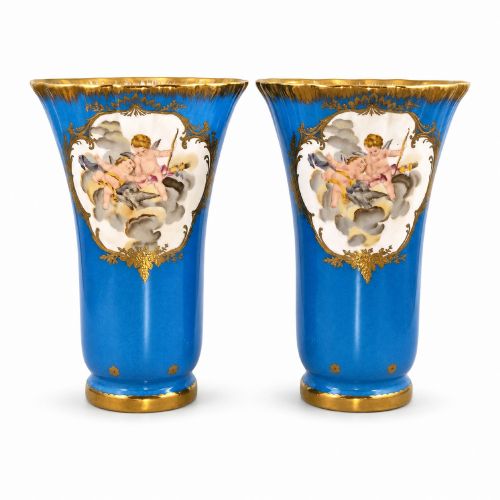


French Rococo Porcelain Urns
French rococo porcelain urns combine flamboyant curved ceramic bodies with heavy gilt bronze mounts, bringing ornate nineteenth-century decorative excess to interior spaces.
French Rococo Porcelain Urns
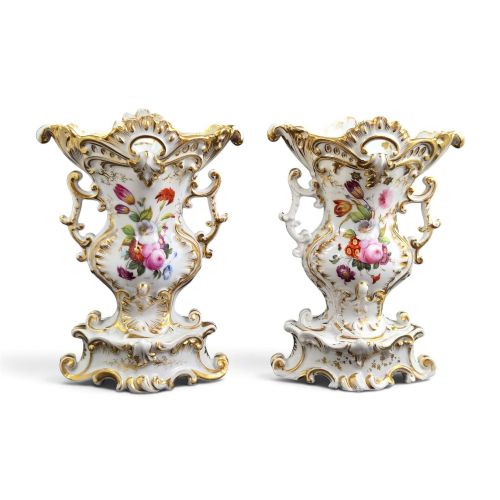
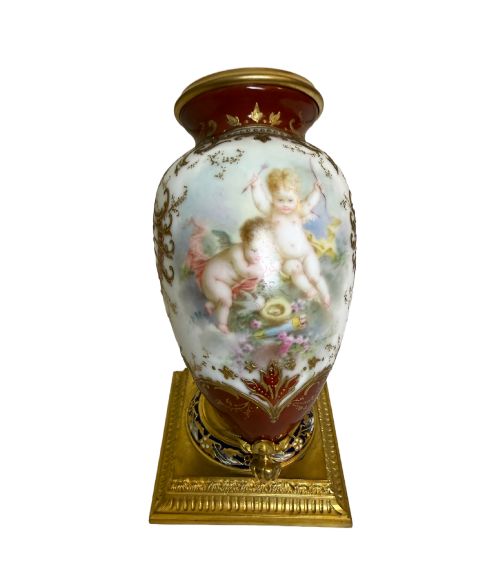
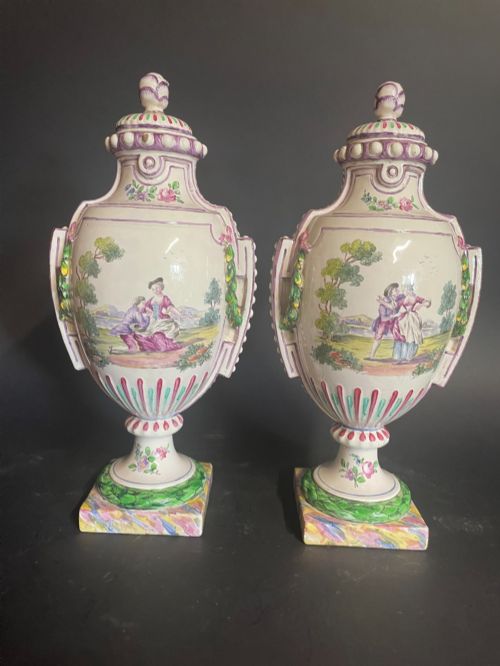
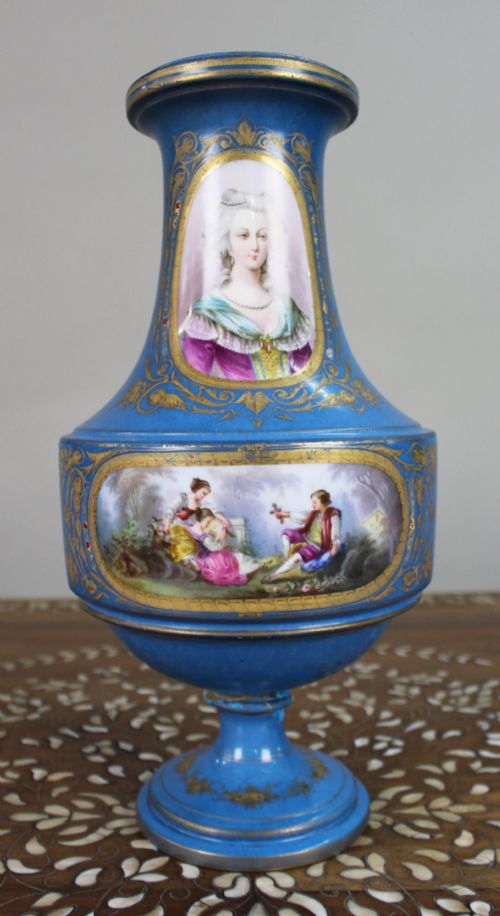
When searching for french rococo porcelain urns, buyers encounter nineteenth-century decorative pieces spanning the 1850s to the 1900s, including styles labelled as French Rococo Revival and Sèvres-style. These objects frequently take the form of lidded vases, decorative urns, and clock garnitures paired with matching side vases. Most examples draw upon eighteenth-century design vocabulary, combining hand-painted floral or figural panels with rich ground colours like bleu céleste.
The physical presence of these items ranges from petite table lamps and ewers to massive, tall lidded vessels standing over a metre in height. Many incorporate gilt bronze, ormolu, or brass mountings that frame the ceramic body with asymmetrical scrolls, foliage, and handles. Alongside pieces produced in direct emulation of Sèvres and Meissen, listings include Old Paris wares, Samson Paris productions, and pieces associated with makers such as Jacob Petit.
How they were made
The primary material foundation of these objects relies on hard-paste or soft-paste porcelain, shaped into vessels and fired before receiving hand-painted enamel decoration and gilding. Artisans applied raised white enamel and hand-painted motifs, frequently depicting naturalistic floral sprays or romantic scenes set against cobalt blue or pink grounds. Firing techniques achieved the glossy glaze and vibrant colour saturation characteristic of mid to late nineteenth-century European factories.
Metal components were cast separately, utilising gilt bronze, ormolu, brass, or gold leaf to create mounts, bases, and handles that hugged the contours of the porcelain. These metalwork elements underwent chasing and gilding to produce the bright metallic contrast integral to the rococo aesthetic. Mechanical assemblies such as clock movements and lamp fittings were integrated into the metal and ceramic chassis during the Victorian period.
French Rococo Porcelain Urns Retail Price Guide 2026
Typical asking prices for french rococo porcelain urns among the pieces listed under this phrase on Sellingantiques today, from the lower quarter to the upper quarter. They describe what is for sale here now, not the wider market.
Materials recorded across current inventory include porcelain, gilt bronze, ormolu, enamel, gold leaf, brass, and glass.
What varies in quality
The distinction between ordinary and exceptional pieces rests upon the precision of the hand-painting and the crispness of the metal casting. Superior examples exhibit finely detailed brushwork on porcelain panels, showing subtle tonal gradations in floral designs and clean application of gold leaf or enamel. Inferior or later commercial productions often display mechanical transfers rather than hand-painted artistry, alongside flatter, less sharply chased ormolu mounts.
Proportion and material weight also dictate overall standing within the range. The finest garnitures and urns demonstrate harmonious scaling between the ceramic body and the heavy gilt bronze mounts, where every scroll and handle supports the composition. Thinner porcelain bodies and poorly fitted metal mounts indicate lower manufacturing ambition.
Jacob Petit·Sceaux Faience·Samson Paris·Vion et Baury·KPM Berlin·Vincenti of Paris
The French Rococo Porcelain Urns Glossary
- Ormolu
- A technique of applying finely ground high-carat gold to an object of bronze, producing a rich golden finish used extensively for mounts on nineteenth-century decorative pieces.
- Bleu céleste
- A bright sky-blue ceramic ground colour famously developed at the Sèvres porcelain manufactory and widely adopted by later revivalist makers.
- Garniture set
- A matching group of three or more decorative vessels, typically comprising a central clock or large urn flanked by smaller matching vases for mantelpiece display.
- Potpourri
- A lidded vessel perforated with decorative holes in the cover to allow scented dried plant materials to diffuse through a room.
- Bisque porcelain
- Unglazed white porcelain fired to a matte, tactile finish that resembles marble, often utilised for sculptural figures and decorative vases.
French Rococo Porcelain Urns: Frequently Asked Questions
What is a clock garniture?
A clock garniture is a matched decorative set consisting of a mantel clock accompanied by two side pieces, such as vases or urns, designed to sit together on a mantelpiece.
These sets were produced in the nineteenth century using porcelain bodies and gilt bronze mounts to create a unified focal point for grand rooms.
How do you identify Sèvres style?
Sèvres style porcelain is identified by distinctive rich ground colours like bleu céleste or pink, combined with elaborate hand-painted floral panels and heavy gilding.
Many nineteenth-century pieces emulate the eighteenth-century French royal factory output, sometimes bearing imitation marks alongside their authentic period characteristics.
Where were these urns made?
These urns were primarily manufactured in France, particularly in Paris workshops and provincial factories during the nineteenth century.
German and other European centres also produced notable pieces in emulation of French rococo and Sèvres aesthetic standards.
How should I clean gilt bronze mounts?
Gilt bronze mounts require gentle dusting with a soft dry cloth to preserve the fragile gold leaf or ormolu surface.
Harsh chemical cleaners and metal polishes must be avoided entirely, as they strip away the historic gilding.