



Blue Sevres Style Urns
Blue sevres style urns bring continental elegance to interiors through rich cobalt glazes and gilt metal mounts.
Blue Sevres Style Urns
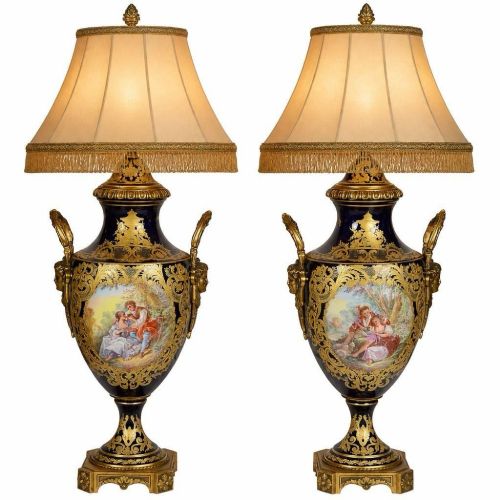
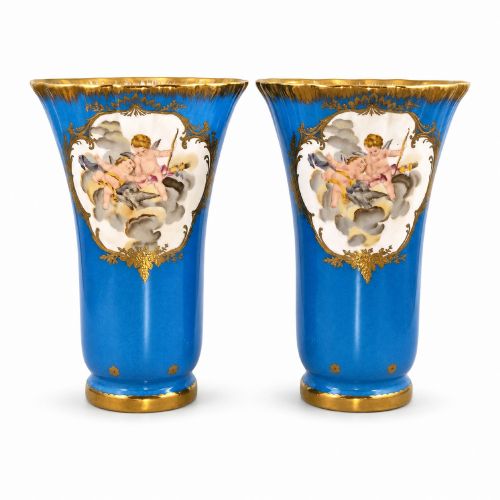
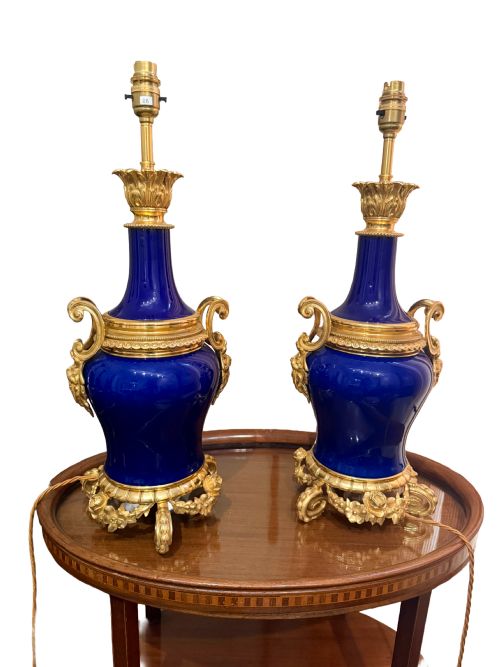
When buyers search for blue sevres style urns, they encounter decorative porcelain vessels and garnitures produced during the nineteenth century in imitation of the famous French royal factory. These pieces frequently appear as pairs of lidded vases or table lamps, often mounted with ornate metal trim.
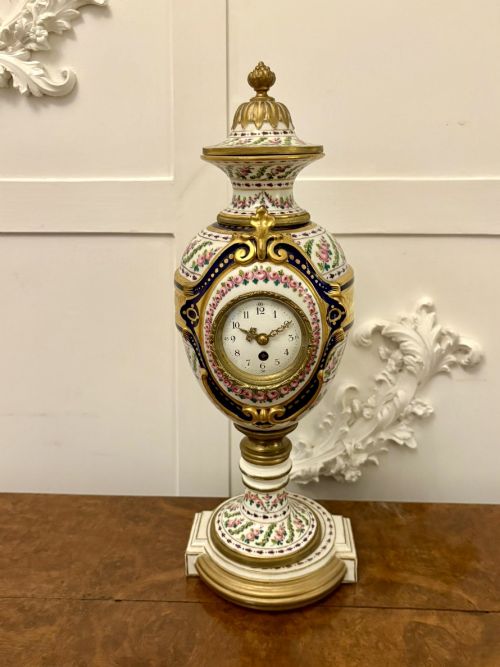
The dominant forms on this page span the 1850s to the 1920s, reflecting nineteenth century French revival tastes such as Rococo and Louis XVI styles. Alongside traditional handled vases, the selection includes mantel clocks and cassolettes incorporating the same distinctive blue porcelain bodies.
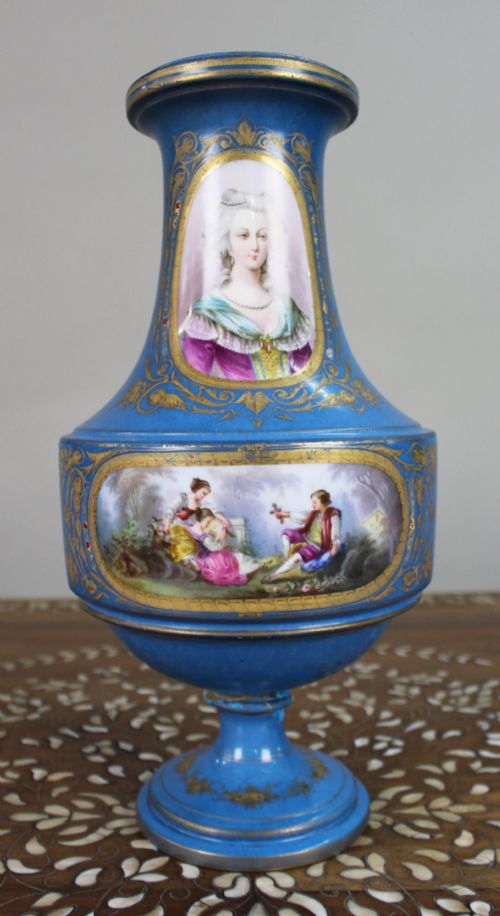
Most examples originate from French workshops or English makers influenced by continental aesthetics, utilised historically as formal mantel ornaments or centrepieces. Their characteristic appearance relies on deep blue glazes contrasted with metallic gilding and hand-painted panels.
Materials and Construction
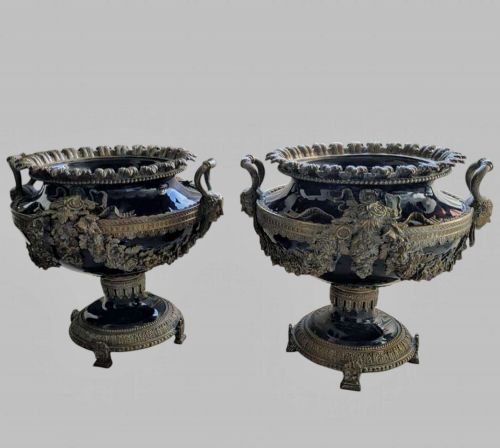
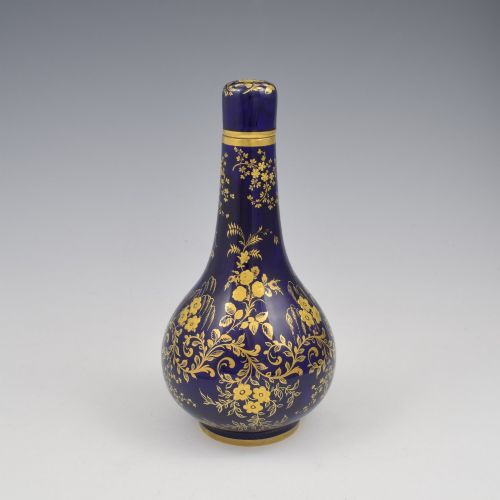
The foundation of each piece is fired porcelain, glazed in rich blue tones such as bleu celeste or cobalt and frequently embellished with hand-painted details. Makers combined this ceramic body with cast and chased ormolu, gilt bronze, or gilt metal mounts that frame the rims, bases, and handles.
Ormolu mounts were secured using threaded pins and nuts through drilled porcelain, requiring precise metalworking to fit the curved ceramic contours. Guilds applied gold leaf or fire gilding to the bronze elements, creating a durable metallic contrast against the polished glaze.
Blue Sevres Style Urns Retail Price Guide 2026
Typical asking prices for blue sevres style urns among the pieces listed under this phrase on Sellingantiques today, from the lower quarter to the upper quarter. They describe what is for sale here now, not the wider market.
French aesthetic influences dominate the selection, including Rococo revival styles and specialised bleu celeste glazes.
Factors Determining Quality
Quality in these pieces depends on the crispness of the bronze or ormolu casting and the artistic merit of the hand-painted porcelain panels. Superior examples feature deeply chased metal mounts and finely detailed pictorial scenes rather than simple transfer prints.
The weight and gauge of the metal components also separate standard production from exhibition pieces, alongside the uniformity of the cobalt or turquoise glaze across large ceramic surfaces.
Japy Frers·Vincenti of Paris·Samson Paris·Derby Porcelain
The Blue Sevres Style Urns Glossary
- Ormolu
- Gilded bronze or brass mounts used extensively to decorate nineteenth-century furniture and porcelain. The technique involves applying a mercury and gold amalgam to cast bronze before heating.
- Garniture
- A set of three or more matching decorative objects, typically comprising a central clock or large vase flanked by smaller matching urns. These sets were designed to display symmetrically on mantelpieces.
- Bleu Celeste
- A bright, light turquoise blue glaze famously associated with the Sevres porcelain factory. It provides a striking background for gilt decoration and painted reserves.
- Cassolette
- A decorative vessel shaped like an urn, featuring a reversible lid that functions as a small bowl or candle holder. They are frequently mounted in gilt metal during the nineteenth century.
Blue Sevres Style Urns: Frequently Asked Questions
What are blue sevres style urns?
These decorative objects are nineteenth-century porcelain vessels inspired by the French royal factory, typically glazed in deep blue and mounted in gilt bronze.
They reflect historical revival aesthetics and were produced in France and England as ornamental garnitures.
How were these urns used historically?
Owners placed them on mantelpieces, sideboards, or console tables as formal decorative centrepieces within wealthy interiors.
Many surviving pieces have been subsequently converted into table lamps while retaining their original ceramic and metal bodies.
How do you identify nineteenth-century pieces?
Dating relies on the style of the ormolu mounts, the type of porcelain body, and recorded maker movements such as those operating in Paris during the 1850s to 1890s.
Revival styles of the period often borrow directly from Louis XVI or Rococo design motifs.
Are these pieces fragile?
The combination of fired porcelain and heavy bronze mounts requires careful handling, particularly around protruding handles and delicate gilt surfaces.
Stable placement on flat furniture surfaces prevents accidental toppling of top-heavy garnitures.