


French Restoration Table
A French restoration table brings architectural dignity and warm timber tones to a room, offering a functional surface rooted in nineteenth-century craftsmanship.
What they are
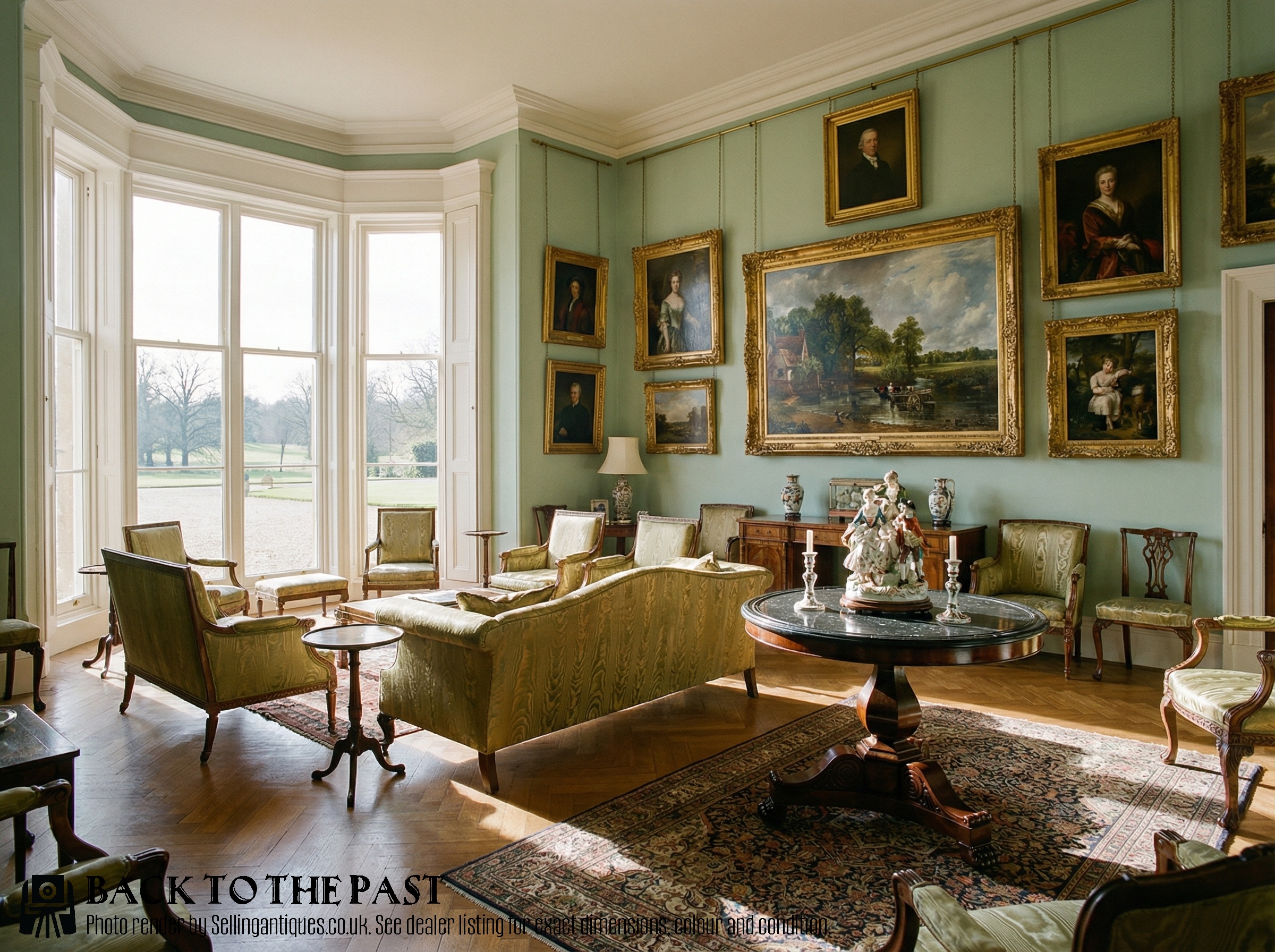
A French restoration table represents a distinct period of nineteenth-century design, encompassing styles from the French Restoration, French Empire, and French Restauration eras. These pieces bridge classical grandeur and domestic utility, serving as practical furnishings that anchor a room with architectural presence.
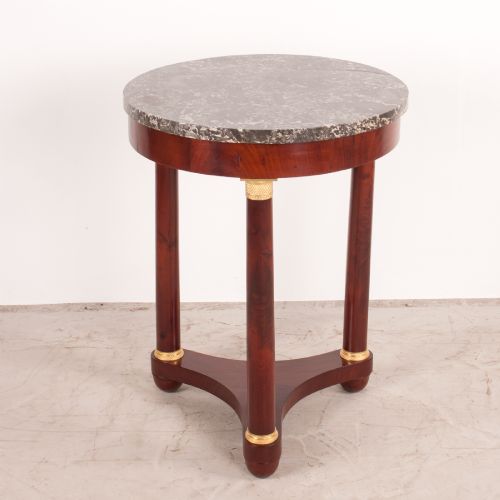
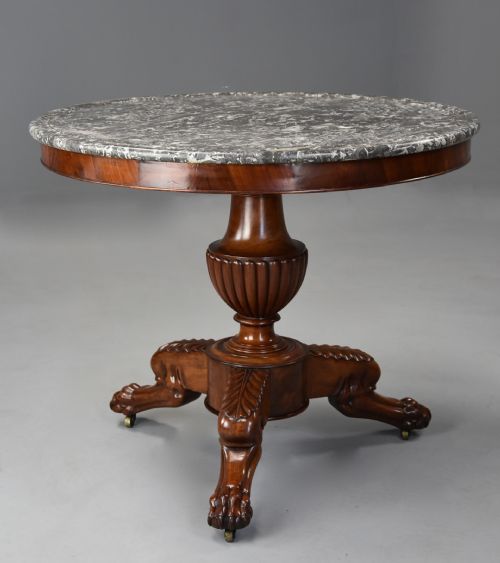
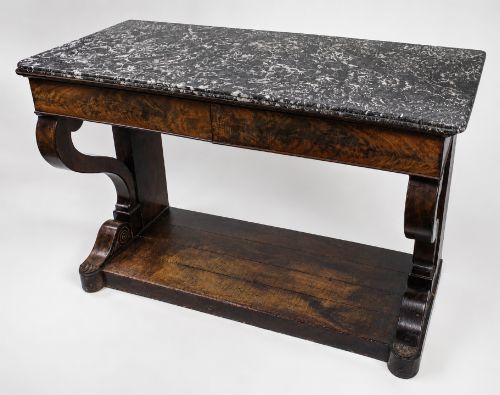
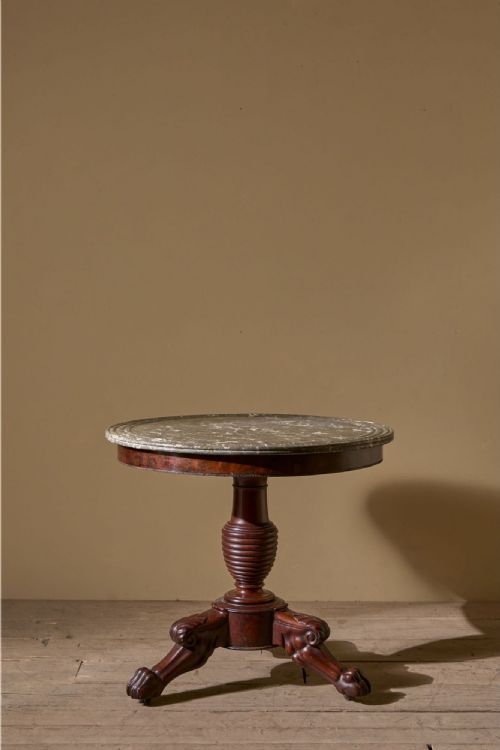
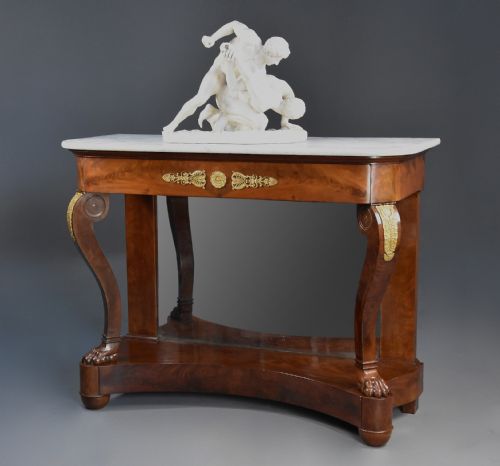
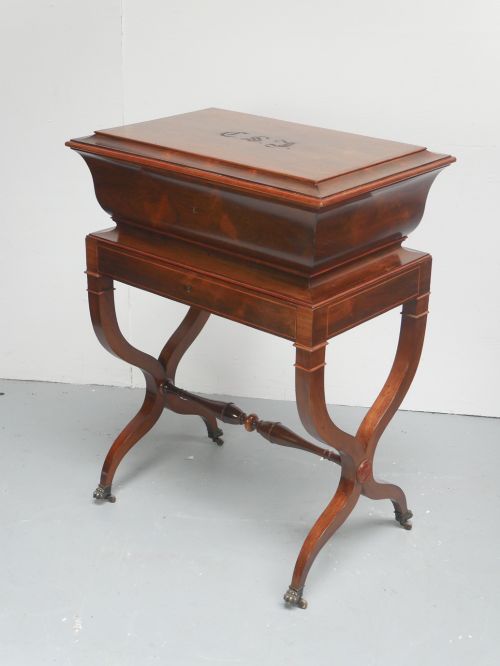
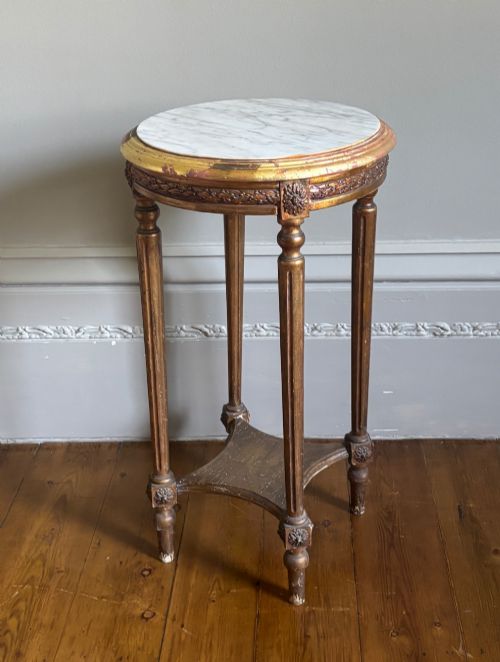
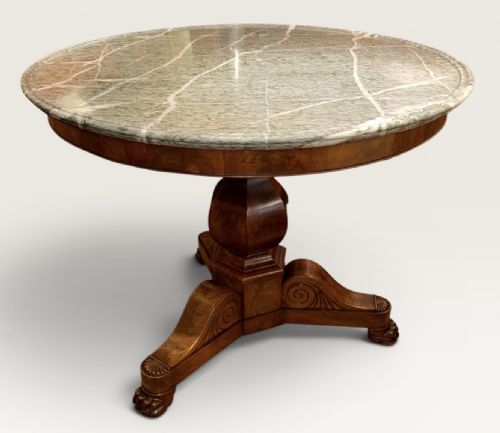
Buyers encountering this search phrase find centre tables, occasional tables, side tables, console tables, and guéridon tables. The guéridon form appears frequently across the listings, offering a round freestanding surface supported by a central column or pedestal.
Originating predominantly from nineteenth-century France, these tables showcase the transitional aesthetic of the period. Pieces range in date from the broader nineteenth-century designation down to specific years such as eighteen-sixty.
How they were made
Cabinetmakers constructed these tables using a variety of timber substrates, including mahogany, walnut, burr elm, and general wood. Craftsmen frequently applied flame mahogany veneer to surfaces to create striking, figured grain patterns that caught the light.
Decoration often incorporated contrasting materials and hardware, utilising brass and ormolu mounts to accent structural lines. Many examples feature original veined marble tops fitted directly into the timber frame to provide a durable and cool surface.
Retail Price Guide 2026
Typical UK retail prices for french restoration table, calculated from the Sellingantiques database of over a million retail prices indexed since 2003. This retail price guide relies exclusively on Sellingantiques data; no external sources or auction records are used, so the figures do not describe the wider market.
Every guéridon holds a secret debt to seventeenth-century Moorish torchbearers, having evolved from wooden figures holding actual lights into elegant tables.
What varies in quality
Quality reveals itself in the selection and application of veneers, where skilled book-matching on flame mahogany or burr elm creates a continuous, harmonious pattern. Lesser examples rely on plain timber or show less meticulous grain placement across the top.
The integration of original materials dictates the standing of a piece, particularly the presence of an undamaged veined marble top and authentic brass or ormolu mounts. Finer construction employs robust internal framing that supports heavy stone without sagging or shifting over time.
The French Restoration Table Glossary
- Guéridon
- A small freestanding French table, typically round and supported by a single central pedestal or column. These tables originated in the seventeenth century and remained popular throughout the nineteenth century.
- Ormolu
- Gilded bronze cast and chased to ornament furniture mounts, legs, and aprons. The technique adds metallic lustre and sculptural detail to nineteenth-century French pieces.
- Flame mahogany
- A veneer cut from the fork of a mahogany tree where the branch joins the trunk. It creates a distinctive rippled, flame-like grain pattern prized by cabinetmakers.
- Console table
- A wall-mounted or freestanding side table designed to stand against a vertical surface. Nineteenth-century examples often feature architectural legs and marble tops.
- Burr elm
- Timber harvested from the growth excrescences on elm trees, yielding a turbulent and highly figured grain. It provides rich visual texture on table tops and panels.
Frequently Asked Questions
What is a guéridon table?
A guéridon is a traditional French round table supported by a central column rather than four corner legs. They function well as freestanding centre pieces in hallways or reception rooms.
Nineteenth-century makers often fitted these circular tops with heavy marble slabs for added utility and weight.
How do I style a console table?
A console or pier table stands flush against a wall, making it suitable for narrow spaces like corridors or entrance halls. Their flat backs and architectural profiles allow them to anchor a mirror or artwork.
Pairing the wooden base and stone top with balanced lighting enhances the nineteenth-century aesthetic without cluttering the surface.
Are these tables solid wood?
Most pieces combine solid timber frames with decorative veneers applied to secondary woods. Cabinetmakers used flame mahogany and burr elm veneers to display striking grain patterns across large surfaces.
Solid wood components typically form the structural supports, columns, and bases while veneers cover the tabletops and aprons.
How do I clean a marble top?
Original veined marble surfaces require gentle cleaning with mild, pH-neutral soap and warm water to protect the stone. A soft cloth prevents scratching the polished finish.
Harsh acidic cleaners or abrasive scrubbing will etch the marble and dull the historical surface over time.