





French Restauration Table
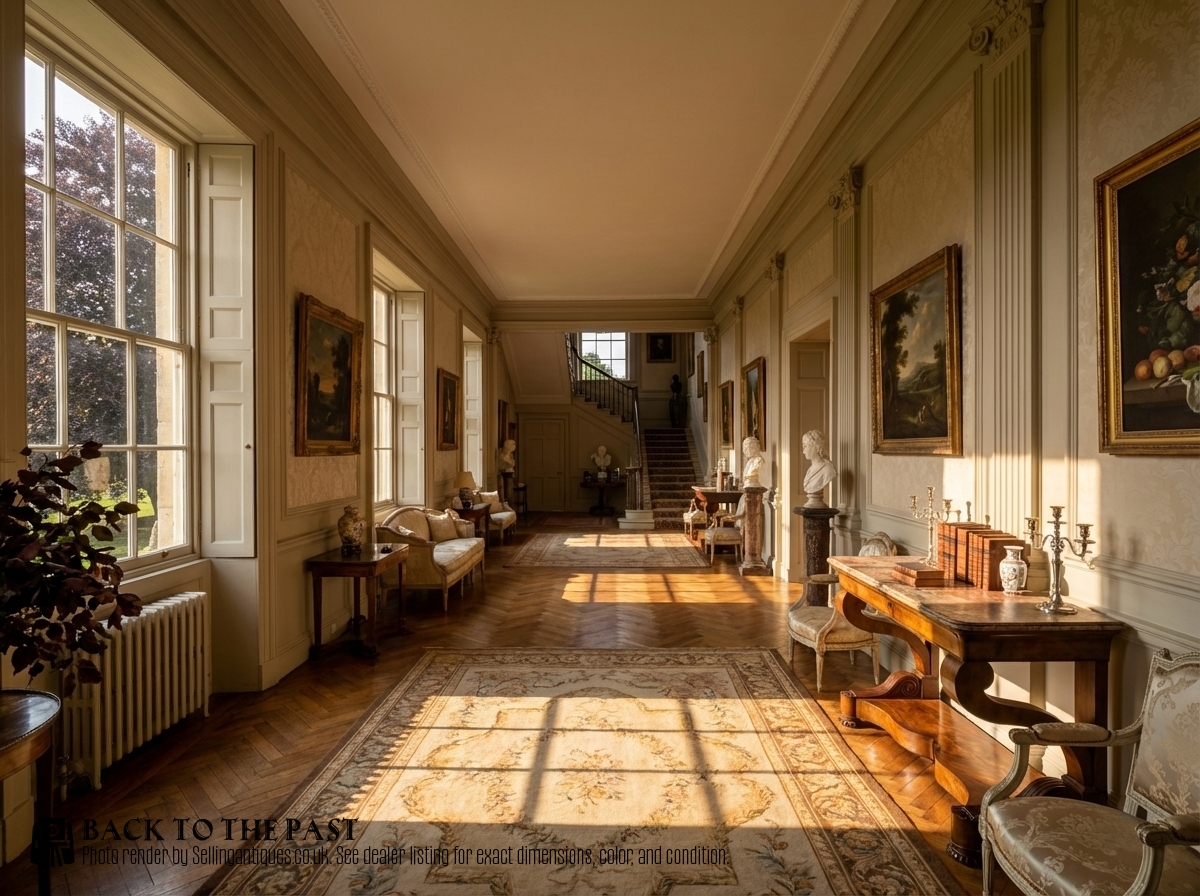
A french restauration table brings architectural lines and rich timbers into a room, offering both sculptural presence and functional surface space.
French Restauration Table
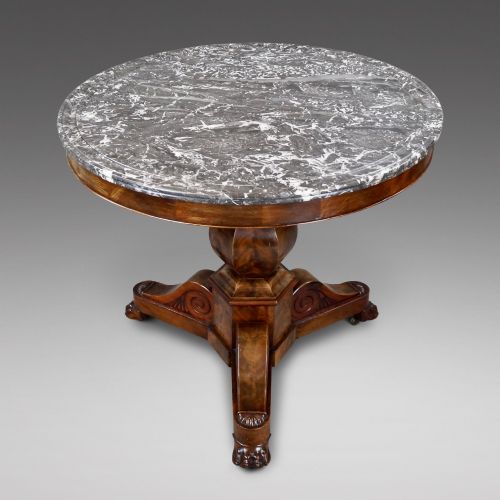
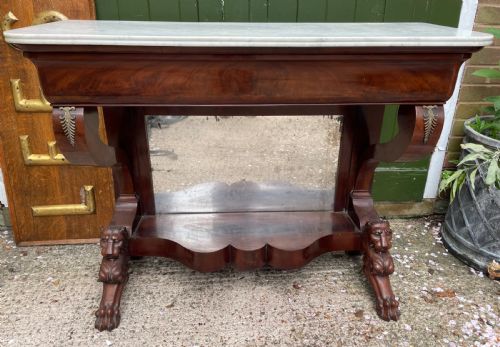
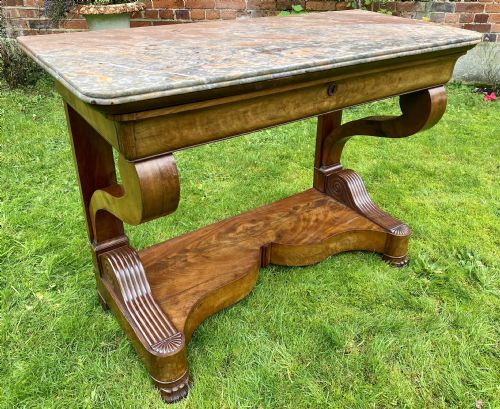
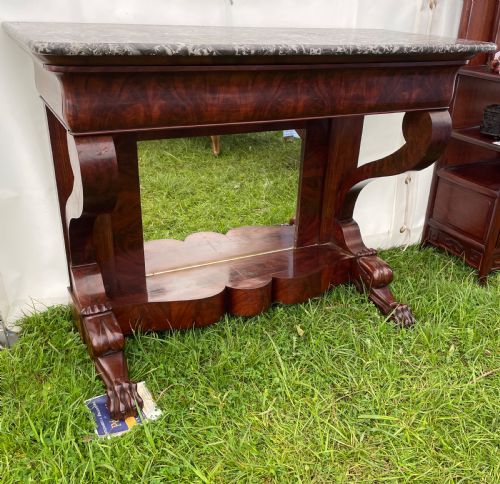
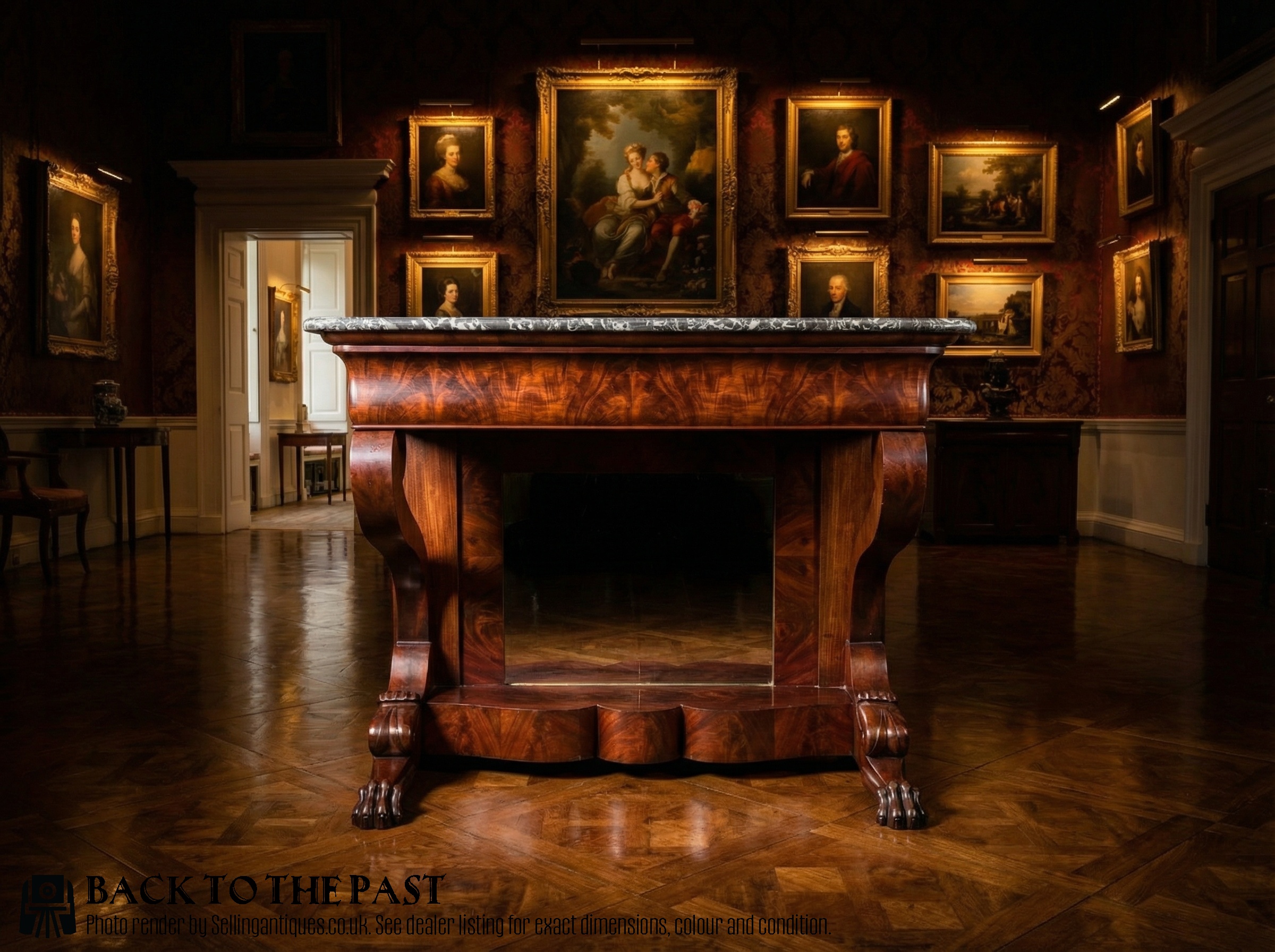
A french restauration table encompasses round centre tables known as gueridons, console tables set against walls, and low bedside tables or vide-poches designed for practical use. These pieces often feature the clean structural lines typical of the early nineteenth century, bridging the transition between earlier empire grandeur and later victorian styles.
The versions most commonly met on this page are circular flame mahogany gueridons and rectangular console tables fitted with carrara marble tops. Alongside these standard forms, occasional variants emerge in pine or walnut, reflecting the diverse material choices of nineteenth-century French cabinet makers.
Materials and construction
Makers built these tables primarily using solid mahogany and flame mahogany veneers over secondary timbers like pine, applying French polish to highlight the dramatic grain patterns. Structural integrity relied on traditional joinery techniques, while surfaces often received heavy slabs of white carrara marble fitted precisely into wooden frames.
Metal ornamentation played a crucial role in the finishing process, incorporating cast bronze and ormolu mounts alongside brass details. These metallic elements were chased and gilded to provide sharp contrast against the dark timber surfaces.
Secondary materials recorded across these listings include ormolu, bronze, brass, glass, walnut, and pine, alongside the dominant mahogany timber.
Distinctions in quality
Quality reveals itself in the selection of timber veneers, where highly figured flame mahogany demonstrates superior material choice compared to plain grain boards. The crispness of the bronze and ormolu mounts further separates standard production from finer pieces, as finely chased metalwork maintains sharp relief and deep lustre.
The integration of original carrara marble tops and the precision of the underlying structural joinery dictate the overall standard of preservation. Tables retaining their unalterable original components and balanced proportions stand distinct from pieces altered or rebuilt over subsequent decades.
Paul Garnier
The French Restauration Table Glossary
- Gueridon
- A small circular French table designed as a centrepiece for a room, typically supported by a central pillar and a tripartite base. These tables became popular during the nineteenth century for display and everyday use.
- Console table
- A wall-mounted or pier table designed to stand flat against a vertical surface, frequently topped with marble. They often feature architectural front supports and mirror arrangements.
- Flame mahogany
- A veneer cut from timber where the branches join the main trunk, creating a distinctive flickering flame-like pattern. Cabinet makers prized this wood for its highly decorative visual impact.
- Ormolu
- Gilded bronze ornamentation applied to furniture and clocks during the eighteenth and nineteenth centuries. The technique involves coating cast bronze with a mercury and gold amalgam before heating.
- Vide-poche
- A small bedside table or pocket-emptier designed for holding personal items in a bedroom. These compact pieces offer practical storage in a small footprint.
French Restauration Table: Frequently Asked Questions
What is a french restauration table?
A french restauration table is a nineteenth-century piece of furniture from France, created during the political restoration period following the fall of Napoleon. These tables frequently utilise mahogany timber, circular gueridon forms, and marble tops.
They serve as functional centrepieces or wall-mounted console tables, combining architectural simplicity with rich wood grains and occasional bronze mounts.
How do I identify a charles x table?
Charles X tables share close stylistic ties with the french restauration period, often featuring unadorned mahogany surfaces that let the natural grain dominate. Look for architectural pedestals and circular tops supported by tripartite bases.
These pieces typically date from the 1820s to the 1830s and display restrained classical proportions without the heavy military symbolism of earlier empire pieces.
Where should I place a gueridon table?
A gueridon table functions best as a freestanding centre table in a hallway, library, or drawing room. Its circular shape allows movement around the perimeter while providing a sturdy surface for a lamp or decorative object.
Ensure the floor is level so the central pillar and foot arrangement remain stable under everyday use.