



French Repeating Carriage Clock
A french repeating carriage clock brings precision engineering and substantial brass housing together for travel and home use.
French Repeating Carriage Clock
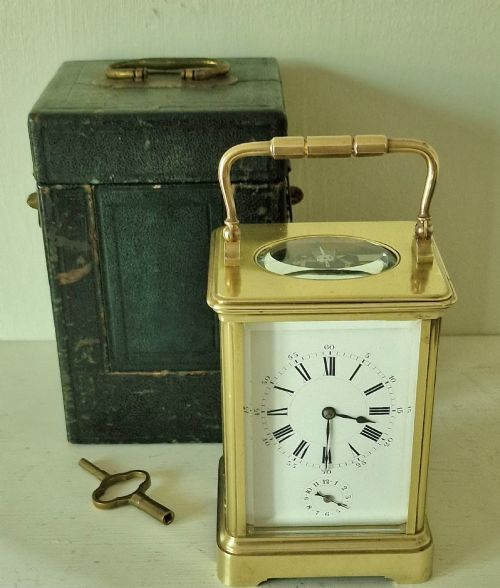
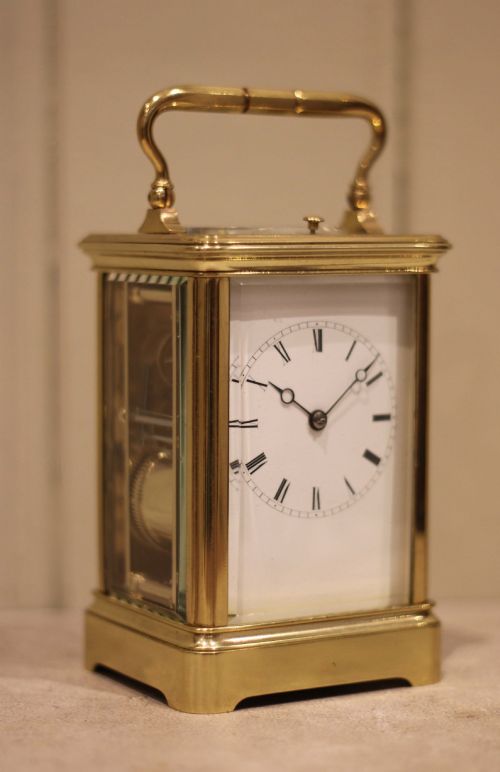
A french repeating carriage clock is a portable timekeeper designed during the nineteenth century, equipped with a mechanism that sounds the last hour or quarters upon pressing a button. These items originate predominantly from French workshops operating between eighteen-fifty and nineteen-twenty, spanning the Victorian and Edwardian eras. The examples met most frequently on this page feature brass or gilded brass frames enclosing glass panels that reveal the escapement within.
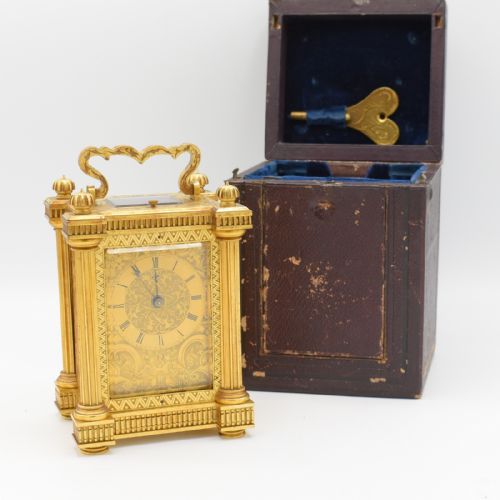
Makers such as Drocourt and Henri Jacot produced both plain designs and heavily decorated pieces featuring enamel bandings or hand-painted panels. Cases vary from standard rectangular housings to gorge styles and doucine profiles. Many units include striking trains, alarms, or grand sonnerie complications alongside the repeating function.
What varies in quality
The sophistication of the internal movement dictates the baseline, moving from standard time-and-strike systems to complicated grand sonnerie and five-minute repeater mechanisms. Maker attribution heavily influences standing, with signed works from established horologists commanding greater attention than unsigned workshop output.
Case execution separates ordinary production from exceptional items through the depth of hand engraving, the weight of the solid brass or silver gilt casting, and the presence of undamaged painted enamel panels. Original gilding and matching numbered keys further distinguish superior survivals.
French Repeating Carriage Clock Retail Price Guide 2026
Typical asking prices for french repeating carriage clock among the pieces listed under this phrase on Sellingantiques today, from the lower quarter to the upper quarter. They describe what is for sale here now, not the wider market.
Listings feature nineteenth-century French production predominantly utilising brass, glass, and enamel across gorge and doucine case forms.
Drocourt·Henri Jacot·Francois Arsene Margaine·Howell And James·Dwerrihouse And Bell
The French Repeating Carriage Clock Glossary
- Repeater
- A mechanism that sounds the hours or quarters on demand when a button or plunger on the case is pressed. This complication allowed owners to check the time in the dark.
- Grand sonnerie
- A striking system that sounds both the hours and the quarters automatically as each quarter hour passes. It represents a more complex gear arrangement than standard hour-striking clocks.
- Escapement
- The internal mechanism that controls the release of power to regulate the movement. Platform escapements became standard in these portable units.
- Doucine case
- A housing featuring a concave curved moulding profile along the upper edges. This architectural silhouette appears on nineteenth-century French models.
French Repeating Carriage Clock: Frequently Asked Questions
How do I operate the repeater mechanism?
Press the button located on the top of the case firmly downwards to trigger the strike train. The clock will sound the last elapsed hour and quarters depending on the specific complication.
Ensure you complete the downward press fully rather than partially to prevent jamming the striking rack. Allow the sequence to finish sounding completely before moving or handling the clock again.
What is the difference between a striking clock and a repeater?
A striking clock sounds the hours automatically on a bell or gong as the hands reach each hour mark. It relies on internal count wheels or rack systems connected to a separate gear train.
A repeating clock adds the ability to sound the time manually on demand via an exterior button. This function repeats the last struck hour even if the automatic striking train has already finished its sequence.
How should I wind a carriage clock?
Use the dedicated winding key on the back plate of the movement, turning it gently in the direction specified for time and strike. Avoid over-winding by stopping the moment firm resistance is felt against the key.
Keep the key stored safely when not in use. Many nineteenth-century pieces require a weekly wind to maintain the eight-day spring power reserve.
Can these clocks be used for travel today?
These pieces were originally built as portable timekeepers for nineteenth-century journeys, often supplied with leather outer cases for protection. Modern transit requires careful handling to protect the delicate internal platform escapement.
Secure the balance wheel and lock the striking train if necessary before moving the clock long distances. Many owners prefer to keep them stationary on a mantelpiece or desk.