
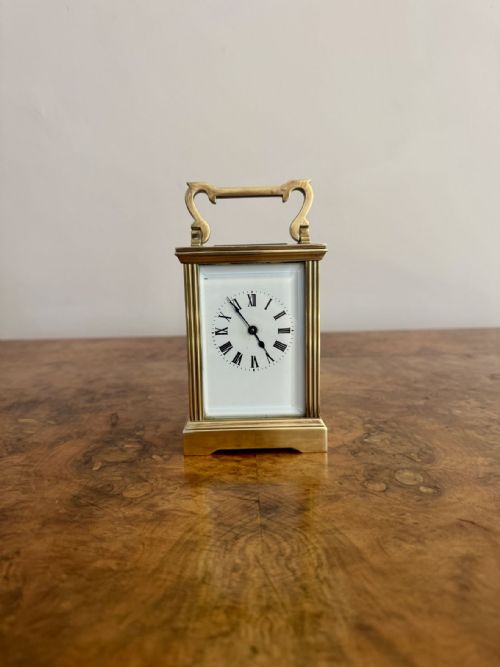
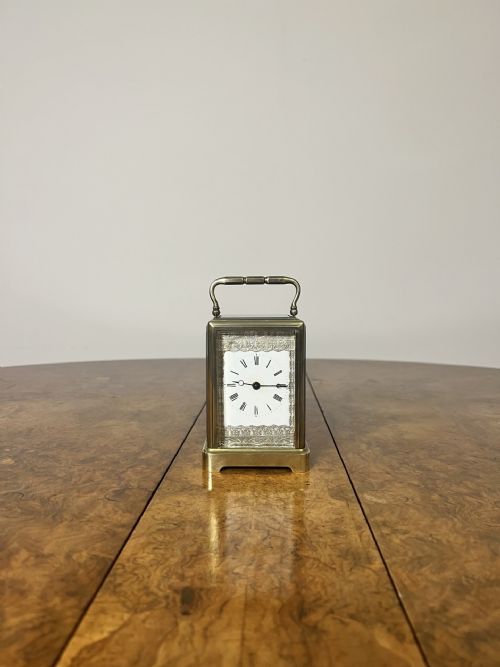


Edwardian Brass Carriage Clock
An edwardian brass carriage clock combines portable mechanical precision with substantial metal and glass housing designed for travel and domestic use.
Edwardian Brass Carriage Clock
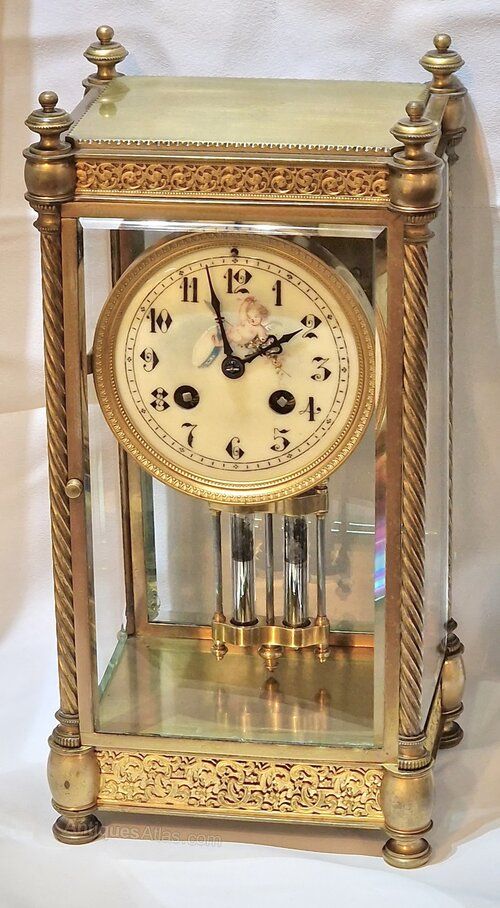
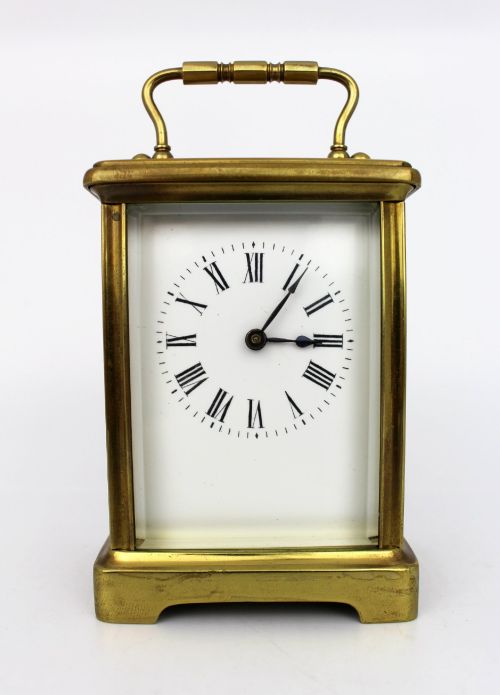
When searching for an edwardian brass carriage clock, buyers encounter portable timepieces originally made for travel or desk use during the late nineteenth and early twentieth centuries. These pieces typically feature heavy brass frames inset with bevelled glass panels that reveal the internal escapement and gear trains.
The specimens seen here span Edwardian, Victorian, and French Belle Epoque styles, alongside architectural, gorge cased, and miniature variants. Most examples derive from French workshops or English retailers, often incorporating specific complications such as repeaters, alarms, or striking mechanisms.
Materials and Construction
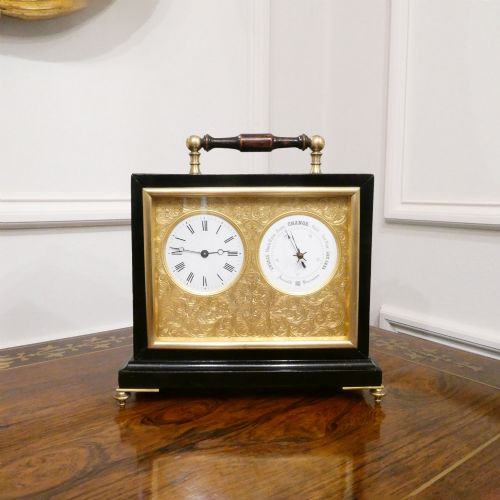
Makers constructed these clocks primarily from brass, gilt brass, or gilt bronze, sometimes pairing the metal framework with ebonised wood or leather travel cases. Enamel dials, frequently decorated with painted numerals or floral bands, sit behind protective glass panels.
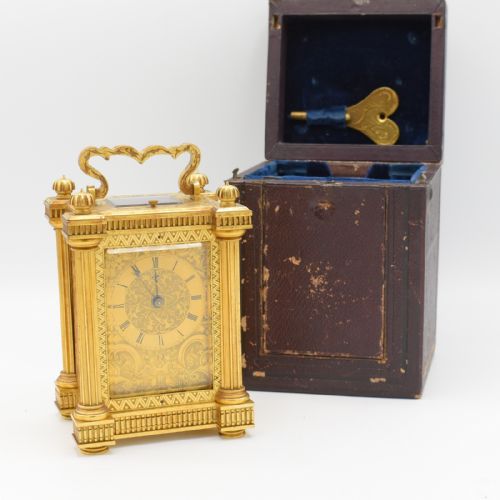
Internal movements rely on brass gear trains, escapements, and balance wheels, occasionally driven by Swiss or French mechanisms. Decorative enrichment includes engine-turned masks, filigree panels, champleve enamel, and hand-engraved brass surfaces.
Tiny cherub dials and hidden alarm settings remind us that Victorian travellers took their timekeeping with a generous dose of charm.
Assessing Build and Finish
Quality differences emerge in the weight of the brass casting, the thickness of the bevelled glass, and the complexity of the movement. Simpler timepieces with plain enamel dials contrast with grand sonnerie or repeating mechanisms housed in heavily chased gorge or architectural cases.
The crispness of hand-engraving on the dial mask and the presence of signed maker movements or original leather travel cases further distinguish standard production pieces from finer workshop outputs.
Howell & James London·Latshea & Sons Edinburgh·Samuel Marti et Cie·Mappin and Webb·J C Vickery London·Alfred Drocourt·L Epee·Bernard Freres
The Edwardian Brass Carriage Clock Glossary
- Repeater
- A mechanism that chimes the hours and quarters on demand when a lever or button is pressed. This complication required intricate internal engineering.
- Champleve
- An enamelling technique where troughs are dug into the metal surface and filled with vitreous enamel before firing. It creates colourful decorative panels on the clock frame.
- Escapement
- The internal mechanism that controls the unwinding of the mainspring by delivering impulses to the balance wheel. It produces the steady ticking sound of the clock.
- Mask
- The decorative metal plate surrounding the dial face, often engine-turned, engraved, or filigree-decorated. It frames the enamel chapter ring.
Edwardian Brass Carriage Clock: Frequently Asked Questions
What is a carriage clock?
A carriage clock is a small, spring-driven portable timepiece developed in the nineteenth century for travel. They feature sturdy metal frames and glass panels so the movement can be viewed from multiple angles.
Most examples include a swing handle on top and sit on four small feet, allowing owners to move them easily between rooms or pack them into leather travel cases.
How do repeating mechanisms work?
Repeating mechanisms allow the clock to chime the last hour and quarter-hour when the user presses a button on the top case. This allowed owners to check the time in total darkness.
Clocks with this feature contain extra gear trains and gongs inside the brass housing, making them heavier and more complex to service.
How do I wind a carriage clock?
Winding requires a dedicated key placed onto the arbors located on the underside or backplate of the movement. Care must be taken not to overwind the mainspring.
Many surviving pieces retain their original keys, which fit the square winding nuts precisely and ensure the mechanism operates correctly.
Are these clocks French or English?
A large proportion of brass carriage clocks were manufactured in French workshops, particularly in Paris and Saint-Nicolas-d'Aliermont, before being imported by English retailers. English firms often retailed these pieces and added their own signatures to the dials or movements.
Distinguishing between them depends on maker marks stamped on the backplate, dial signatures, and specific stylistic conventions of the brass case.