
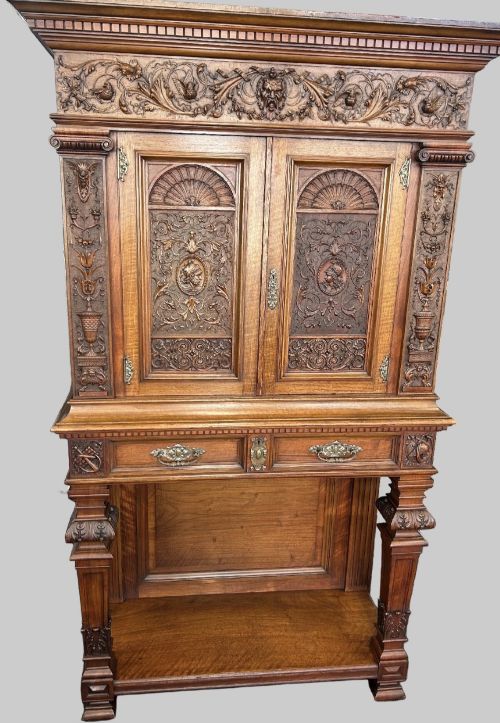
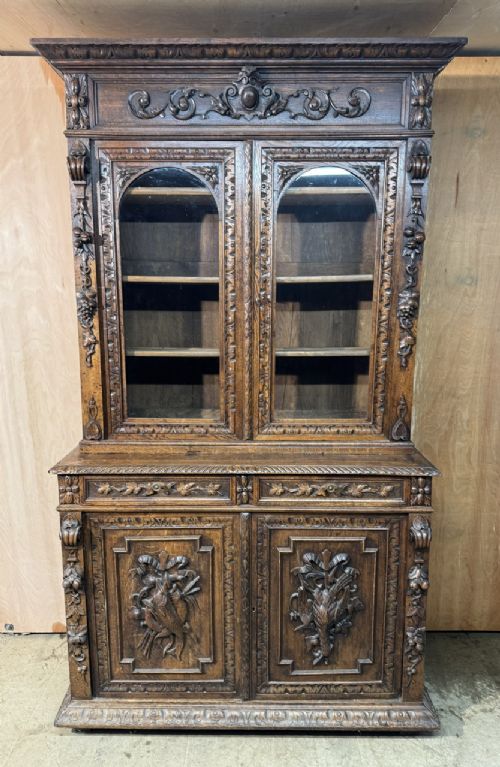
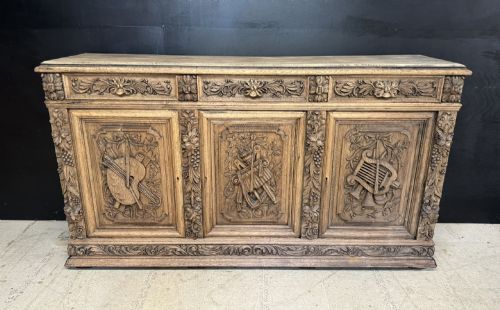
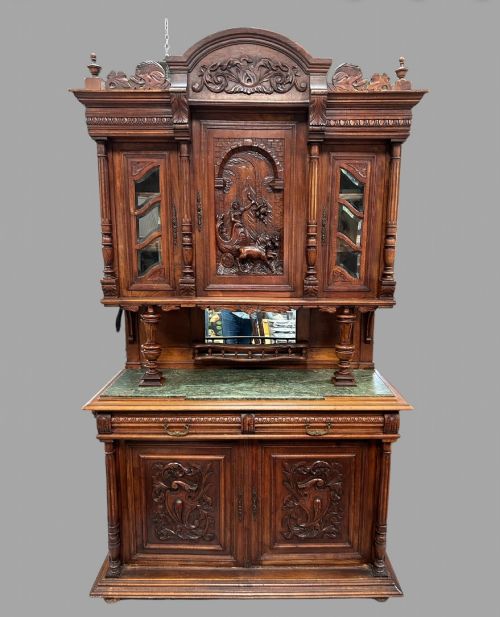


French Renaissance Cupboard
These french renaissance cupboard designs bring heavy carved timber and grand continental presence straight into a room.
French Renaissance Cupboard
When you search for a french renaissance cupboard, you encounter substantial storage furniture shaped by historical revivals across the nineteenth century alongside select eighteenth-century examples. The selection includes architectural sideboards, buffets, hall cupboards, and smaller bedside cabinets built for functional domestic use.
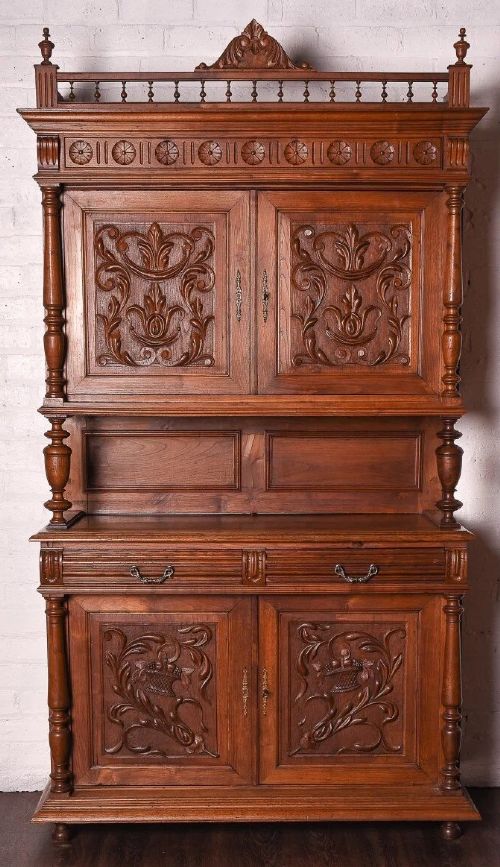
Most pieces date to the nineteenth century, reflecting the nineteenth-century taste for Renaissance revival, Louis XIII revival, and Henri II styles. These heavy timber builds range from grand game cabinets and buffets de corps to low pot cupboards fitted with marble tops.
Materials and construction
Cabinetmakers constructed these pieces primarily from solid oak and walnut, choosing dense hardwoods suited to deep sculptural carving. Iron, steel, and brass hardware such as hinges and locks secure the heavy doors and drawers.
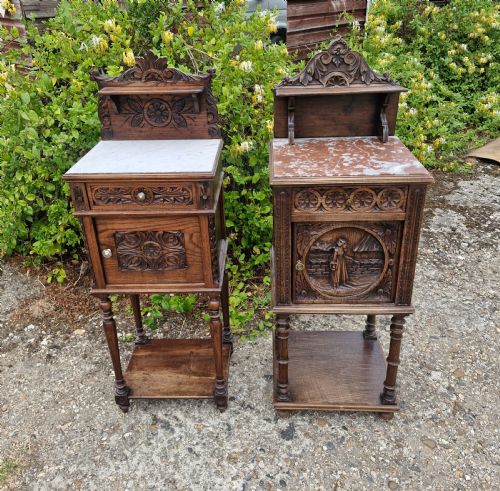
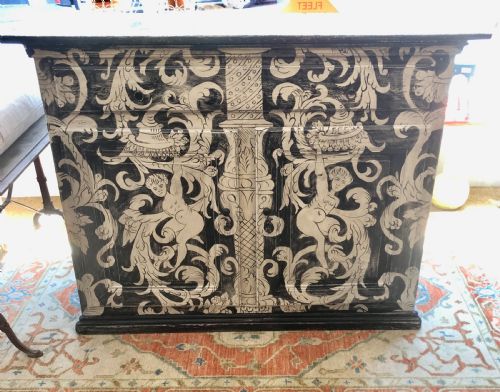
Surfaces feature elaborate hand-carved ornamentation, panel work, and occasional hand-painted decoration. Certain bedside and cabinet designs incorporate fitted marble tops alongside glass elements.
Listings span the eighteenth and nineteenth centuries, featuring walnut and oak construction enriched with marble and brass.
Judging quality and craftsmanship
The distinction between standard production and top-tier work rests entirely on the depth and sharpness of the hand-carved detail. Finer pieces display crisp relief work across figures, foliage, and architectural moulding without soft edges.
Material selection also dictates the hierarchy, with richly figured walnut and heavy quarter-sawn oak holding higher regard. Integrated stone elements like marble tops further elevate the status of individual items.
The French Renaissance Cupboard Glossary
- Buffet de corps
- A large two-tier formal sideboard or cupboard used for displaying plate and storing provisions. This imposing form sits centrally in dining spaces.
- Renaissance Revival
- An architectural nineteenth-century design movement drawing inspiration from sixteenth-century forms. It employs columns, pilasters, and dense relief carving.
- Pot cupboard
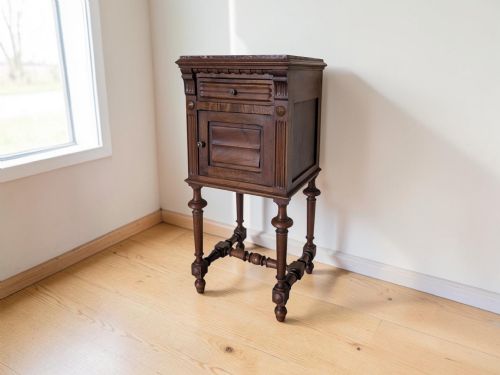
- A small bedside cabinet originally designed to house a chamber pot. These compact storage pieces often feature a single door and a marble top.
French Renaissance Cupboard: Frequently Asked Questions
Where should I place a large buffet?
These imposing cabinets demand generous wall space and solid flooring to support their considerable weight. Dining rooms and spacious hallways provide traditional settings that balance their architectural proportions.
Keep them away from direct heat sources and strong sunlight to protect the aged oak and walnut surfaces from drying out.
How do I care for carved oak?
Dust the deep recesses of the carving regularly using a soft brush to prevent dirt accumulation. Apply a quality beeswax occasionally to nourish the timber and maintain a natural sheen.
Avoid modern liquid polishes containing silicones, which can build up on the wood over time and dull the grain.
What is a hunts game cabinet?
A hunts game cabinet is a specialised storage piece historically used for sporting estates and dining rooms. The carvings on these pieces frequently incorporate game animals, hunting motifs, and foliage.
They offer deep interior storage enclosed by heavy panelled doors secured with iron hardware.
How do I date a revival piece?
Examine the construction methods visible on the interior and backboards, such as saw marks and fastener types. Nineteenth-century revival items combine older sixteenth-century decorative motifs with machine-sawn internal timbers.
Compare the hardware, hinges, and lock mechanisms against period standards to confirm the era of manufacture.